How to Fix a Wobbly Ceiling Fan (Step-by-Step Solution)

Maintaining the mechanical systems of an older home is a continuous process that directly impacts the property’s resale value and structural longevity. When a potential buyer walks into a room and sees an oscillating ceiling fixture, they often perceive it as a sign of general neglect, regardless of the home’s actual condition. My 17 years in facilities maintenance have taught me that small mechanical issues are usually symptoms of deeper, addressable problems. By applying a systematic home maintenance checklist, you can protect your investment and ensure every system operates as intended.
During my tenure managing legacy properties, I once encountered a 1920s Victorian where every ceiling fan in the house seemed to vibrate. The homeowner was concerned about structural damage to the lath and plaster ceilings. Through a series of residential diagnostics, we discovered that the issue wasn’t the fans themselves, but rather the mounting brackets that had loosened over decades of seasonal temperature shifts. Addressing these small mechanical failures early prevented a much larger bill for ceiling restoration and electrical box replacement.
The Building Science of Rotational Equilibrium
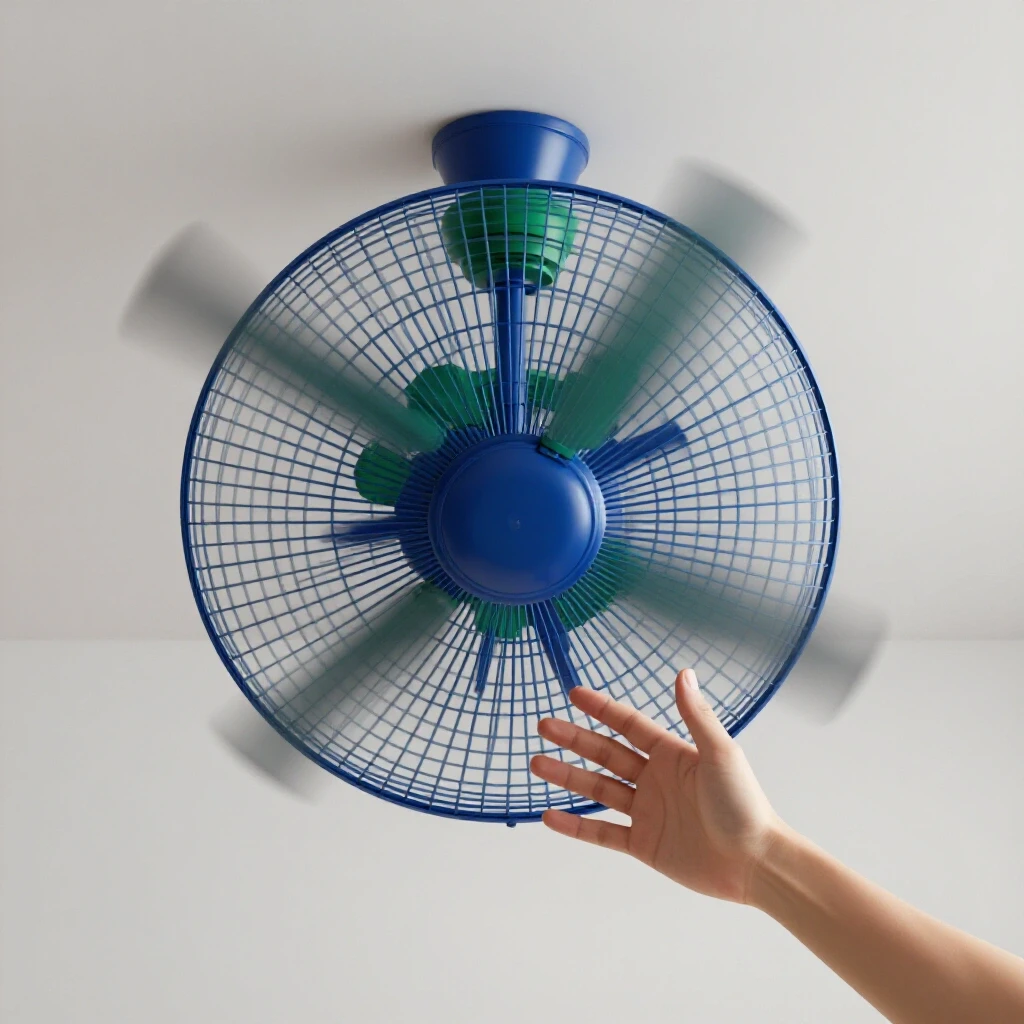
Rotational equilibrium in a ceiling fixture refers to the state where the centrifugal forces generated by the spinning blades are perfectly balanced around the center of the motor. When weight is distributed unevenly, the center of gravity shifts, causing the assembly to pull away from its vertical axis. This creates a rhythmic swaying motion that stresses the mounting hardware and the home’s framing.
In my experience, understanding the “why” behind mechanical failure is the first step in preventative home care. When a fan spins, each blade exerts a specific amount of force. If one blade is even a few grams heavier than the others, or if it sits at a different angle, it creates an asymmetrical load. This is not just an aesthetic annoyance; it is a matter of structural protection. Over time, the constant vibration can back out screws or even cause the junction box to fatigue, posing a safety risk to the occupants below.
Identifying Mechanical Resonance and Vibration
Mechanical resonance occurs when the frequency of a rotating object matches the natural frequency of the structure it is attached to, leading to amplified movement. In older homes, where timber framing may have settled, this resonance can cause audible rattling in nearby walls or windows.
When I perform a residential diagnostic on an unsteady fan, I look for signs of resonance first. If the vibration only occurs at a specific speed, it usually indicates a minor weight imbalance. However, if the entire assembly sways at all speeds, the issue is likely rooted in the mounting hardware or a bent blade bracket. Identifying these patterns early is a key part of any effective home maintenance checklist.
Essential Diagnostic Tools for Fixture Assessment
Professional-grade diagnostics require specific tools to measure tolerances and identify the root cause of mechanical instability. Without the right equipment, you are simply guessing at the problem, which can lead to wasted time and unnecessary part replacements.
- Digital Calipers or a Precision Ruler: Used to measure the distance from the tip of each blade to the ceiling to ensure uniform tracking.
- Torque Screwdriver: Essential for ensuring all fasteners are tightened to manufacturer specifications without stripping the threads.
- Non-Contact Voltage Tester: A critical safety tool to confirm power is fully cut before you begin any physical inspection of the motor or wiring.
- Laser Level: Helpful for checking if the mounting bracket is perfectly horizontal, especially in older homes with sloped or sagging ceilings.
- Gram Scale: Used to weigh individual blades if a severe imbalance is suspected, ensuring they are within a 1-gram tolerance of each other.
The Role of Moisture Detection in Blade Integrity
Moisture detection is a vital part of maintaining wooden fan blades, as high humidity can cause organic materials to warp or swell over time. If a blade absorbs moisture, its weight and pitch will change, leading to a persistent oscillation.
In properties where I have tracked moisture problems, I often find that fans in kitchens or bathrooms suffer the most. A simple moisture meter can tell you if a wooden blade has exceeded a 12% moisture content, which is often enough to throw the entire system out of alignment. Keeping these blades sealed and dry is a fundamental part of structural protection for your mechanical fixtures.
Symptom-to-Root-Cause Diagnostic Tree
| Symptom | Potential Root Cause | Recommended Action |
|---|---|---|
| Clicking or Ticking Sound | Loose blade screw or decorative cover | Tighten all hardware to hand-tight plus 1/4 turn |
| Rhythmic Swaying at High Speed | Minor blade weight discrepancy | Use a balancing kit with 3-gram weighted clips |
| Visible Shaking at All Speeds | Loose mounting bracket or non-fan-rated box | Inspect junction box and tighten ceiling brace |
| One Blade Tracking Higher | Bent blade iron or warped material | Measure vertical distance; shim or replace bracket |
| Grinding Noise | Motor bearing failure or dust accumulation | Clean motor housing; if noise persists, replace unit |
Safety Protocols and Structural Requirements
Safety is the primary concern when dealing with overhead mechanical systems that weigh between 15 and 50 pounds. The Consumer Product Safety Commission (CPSC) provides clear guidelines on the necessity of using fan-rated junction boxes, which are designed to withstand the dynamic loads of a spinning motor.
Before I ever touch a screwdriver, I verify that the electrical circuit is off and that the junction box is secured directly to a joist or a heavy-duty spreading brace. In older homes, you will often find fans attached to standard “pancake” boxes meant for light fixtures. These are not designed for the lateral stress of a moving fan and can fail over time. If you see the junction box moving independently of the ceiling, stop immediately and consult a professional to install a proper brace.
Circuit Amperage and Electrical Resistance
Electrical resistance increases when connections are loose, which can lead to heat buildup and motor inefficiency. Most residential ceiling fans draw between 0.5 and 1.0 amps, but a struggling, unbalanced motor can draw more power as it fights against the friction of an uneven rotation.
When performing preventative home care, I check the wire nuts and connections within the canopy. If I see any signs of discolored insulation or “charring,” it indicates a high-resistance connection. Ensuring these wires are tight and the circuit is not overloaded is just as important as any plumbing repair guides or HVAC filters you might be managing.
Step-by-Step Restoration of Equilibrium
Addressing an unsteady fan requires a methodical approach that starts with cleaning and ends with precision balancing. Most homeowners jump straight to adding weights, but in my 17 years of experience, the solution is often much simpler and involves basic mechanical adjustments.
Step 1: Debris Removal and Hardware Inspection
Dust accumulation on the top of fan blades can be surprisingly heavy and is rarely distributed evenly. Use a damp microfiber cloth to remove all buildup, as even a few millimeters of dust can create enough drag to cause a noticeable oscillation.
Once clean, check every screw on the assembly. This includes the screws connecting the blades to the “irons” (the metal brackets) and the screws connecting the irons to the motor. Use a steady hand and ensure they are snug. Over-tightening can crack the blade material, so aim for a firm “hand-tight” feel.
Step 2: Measuring Blade Tracking
Blade tracking refers to whether all blades are traveling through the same horizontal plane. To test this, hold a yardstick against the ceiling and measure the distance to the edge of one blade. Rotate the fan by hand and check the same point for every other blade.
If you find a variance greater than 1/8 of an inch, you have a tracking issue. This is often caused by a bent blade iron. You can carefully apply pressure to the bracket to nudge it back into place, but be cautious—cast metal can snap if stressed too far. If the blade itself is warped, replacement is usually the only safe option.
Step 3: Utilizing the Balancing Kit
If the fan is clean, tight, and tracking correctly but still sways, it is time to use a balancing kit. These kits typically contain a plastic clip and several adhesive-backed lead or steel weights.
- Attach the plastic clip to the center of one blade.
- Turn the fan on to see if the swaying improves.
- Repeat this for every blade until you find the one where the clip makes the most difference.
- Once the “problem” blade is identified, move the clip inward and outward along that blade to find the “sweet spot.”
- Replace the clip with a permanent adhesive weight on the top of the blade at that exact distance from the center.
Preventative Maintenance Schedule for Ceiling Systems
| Frequency | Task | Metric/Goal |
|---|---|---|
| Every 6 Months | Dust blades and motor housing | Zero visible debris |
| Annually | Tighten all hardware and brackets | No movement when wiggled by hand |
| Annually | Check blade tracking | Variance less than 1/8 inch |
| Every 2 Years | Inspect junction box and canopy | No signs of heat or loose wiring |
| Seasonally | Reverse motor direction | Ensure switch operates smoothly |
DIY vs. Professional Scope Limits
Knowing when to step back is a hallmark of a responsible homeowner. While most balance issues are well within the DIY realm, structural or electrical failures require specialized knowledge and licensing to ensure the safety of the property.
- DIY Scope: Cleaning, tightening screws, using balancing kits, measuring blade tracking, and replacing decorative pull chains.
- Professional Scope: Replacing a non-fan-rated junction box, installing a new support brace between joists, troubleshooting motor humming or internal electrical failures, and running new dedicated circuits.
In my years as a technician, I have seen many “handyman” repairs that ignored the structural requirements of the building code. If your fan is mounted to a box that is only held in by the plaster of an old ceiling, no amount of balancing will make it safe. Always prioritize the structural protection of your home over a quick fix.
Long-Term Strategies for Mechanical Preservation
The goal of any residential diagnostic program is to catch minor wear before it becomes a major expense. By including your ceiling fixtures in your broader home maintenance checklist, you can extend the life of the motors and protect your ceilings from unnecessary stress.
I recommend keeping a log of when each fan was last serviced. In older properties, the vibration from an unbalanced fan can actually contribute to the cracking of crown molding or the loosening of nearby plaster. By maintaining rotational equilibrium, you are not just fixing a fan; you are preserving the envelope and interior finishes of your home.
Case Study: The High-Traffic Great Room
In a large facility I once managed, we had heavy, 60-inch industrial-style fans in a high-traffic area. These fans ran 24/7 to assist with HVAC efficiency and air distribution. We noticed that one unit began to develop a severe sway every six months.
The investigation revealed that the high-velocity air was causing the set screws on the downrod to vibrate loose. Our solution was to implement a quarterly torque check and apply a small amount of thread-locking compound to the fasteners. This simple adjustment, costing less than five dollars, saved us from having to replace an expensive motor and prevented a potential safety hazard in a public space.
Frequently Asked Questions
Why does my fan only shake when I turn it on high? At higher speeds, the centrifugal force increases exponentially. A minor weight imbalance that is unnoticeable at low speeds becomes magnified as the RPMs increase, causing the assembly to pull away from its center of gravity.
Can I just bend the blades back into place? You should never bend the blades themselves, as this can damage the material’s structural integrity. You can, however, slightly adjust the metal “irons” that hold the blades, provided they are not made of brittle cast-zinc.
Is it normal for a ceiling fan to have a slight movement? A very slight movement (less than 1/16 of an inch) is common in many units, especially those on long downrods. However, it should never be enough to cause noise or visible swaying of the mounting canopy.
How do I know if my ceiling box is fan-rated? A fan-rated box is typically made of heavy-duty metal or reinforced plastic and will be marked with “Acceptable for Fan Support.” It is usually bolted directly to a wooden joist or a steel cross-brace.
What causes a fan to start making a clicking sound? Clicking is almost always caused by a loose component. Check the blade screws, the light kit mounting, and the decorative canopy. Even a loose pull-chain hitting the glass globe can create a rhythmic clicking.
Can humidity affect how a fan spins? Yes. In older homes without climate control, wooden blades can absorb moisture unevenly. This increases the weight of specific blades and can cause them to warp, leading to an unbalanced rotation.
How often should I clean my fan blades? In most environments, a bi-annual cleaning is sufficient. However, if you have pets or live in a dusty climate, a quarterly cleaning will prevent debris buildup from affecting the mechanical balance.
What should I do if the balancing kit doesn’t work? If a balancing kit fails to solve the issue, the problem is likely a bent motor shaft or a severely warped blade. At this point, the unit has reached the end of its serviceable life and should be replaced for safety reasons.
Does reversing the fan direction affect its balance? The direction of rotation (clockwise vs. counter-clockwise) should not affect the balance if the blades are properly aligned. If it only shakes in one direction, check for loose hardware that may be shifting under the change in torque.
Should I oil my ceiling fan motor? Most modern fans have permanently lubricated bearings and do not require oiling. If you have an older “Cast Iron” style fan with an oil reservoir, you should check the level annually and add non-detergent motor oil as specified by the manufacturer.
(This article was written by one of our staff writers, Daniel Whitaker. Visit our Meet the Team page to learn more about the author and their expertise.)