Christmas Storage Cost Breakdown: Avoid Common Organization Mistakes (Guide)

The transition from a festive, decorated home back to a clean, open space is often the most satisfying part of the new year. When every ornament and light strand has a designated spot, the ease of cleaning increases, and the mental load of home maintenance decreases. However, achieving that level of order requires a financial strategy that most homeowners overlook until they are standing in a crowded garage with a shrinking bank balance.
Establishing a Financial Framework for Seasonal Inventory Management
A financial framework for seasonal items involves tracking the purchase price of bins, shelving units, and the opportunity cost of the square footage used. It ensures that holiday overhead doesn’t creep into your primary home maintenance funds or disrupt your long-term savings goals. By treating storage as a line item in your home renovation budget, you avoid the “nickel and dime” effect that occurs when small organizational purchases accumulate into significant debt.
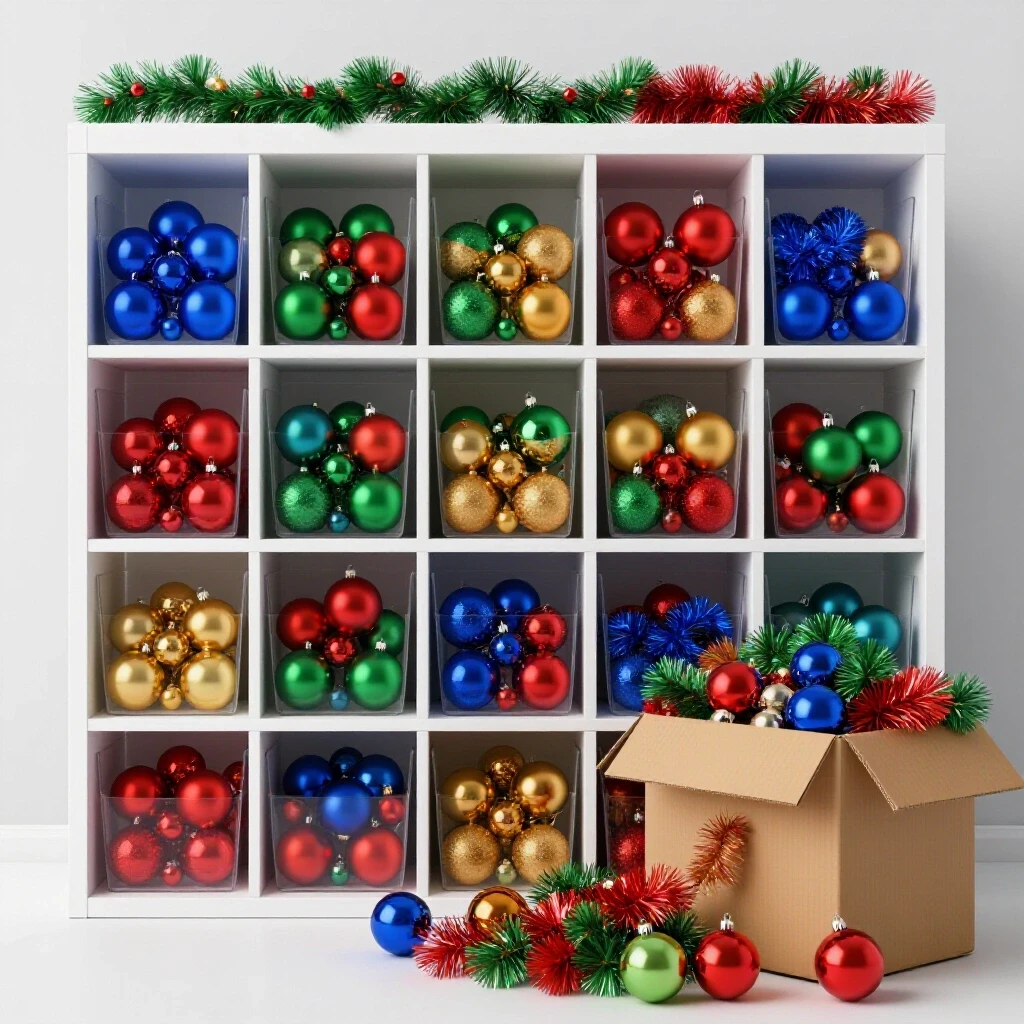
When I managed my first major home update, I focused entirely on the kitchen and bathrooms. I neglected the “overflow” areas where seasonal items live. This was a tactical error. I soon realized that without a dedicated remodeling expense tracker for my storage zones, I was losing money through damaged goods and inefficient use of expensive square footage. In the world of financial planning for homeowners, every square foot has a carrying cost. If you are paying a mortgage on 2,000 square feet but 200 of those are filled with disorganized boxes, you are essentially paying “rent” on clutter.
To build a realistic framework, I recommend a 10% contingency buffer for all storage projects. This accounts for the rising cost of high-density plastics and lumber. In the last three years, the U.S. Bureau of Labor Statistics has noted significant fluctuations in plastic resin and wood product pricing. A shelf that cost $45 in 2021 might cost $65 today. Your budget must reflect these market realities to remain viable.
Why Initial Estimates for Holiday Bin Systems Often Fail
Many homeowners fail to account for the cumulative cost of specialized containers and structural supports. This section explores how a remodeling expense tracker can capture these small but frequent purchases that lead to budget overruns. When we estimate a project, we often think of the “big” items like a new shelving unit, but we ignore the “micro-costs” like labels, specialized ornament padding, and heavy-duty fasteners.
In my own experience, I once set out to “organize the basement” with a loose $200 estimate. I didn’t use a formal cost breakdown guide. By the time I had purchased the reinforced totes needed to stack items five-high and the moisture-resistant gaskets required for a basement environment, I had spent $540. This was a 170% variance from my original guess. This happened because I didn’t account for the “unit cost” of protection.
Interestingly, the “change-order” concept from professional construction applies here too. A change-order is a formal amendment to a contract that increases the price due to a change in scope. In home organization, a change-order happens every time you realize your tree bag doesn’t fit the new 9-foot spruce or your wreath hangers don’t work on the new siding. Without a pre-allocated “miscellaneous” fund, these shifts eat into your monthly grocery or utility budget.
Projected vs. Actual Budget Line-Item Breakdown
To illustrate the gap between expectation and reality, I have compiled data from my personal ledger. This table represents a typical mid-sized home storage overhaul for seasonal decor.
| Item Description | Projected Cost | Actual Cost | Variance (%) | Why the Shift? |
|---|---|---|---|---|
| Heavy-Duty 27-Gallon Totes (10) | $120.00 | $185.00 | +54% | Switched to gasket-sealed for moisture protection. |
| Vertical Steel Shelving Unit | $150.00 | $210.00 | +40% | Required higher weight capacity for heavy lights. |
| Specialized Ornament Dividers | $40.00 | $95.00 | +137% | Cardboard failed; upgraded to archival plastic. |
| Labeling and Inventory System | $15.00 | $45.00 | +200% | Purchased weather-resistant adhesive labels. |
| Total Project Cost | $325.00 | $535.00 | +64.6% | Underestimated material quality needs. |
Analyzing the Cost vs. Value of Dedicated Storage Renovations
Evaluating the return on investment for built-in holiday closets or attic upgrades is a core part of a sound financial plan. Using cost vs value home improvement data helps determine if adding permanent shelving increases your home’s marketability or just adds personal convenience. While a custom-built storage room rarely yields a 100% ROI, it can significantly improve the “saleability” of a home by showcasing an organized, high-capacity environment.
According to Remodeling Magazine’s recent reports, functional improvements like attic insulation and storage reinforcements often recoup about 50% to 60% of their cost at resale. However, the “lifestyle value” is where the real gain lies. If an organized storage system saves you four hours of labor every December and January, and you value your time at $50 an hour, the system pays for itself in “time-equity” within a few seasons.
Building on this, you must avoid “over-improving.” If the homes in your neighborhood typically have basic wire shelving in the garage, installing custom mahogany cabinetry for your nutcracker collection is a poor financial move. You will never see that money again. Stick to “neighborhood-grade” materials like plywood, steel racking, or high-quality resin bins to keep your investment aligned with local market ceilings.
Calculating the True Price of Protecting Your Seasonal Assets
This involves looking at the depreciation of decorations versus the cost of high-end protection. A cost breakdown guide for storage helps you decide if a $50 tree bag is worth it for a $200 tree. This is essentially a form of “self-insurance.” You are spending money today to prevent a total loss of an asset in the future.
Consider the “Amortization of Protection.” If you have $2,000 worth of heirloom ornaments, spending $200 on archival-quality storage boxes represents a 10% insurance premium. If those boxes last 20 years, your annual cost of protection is only $10. Conversely, if you store them in cheap cardboard boxes that attract pests or moisture, you risk a 100% loss of the asset value.
- Asset Value: Total replacement cost of all holiday decor.
- Protection Ratio: Aim for storage costs to be no more than 15-20% of the asset value.
- Depreciation Schedule: Most plastic bins have a functional life of 10-15 years before the plastic becomes brittle.
- Maintenance Cost: The annual cost of replacing broken bins or updating labels.
Why Standard Remodeling Estimates Fail in Storage Spaces
Standard estimates often ignore the “localization” of costs. Labor rates for a handyman to install shelving vary wildly between the Midwest and the West Coast. Furthermore, the “prep work” for storage areas—such as leveling a floor or adding lighting—is frequently omitted from the initial thought process.
Building a storage area is not just about the shelves; it is about the environment. If your storage area is prone to temperature swings, you may need to invest in climate-controlled solutions, which can triple your costs. In my second renovation, I forgot to account for the cost of LED shop lights in the storage room. I spent $150 on the shelves but couldn’t see what was on them. Adding the electrical work and fixtures after the fact cost me an additional $300 because I hadn’t planned for the wiring.
Practical Spreadsheet Templates for Tracking Decor Expenses
Using a financial planning for homeowners approach involves a line-item audit of every hook, box, and shelf. This ensures you aren’t over-improving a basement or attic beyond its functional utility. A well-structured spreadsheet is your best defense against “budget creep.”
- Inventory Tab: List every category of decor (Lights, Tree, Ornaments, Linens).
- Current Storage Audit: Note the condition and type of every bin you currently own.
- Gap Analysis: Identify what is currently unprotected or poorly stored.
- Market Research Tab: Log prices from at least three different retailers for shelving and bins.
- Actual Spend Tracker: Record every receipt, including taxes and shipping fees.
By following this method, you move from “guessing” to “accounting.” This level of detail might seem excessive for holiday boxes, but it builds the habit of financial discipline that protects your larger home equity.
Regional Labor Cost Coefficients and Material Shifts
The cost of organizing your home is heavily influenced by where you live. While many cost-conscious homeowners prefer “sweat equity” (doing the work themselves), it is important to know the market value of that labor. The U.S. Bureau of Labor Statistics provides data on “Installation, Maintenance, and Repair Occupations” that can serve as a benchmark.
If you decide to hire help for structural shelving, the regional multiplier can be significant. In the Northeast or West Coast, labor rates can be 1.2x to 1.5x the national average. In the South, they might be 0.8x. If a national blog says a project costs $500, but you live in San Francisco, you should realistically budget $750.
- Material-to-Labor Ratio: For storage projects, materials usually account for 70% of the cost, while labor accounts for 30%.
- DIY Valuation: Value your own time at the local “handyman” rate to see if the project is truly a saving or a time-sink.
- Bulk Purchasing: Buying 20 bins at once often yields a 10-15% discount compared to buying them individually over three months.
Anticipating Hidden Municipal and Preparation Fees
While you rarely need a permit to buy plastic bins, structural changes to your home to accommodate storage might trigger municipal fees. If you are adding a loft to your garage or finishing a portion of the attic for seasonal items, you may need a building permit.
In some jurisdictions, adding “permanent” shelving that is bolted to the structure can technically be seen as a home improvement that requires inspection. If you bypass this, you might face issues during a home sale when an inspector flags unpermitted structural work. Always check with your local building department before adding heavy-duty overhead racks or modifying attic joists.
- Permit Costs: Usually range from $50 to $250 for minor structural additions.
- Tax Assessment: In some areas, adding finished square footage (even for storage) can increase your property tax assessment.
- Insurance Adjustments: If you significantly increase the value of the items stored in your home, you may need to update your homeowner’s insurance “contents” coverage.
Conclusion: Next Steps for the Disciplined Homeowner
The key to avoiding the “organization mistake” is to stop viewing storage as a secondary concern. It is a vital component of your home’s infrastructure. Start by auditing your current seasonal inventory and calculating its replacement value. Then, create a dedicated tab in your home renovation budget specifically for “Seasonal Asset Protection.”
Avoid the temptation to buy cheap, mismatched bins on a whim. Instead, save until you can afford a cohesive, durable system that fits your space perfectly. This disciplined approach prevents the cycle of buying, breaking, and rebuying that drains so many household budgets. Your goal is a one-time investment that serves your home for a decade or more.
Frequently Asked Questions
How much should I realistically budget for a full holiday storage overhaul? For a standard three-bedroom home, a comprehensive system including heavy-duty shelving and high-quality bins typically ranges from $500 to $1,200. This depends on whether you utilize existing space or need to build new structural supports.
Is it cheaper to build wooden shelves or buy pre-made steel units? Currently, with lumber prices stabilizing, building wooden shelves can be 20-30% cheaper if you have the tools. However, steel units offer better weight capacity and are “portable” assets you can take with you if you move, which adds long-term value.
How do I calculate the “carrying cost” of my storage space? Divide your monthly mortgage payment by the total square footage of your home. Multiply that “cost per square foot” by the area dedicated to storage. This shows you exactly how much of your monthly housing budget is spent on “housing” your decorations.
Should I include storage bins in my “home renovation budget” or “household supplies” budget? If you are buying more than five bins or installing shelving, it should be a line item in your home renovation budget. This allows you to track the investment against your home’s value rather than treating it as a disposable monthly expense.
What is the most common hidden cost in home organization projects? The “replacement cost” of items damaged by poor storage. If you spend $100 on cheap bins but lose $300 worth of lights to moisture or pests, your “actual” project cost includes that $300 loss.
Does organized storage actually increase my home’s resale value? It doesn’t usually increase the “appraised” value, but it significantly impacts “perceived” value. Buyers often pay a premium for homes that appear well-maintained and “move-in ready,” and organized storage is a primary indicator of a diligent homeowner.
How can I avoid over-improving my storage area? Research the “standard” for storage in your local real estate market. If most homes have unfinished basements with basic plastic bins, don’t spend $5,000 on custom cabinetry. Keep your investment within 1-2% of your home’s total value.
What is a “change-order escalation clause” in a DIY context? It is a mental and financial rule where you stop the project if costs exceed 20% of the estimate. This forces you to re-evaluate the scope and prevents “sunk cost fallacy” where you keep spending money on a failing plan.
Are “specialized” storage containers worth the extra cost? Only for high-value or fragile items. For basic items like plastic lawn ornaments, standard heavy-duty totes are more cost-effective. Use the “15% rule”: don’t spend more than 15% of the item’s value on its container.
How often should I update my remodeling expense tracker for storage? Perform a “mini-audit” every year during the post-holiday cleanup. Note any cracked bins or sagging shelves and add those replacement costs to your upcoming year’s maintenance budget.
What is the best way to track small organizational purchases? Use a dedicated smartphone app or a “receipt capture” tool linked to your main home finance spreadsheet. This prevents $10 and $20 purchases from slipping through the cracks and distorting your true project cost.
Should I value my “sweat equity” when budgeting for storage? Yes. If a project takes you 20 hours of weekend time, that is time you aren’t spending on other home maintenance or income-generating activities. Always weigh the “time-cost” against the “hired-labor” cost to find the most efficient path.
(This article was written by one of our staff writers, Steven Fletcher. Visit our Meet the Team page to learn more about the author and their expertise.)