How to Fix Cold Floors in Winter With Insulation (Step-by-Step)

The sensation of stepping onto a frigid surface in the middle of a January night is a memory that sticks with you. During my years managing older residential properties, I spent countless hours investigating why certain rooms felt like walk-in freezers while others remained comfortable. I remember one specific property where the floor temperature in the kitchen dropped to 48 degrees Fahrenheit, even though the thermostat was set to 70. This wasn’t just a matter of comfort; it was a symptom of a failing building envelope that required a systematic diagnostic approach to resolve.
Understanding Thermal Resistance and Surface Chills
Thermal resistance, commonly known as R-value, measures how well a material resists the flow of heat. In the context of residential flooring, heat moves from your living space toward colder areas through conduction, convection, and radiation. When a floor feels excessively cold, it is often because the materials beneath it are allowing heat to escape faster than the heating system can replenish it.
Building science is the study of how heat, air, and moisture move through a structure. For homeowners, understanding these principles is the first step in preventative home care. Heat naturally seeks equilibrium, moving from warm areas to cold areas. If your floor lacks a sufficient thermal break, the subfloor acts as a bridge, pulling warmth out of the room and into the crawlspace or basement below. This process, known as thermal bridging, is a primary cause of localized discomfort in older homes.
Diagnostic Equipment for Home Envelope Testing
To address underfoot chill effectively, you must move beyond guesswork and use objective measurement tools. Relying on your sense of touch is subjective and can be misleading due to the way different materials conduct heat. A systematic residential diagnostics approach requires a specific kit of tools to identify where the thermal barrier is failing.
- Infrared Thermometer: This handheld device allows you to measure surface temperatures from a distance. It is essential for identifying “cold spots” on a floor grid.
- Thermal Imaging Camera: While more advanced, a basic thermal camera provides a visual map of heat loss. It can show exactly where air is leaking through floorboards or where insulation has shifted.
- Pinless Moisture Meter: Moisture increases the thermal conductivity of wood. Using a meter to ensure subfloor moisture content is below 12% helps rule out dampness as a cause of heat loss.
- Anemometer: This tool measures air velocity. It is useful for detecting drafts (measured in feet per minute) near baseboards or floor vents.
- Smoke Pen: A simple tool that releases a thin trail of smoke to visualize air movement, helping you pinpoint the exact entry point of cold air.
Tracing the Path of Heat Loss in Older Properties
In my 17 years of maintenance, I have found that floor temperature issues rarely have a single cause. Instead, they are usually a combination of air infiltration and poor material density. Before applying any fixes, you must perform a systemic property assessment to categorize the symptoms you are seeing.
| Symptom | Potential Root Cause | Diagnostic Test |
|---|---|---|
| Floor feels cold only near exterior walls | Thermal bridging through the sill plate | Infrared scan of the wall-to-floor junction |
| Drafts felt at the feet while sitting | Air leakage through baseboards or subfloor gaps | Smoke pen test along the floor perimeter |
| Icy floors over a crawlspace | Lack of a vapor barrier or missing floor insulation | Visual inspection of the crawlspace ceiling |
| Cold spots in the center of a room | Gaps in the subfloor or disconnected ductwork | Infrared thermometer grid mapping |
| Damp feeling on hardwood surfaces | High humidity in the space below | Moisture meter check (look for >15% MC) |
The Role of Convection and the Stack Effect
The “stack effect” is a building science concept where warm air rises and escapes through the top of a house, creating a vacuum that pulls cold air in through the bottom. This is why floors in older homes often feel colder than the rest of the room. As the house “breathes,” it draws in frigid air through tiny cracks in the foundation and floor joists.
To combat this, you must look at the floor as a part of a larger system. If you only insulate the floor without addressing air leaks, the cold air will still find a way in. This is why a home maintenance checklist should always include an inspection of the “rim joist”—the area where the house frame sits on the foundation. Sealing these gaps is often more effective than adding thick layers of material elsewhere.
Practical Interventions: Enhancing Floor Comfort via DIY Methods
Once you have diagnosed the source of the chill, you can implement targeted improvements. In many legacy properties, structural changes aren’t always the first option. Instead, focusing on the interface between the floor and the living space can yield significant results. Using a combination of physical barriers and air-sealing techniques can stabilize surface temperatures.
- Seal the Perimeter: Use a high-quality caulk or expandable foam to seal gaps between the floor and the baseboards. Even a 1/8-inch gap can allow significant air infiltration.
- Gasket Installation: Install foam gaskets behind electrical outlets on exterior walls. Air often travels through wall cavities and exits at the floor level.
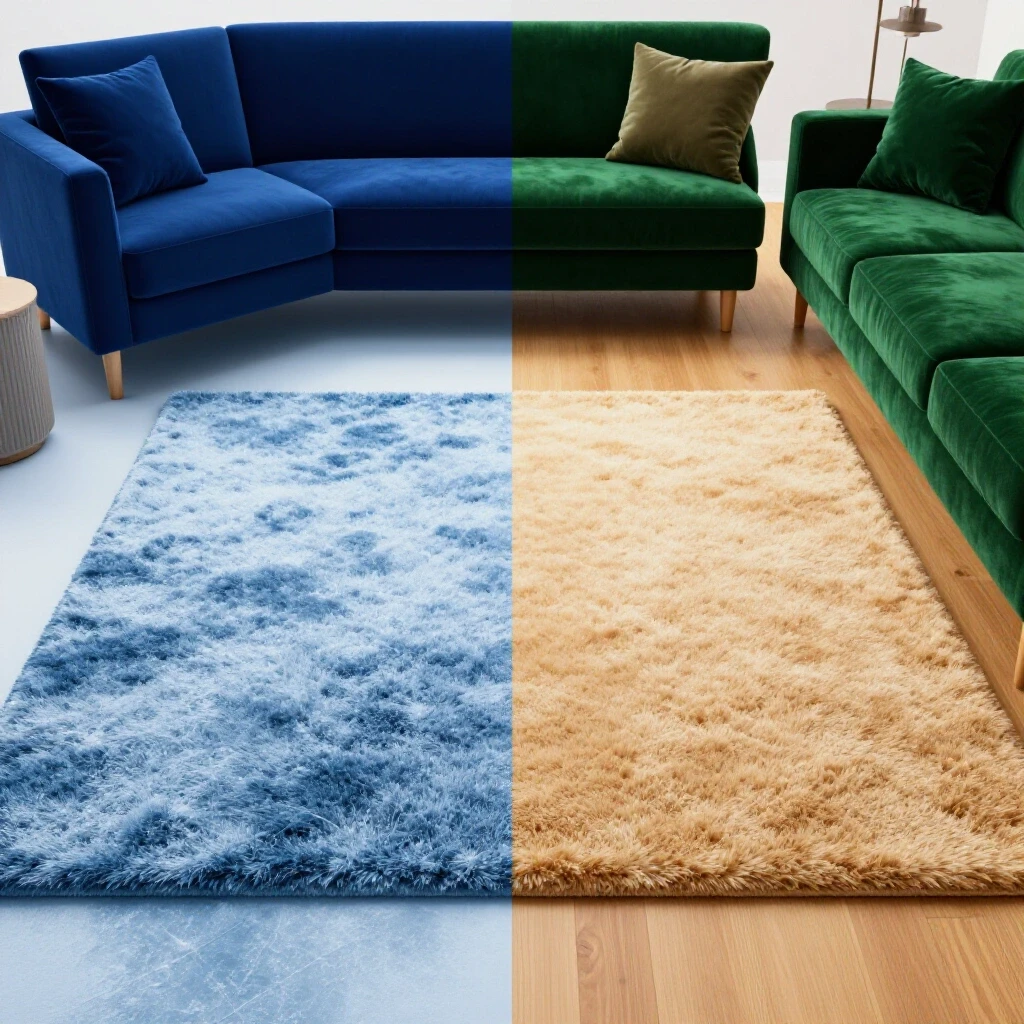
- Subfloor Batting: If you have access to the joists from below, installing mineral wool batting can provide a high R-value. From a building science perspective, a rug is not just a design choice; it is an additional layer of insulation. By adding a physical barrier between your feet and the cold subfloor, you are increasing the total R-value of the floor assembly.
Rugs with a high pile height and a dense weave trap air, which acts as a natural insulator. For maximum effectiveness, pair rugs with a felt or rubberized pad. These pads add another 0.5 to 1.0 R-value to the floor. In my own experience, adding a thick wool rug with a high-quality pad to a cold tile floor increased the surface temperature by nearly 8 degrees during the peak of winter.
Managing Air Infiltration at the Floor Level
Air movement is the enemy of a warm floor. Even if a floor is well-insulated, a fast-moving draft will strip heat away from the surface through convective cooling. This is why “draft snakes” or weighted door sweeps are highly effective, low-tech solutions for older homes.
When crafting or selecting a draft blocker, use heavy materials like dried beans, sand, or heavy fabric. The goal is to create a continuous seal against the floor. Place these at the base of exterior doors and in front of unused fireplaces. This simple step prevents the “river of cold air” that often flows across floors in legacy properties during windy nights.
Seasonal Calibration for Consistent Surface Temperatures
Maintaining a comfortable home requires a multi-year prevention program. You cannot simply “set and forget” your home’s thermal envelope. As materials age, they shrink, settle, and degrade. A seasonal maintenance schedule ensures that small gaps don’t turn into major thermal failures.
- Autumn (Pre-Winter): Inspect all exterior door sweeps and replace any that are cracked or brittle. Check the perimeter of the foundation for new cracks.
- Winter (Active Monitoring): Use your infrared thermometer during the coldest week of the year to identify new cold spots. Record these in a log for spring repairs.
- Spring (Post-Winter): Inspect the crawlspace or basement for signs of condensation that may have occurred during the cold months.
- Summer (Envelope Sealing): Use the warmer weather to apply caulk and sealants, as many of these products require specific temperature ranges to cure properly.
Preventative Maintenance Schedule by System
System Frequency Action Item Metric/Standard Floor Perimeter Annually Inspect baseboard caulking for separations No visible gaps > 1/16″ Crawlspace Bi-annually Check vapor barrier integrity and moisture Ground should be 100% covered Doors/Thresholds Seasonally Test for drafts using a smoke pen No horizontal smoke movement Area Rugs/Pads Annually Clean and inspect for wear or dampness Dry to the touch; no musty odors Rim Joists Every 3 Years Check for insulation sagging or air leaks Insulation must be flush to wood Critical Diagnostic Mistakes to Avoid
In the rush to fix a cold floor, many homeowners make mistakes that can lead to moisture problems or reduced air quality. One common error is “over-insulating” without considering ventilation. If you seal a floor so tightly that air cannot move, you may trap moisture against the wood, leading to rot or mold.
Another mistake is ignoring the “bypass.” A bypass is a hidden path that air takes around insulation. For example, if you insulate the floor joists but leave a gap around a plumbing pipe that goes into the wall, cold air will simply bypass your insulation and enter the room through the wall cavity. Always look for the “path of least resistance” when performing residential diagnostics.
DIY vs. Professional Scope Limits
Knowing when to handle a project yourself and when to stop is vital for structural protection. For the prevention-focused homeowner, the DIY scope should generally stay within the realm of non-structural, accessible repairs.
- DIY Scope: Adding rugs, sealing baseboards, installing door sweeps, laying vapor barriers in accessible crawlspaces, and adding batting to open joists.
- Limits of DIY: If you discover significant wood rot, widespread mold, or if the floor is sagging, these are signs of structural issues that require a deeper investigation into the home’s integrity. Additionally, if you find that your floor is cold due to a cracked foundation or a failing HVAC trunk line, these are mechanical failures that go beyond simple thermal management.
Establishing a Baseline for Thermal Comfort
To know if your interventions are working, you need a baseline. On a day when the outside temperature is 32 degrees Fahrenheit, measure the temperature of your floor in the center of the room and near an exterior wall. A well-performing floor in an older home should typically stay within 5 to 10 degrees of the ambient room temperature. If the delta (difference) is greater than 15 degrees, you have a significant thermal bridge that needs attention.
By documenting these measurements before and after you add rugs, seal drafts, or improve subfloor barriers, you can see the measurable outcomes of your work. This data-driven approach removes the anxiety of “not knowing” and replaces it with a clear understanding of your home’s performance.
Frequently Asked Questions
Why is my floor still cold even though I have insulation in the crawlspace? This is often due to air infiltration. If the insulation isn’t touching the subfloor (leaving an air gap), or if cold air is blowing in from the rim joists, the insulation cannot do its job. The air gap allows cold air to circulate between the insulation and your floor, effectively rendering the insulation useless.
Can I use spray foam to seal gaps in my flooring? Yes, but use “low-expansion” foam designed for windows and doors. High-expansion foam can exert enough pressure to warp floorboards or trim. Always test a small amount in an inconspicuous area first.
How thick should a rug pad be for the best thermal results? A felt pad of at least 1/4 to 3/8 inch is ideal. Felt has a higher density than foam and provides better thermal resistance. It also helps dampen sound, which is a secondary benefit in older homes with creaky floors.
Does moisture make a floor feel colder? Absolutely. Wet or damp materials conduct heat much faster than dry ones. If your subfloor has a high moisture content, it will pull heat away from your feet more aggressively. This is why moisture detection is a critical part of any floor temperature diagnostic.
Is it safe to put rugs over floor heaters? No. Never cover floor registers or baseboard heaters with rugs or furniture. This restricts airflow, making your heating system work harder, and can create a fire hazard. Ensure rugs are at least 6 to 12 inches away from any heat source.
What is the best way to seal drafts under an exterior door? A combination of a high-quality threshold gasket and a weighted draft snake is most effective. Ensure the threshold gasket makes firm contact with the bottom of the door when it is closed.
Should I insulate the floor of my basement? In most cases, it is more effective to insulate the basement walls rather than the ceiling (your floor). If the basement is within the “conditioned space” of the home, keeping the walls warm will naturally keep the floor above warmer.
How do I know if my cold floor is a sign of a bigger problem? If the floor is cold and also shows signs of “cupping” (edges of boards rising) or “crowning” (center of boards rising), you likely have a serious moisture issue. If you see daylight through the floorboards or near the foundation, you have a structural gap that needs immediate sealing to prevent pests and water intrusion.
Will heavy curtains help keep my floors warm? Yes. Long curtains that touch the floor can prevent “convective loops.” Cold air from windows naturally sinks to the floor. Curtains that reach the floor trap that cold air behind the fabric, preventing it from rushing across the floor and chilling your feet.
What is the “Rule of Thumb” for R-values in floors? While it varies by climate, a common goal for floors over unheated spaces is an R-value of R-13 to R-30. However, in older homes, even reaching R-11 can make a dramatic difference in comfort if air sealing is done correctly first.
By following these systematic diagnostic steps and focusing on the physics of heat movement, you can transform a drafty, uncomfortable space into a stable environment. The key is to be proactive, use the right tools, and address the “invisible” problems like air leaks and moisture before they lead to more significant structural concerns.
(This article was written by one of our staff writers, Daniel Whitaker. Visit our Meet the Team page to learn more about the author and their expertise.)