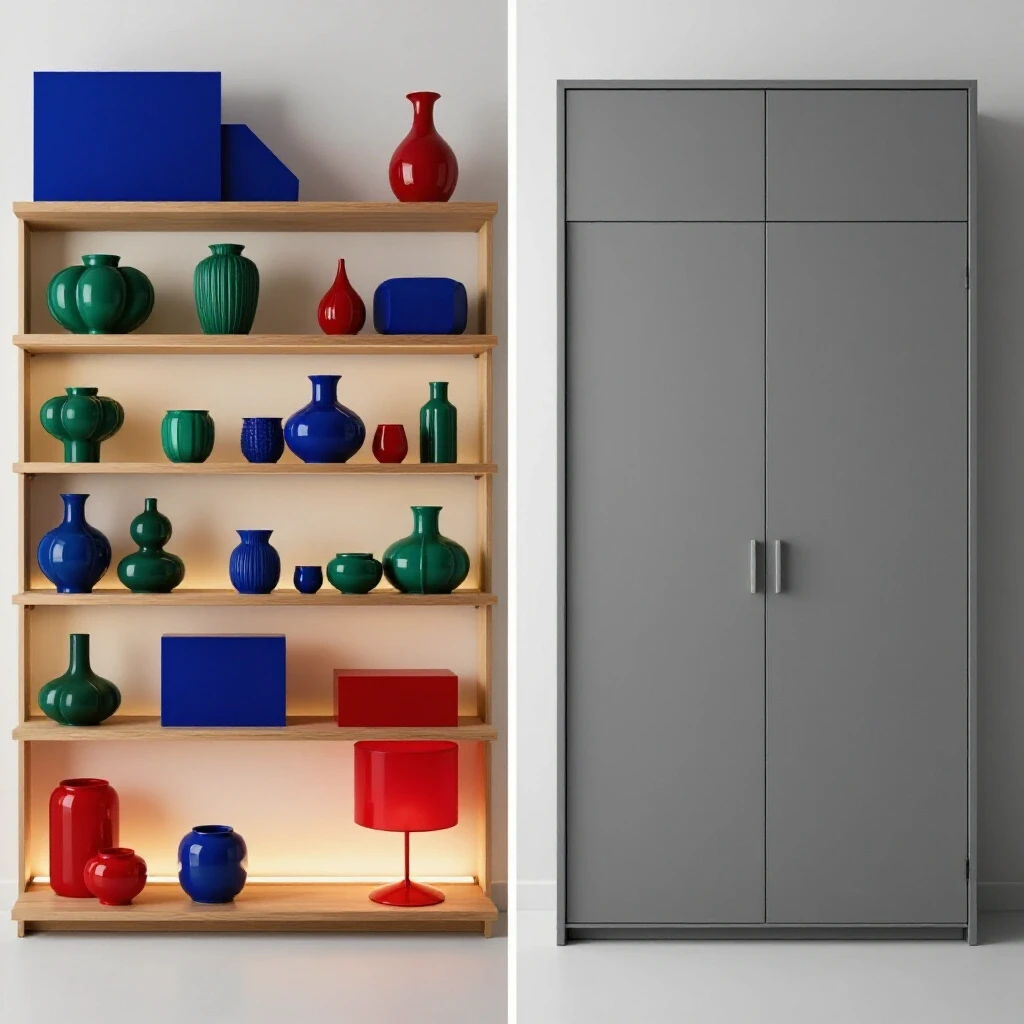
Display Shelves vs Closed Storage: Which Is Best for Home Use? (Guide)

I once asked a contractor if he preferred open ledges or deep cabinets for his own kitchen. He laughed and said, “I prefer cabinets, because I’m not tidy enough to live in a museum, but I’m too proud to let you know that.” This highlights the central tension every homeowner faces when designing a space: the desire for an aesthetic, accessible layout versus the practical need to manage the inevitable accumulation of daily life.
As a supply chain analyst with 13 years of experience, I look at home materials through the lens of performance data and lifecycle costs. When I renovated my second property, I opted for thick, reclaimed wood planks in the kitchen. I loved the look, but I quickly realized I hadn’t accounted for the “viscosity of dust.” In a kitchen, dust isn’t just dry particles; it mixes with airborne cooking oils to create a tacky film. Because those surfaces were exposed, my maintenance schedule tripled compared to the enclosed units in my previous home. This personal experience, backed by technical material standards, informs how I evaluate the trade-offs between visible and hidden storage systems.
Evaluating Technical Standards for Exposed and Enclosed Surfaces
Technical standards provide a baseline for how materials will behave under stress, moisture, and repeated use. Organizations like ASTM International and the National Association of Home Builders (NAHB) offer data on surface hardness, moisture absorption, and structural load-bearing capacity, which are essential for deciding between open and closed organizational systems.
When you choose a surface that will be constantly visible, the material’s “wear layer” and “porosity” become your primary concerns. Porosity refers to the percentage of void space in a material; a high-porosity material, like unsealed limestone or certain softwoods, will absorb liquids and oils much faster than a non-porous material like tempered glass or high-pressure laminate (HPL).
Building on this, the ASTM D3363 standard, which measures film hardness via the pencil test, is a great metric for shelving. If you are sliding heavy ceramic plates across an open shelf, you need a surface with a high hardness rating to prevent “scuffing,” which is the physical transfer of material from one object to another. In contrast, enclosed storage allows you to use materials that might be more susceptible to surface wear but offer better structural stability, such as furniture-grade plywood.
Visible Arrangements vs. Concealed Units: A Performance Comparison
This comparison evaluates the functional differences between exposed shelving and cabinetry. It focuses on environmental exposure, such as UV degradation and dust accumulation, versus the structural integrity and mechanical wear of hinges and drawer slides in concealed systems.
Visible storage systems rely heavily on the tensile strength of their mounting hardware. Tensile strength is the maximum load a material can support without fracturing when being stretched. For floating shelves, the bracket’s ability to resist “deflection” (sagging) is the most common failure point. Interestingly, the NAHB notes that while the shelves themselves may last 50 years, the aesthetic “finish” of exposed materials often degrades faster due to UV exposure from nearby windows.
Concealed units, or traditional cabinets, introduce mechanical complexity. Here, we look at the “cycle life” of hinges and drawer slides. A high-quality soft-close hinge is often rated for 50,000 to 100,000 cycles. If you open a cabinet ten times a day, a 50,000-cycle hinge should technically last over 13 years. As a result, the primary “maintenance” for closed storage isn’t cleaning the interior—it’s adjusting the hardware to ensure doors remain flush.
Table 1: Side-by-Side Material Performance Specifications
| Metric | Exposed Natural Wood | Tempered Glass | Powder-Coated Steel | Enclosed MDF (Painted) |
|---|---|---|---|---|
| Janka Hardness | 1,010 (Walnut) | N/A (Brittle) | High | Mid-Low |
| Porosity Rate | High (if unsealed) | 0% | 0% | Low (sealed) |
| UV Resistance | Low (Fades) | High | High | Moderate |
| Cleaning Frequency | Weekly | Bi-Weekly | Monthly | Quarterly (Interior) |
| Structural Load | 40-60 lbs/ft | 20-30 lbs/ft | 80-100 lbs/ft | 50-70 lbs/ft |
The Science of Surface Maintenance and Environmental Factors
Material science investigates the physical properties of substances used in home construction. Key metrics include the Mohs scale for mineral hardness, Janka ratings for wood density, and absorption rates that determine how easily a surface stains when exposed to liquids.
When a surface is exposed, it interacts with the room’s micro-climate. For example, if you use solid wood for open ledges, you must consider the “hygroscopic” nature of the material. Wood absorbs and releases moisture to stay in equilibrium with the surrounding air. In a humid kitchen or bathroom, this can lead to warping or “cupping.” I once installed white oak (Janka rating 1360) shelves near a stove. Within two years, the heat and steam caused a 3mm deflection in the wood, making my glassware look tilted.
Closed storage mitigates these environmental impacts. The “box” of a cabinet acts as a buffer, slowing down the rate of temperature and humidity change for the items inside. This is why valuable or delicate items are almost always better suited for enclosed environments. From a supply chain perspective, the “cost per touch” is also lower for closed storage; you spend less on specialized cleaners and more on the initial quality of the hardware.
Why Upfront Material Costs Don’t Always Equal Long-Term Value
Determining value requires looking past the initial price tag to the lifecycle cost, which includes installation, maintenance, and eventual replacement. A high-end material like quartz may have a high upfront cost but requires nearly zero maintenance, whereas a cheaper softwood shelf may require annual refinishing.
In my years of analyzing material procurement, I’ve seen homeowners spend $2,000 on custom-milled open shelving only to find that the labor cost of keeping them “display-ready” is unsustainable. If you choose an open system, you are essentially paying for the material twice: once at the register and every week in labor.
Conversely, enclosed storage often has a higher upfront cost due to the complexity of doors, frames, and hardware. However, the “utility value” is often higher because it accommodates “clutter” without aesthetic penalty. When evaluating these options, use a 15-year horizon. A durable, enclosed system made of 18mm plywood with a high-pressure laminate finish often outperforms a series of open metal racks in both durability and “visual calm.”
Table 2: 15-Year Maintenance and Lifecycle Outlay
| Component | Initial Cost Factor | Annual Maint. Hours | 15-Year Durability | Replacement Risk |
|---|---|---|---|---|
| Open Hardwood | Medium | 15-20 hours | High | Low |
| Open Glass | Medium | 25-30 hours | Moderate | High (Chipping) |
| Closed Laminate | High | 5-8 hours | Very High | Low |
| Closed Painted Wood | Very High | 10-12 hours | High | Moderate (Scratches) |
Installation Demands and Structural Requirements
The physical installation of storage systems requires an understanding of “static load” versus “dynamic load.” Static load is the weight of the objects sitting still, while dynamic load includes the force applied when you quickly set down a heavy stack of plates or lean on the surface.
- Stud Alignment: For open shelving, you must secure brackets directly into wall studs. If the studs don’t align with your desired aesthetic, you may need to open the wall to install “blocking” (horizontal supports).
- Fastener Grade: Use #8 or #10 screws with a minimum 2.5-inch penetration into the wood framing.
- Leveling: A 1mm error at the wall can translate to a 5mm tilt at the edge of a 12-inch shelf.
- Hinge Calibration: For closed storage, ensure you have “six-way adjustable” hinges. These allow you to move the door up/down, left/right, and in/out to compensate for a house settling over time.
In my third property, I ignored the “blocking” requirement for a set of heavy steel shelves. Within six months, the drywall began to “mushroom” around the anchors due to the constant tension. I had to rip out the drywall and start over. This was a costly lesson in why technical specs for “pull-out strength” matter more than how the shelf looks in a catalog.
Practical Strategies for Matching Materials to Your Lifestyle
Choosing between visible and hidden organization should be a data-driven decision based on your household’s “activity profile.” If you have a high-traffic home with children or pets, your “abrasion resistance” needs will be higher than a single-occupant household.
- The “Daily Use” Rule: Place items used every single day (like coffee mugs) on visible surfaces. This reduces the “cycle count” on your cabinet hinges and provides quick access.
- The “Dust Threshold”: If you live in an area with high pollen or near a busy road, enclosed storage is almost mandatory to protect your health and reduce cleaning labor.
- Material Mixing: Use high-durability materials like quartz or stainless steel for open areas and more cost-effective materials like melamine-faced chipboard (MFC) for the interiors of closed units.
- Weight Distribution: Always place the heaviest items (stand mixers, cast iron) in the lowest enclosed units to maintain a low center of gravity for your home’s cabinetry.
By applying these supply chain principles—evaluating the “wear layer,” understanding “cycle life,” and calculating “maintenance labor”—you can move past the overwhelming options and make a choice based on evidence.
A Technical Buying Worksheet for Storage Materials
When you are at the showroom or browsing technical spec sheets, use this checklist to score your potential materials.
- Surface Hardness: Is the material rated on the Mohs scale or Janka scale? (Aim for Janka > 1000 for wood).
- Chemical Resistance: Can the surface withstand a 10% bleach solution or vinegar without etching? (Crucial for open kitchen shelves).
- Hardware Grade: Are the hinges/slides ANSI/BHMA Grade 1? (Grade 1 is the highest for durability).
- Sourcing Origin: Is the plywood “carburetor-compliant” (CARB Phase 2) for low formaldehyde emissions?
- Warranty Limits: Does the warranty cover “finish degradation” or only “structural failure”?
FAQ: Navigating the Trade-offs of Home Organization
What is the most durable material for open shelving in a high-humidity area? Powder-coated aluminum or 316-grade stainless steel are the top performers. They have a 0% absorption rate and are immune to the warping issues that plague natural wood. If you prefer a stone look, engineered quartz is superior to granite because it is non-porous and does not require periodic sealing.
How do I know if my wall can support the weight of heavy visible storage? A standard 2×4 stud can hold significant vertical weight, but the “shear strength” of the screw is the bottleneck. Always use a stud finder and ensure your fasteners penetrate at least 1.5 inches into the center of the stud. For loads exceeding 50 lbs per bracket, professional structural blocking is recommended.
Why do my cabinet doors always seem to sag after a year? This is usually due to “hinge fatigue” or loose screws in the cabinet carcass. Most modern cabinets use “Euro-style” hinges. If the screw holes have stripped, you can use a “hardwood plug” and wood glue to reset the hole, providing a fresh bite for the screw.
Is there a technical difference between MDF and Plywood for hidden storage? Yes. Plywood (specifically Grade A-B) has higher “screw-holding strength” and better resistance to moisture-induced swelling. MDF (Medium Density Fiberboard) is flatter and better for painted finishes but can “blow out” or crumble if it gets wet or if screws are over-tightened.
Does glass shelving require special safety ratings? Absolutely. You should only use “tempered” glass, which is processed to be four to five times stronger than standard glass. If it breaks, it shatters into small, blunt cubes rather than sharp shards. Look for the permanent etch mark in the corner of the glass indicating it meets ASTM C1048 standards.
How often should I treat natural wood shelves to prevent staining? For open kitchen ledges, a food-safe mineral oil or “butcher block conditioner” should be applied every 3 to 6 months. This fills the wood’s pores and creates a hydrophobic barrier against spills.
What are “mils,” and why do they matter for shelf finishes? A “mil” is one-thousandth of an inch. It measures the thickness of a coating (like paint or a wear layer). A high-quality laminate or powder coat should be at least 2-4 mils thick to resist scratching through to the base material.
Can I mix visible and hidden storage in the same room? From a supply chain efficiency standpoint, this is often the best approach. Use “closed” units for 80% of your items to minimize maintenance, and “open” ledges for the 20% of items you use most frequently or wish to highlight.
What is the “deflection limit” for a shelf? The industry standard is L/240, which means the shelf should not sag more than the length of the shelf divided by 240. For a 4-foot shelf, that’s about 0.2 inches. If your shelf sags more than this, it is structurally overloaded.
Are “floating” shelves less durable than those with visible brackets? Technically, yes. Floating shelves rely on an internal “torsion box” or a hidden metal rod. These have a shorter “lever arm,” which increases the stress on the wall connection. Brackets with a diagonal “strut” provide much higher load-bearing capacity.
(This article was written by one of our staff writers, Andrew Morrison. Visit our Meet the Team page to learn more about the author and their expertise.)