How to Install an Egress Window: Step-by-Step Guide (Homeowner Tips)

Discussing safety is the most critical starting point for any basement conversion. In my 18 years as a construction project coordinator, I have seen many homeowners view a basement bedroom as a simple matter of drywall and carpet. However, without a code-compliant emergency exit, that room is a safety hazard. A proper exit system provides a clear path for occupants to escape during a fire and allows emergency responders to enter with their equipment. Beyond the life-saving benefits, adding a large window transforms a dark, damp basement into a bright, livable area that feels like part of the upper floors.
Defining the Scope of Work for Basement Exit Systems
Establishing a clear scope involves identifying the technical requirements for creating a safe, legal opening in a below-grade foundation wall. This process includes verifying the window’s net clear opening area, determining the necessary excavation depth, and assessing the impact on the home’s structural load-bearing capacity and exterior drainage.
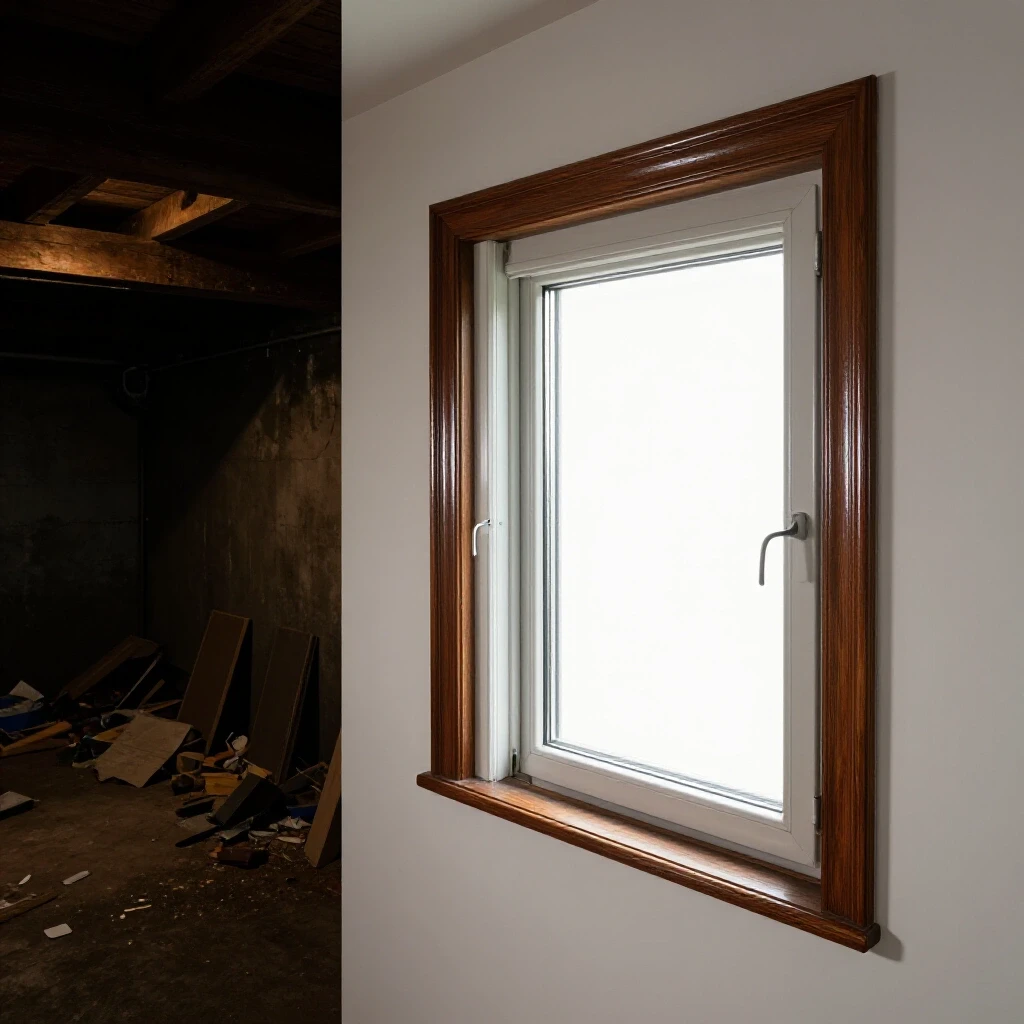
When you begin your residential renovation planning, you must understand that this is not a standard window replacement. You are essentially performing surgery on your home’s foundation. The scope of work must include the excavation of a large area outside the wall, the cutting of reinforced concrete or masonry, and the installation of a structural header. A header is a horizontal beam placed above an opening to support the weight of the house above it.
In one of my personal home renovations, I assumed the existing window opening could just be “widened a bit.” I quickly realized that widening an opening requires a larger header to distribute the weight of the floor joists. If you skip this step, you risk sagging floors or cracked drywall in the rooms above. Your scope should also detail how the new window well will drain. Without a connection to the home’s weeping tile (the perforated pipe that carries water away from the foundation), your new window well will eventually become a backyard aquarium.
Budget Forecasting for Residential Foundation Projects
Budgeting for foundation modifications requires a blend of standard material costs and significant labor allocations for heavy equipment and specialized cutting. Accurate forecasting accounts for excavation, concrete disposal fees, structural reinforcements, and the high-performance window unit itself, while maintaining a robust contingency fund for unforeseen subterranean obstacles.
Using data from RSMeans construction estimating resources, a standard basement exit installation typically ranges from $3,500 to $6,500. However, I have seen these costs fluctuate based on the foundation material. Cutting through a 10-inch poured concrete wall is more labor-intensive than removing concrete blocks. You should also account for the “invisible” costs, such as soil removal. A standard window well requires moving about two to three cubic yards of dirt, which is more than most homeowners can simply spread around their flower beds.
| Expense Category | RSMeans Estimated Cost | Real-World Bid Average | Notes |
|---|---|---|---|
| Excavation & Soil Hauling | $600 – $900 | $800 – $1,200 | Costs rise if access for machinery is tight. |
| Concrete Cutting/Removal | $800 – $1,100 | $1,000 – $1,500 | Poured concrete is more expensive than block. |
| Window & Well Kit | $900 – $1,400 | $1,100 – $1,800 | Includes ladder, cover, and high-spec glass. |
| Structural Header/Framing | $300 – $500 | $400 – $700 | Required if widening the original opening. |
| Waterproofing & Drainage | $400 – $700 | $600 – $900 | Tie-in to existing weeping tile is essential. |
Contractor Management Guide for Structural Modifications
Effective management of specialized trades involves vetting for specific experience in foundation work and ensuring all structural changes are documented and verified. This guide focuses on setting clear performance benchmarks, establishing a fair payment schedule based on milestones, and maintaining open communication to prevent common disputes over site conditions.
When you are deep in the home remodeling tips phase, the most important advice I can give is to vet your specialists for their “wet work” experience. You need someone who understands the thermal envelope, which is the physical separator between the conditioned (heated/cooled) and unconditioned environment of a building. If the window isn’t flashed and sealed correctly, you will face moisture intrusion that leads to mold.
I always recommend a milestone-based payment schedule to keep the project on track. For a project of this scale, a common breakdown looks like this: 1. 10% Deposit: To secure the start date and order materials. 2. 30% Post-Excavation: After the hole is dug and the foundation is ready for cutting. 3. 40% Post-Installation: Once the window is set, the header is in place, and the well is secured. 4. 20% Final Completion: After the site is graded, the interior trim is done, and the final inspection is passed.
Construction Sequencing for Basement Light and Safety Upgrades
The order of operations is vital to maintaining the structural integrity of the home and protecting the interior from the elements. This sequence begins with site preparation and utility marking, followed by excavation, structural cutting, window installation, and finally, the integration of drainage and backfilling.
In construction sequencing, timing is everything. You don’t want a massive hole in your yard and a giant gap in your foundation right before a weekend rainstorm. I’ve managed projects where a simple delay in the window delivery left a basement exposed for four days. Always verify that the window unit is on-site before the concrete saw touches the wall.
- Phase 1: Utility Locating. Before any shovel hits the dirt, you must have your gas, water, and electrical lines marked.
- Phase 2: Excavation. The hole must be dug roughly 12 inches deeper than the window sill to allow for a gravel drainage bed.
- Phase 3: Structural Cut. The wall is cut from both the inside and outside to ensure a clean, square opening.
- Phase 4: Framing the “Buck.” A pressure-treated wood frame, called a buck, is installed into the concrete opening to hold the window.
- Phase 5: Window Setting. The window is leveled, shimmed, and fastened into the buck.
- Phase 6: Drainage Tie-in. A vertical drain pipe is connected from the gravel bed to the home’s perimeter drain.
Structural Inspection Checklists and Quality Control
Quality control for foundation work centers on verifying that the new opening does not compromise the home’s stability and that the water management system is robust. This checklist provides homeowners with specific technical points to verify, such as header placement, proper flashing, and the correct slope of the exterior grade.
During a kitchen remodel budget discussion, people often overlook the structural inspection checklists for other parts of the house. For a basement window, your “rough-in” phase is the most critical. This is when the window is in place but the walls aren’t closed up yet. You need to verify the thermal envelope adjustments. Is there high-quality spray foam or specialized flashing tape around the window frame? If you see daylight or feel a draft, the job isn’t done.
Another key check is the “egress” math. To meet code, the window must have a net clear opening of at least 5.7 square feet. The sill height cannot be more than 44 inches off the floor. I once saw a project where the contractor installed a beautiful window, but because they didn’t account for the thickness of the new subfloor, the sill ended up 46 inches high. They had to build a permanent step under the window just to pass inspection.
Navigating Hidden Structural Surprises in Older Foundations
Opening a foundation wall often reveals issues that have been hidden for decades, such as deteriorating footings, outdated wiring, or moisture damage. Formulating a contingency plan involves allocating extra funds and time to address these discoveries without derailing the entire renovation timeline.
In my years of residential renovation planning, the most common “budget blower” is finding an unexpected utility line. I was working on a 1950s bungalow where we found an abandoned oil tank line right where the window needed to go. We had to pause for two days to ensure the line was dead and safe to remove. This is why a contingency buffer is non-negotiable.
| Property Age | Recommended Contingency Buffer | Common Hidden Issues |
|---|---|---|
| 0–15 Years | 10% – 15% | Minor grading issues, irrigation lines. |
| 16–40 Years | 15% – 20% | Tree roots, outdated waterproofing, clay pipes. |
| 41+ Years | 20% – 30% | Crumbling footings, lead pipes, unmapped wiring. |
When you find mold or rot behind the old basement paneling, don’t panic. It is better to find it now while the wall is open. Use this as an opportunity to fix the root cause—usually poor exterior drainage—rather than just covering it up again.
Essential Tools and Resources for Project Oversight
Managing a foundation project requires more than just a clipboard. Modern tools can help you track progress and ensure the technical specs are met.
- Digital Leveling Apps: Use your smartphone to verify the window sill and the well drainage slope are correct.
- Construction Estimating Software: Tools like Clear Estimates or RSMeans data help you verify if a contractor’s bid is in the right ballpark.
- Moisture Meters: Use these to check the concrete around the new opening for several weeks after installation to ensure no leaks occur.
- Project Management Apps: Tools like Trello or CoConstruct allow you to upload photos of the “open” wall before it’s covered, which is invaluable for future insurance or resale needs.
Finalizing the Project and Post-Occupancy Evaluation
The final phase involves more than just a signature; it requires a thorough walk-through to ensure the site is safe and the installation is weather-tight. A post-occupancy evaluation helps you confirm that the new window is performing as expected regarding light, ventilation, and insulation.
The “punch list” is your final list of small fixes. For a window project, this includes checking that the window operates smoothly, the emergency ladder is securely bolted to the well, and the exterior soil has been compacted. If the soil isn’t compacted, it will settle during the first rain, creating a low spot that funnels water toward your new window.
Interestingly, most homeowners find that the biggest benefit isn’t just safety—it’s the change in air quality. A large, operable window allows for cross-ventilation in a space that was previously stagnant. This reduces the reliance on dehumidifiers and makes the basement feel like a healthy, integrated part of the home.
Frequently Asked Questions
How much light does a basement exit window actually add? It is a transformative amount. Because the window well is typically wider than the window itself, it acts as a light well, reflecting sunlight into the room. In my experience, a single egress window can provide enough natural light to make a 200-square-foot room feel as bright as a ground-floor bedroom.
Can I install one of these if I have a crawlspace? Generally, no. These systems are designed for full-height basement walls. If you have a crawlspace, you would likely need to “dig out” the crawlspace to create a full basement first, which is a much larger structural undertaking.
What happens if the contractor hits a pipe while digging? This is why utility marking is the first step in construction sequencing. If a pipe is hit, work stops immediately. Repairs to private lines (like an irrigation system) are usually the homeowner’s cost unless the contractor was negligent. Repairs to main utility lines are handled by the utility company but can cause significant delays.
Does the window well need a cover? While not always required by code, a cover is highly recommended for safety and cleanliness. It prevents children or pets from falling into the well and keeps leaves and snow from clogging the drainage system. Ensure the cover is “quick-release” so it doesn’t hinder an emergency exit.
Will this project increase my property taxes? In many jurisdictions, adding a legal bedroom (which requires an egress window) increases the “room count” of your home. This can lead to a higher tax assessment, but it also significantly increases the resale value of the property.
How do I know if my foundation is strong enough for a new opening? A structural inspection checklist usually starts with a visual check for large cracks or bowing in the foundation. If your foundation is already compromised, a structural engineer must design a reinforcement plan before any cutting begins.
What is the “critical path” for this project? The critical path is: Utility marking -> Excavation -> Concrete cutting -> Window installation. If any of these steps are delayed, the entire project stops. Tasks like interior trim or exterior landscaping are not on the critical path because they can be done later without stopping the core work.
How do I handle a dispute if the window leaks after the first rain? Your contract should include a one-year warranty on labor and waterproofing. If a leak occurs, document it with video and contact the contractor immediately. A reputable pro will return to check the drainage tie-in and the exterior flashing, as these are the most common failure points.
Is it possible to DIY this project? While a very skilled homeowner can do the framing and window setting, I strongly advise against DIY concrete cutting and excavation. The equipment is dangerous, and the risk of structural failure or hitting a utility line is too high for most non-professionals.
How long does the actual installation take? From the first shovel in the ground to a weather-tight window, the process usually takes 2 to 4 days. This assumes no major structural surprises or weather delays. Interior finishing and exterior landscaping may add another few days to the total timeline.
(This article was written by one of our staff writers, David Langford. Visit our Meet the Team page to learn more about the author and their expertise.)