Electrical Panel Upgrade Safety Guide (Home Renovation Tips)

Focusing on aesthetics is often the first step in any home renovation journey. We spend hours scrolling through galleries of waterfall islands, rainfall showerheads, and custom cabinetry. However, the most beautiful kitchen or bathroom is only as good as the infrastructure supporting it. During my 18 years as a project coordinator, I have seen many homeowners invest thousands in high-end appliances only to realize their home’s power center cannot handle the load. Modernizing your home’s electrical foundation is not just a technical necessity; it is a critical step in ensuring your design vision functions safely and reliably for years to come.
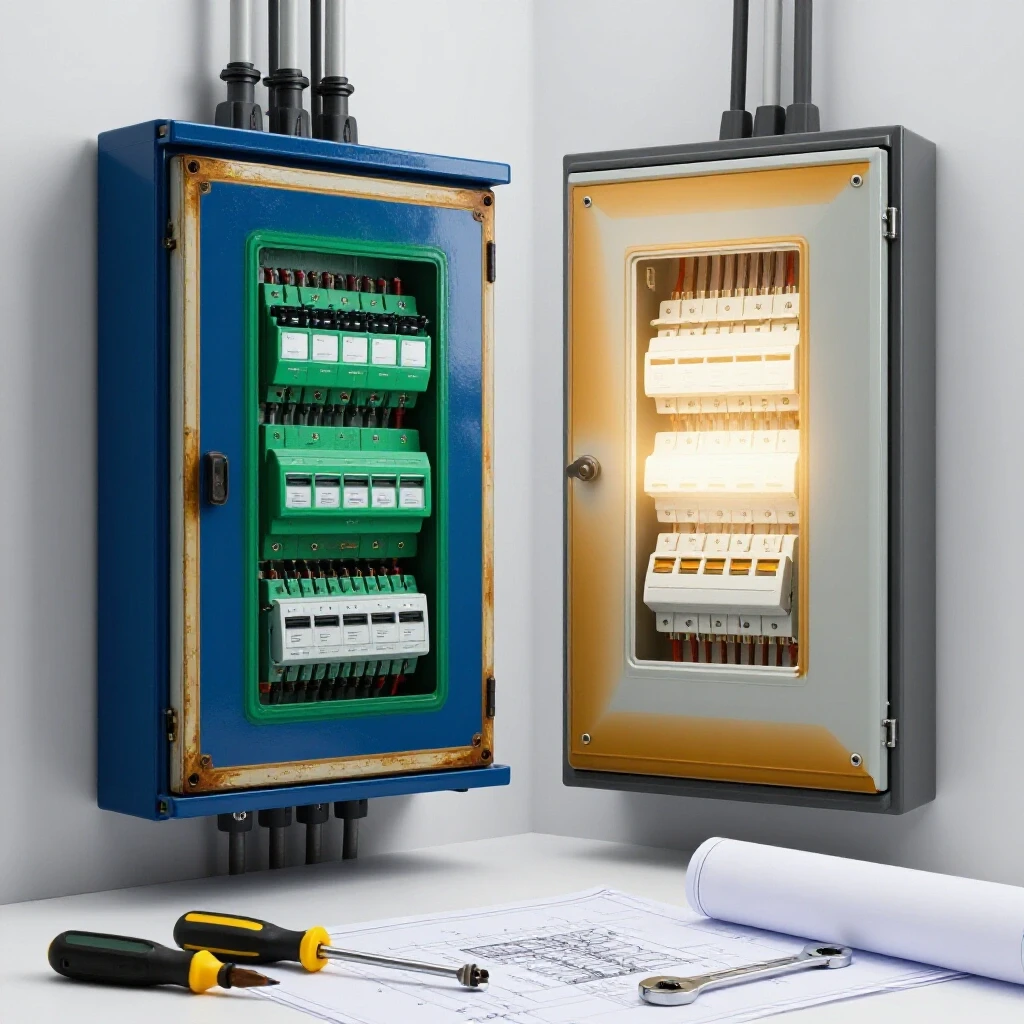
Assessing Your Home’s Power Foundation
Modernizing the central hub of your home’s electrical system involves evaluating the current capacity of your service equipment against the demands of modern living. This process ensures that your home can safely distribute power to new appliances, smart home technology, and high-efficiency lighting without overloading existing circuits or creating fire hazards.
When I managed my first full-home renovation on a 1940s bungalow, the “heart” of the house was a small, dusty box with only twelve circuits. It was barely enough to run a toaster and a hair dryer at the same time. Today, a standard kitchen remodel alone might require six or seven dedicated circuits for things like induction cooktops, built-in microwaves, and wine fridges. Before you pick out a single tile, you must understand what your current system can handle.
A residential renovation planning phase should always begin with a load calculation. This is a formal assessment where a professional determines the total wattage your home requires. If you are adding a suite of smart appliances or a dedicated home office, your old system may be at its limit. In my experience, skipping this step leads to “nuisance tripping,” where breakers pop frequently, or worse, heat buildup behind your walls.
Integrating Power Infrastructure into Your Design Plan
Aligning your home’s electrical capacity with your interior design goals requires a proactive approach to space planning and utility management. This ensures that decorative elements, such as recessed lighting or automated window treatments, have the stable power source they need to operate correctly without compromising the aesthetic harmony of the room.
Interestingly, many homeowners view the electrical box as a “basement problem.” In reality, it is a design problem. For example, if you want a clean, minimalist kitchen with no visible outlets on the backsplash, you might opt for pop-up outlets or under-cabinet strips. These require specific wiring configurations that must be supported by a robust central distribution system.
During a recent project coordination for a whole-house remodel, the client wanted extensive LED accent lighting in every room. While LEDs use less power, the sheer number of drivers and dimmers required a more sophisticated circuit arrangement than the original 1980s setup could provide. We had to expand the central power hub to accommodate these “low-voltage” but high-complexity design features.
- Design Tip: Map out every single electronic device you plan to use in a room before the walls are opened.
- Aesthetic Harmony: Ensure your service panel is located in an accessible but unobtrusive area, or plan for a sleek enclosure that meets safety standards.
Estimating the Financial Impact of Modernizing Electrical Service
Budgeting for an update to your home’s power distribution center involves more than just the cost of the hardware. It includes labor for the installation, the cost of bringing existing wiring up to current standards, and the potential structural repairs needed after the walls are accessed to run new lines.
Based on data from RSMeans construction estimating resources, the cost of updating a central service panel can vary wildly based on your geographic location and the age of your home. I always advise my clients to look beyond the initial quote. A low bid often misses the “hidden” costs, such as the need to repair drywall or the cost of new grounding rods.
In my second personal renovation, I budgeted $2,500 for the electrical hub update. However, once we opened the walls, we found “daisy-chained” wiring that was a major safety risk. Correcting this added $1,200 to the bill. This is why a healthy contingency fund is non-negotiable.
RSMeans-Derived Cost Estimations vs. Real-World Bids
| Component | RSMeans National Average | Real-World High-End Bid | Why the Gap? |
|---|---|---|---|
| Main Service Panel (200 Amp) | $1,800 – $2,400 | $3,500 – $5,000 | Includes labor for complex wire re-routing. |
| Dedicated Appliance Circuits | $150 – $300 each | $400 – $600 each | Often involves difficult runs through finished ceilings. |
| Grounding System Update | $200 – $400 | $500 – $800 | Soil conditions or local requirements can increase labor. |
| Drywall Patching/Painting | $300 – $600 | $800 – $1,500 | Matching custom textures or high-end paint finishes. |
Strategic Sequencing: When to Update the Power Center
Construction sequencing is the art of scheduling tasks so that one trade does not interfere with another. Updating your electrical infrastructure must happen early in the “rough-in” phase, after structural changes are made but before insulation and drywall are installed, to avoid costly rework and delays.
As a project coordinator, I use a “critical path” schedule. This identifies the tasks that must be finished before anything else can move forward. Updating the power center is almost always on the critical path. If the panel isn’t ready, the electrician can’t wire the kitchen. If the kitchen isn’t wired, the inspector can’t sign off. If there is no sign-off, the drywall crew stays home.
Building on this, I once saw a project stall for three weeks because the homeowner ordered custom cabinets before confirming the electrical layout. When the electrician realized the panel needed to be moved to meet modern spacing requirements, the cabinet layout no longer worked. Always finalize your power distribution plan before committing to fixed furniture or cabinetry.
Renovation Phase Sequencing
- Demolition: Remove old finishes to expose existing wiring.
- Structural Framing: Complete all wall movements.
- Electrical Service Update: Install the new central hub and main lines.
- Rough-In Plumbing/HVAC: Install pipes and ducts around the new wiring.
- Rough-In Electrical: Run individual circuits to outlets and lights.
- Inspection: Verify all systems meet safety benchmarks.
- Insulation and Drywall: Close the walls once the “guts” are approved.
Navigating Contractor Coordination and Scope of Work
Effective contractor management requires a clear, written scope of work that defines exactly what the electrical professional is responsible for. This document should cover everything from the capacity of the new panel to the specific types of breakers used, ensuring there are no disputes over “hidden” tasks later.
When vetting an electrician for your home remodeling tips, ask for a “load summary” as part of their bid. A pro who takes the time to count your appliances and square footage is far more reliable than one who just gives a flat price over the phone. I’ve learned that the most expensive contractor is often the one you have to hire to fix the mistakes of the cheapest one.
In my 18 years of oversight, the most common contractor dispute arises from “scope creep.” This happens when you ask for “just one more outlet” or “a slightly different light fixture” after the contract is signed. To prevent this, use a formal change order process. Even a simple email confirming the price change for an added task can save you thousands in legal fees or project delays.
- Checklist for Vetting:
- Ask for proof of active license and specific residential experience.
- Request a detailed breakdown of materials vs. labor.
- Confirm they will handle the scheduling of all necessary inspections.
- Ask how they handle “surprises” found behind the walls.
Managing Hidden Surprises and Change Orders
Hidden structural issues, such as outdated wiring or moisture damage near the electrical service entrance, are the primary reasons budgets blow up. Identifying these risks early through a structural inspection checklist allows you to allocate funds before the project starts, rather than scrambling mid-renovation.
I remember a project where we planned a simple kitchen refresh. When we pulled back the old panel cover, we found that a previous owner had used oversized breakers for undersized wires—a massive fire hazard. We had to pivot the entire budget to address this safety issue. It wasn’t what the client wanted to hear, but it was the only responsible way to move forward.
As a result of these experiences, I recommend a tiered contingency buffer. Newer homes might only need 10%, but if your house was built before 1970, you should be looking at 20% to 25%. This isn’t “extra” money; it is a planned part of a realistic budget.
Contingency Buffer Allocations by Property Age
- Built 2000–Present: 10–15% (Modern standards are likely in place).
- Built 1970–1999: 15–20% (Likely needs more circuits for modern tech).
- Built Pre-1970: 20–25% (High probability of needing a full service modernization).
Final Verification and Post-Occupancy Performance
The final stage of any electrical update is the “punch list” and post-occupancy evaluation. This involves testing every outlet, dimmer, and appliance under full load to ensure the new system performs as expected in a real-world environment.
Once the dust settles, don’t just assume everything works because the lights turn on. I always perform a “stress test” with my clients. We turn on the oven, the dishwasher, and a few high-draw appliances simultaneously. If a breaker trips, we know there is a balancing issue that needs to be fixed before the contractor receives their final payment.
This post-occupancy phase is also the time to organize your documentation. Label every circuit in the new panel clearly. I’ve seen homeowners spend hours flipping switches because the “electrician’s shorthand” on the panel door was unreadable. Clear labeling is the final touch of a professional job.
- Digital Blueprints: Keep a digital copy of your wiring map.
- Lien Waivers: Ensure you receive a signed lien waiver from the subcontractor before making the final payment.
- Warranty Documents: File all paperwork for the new service equipment and any smart home components.
Frequently Asked Questions
How do I know if my current electrical hub needs an update before a kitchen remodel? If your home still uses fuses instead of breakers, or if your panel is rated for 100 amps or less, you likely need an update. Modern kitchens with high-end appliances usually require a 200-amp service to run everything safely. Look for signs like flickering lights or warm spots on the panel cover.
What is a “load calculation,” and why is it important for my budget? A load calculation is a mathematical determination of how much electricity your home consumes. It prevents you from overspending on a system that is too large or, conversely, installing one that is too small. This calculation is the foundation of an accurate estimate and prevents mid-project budget surprises.
Can I just add more breakers to my existing box to save money? Not always. A box has a physical limit on how many breakers it can hold and a total capacity limit. Adding “tandem” breakers without checking the total load can lead to overheating. It is often safer and more cost-effective in the long run to modernize the entire distribution center.
How does updating my electrical service improve the “aesthetics” of my home? While the panel itself is hidden, a modern system allows for advanced lighting designs, such as layered LED strips and smart dimming systems. Without a robust power source, these high-end design features may flicker, buzz, or fail to operate, ruining the visual impact of your renovation.
What is the difference between “rough-in” and “finish” phases in electrical work? The rough-in phase happens when the walls are open; this is when the main wires and boxes are installed. The finish phase happens after painting, where outlets, switches, and light fixtures are connected. The central power hub is typically updated during the rough-in phase.
How much “float time” should I build into my schedule for an electrical update? I recommend at least three to five days of “float” or buffer time. Delays often happen waiting for the utility company to disconnect power or for a local inspector to visit the site. Building this into your schedule prevents other trades from being delayed.
Why should I care about “dedicated circuits” for my appliances? Modern building standards require certain appliances, like refrigerators and microwaves, to have their own “lane” of power. This prevents a toaster from tripping the breaker and turning off your fridge. It ensures your high-end kitchen functions smoothly without interruptions.
What are the signs of a “hidden structural surprise” related to wiring? Look for “char” marks inside old outlets, brittle wire insulation that crumbles when touched, or evidence of rodent damage. If your home has undergone several partial remodels over the decades, you may also find “junction boxes” hidden behind drywall, which is a major safety violation.
How do I handle a dispute with my electrician over a change order? Refer back to your original scope of work. If the task wasn’t listed, it is likely a valid change order. However, the price should be fair. Compare the quote to RSMeans data or get a second opinion if the cost seems unusually high for the work described.
What should be on my final “punch list” for an electrical modernization? Check that all circuits are clearly labeled in plain English. Ensure all outlets are level and flush against the wall. Test every GFCI (ground-fault) outlet to ensure it trips and resets correctly. Finally, verify that no debris was left inside the panel or around the work area.
Is a smart home system compatible with an older electrical panel? Usually, no. Smart switches and hubs often require a “neutral wire” and a very stable power supply. Older systems may lack the necessary wiring or have “dirty” power (fluctuations) that can damage sensitive electronics. Modernizing your central hub is the best way to protect your smart home investment.
How does a “lien waiver” protect me during a renovation? A lien waiver is a document signed by the contractor or subcontractor stating they have been paid in full for their work. This prevents them from placing a legal claim (lien) on your house if the general contractor fails to pay them, even if you already paid the general contractor. Always collect these before final payment.
(This article was written by one of our staff writers, David Langford. Visit our Meet the Team page to learn more about the author and their expertise.)