Home Plumbing Renovation Costs and Lessons Learned (Budget Guide)

They say a house is just a box that holds your money until the pipes decide they want it more. During my first personal kitchen renovation, I learned this the hard way when I decided to move the kitchen sink ten feet across the room to gain a better view of the backyard. That single decision, which seemed like a simple design choice, added thousands to my budget and three days to the schedule. It taught me that while you see the shiny chrome faucet, the real story is written in the hidden lines behind the drywall.
Estimating the Financial Impact of Pipework Upgrades
Residential renovation planning requires a realistic look at how water systems influence your total project costs. This phase involves calculating the price of moving existing lines, installing new fixtures, and the labor required to connect everything to the main stack. Understanding these costs early prevents the sticker shock that often hits midway through a remodel.
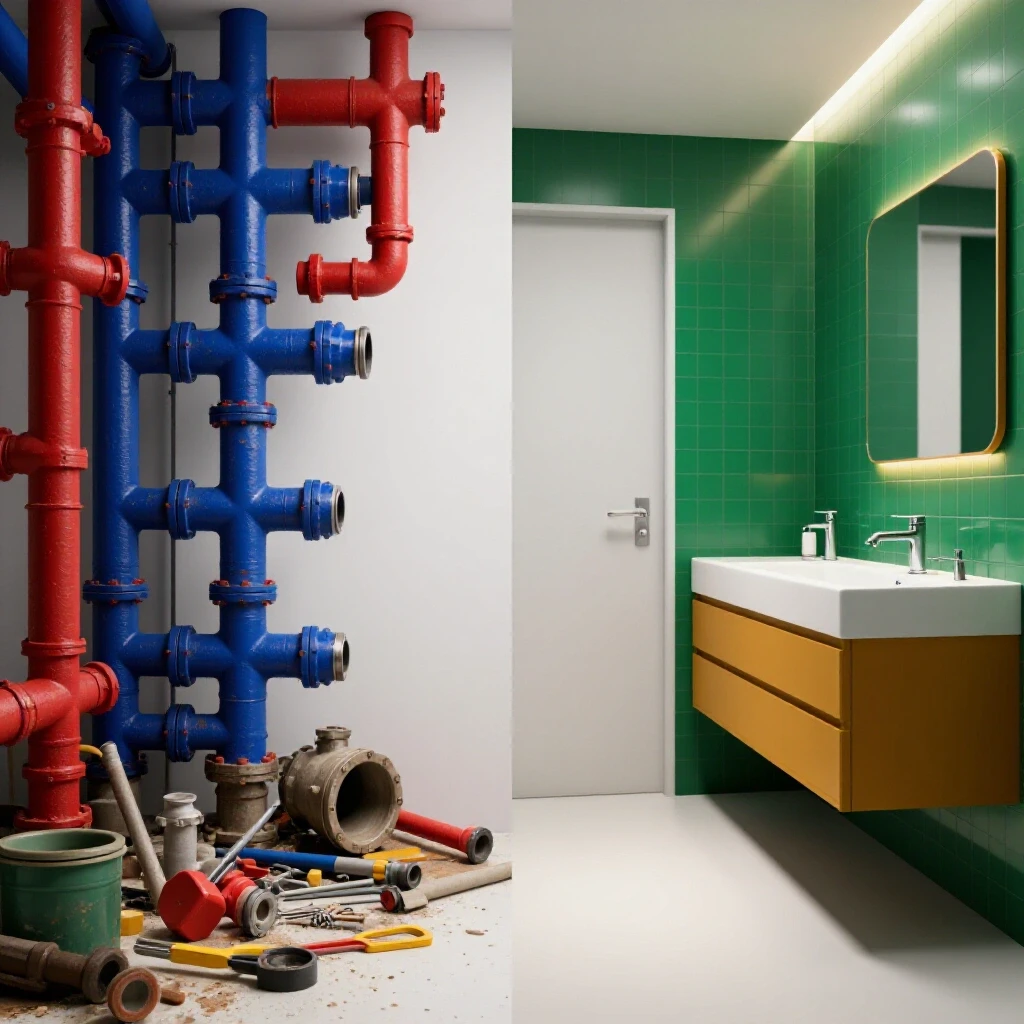
In my 18 years as a project coordinator, I have seen many homeowners treat pipework as an afterthought. They spend months picking out Italian marble but only minutes thinking about the drain lines. According to RSMeans data, the national average for a standard bathroom rough-in ranges from $800 to $1,500 per fixture. This includes the labor and materials to get the water to the spot and the waste away from it.
When you start your kitchen remodel budget, remember that “stacking” is your friend. If you can keep your new bathroom directly above or below an existing one, you save on the vertical pipe runs. Moving a toilet just three feet can require cutting through floor joists, which triggers additional structural costs. I always advise a 15% to 20% contingency fund specifically for what we find once the walls are opened.
Why Hidden Structural Surprises Influence Your Spending
Opening up a wall is like opening a time capsule, but instead of old newspapers, you often find outdated layouts or previous DIY mistakes. These surprises can quickly change your financial forecast by requiring unplanned repairs to the home’s framework. Identifying these issues during the demolition phase is critical for maintaining your project timeline.
During a whole-house remodel in a 1940s bungalow, we discovered that a previous owner had notched out nearly half of a load-bearing stud to fit a drain pipe. This wasn’t just a piping issue; it was a structural one. We had to pause the work, bring in a carpenter to sister the joists, and reroute the line. This added $1,200 to the bill that wasn’t in the initial bid.
- Contingency Buffer Allocations by Property Age
- Homes built after 2000: 10% buffer
- Homes built 1970–1999: 15% buffer
- Homes built 1940–1969: 20% buffer
- Homes built before 1940: 25% or more
| Renovation Phase | Estimated Labor % | Estimated Material % | Impact on Schedule |
|---|---|---|---|
| Rough-In | 70% | 30% | High |
| Finish Phase | 40% | 60% | Medium |
| Testing/Punch List | 90% | 10% | Low |
Managing the Two Major Phases: Rough-In and Finish Work
The construction sequencing of a water-related project is divided into two distinct stages that happen weeks or months apart. The rough-in phase occurs when the walls are open and the “bones” are installed, while the finish phase happens after painting and tiling. Distinguishing between these helps you manage your contractor’s payment schedule and expectations.
The rough-in is the most labor-intensive part. This is when the plumber runs the supply lines and the waste-vent pipes. If you are doing a bathroom remodel, this happens right after the framing is finished but before the insulation and drywall go up. I once managed a project where the homeowner bought a high-end shower system that required a specific valve. Because the valve wasn’t on-site during the rough-in, the entire project stalled for two weeks.
The finish phase is the “glamour” stage. This is when the sinks, toilets, and faucets are actually installed. It usually goes quickly, but it is also where most aesthetic errors occur. If the rough-in wasn’t precise, your vanity might not sit flush against the wall, or your faucet might be off-center. Precision in the first phase ensures beauty in the second.
The Importance of Rough-In Precision
A rough-in is the installation of all pipes that will eventually be hidden behind walls or under floors. This stage must be perfect because fixing an error later requires tearing out finished tile or cabinetry. It includes the water supply lines, drain pipes, and vent stacks that allow air into the system.
I recommend using structural inspection checklists before the drywall is hung. Check that every pipe is secured with the proper brackets to prevent “water hammer,” which is that loud banging sound you hear when you turn off a faucet. Also, verify that the “stub-outs” (the parts of the pipe sticking out of the wall) are at the correct height for your specific vanity. A vanity with drawers requires different pipe placement than one with open shelves.
Balancing Material Choices with Labor Expenses
Choosing between different piping materials and fixture grades can significantly shift your total investment. While some materials are cheaper to buy, they might take longer to install, which drives up the labor cost. Finding the “sweet spot” between material durability and ease of installation is key to a balanced budget.
In the past, copper was the standard for water lines. It is durable but expensive and requires a skilled hand to solder joints. Today, many residential renovation planning experts suggest PEX (cross-linked polyethylene). PEX is flexible, meaning it needs fewer fittings and can be installed much faster. In my own second home renovation, switching from copper to PEX saved me about 30% on labor costs without sacrificing performance.
- PEX Piping: Lower material cost, very fast installation, fewer joints.
- Copper Piping: Higher material cost, slow installation, very high durability.
- PVC/ABS: Standard for waste lines; inexpensive and reliable.
- Cast Iron: Used for waste lines in high-end projects to reduce the sound of rushing water.
| Material Type | Cost per Linear Foot (Avg) | Labor Intensity | Noise Dampening |
|---|---|---|---|
| PEX | $0.50 – $2.00 | Low | Moderate |
| Copper | $4.00 – $8.00 | High | Low |
| Cast Iron (Waste) | $5.00 – $10.00 | Very High | Excellent |
| PVC (Waste) | $0.75 – $1.50 | Low | Poor |
How Water System Layouts Affect Your Daily Lifestyle
The way your home’s water is distributed impacts everything from how long it takes to get hot water in the morning to the noise levels in your bedroom. A well-planned layout considers the “lifestyle flow” of the inhabitants. Poorly placed pipes can lead to annoying sounds or low pressure that ruins the experience of a new rain-head shower.
When I coordinated a large remodel for a family of five, we realized their primary concern was the “morning rush.” By installing a recirculating pump and upgrading the pipe diameter to the primary bath, we ensured that multiple showers could run at once without a drop in temperature or pressure. These are the details that don’t show up in a Pinterest photo but make a massive difference in how you feel about your home.
Minimizing Friction Through Proper Design
Design errors often stem from a lack of communication between the architect and the plumber. A common mistake is placing the primary bathroom’s drain lines directly over the living room ceiling without soundproofing. This leads to a “waterfall” sound every time someone flushes upstairs while you are trying to watch a movie.
To avoid this, I suggest a “quiet pipe” strategy. Use cast iron for the vertical waste stacks or wrap PVC pipes in high-density rubber insulation. Building on this, ensure your kitchen remodel budget includes a high-quality shut-off valve for every fixture. If a faucet leaks in three years, you want to be able to turn off just that sink rather than the water for the entire house.
Contractor Vetting and Communication Strategies
Finding the right professional is the most important step in avoiding contractor disputes and budget overruns. A good plumber provides more than just labor; they offer insights into the feasibility of your design. Vetting involves checking references, verifying insurance, and ensuring they are comfortable with the specific materials you have chosen.
I always tell homeowners to ask for a “line-item bid” rather than a lump sum. A lump sum of “$12,000 for plumbing” tells you nothing. You want to see the breakdown: How much for the rough-in? How much for the finish? Is the permit fee included? This transparency prevents scope creep—the slow growth of a project’s cost due to small, unrecorded changes.
- Contractor Management Guide: 5 Questions to Ask
- Will you be using PEX or copper for the supply lines?
- Does your bid include the cost of pulling all necessary permits?
- Who is responsible for hauling away the old pipes and fixtures?
- How do you handle change orders if we find rot behind the walls?
- Can you provide a schedule showing when you will need the fixtures on-site?
Critical Path Scheduling and Site Coordination
In construction, the “critical path” is the sequence of tasks that determines the project’s finish date. Plumbing is almost always on the critical path because so many other trades depend on it. For example, the tiler cannot start until the shower pan is installed and tested, and the cabinet maker cannot finish until the sink is set.
Interestingly, the biggest delays I see aren’t caused by slow workers, but by late deliveries. If your custom bathtub is stuck on a ship, your entire bathroom remodel grinds to a halt. As a project coordinator, I use a “lead-time calculator” to work backward from the installation date. If a faucet takes six weeks to arrive, we order it eight weeks before the plumber is scheduled for the finish phase.
Handling Change Orders Without Blowing the Budget
A change order is a formal document that modifies the original contract’s scope of work. They are the primary cause of budget overruns in residential renovations. While some are unavoidable—like finding a broken pipe under the floor—others are the result of changing your mind about a fixture location.
To manage this, I implement a “Change Order Threshold.” Any change that costs more than $500 must be signed off by both parties before the work begins. This prevents “invoice shock” at the end of the month. As a result, the homeowner stays in control of the finances, and the contractor feels secure knowing they will be paid for the extra effort.
Real-World Case Study: The $18,000 Bathroom Overhaul
Let’s look at a real project I managed involving a primary bathroom. The goal was to move the shower and add a double vanity. The initial estimate was $15,000, but the final cost was $18,200. Why the $3,200 difference?
First, when we pulled up the old subfloor, we found that the floor joists had been cut improperly decades ago. Fixing the structure cost $1,400. Second, the homeowner decided mid-way to add a handheld sprayer in the shower, which required an extra valve and more pipework, adding $800. Finally, the chosen vanity was an “off-the-shelf” unit that didn’t fit the standard pipe heights, requiring $1,000 in custom adjustments.
- Initial Bid: $15,000
- Structural Repair: $1,400 (Unexpected)
- Design Change: $800 (Optional)
- Fixture Compatibility Issue: $1,000 (Planning Error)
- Total Spent: $18,200
This case highlights that while we can plan for the knowns, the unknowns and our own design choices drive the final number. Using home remodeling tips like verifying fixture specs before the rough-in could have saved that last $1,000.
Conclusion and Next Steps
Renovating the water systems in your home is a complex dance between design, budget, and structural reality. It requires a disciplined approach to estimation and a clear understanding of the construction sequence. By focusing on the rough-in quality and being realistic about your contingency fund, you can navigate the process with much less stress.
Your next steps should be: 1. Create a detailed floor plan showing every fixture location. 2. Gather at least three line-item bids from licensed professionals. 3. Order your “long-lead” items (tubs, valves, faucets) immediately. 4. Walk the site with your plumber before the walls are closed to verify the “stub-out” locations.
FAQ: Navigating Your Water System Renovation
What is the difference between rough-in and finish plumbing? Rough-in is the first stage where pipes are installed inside the walls and floors. It includes supply lines, drains, and vents. Finish plumbing happens at the end of the project when the actual sinks, toilets, and faucets are connected to those pipes.
How much should I budget for moving a toilet? Moving a toilet is one of the most expensive changes because of the large drain pipe (usually 3 inches). Expect to pay between $2,500 and $4,500 depending on how far it moves and if the floor joists need to be modified.
Is PEX really as good as copper? Yes, for most residential applications. PEX is resistant to scale and chlorine, doesn’t corrode, and is much faster to install. However, copper is still preferred by some for its longevity and because it is a more “premium” material in certain markets.
What is a “wet wall,” and why does it matter? A wet wall is a thicker-than-normal wall (usually 2×6 instead of 2×4) that houses the main plumbing stack and multiple pipes. Designing your kitchen and baths to share a wet wall can save you thousands in labor and material.
Why is my plumber asking for a deposit before starting? It is standard for a plumber to ask for 10% to 33% upfront to cover the cost of materials and to secure your spot on their schedule. Never pay 100% upfront; the final payment should only be made after the “punch list” is complete.
What is a “water hammer,” and how do I prevent it? Water hammer is a thumping noise caused by water stopping suddenly. It is prevented by installing “air chambers” or “water hammer arrestors” and ensuring all pipes are securely strapped to the framing.
Can I save money by buying my own fixtures? Yes, but be careful. If you buy a faucet and it is missing a part, the plumber will charge you for the time they spend waiting. Many contractors prefer to supply the fixtures so they can guarantee the parts and the warranty.
How long does a typical bathroom rough-in take? For a standard three-fixture bathroom (sink, toilet, tub), the rough-in usually takes 2 to 4 days, depending on the complexity of the drain lines and access to the main stack.
What should be included in a plumbing contract? A solid contract should include the scope of work, a payment schedule tied to milestones (like “rough-in passed inspection”), a list of materials to be used, and a clear policy on how change orders are handled.
Do I need a permit for a simple kitchen sink replacement? If you are just swapping an old sink for a new one in the same spot, you usually don’t. However, if you are moving the sink or changing the pipe sizes, a permit is almost always required by local building departments.
(This article was written by one of our staff writers, David Langford. Visit our Meet the Team page to learn more about the author and their expertise.)