How the Five-Minute Tidy Rule Simplifies Home Organization (Guide)

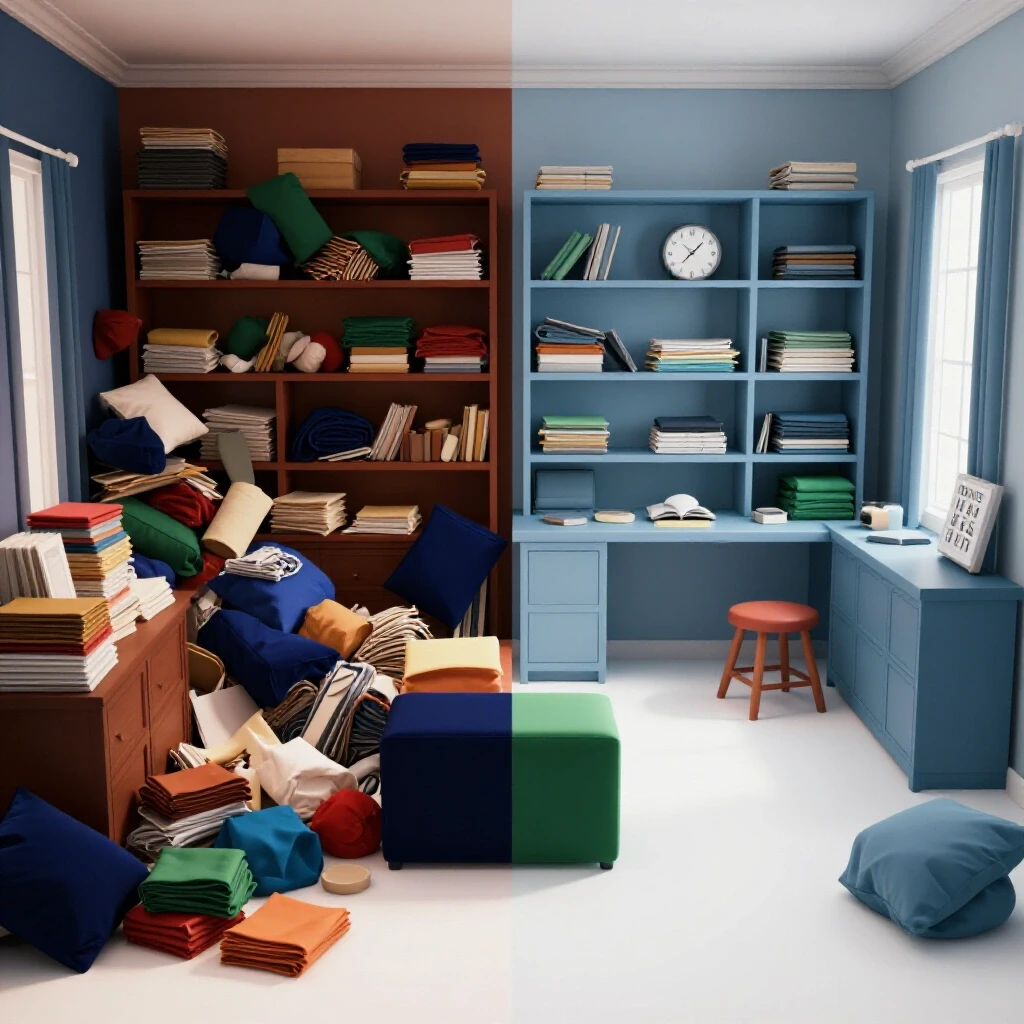
You spend your entire Sunday afternoon sorting through piles of mail, toys, and miscellaneous kitchen gadgets. By the time you go to bed, the counters are clear and the floors are visible. Yet, by Tuesday evening, the same piles have returned, and the visual noise is already starting to trigger that familiar sense of mental fatigue. This cycle of “clean and crash” is common for many busy families, but it usually stems from a fundamental misunderstanding of spatial logistics.
In my eleven years working in operations and logistics, I have learned that a system is only as good as its maintenance requirements. If a storage solution requires too many steps to use, it will fail during a busy Tuesday morning rush. My own family struggled with this until I stopped treating our home like a showroom and started treating it like a high-flow distribution center. We moved away from long, grueling weekend cleaning sessions and toward a model of rapid, micro-adjustments that take less than five minutes at a time.
Why High-Friction Systems Lead to Rapid Clutter Reversion
High-friction systems are organizational methods that require multiple physical or mental steps to complete a simple task, such as putting away a pair of scissors. When a system is too complex, the “cost” of maintaining it exceeds the energy we have at the end of a long workday.
In the world of logistics, we talk about “retrieval friction.” This is the number of actions required to get an item out of storage or put it back. If you have to move a box to get to another box, then unlatch a lid, that is high friction. For a busy parent, high friction is the enemy of a tidy home. Research in environmental psychology suggests that when our physical environment is cluttered, our brains are constantly processing “unfinished tasks,” which leads to increased cortisol levels and reduced focus.
To fix this, we have to reduce the number of steps in our daily routines. If an item cannot be put away in under ten seconds, the system is likely too complex for a lived-in home. We need to focus on “flow rates”—the speed at which items enter and leave a room—to ensure that our daily resets are actually effective.
The Psychology of Visual Overload and Decision Fatigue
Visual overload occurs when the brain is forced to process too many competing stimuli in a single environment, leading to a state of mental exhaustion. Decision fatigue happens when we are forced to make too many choices about where things belong throughout the day.
When you walk into a room filled with “homeless” items, your brain tries to categorize every single one of them. This is why you feel tired just looking at a messy kitchen. In organizational behavior studies, this is known as cognitive load. By creating a home where every item has a logical, low-effort “docking station,” we remove the need for constant decision-making.
Interestingly, the most successful systems are those that account for human laziness. We often design systems for our “best selves”—the version of us that has infinite energy. Instead, we should design for our “tired selves.” This means creating zones where items can be grouped quickly without needing perfect alignment or color-coding.
Evaluating Storage Friction Index by Bin Type
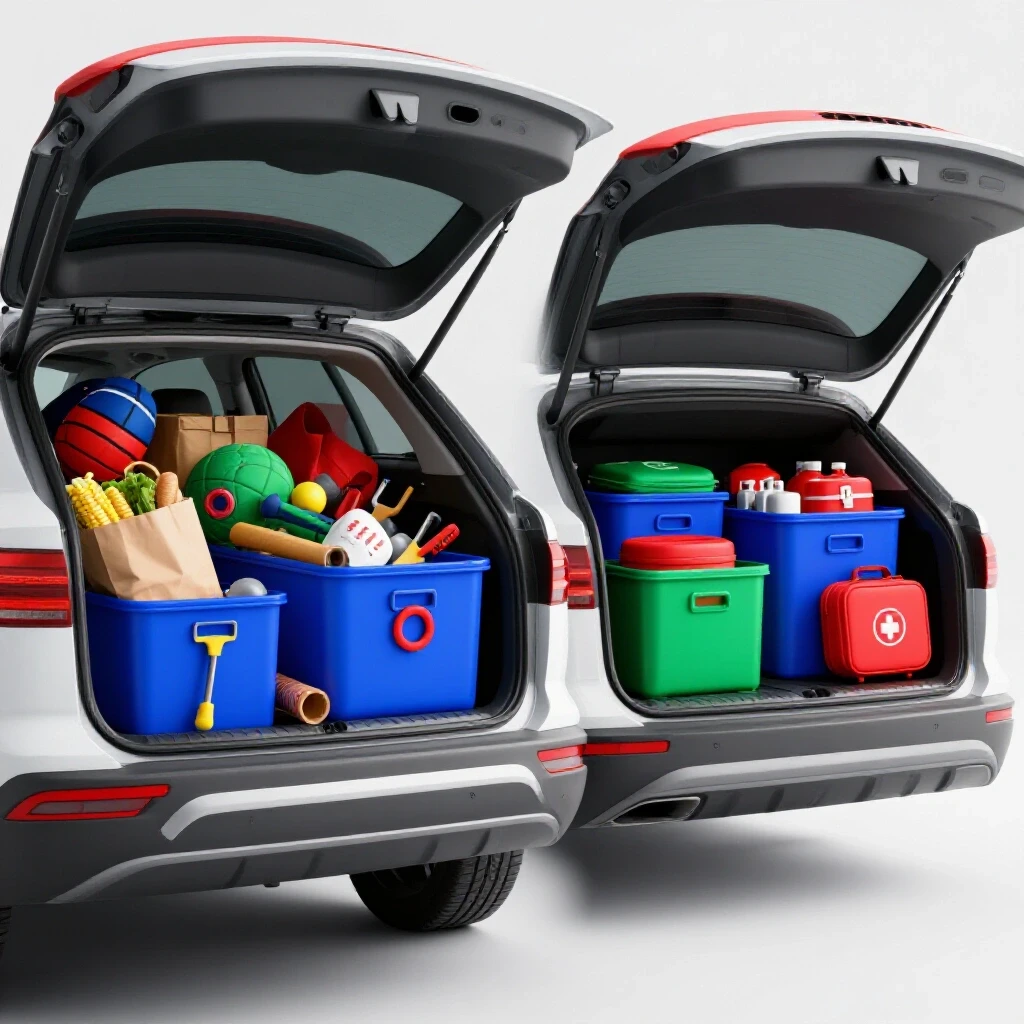
When choosing how to store items, the physical design of the container determines whether the system will last. A lid might look neater, but it adds a physical barrier that often leads to items being left on top of the bin rather than inside it.
| Container Type | Steps to Store | Friction Level | Best Use Case |
|---|---|---|---|
| Open Front Bin | 1 (Drop) | Very Low | Daily toys, shoes, frequently used tools |
| Drawer (No Divider) | 2 (Open, Drop) | Low | Socks, kitchen utensils, linens |
| Lidded Tote | 3+ (Move, Unlatch, Drop) | High | Seasonal decor, archival documents |
| Stacked Lidded Bins | 5+ (Unstack, Unlatch, etc.) | Critical | Long-term garage storage only |
Implementing a 300-Second Daily Reset Framework
A 300-second reset is a structured, five-minute burst of activity designed to clear high-traffic surfaces and return items to their designated zones. This is not a deep clean; it is a tactical redistribution of items to prevent a total system collapse.
I began implementing this with my family by setting a timer after dinner. We focused exclusively on “hot spots”—surfaces like the entryway table, the kitchen island, and the coffee table. The goal was simple: move items from the “active zone” back to their “storage zone.” Because we had already reduced the friction of our storage (using open bins and clear labels), these five-minute bursts were highly productive.
The key to making this work is the “One-Touch Rule.” If you pick something up, you do not put it down until it is in its final destination. This prevents the “shuffling” of clutter from one surface to another, which is a common bottleneck in household logistics.
Designing High-Speed Zoning Maps for Your Home
Zoning is the practice of dividing a space into specific functional areas based on the frequency of use and the type of activity performed there. By mapping out your home’s “flow,” you can place storage where it is naturally needed.
- Zone 1: The Transition Zone (Entryway). This area handles the highest inflow and outflow. It needs open hooks and floor-level bins for bags and shoes.
- Zone 2: The Active Zone (Kitchen/Living Room). These areas require “micro-storage” for items used daily. Think of these as docking stations for remotes, chargers, and mail.
- Zone 3: The Support Zone (Closets/Pantry). This is where items go when they aren’t in immediate use but are needed weekly.
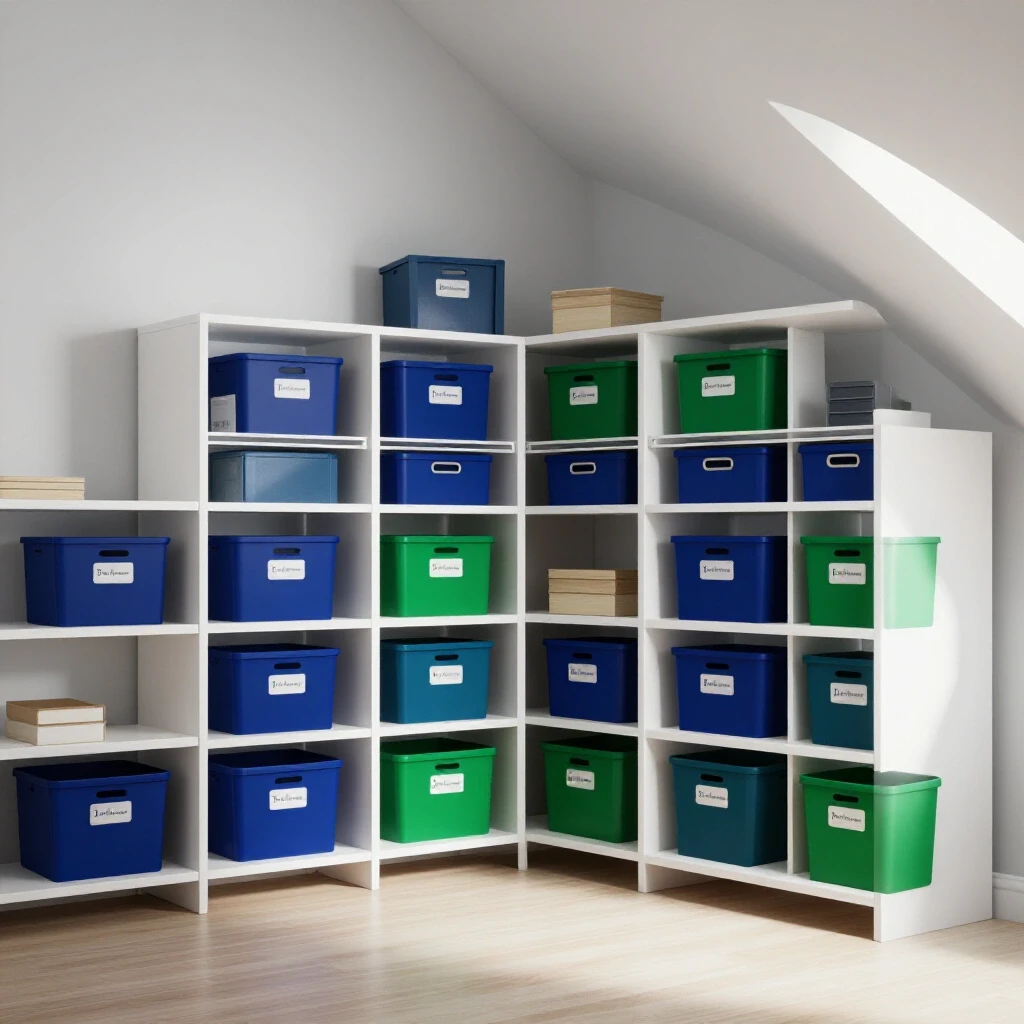
- Zone 4: The Archive Zone (Attic/Garage). This is for items used once a year or less.
When we redesigned our living room, I noticed that my children’s toys always ended up under the coffee table. Instead of fighting it, I placed two large, open baskets directly under the table. The “retrieval steps” dropped from twelve (going to the playroom) to one (dropping it in the basket). This simple shift in spatial ergonomics saved us hours of cleaning time each week.
Reducing Sorting Friction for Children and Busy Adults
The success of any household system depends on the person with the lowest threshold for organization. In a family, this is usually the youngest child or the most stressed adult. If they can’t follow the system, the system is broken.
- Use Visual Cues: For children, use picture labels on bins. For adults, use clear containers so the contents are visible without opening them.
- Eliminate Precision: Don’t ask family members to “file” things. Ask them to “bin” things. Categories should be broad (e.g., “Building Blocks” rather than “Blue 2×4 Bricks”).
- Point-of-Use Storage: Store items exactly where they are used. If you always open mail at the kitchen island, put a small recycling bin and a letter opener in a drawer right there.
- The 80% Capacity Rule: Never fill a shelf or bin more than 80% full. Once a container reaches capacity, the friction of putting things away increases because you have to “wiggle” items into place.
A Case Study in Household Logistics: The “Drop Zone” Failure
Three years ago, I installed a beautiful, multi-compartment mail sorter in our hallway. It had slots for “Bills,” “Invitations,” and “Coupons.” Within a week, the top of the sorter was covered in a messy pile of paper, and the slots were empty.
The problem was decision fatigue. When we walked in the door after work, we didn’t want to categorize mail. We just wanted to put it down. I replaced the complex sorter with a single, large “Inbox” tray. Now, we drop everything there. Once a week, during a dedicated time block, we sort the tray. By reducing the daily requirement to a single “drop” action, the hallway stayed clear. This is a classic example of how simplifying the “inflow” process prevents surface clutter.
Measuring Maintenance Success with Simple Metrics
In logistics, we use Key Performance Indicators (KPIs) to track efficiency. You can apply similar, simplified metrics to your home to see if your organization systems are actually working.
- Reset Time: How many minutes does it take to clear all flat surfaces in the main living area? (Target: < 5 minutes).
- Search Time: How long does it take to find a specific item, like a spare key or a stapler? (Target: < 30 seconds).
- Reversion Rate: How many days does it take for a “clean” room to become “messy” again? If it’s less than three days, your storage friction is too high.
- Step Count: How many physical steps must you take to put away the items from one room?
Selecting Sustainable Storage Gear for Long-Term Order
The market is full of “pretty” storage solutions that are impractical for real life. When shopping for gear, look for durability and ease of access over aesthetics.
- Modular Units: Choose systems that can grow or change. Fixed shelving is often a bottleneck because it doesn’t adapt to changing family needs.
- Heavy-Duty Materials: For high-traffic areas like mudrooms, use metal or thick plastic. Woven baskets are beautiful but can snag clothing or break under the weight of heavy toys.
- Digital Inventory: For deep storage (Zone 4), use smart-label systems. These are QR codes you stick on a box; you scan the code with your phone to see a photo of what’s inside without unstacking the bins.
- Uniformity: Using the same type of bin throughout a zone reduces visual “noise” and makes it easier to swap containers as needs change.
The Role of Habit Loops in Maintaining Spatial Order
A habit loop consists of a cue, a routine, and a reward. To maintain a functional home, you need to anchor your quick tidying sessions to existing cues in your daily life.
For example, my “cue” is the coffee pot finishing its brew in the morning. While the coffee drips, I spend those four minutes emptying the dishwasher or clearing the kitchen counter. The “reward” is sitting down to drink my coffee in a clear, calm space. By tying the maintenance task to a pre-existing habit, it requires zero extra willpower.
Building these loops across the family ensures that the “load” of household management is shared. We often use “pre-transition” resets. Before we leave the house for school or before we start a movie, we do a quick 60-second sweep. This prevents the “clutter creep” that happens when tasks accumulate throughout the day.
Common Mistakes That Increase Household Stress
- Over-Categorizing: Creating too many small categories makes it impossible for others to know where things go. Keep it broad.
- Buying Bins Before Sorting: Never buy containers until you have decluttered. You will end up organizing “trash” or buying the wrong size for your needs.
- Ignoring the “One-In, One-Out” Rule: In a finite space, you cannot increase the “inflow” without a corresponding “outflow.” If a new toy comes in, an old one must be donated or recycled.
- Prioritizing Hidden Storage: Putting everything behind closed doors can lead to “shove-and-shut” syndrome. Use open storage for items you use every day to keep them visible and accessible.
Summary of Daily Maintenance Metrics
| Metric | Definition | Ideal Range |
|---|---|---|
| Throughput | Items processed vs. items entering the home. | 1:1 Ratio |
| Surface Density | Percentage of counter space covered by objects. | < 20% |
| Retrieval Speed | Time to find and access a stored item. | < 30 Seconds |
| Friction Count | Number of physical movements to store an item. | 1–2 Movements |
Practical Steps to Begin Your Transition
Start by identifying the single most frustrating “hot spot” in your home—usually the kitchen counter or the entryway. Apply the principles of low-friction storage there first. Remove any lidded boxes or complex sorters and replace them with open bins or simple hooks.
Once that area stays clear for a week, move to the next zone. Remember, the goal isn’t a “perfect” home; it’s a home that works for you, rather than you working for it. By focusing on flow, friction, and five-minute resets, you can break the cycle of clutter and reclaim your mental space.
Frequently Asked Questions
How do I get my children to follow a five-minute reset routine? The key is reducing the cognitive load for them. Use open-top bins at their height and use clear, visual labels (pictures for younger kids). Make the reset a “race” or tie it to a high-value activity, like “We can start the movie as soon as the floor is clear.” Because the system is low-friction, it won’t feel like a chore.
What if my house is already too cluttered for a five-minute session to matter? If you are starting from a point of high accumulation, use the five-minute rule to maintain the areas you have cleared. Do not try to declutter the whole house in five-minute increments. Use a longer block to “reset” a zone to a baseline, then use the micro-sessions to ensure it never reverts to its previous state.
Is it better to organize by room or by category? For daily maintenance and quick resets, organize by “Zone” and “Frequency of Use.” Items used in the same activity should be stored together, even if they technically belong to different categories. This reduces the “travel time” during your daily resets.
How do I handle “sentimental” clutter that I can’t just toss in a bin? Sentimental items should never be in your “Active Zones” (Zones 1 and 2). Move them to “Archive Storage” (Zone 4) in lidded, protected bins. This keeps your daily living spaces functional while preserving items that have emotional value.
What is the best way to manage “paper clutter” like mail and school forms? Use a single-entry “Inbox” tray. Do not try to sort mail as soon as you walk in. Instead, make “Emptying the Inbox” a once-a-week task. This prevents daily decision fatigue while keeping the paper contained in one predictable location.
Can I use this system in a small apartment with limited storage? Yes, in fact, it is even more critical in small spaces. When square footage is limited, the “80% Capacity Rule” is your best friend. Overfilling small closets makes them high-friction, leading to items being left out on furniture. Keep your storage loose and accessible.
How do I stay motivated when the house gets messy again? Shift your perspective from “perfection” to “flow.” Expect the house to get messy—that’s a sign of a life being lived. The goal of a low-friction system is to make the recovery from that mess as fast and painless as possible. If a reset takes five minutes, it’s easy to start again.
What are the best types of labels for a low-maintenance home? For “Active Zones,” use bold, easy-to-read text. For kids, use icons. If you use opaque bins, labels are mandatory. If you use clear bins, labels are optional but helpful for other family members who didn’t set up the system.
How do I deal with items that don’t seem to have a “home”? If an item doesn’t have a home, it becomes “permanent clutter.” Every object must have a designated “docking station.” If you can’t find a place for it, ask yourself if the item is truly necessary for your current lifestyle.
What should I do if my partner doesn’t support these organization systems? Focus on “Path of Least Resistance” design. If your partner leaves their keys on the counter, put a small tray exactly where they naturally drop them. Don’t ask them to change their behavior; change the environment to catch their behavior. When they see how much easier it is to find things, they usually get on board.
How often should I audit my storage zones? I recommend a quick “Logistics Check” every six months. As kids grow or seasons change, your inflow and outflow will shift. A bin that worked for toddler toys won’t work for sports equipment. Adjust your zones to match your current reality.
(This article was written by one of our staff writers, Christopher Bennett. Visit our Meet the Team page to learn more about the author and their expertise.)