How to Fix Floor Plan Mistakes in Renovations (Expert Tips)

Living in a house before you renovate it is like wearing a new pair of leather boots. On the shelf, they look perfect, but you only realize where they pinch your toes after walking a few miles. Most homeowners approach a major interior overhaul by looking at static drawings, yet the true success of a project depends on how the space breathes once the dust settles. During my 18 years in the field, I have seen many beautiful rooms that felt uncomfortable because the fundamental flow of the house was ignored.
Understanding the Dynamics of Interior Room Connectivity
Interior room connectivity refers to how different living zones relate to one another and how easily people move between them. It is the invisible thread that ties a kitchen to a dining room or a master bedroom to its ensuite.
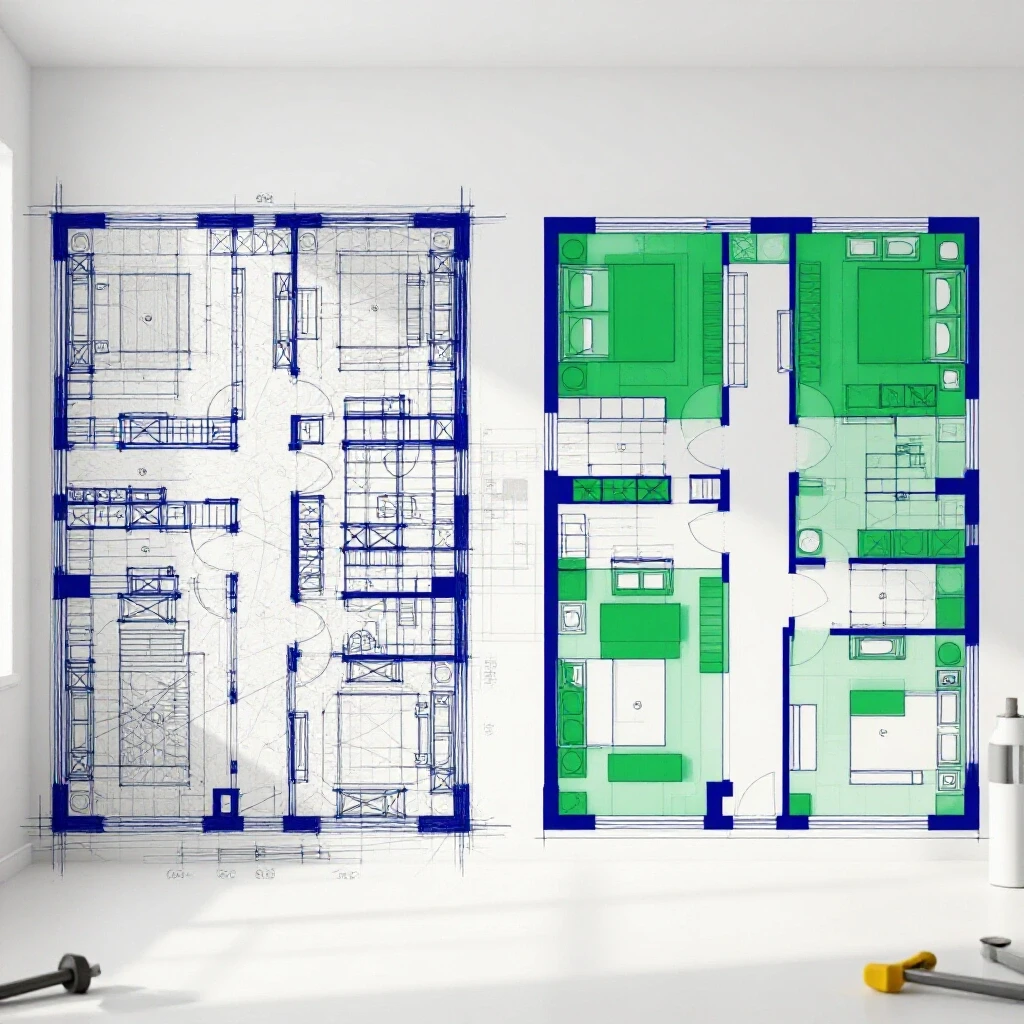
When I tackled my first full-home renovation, I focused entirely on the finishes. I chose the most durable hardwoods and the most elegant trim. However, I left a narrow doorway between the kitchen and the living area. Within a month of moving back in, I realized the mistake. Every time I hosted a dinner, I felt isolated from my guests. The physical connection was missing, and no amount of high-end cabinetry could fix that feeling of separation.
Building on this, modern residential life favors “sightlines.” This is the ability to see from one functional area into another. In a standard kitchen remodel, improving connectivity often means widening an opening or repositioning a kitchen island to ensure the cook can interact with the rest of the household. It is about removing barriers that serve no structural purpose but create psychological distance.
Optimizing Circulation Paths and Daily Traffic Flow
Circulation paths are the “highways” of your home, representing the most common routes people take to get from point A to point B. A well-planned layout ensures these paths are wide enough and free of obstacles like swinging doors or poorly placed furniture.
In my professional experience coordinating residential builds, I often use a 36-inch standard for primary walkways. Anything less feels cramped, especially when two people try to pass each other. Interestingly, many homeowners forget to account for “door swings.” A door that opens into a high-traffic hallway can become a constant source of frustration and even a safety hazard.
| Layout Component | Standard Minimum | Recommended for Comfort |
|---|---|---|
| Main Hallway Width | 36 inches | 42 to 48 inches |
| Kitchen Work Triangle Path | 4 feet | 6 to 8 feet |
| Clearance Around Dining Tables | 32 inches | 36 to 42 inches |
| Bathroom Walkway | 30 inches | 36 inches |
As a result of poor circulation planning, I once managed a project where the homeowner insisted on a massive kitchen island. Once installed, the gap between the island and the refrigerator was only 28 inches. We had to go back and trim the stone countertop because the “pinch point” made it impossible to open the fridge while someone was standing at the sink.
The Strategic Distribution of Natural Light
Natural light distribution is the practice of positioning interior elements to allow sunlight to penetrate deeper into the home. This involves more than just windows; it is about how interior walls and openings influence the movement of light.
During a whole-house remodel I oversaw three years ago, the client complained that their center hallway felt like a cave. We decided to adjust the layout by replacing solid doors with glazed versions and creating “transoms”—small windows located above doorways. These simple changes allowed light from the sun-drenched bedrooms to spill into the dark corridor.
When you are rethinking your interior footprint, consider the sun’s path. Morning light is best for kitchens and breakfast nooks, while evening light is ideal for living rooms. If a wall is blocking that light, you might consider a “half-wall” or a “pony wall.” This provides a physical boundary for furniture placement while keeping the upper half of the room open to the light source.
Integrating Storage Solutions into the Interior Footprint
Storage placement involves identifying underutilized areas within the house structure to create functional space for belongings. It is the difference between a cluttered home and one where everything has a designated spot.
I learned a valuable lesson about storage during my second personal renovation. I had plenty of square footage, but I didn’t have storage where I actually needed it. I had a large hall closet, but it was 20 feet away from the entryway. This led to shoes and coats piling up by the front door.
- Point-of-use storage: Place cabinets or shelving exactly where the items are used.
- Niche utilization: Use the space between wall studs for small bathroom shelves or spice racks.
- Built-in transitions: Use the “dead space” under stairs or at the end of hallways for deep drawers.
- Vertical expansion: Run cabinetry to the ceiling to maximize volume without increasing the footprint.
Managing the Sequence of Physical Layout Adjustments
Construction sequencing is the logical order in which tasks must be completed to ensure the project moves forward without redo work. For layout changes, this sequence is critical because moving a wall often affects plumbing, electrical, and HVAC systems.
Before any walls are moved, a “structural verification” is necessary. This is the process of determining if a wall is load-bearing, meaning it supports the weight of the roof or the floor above. If you remove a load-bearing wall without proper support, the house can sag or collapse.
| Phase | Key Activity | Quality Control Benchmark |
|---|---|---|
| Discovery | Remove small sections of drywall to see what is inside. | Identify hidden wires, pipes, or mold. |
| Rough-In | Move the “guts” (pipes/wires) to the new wall locations. | Ensure all systems are tested before closing walls. |
| Framing | Build the new wall skeletons and door headers. | Verify all openings are level and square. |
| Closing | Install new drywall and finish the surfaces. | Check for smooth transitions between old and new walls. |
In one project, a subcontractor failed to check for “hidden structural surprises” behind a dining room wall. When they started demolition, they found a main plumbing stack for the upstairs bathroom. Because we hadn’t planned for that, the entire layout had to be adjusted on the fly, which delayed the project by two weeks.
Avoiding Contractor Disputes During Layout Changes
Contractor management is the process of overseeing the work and communication of the people building your home. Disputes often arise when the “scope of work”—the detailed list of tasks to be performed—is vague.
To minimize friction, I recommend using a “change order” system. A change order is a written agreement that documents any deviation from the original plan. If you decide to move a doorway six inches to the left after the framing is done, that is a change order.
- Document everything: Use a project management app to track daily progress and photos.
- Weekly walk-throughs: Meet with the lead contractor every Friday to discuss the upcoming schedule.
- Verify milestones: Do not release payments until specific phases, like “rough-in plumbing,” are inspected and completed.
- Clarify expectations: Define what “paint-ready” or “broom-clean” means in your contract.
Identifying Hidden Structural Issues Early
A structural inspection checklist is a tool used to identify potential problems before they become major setbacks. When you change a floor plan, you are often opening up parts of the house that haven’t been seen in decades.
In an older home I renovated, we found “knob and tube” wiring—an outdated and potentially dangerous electrical system—hidden inside a wall we were moving. We also found evidence of “rot,” which is the decay of wood caused by moisture.
- Check for mold: Look for dark spots or musty odors near plumbing fixtures.
- Inspect for pests: Check for termite damage or carpenter ant trails in the wooden frame.
- Verify wiring: Ensure the electrical panels can handle the new room configurations.
- Test for level: Use a long level to see if floors are sagging, which might indicate foundation issues.
Refining the Layout Through Post-Occupancy Evaluation
A post-occupancy evaluation is the process of assessing how well the new layout works after you have lived in it for several months. It is an honest look at what was successful and what could have been better.
After my own renovations, I realized that while the kitchen flow was great, I had placed the light switches in an awkward spot. I had to reach behind a door to turn on the lights. This is a common mistake in layout adjustments. We often think about where the walls go, but we forget how we will interact with the “switches and outlets” once the furniture is in place.
Practical Tools for Managing Layout Transitions
Managing a remodel requires more than just a hammer; it requires organization. Here are the tools I have found most effective for homeowners:
- Digital Floor Plan Apps: Tools like MagicPlan or RoomScan Pro allow you to create 2D and 3D models using your phone.
- Critical Path Scheduling: Use a simple Gantt chart to see how one task (like flooring) depends on another (like wall painting).
- Daily Logs: Keep a notebook or digital doc of who was on-site and what they accomplished.
- Lien Waivers: These are legal documents that prove a subcontractor has been paid, protecting you from future claims.
Conclusion: Taking the First Steps Toward a Better Layout
Adjusting the interior footprint of your home is a complex puzzle, but it is also the most rewarding part of a renovation. It is the step that transforms a house from a collection of rooms into a cohesive living environment.
Start by observing your current daily patterns. Where do you trip over things? Where is it too dark? Where do people naturally congregate? Once you identify these “pain points,” you can begin to sketch out a revised flow. Remember that the goal is not just to make the house look better, but to make it function better for the way you actually live.
Before you begin demolition, take the time to do a “discovery” phase. Open up a few small holes in the drywall to see what you are dealing with. This simple step can save you from the stress of unexpected structural discoveries later on. By planning for the flow, the light, and the hidden systems, you can ensure that your new layout is one you will enjoy for years to come.
Frequently Asked Questions
What is the most common mistake people make when changing a room layout? The most frequent error is ignoring “circulation paths.” Homeowners often focus on adding more features, like a larger island or a bigger tub, without realizing they are narrowing the walkways. This leads to a house that feels crowded and difficult to move through, even if the individual rooms look beautiful.
How do I know if a wall is safe to move? You must determine if the wall is “load-bearing.” Generally, walls that run perpendicular to the floor joists or are located directly above other walls in the basement are load-bearing. However, the only way to be sure is to look at the framing in the attic or crawlspace to see where the weight of the house is being transferred.
Why is natural light so important in a layout? Natural light affects both the mood of the inhabitants and the perceived size of the space. A room with ample sunlight feels larger and more inviting. When revising a layout, you want to ensure that walls do not “clip” the light coming from windows, which can create dark, unusable corners.
What should I do if I find mold or old wiring inside a wall? Stop work immediately in that area. Mold requires professional remediation to ensure spores do not spread throughout the house. Outdated wiring, like knob and tube or ungrounded lines, should be replaced to meet modern safety standards and to handle the electrical load of modern appliances.
What is “scope creep” and how do I avoid it? Scope creep happens when you start adding small tasks to the project that weren’t in the original plan. For example, “while the wall is open, let’s add three more outlets.” These small changes add up quickly in terms of time and labor. To avoid it, finalize your layout and feature list before the first hammer swings.
How wide should a doorway be for a comfortable flow? While a standard interior door is often 30 or 32 inches, a 36-inch opening is much better for main thoroughfares. This allows for easier movement of furniture and provides a more open, modern feel to the home’s connectivity.
How can I test a new layout before the walls are built? One of the best “low-tech” methods is to use painter’s tape on the floor. Tape out the exact dimensions of the new walls, islands, and furniture. Walk through the space for a few days to see if the new paths feel natural or if you find yourself bumping into the “tape walls.”
What is the “rough-in” phase of construction? The rough-in phase occurs after the wall frames are up but before the drywall is installed. This is when the “veins and arteries” of the house—the plumbing pipes, electrical wires, and HVAC ducts—are installed. It is the most critical time to double-check that everything is in the right place, as moving them later is much more difficult.
How do I handle a contractor who isn’t following the schedule? Refer back to your “critical path schedule.” If a delay in framing is going to push back the plumber, you need to have a documented conversation with the contractor. Use your daily logs to show where the delays started and ask for a written plan on how they intend to get back on track.
Why is storage placement more important than storage size? A giant walk-in closet is useless if it is on the wrong side of the house. Effective storage is about “proximity.” You need your vacuum cleaner near the high-traffic areas and your pantry near the kitchen work zone. Strategic placement reduces the time and effort spent on daily chores.
(This article was written by one of our staff writers, David Langford. Visit our Meet the Team page to learn more about the author and their expertise.)