How to Organize Your Fridge to Reduce Food Waste (Step-by-Step)

In my own home, we used to treat our refrigerator like a temporary storage unit rather than a high-turnover distribution center. We would buy fresh produce, shove it into the deep recesses of a shelf, and find it three weeks later in a state of decay. This cycle caused significant mental fatigue and financial waste. By applying spatial management principles, I redesigned our internal storage systems to focus on ease of use. This shift moved us away from “perfect” aesthetics and toward a sustainable flow that even my children could follow.
Understanding the Logistics of Cold Storage Systems
Cold storage logistics refers to the strategic placement of items to ensure they are used before they expire while maintaining easy access. It involves balancing spatial capacity with the speed at which your family consumes different types of food.
When a storage system fails, it is usually because the “retrieval friction” is too high. Retrieval friction is the amount of physical and mental effort required to find and remove an item. If you have to move three jars of pickles to reach the yogurt, you are less likely to eat the yogurt before it spoils. In my professional work, we measure “pick paths” to see how quickly workers can find items. Applying this to your home means ensuring that the items you use most often are in the most accessible “strike zones.”
Research in environmental psychology suggests that visual clutter leads to increased cortisol levels, the body’s primary stress hormone. When you open a crowded fridge, your brain experiences a “visual processing overload.” This makes it harder to decide what to cook, often leading to decision fatigue. By creating a system that prioritizes visibility, you reduce the cognitive load on yourself and your family.
Why High-Friction Systems Lead to Rapid Reversion
System friction occurs when an organizational method requires too many steps to maintain, leading the user to abandon the system entirely. This is why complex bin systems often fail in busy households with children and professionals.
In my early decluttering journeys, I bought expensive, opaque bins that looked beautiful but hid the contents. This was a classic logistics error. If you cannot see the inventory, you cannot manage the turnover. Within days, our system collapsed because no one knew where anything belonged. We found that the more steps required to put something away, the faster the house reverted to a cluttered state.
To combat this, I focus on “low-touch” systems. These are designs where an item can be retrieved or replaced in two movements or fewer. For example, a clear pull-out drawer is a one-movement system, while a lidded box stacked under another box is a three-movement system. The latter almost always leads to clutter.
Storage Friction Index by Container Type
| Container Type | Movement Count | Visibility Level | Maintenance Difficulty |
|---|---|---|---|
| Open Clear Bins | 1 Step | High | Very Low |
| Stackable Clear Drawers | 1 Step | High | Low |
| Opaque Bins with Lids | 3 Steps | None | High |
| Deep Wire Baskets | 1-2 Steps | Medium | Medium |
| Original Packaging | Variable | Low | High |
Creating a High-Efficiency Zoning Map
A zoning map is a spatial plan that assigns specific categories of items to fixed locations based on their frequency of use and shelf-life requirements. This creates a predictable environment where every family member knows exactly where to look.
In my home, I mapped our shelves based on “flow rates.” High-flow items, like milk and snacks, were placed at eye level. Low-flow items, like condiments or baking soda, were moved to the top or bottom. This reduces the time the door stays open and prevents items from being pushed to the back where they are forgotten. We also designated a “Eat Me First” zone for items nearing their expiration dates.
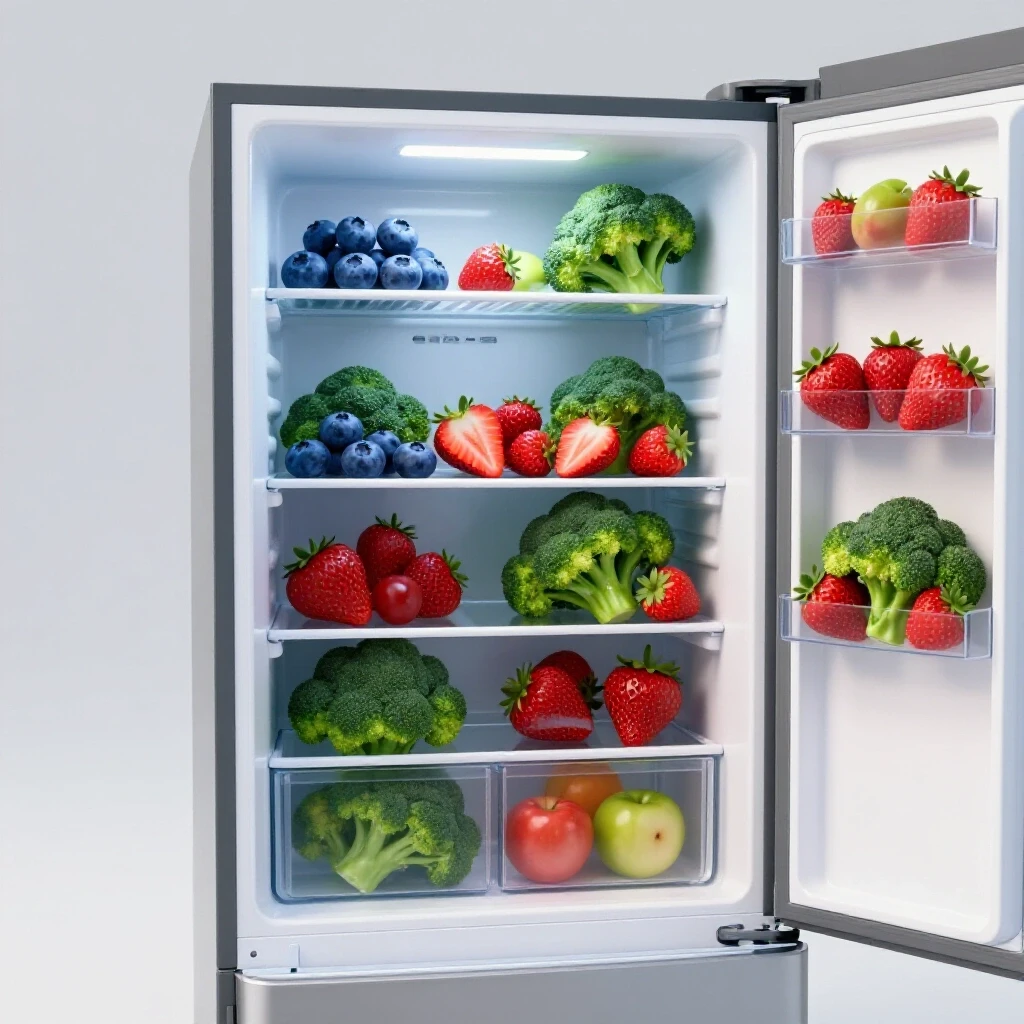
When designing your map, consider the “Rule of 70%.” Industrial warehouses often aim for 70% to 80% capacity to allow for efficient movement. If your shelves are 100% full, air cannot circulate, and you cannot see what is behind the front row. Maintaining a small buffer of empty space is the best way to ensure your system remains sustainable over the long term.
- Zone 1: Upper Shelves (Consistent temperature for leftovers and ready-to-eat items).
- Zone 2: Middle Shelves (High-visibility area for dairy and frequently used perishables).
- Zone 3: Lower Shelves (Coldest area for raw proteins or large items).
- Zone 4: Door Bins (Warmest area for shelf-stable condiments and juices).
- Zone 5: Crisper Drawers (Humidity-controlled zones for leafy greens and fruits).
The Psychology of Visual Inventory Systems
Visual inventory systems rely on transparent storage and clear labeling to provide instant feedback on what items are in stock. This reduces the mental energy needed to plan meals or create shopping lists.
Studies in organizational behavior show that “out of sight, out of mind” is a literal psychological hurdle. When food is hidden in drawers or behind large containers, the brain stops accounting for it as a resource. This leads to “duplicate buying,” where you purchase items you already own because you couldn’t see them during your last check.
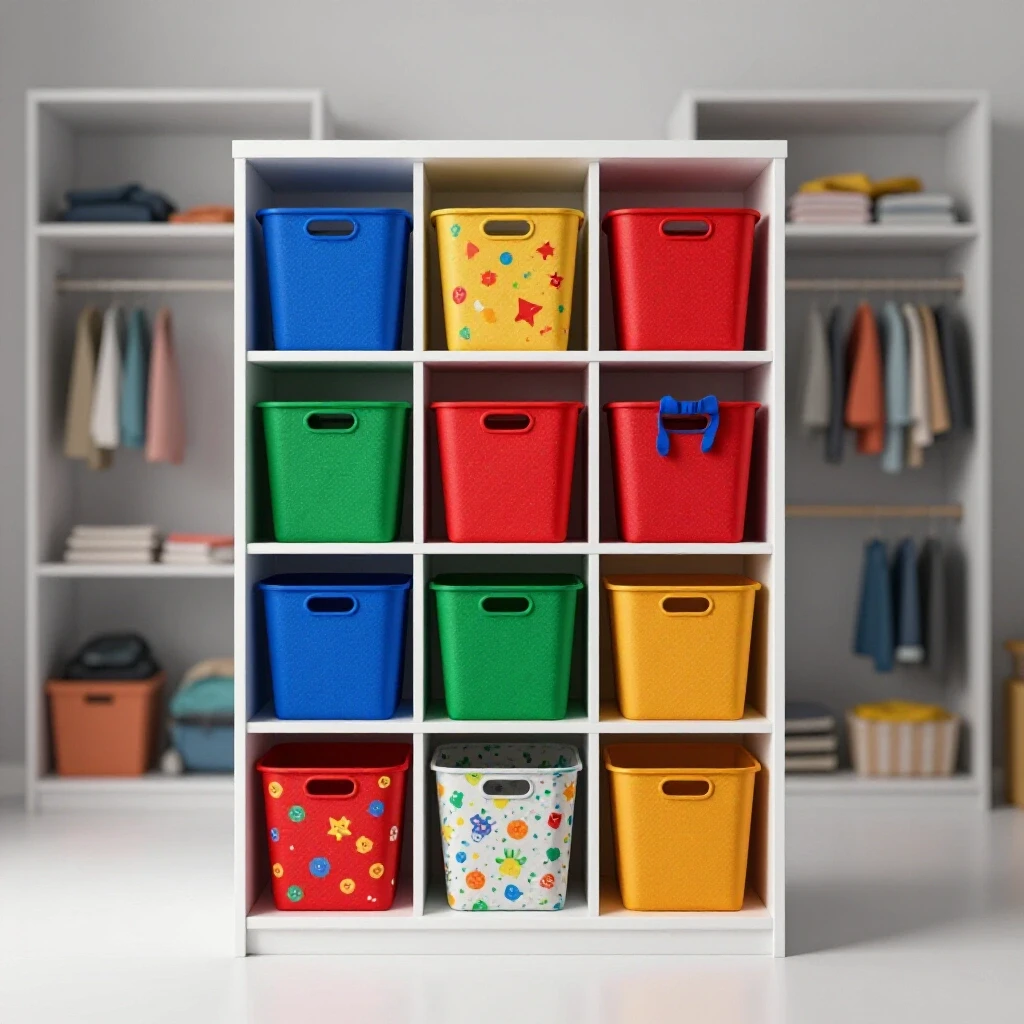
In our house, we switched to clear, modular bins. This allowed us to see exactly how many carrots or yogurts were left at a single glance. Interestingly, our food waste dropped significantly once we could see the “inventory levels” clearly. We no longer had to dig through the shelves, which saved us about four minutes per meal prep session.
Practical Steps for a Sustainable Sorting Framework
A sorting framework is a repeatable process used to categorize and organize items during a decluttering session. It ensures that the most important items are prioritized and that clutter is removed systematically.
I recommend a “Time-Boxed Audit” once a week, ideally right before you go grocery shopping. This should take no more than 10 to 15 minutes. During this time, you move older items to the front and wipe down any spills. This prevents the “clutter creep” that happens when small messes accumulate over time.
- Clear the Deck: Remove everything from one shelf at a time to avoid overwhelming your workspace.
- Categorize by Use: Group items into logical families, such as “Breakfast,” “Sandwiches,” or “Produce.”
- Check the Vitals: Look for expired dates or items that have lost their freshness.
- Wipe and Reset: Clean the surface and place items back according to your zoning map.
- Label the Zone: Use simple, large-font labels on the shelf or bin (not the item) to guide other family members.
Weekly Maintenance Timeline by Family Size
| Family Size | Daily Tidy Time | Weekly Deep Audit | Monthly System Review |
|---|---|---|---|
| 1-2 People | 2 Minutes | 10 Minutes | 15 Minutes |
| 3-4 People | 5 Minutes | 15 Minutes | 20 Minutes |
| 5+ People | 8 Minutes | 25 Minutes | 30 Minutes |
Selecting Low-Maintenance Storage Gear
Low-maintenance storage gear consists of durable, easy-to-clean containers that enhance visibility without adding extra steps to your daily routine. The goal is to support the system, not to make it more complicated.
When I first started, I made the mistake of buying complex gadgets with too many moving parts. They were hard to wash and eventually broke. Now, I look for “industrial-grade” simplicity. Square or rectangular bins are superior to round ones because they eliminate “dead space” in the corners. I also look for containers that are dishwasher safe to reduce the labor required to keep them clean.
- Avoid Lids Where Possible: For items used daily, open-top bins are faster and easier for children to use.
- Prioritize Depth: Choose bins that utilize the full depth of your shelves so items don’t get lost in the back.
- Non-Slip Bases: Look for bins that stay in place when you pull them forward.
- Modular Sizes: Stick to two or three standard bin sizes so they can be easily rearranged as your needs change.
Reducing Daily Sorting Friction for the Whole Family
Family behavior alignment is the process of teaching and encouraging all household members to follow the established organization rules. It requires the system to be intuitive enough that it doesn’t need constant explanation.
In my family, the “friction test” was my seven-year-old. If he couldn’t find a snack and put the wrapper in the trash without asking me where it went, the system was too complex. We found that labeling the bins with both words and simple icons helped everyone stay on track. We also simplified our categories. Instead of having a bin for “Apples” and a bin for “Oranges,” we just have a “Fruit” bin. This reduces the “sorting fatigue” that occurs when categories are too specific.
Logistical flow is also about the “Inflow/Outflow Control.” When new groceries come in, the oldest items must move to the front. This is the “First In, First Out” (FIFO) method used in professional kitchens. By making this a habit during the “Weekly Reset,” we ensured that nothing sat at the back of the shelf for more than seven days.
Measuring Success Through Inventory Turnover
Success in home organization is measured by how well the system serves your daily life, not by how it looks in a photo. In logistics, we look at “inventory turnover,” which is how quickly items are used and replaced.
If you find that you are throwing away less food and spending less time searching for ingredients, your system is working. I tracked our household waste for a month and found that by simply improving visibility and reducing friction, we cut our food waste by nearly 40%. The mental relief of knowing exactly what we have for dinner when we walk through the door after work is invaluable.
- Retrieval Time: You should be able to find any item in under 5 seconds.
- Sorting Speed: A full grocery haul should be put away in under 10 minutes.
- Space Utilization: Aim for roughly 70% shelf occupancy to allow for visibility and airflow.
- Cleanliness: Spills should be visible and reachable immediately to prevent long-term odors.
Frequently Asked Questions
Why does my fridge get messy again so quickly after I clean it?
This usually happens because the system has high “retrieval friction.” If items are stacked or hidden, people will move things around to find what they need and won’t put them back correctly. Switching to clear, open bins and a strict zoning map helps maintain order because it’s easier to put things away than to leave them out.
Do I really need to use bins for everything?
No. Bins are most useful for small, loose items like yogurts, snacks, or citrus fruits that tend to roll around. Larger items like milk cartons or heads of cabbage often sit better directly on the shelf. The goal is to use bins to create “drawers” on deep shelves to prevent items from being lost in the back.
How do I get my spouse and kids to follow the system?
Keep the categories broad and use clear labels. If the system is too specific (e.g., “Organic Greek Yogurt” vs. just “Dairy”), people will get frustrated. Make it easy to do the right thing and hard to do the wrong thing.
What is the best way to handle leftovers?
Designate a specific “Leftover Zone” at eye level. Use clear glass containers so you can see the contents. If leftovers are tucked away in opaque bowls, they are much more likely to be forgotten and eventually wasted.
How often should I deep clean the shelves?
If you perform a 15-minute “Weekly Reset” before grocery shopping, you should only need to do a deep wipe-down every three to six months. The weekly audit prevents the buildup of old food and dried spills.
Should I take food out of its original packaging?
Only if the original packaging is bulky, opaque, or prevents you from seeing how much is left. For example, taking eggs out of a cardboard carton and putting them in a clear holder improves visibility, but moving bagged salad into another container might be unnecessary work.
What should I do with the “Dead Zones” in the corners?
Use those areas for items you rarely use, like backup jars of mustard or baking soda. Alternatively, keep those areas clear to improve air circulation, which helps keep your food fresh longer.
How do I manage a fridge that is shared by many people?
Assign specific shelves or bins to each person. This creates a sense of ownership and makes it clear who is responsible for which items. Labels are essential in a shared environment to avoid confusion and “inventory overlap.”
Is it worth labeling the shelves?
Yes. Labels act as a “visual anchor.” Even if a bin is empty, the label tells the family exactly what should go back in that spot, preventing random items from filling the void.
Does organization actually help reduce food waste?
Yes, primarily by increasing visibility. When you can see your inventory, you are more likely to use what you have before it spoils and less likely to buy duplicates. This “visual feedback loop” is the most effective way to manage perishables.
What is the most common mistake people make?
Buying too many containers before they have a plan. Always map your zones and measure your shelf dimensions before purchasing any gear. A bin that doesn’t fit your shelf perfectly creates “dead space” and increases frustration.
How can I make the system last for months?
Focus on “low-maintenance” habits. If a system requires you to spend an hour every weekend to maintain it, it will eventually fail. Aim for a system that only requires 10 to 15 minutes of your time per week. Consistency is more important than a one-time “perfect” setup.
(This article was written by one of our staff writers, Christopher Bennett. Visit our Meet the Team page to learn more about the author and their expertise.)