Grill Station Cost Breakdown: Budgeting for Outdoor Projects (Guide)

Modern smart home technology often focuses on what happens inside our four walls, from automated thermostats to security cameras. However, as a financial planner who has spent a decade obsessing over home renovation budgets, I have noticed a shift toward “smart” outdoor investments. These are projects that prioritize modularity, low maintenance, and high utility without the heavy price tag of a permanent structural addition. Last summer, I decided to apply my rigorous cost-tracking methods to a personal project: a dedicated outdoor cooking area. By using a detailed remodeling expense tracker, I managed to build a functional, aesthetically pleasing setup for under $800. My goal was to prove that a disciplined financial framework could produce a high-value result without the common “budget creep” that plagues most home improvements.
Establishing a Financial Framework for Outdoor Improvements
A financial framework for home projects is a set of pre-determined rules that dictate how much you will spend based on your home’s current value and your liquid cash reserves. It acts as a guardrail to prevent emotional spending during the construction phase.
When I begin any project, I start with a “hard cap” based on the cost vs value home improvement data for my specific zip code. For a DIY outdoor counter and cooking niche, the value is primarily in lifestyle enhancement rather than a 1:1 equity return. I categorize this as a “Lifestyle Asset,” meaning I only use discretionary cash—never debt. I recommend a 15% contingency buffer for material price fluctuations. If the lumber prices spike at the local yard, that buffer ensures the project doesn’t stall. For my summer build, I allocated $700 as the base and $100 as the “just in case” fund.
Why Standard Estimates Often Fail the Cost-Conscious Planner
Standard estimates fail because they usually overlook the “ancillary costs” like weatherproofing sealants, specialized fasteners, and delivery fees. These small items can easily add 20% to a project’s total if they are not line-itemed from the start.
In my experience, homeowners often look at the price of a grill and a few bags of concrete and assume they are done. They forget the cost of a high-quality cover, the stain for the wood, or the stainless steel hardware required to prevent rust. When I tracked my own expenses, I realized that “miscellaneous hardware” was my second largest category after lumber. To avoid this, I use a bottom-up estimating approach. I list every single screw and bracket before I ever visit the hardware store. This level of detail keeps the home renovation budget predictable.
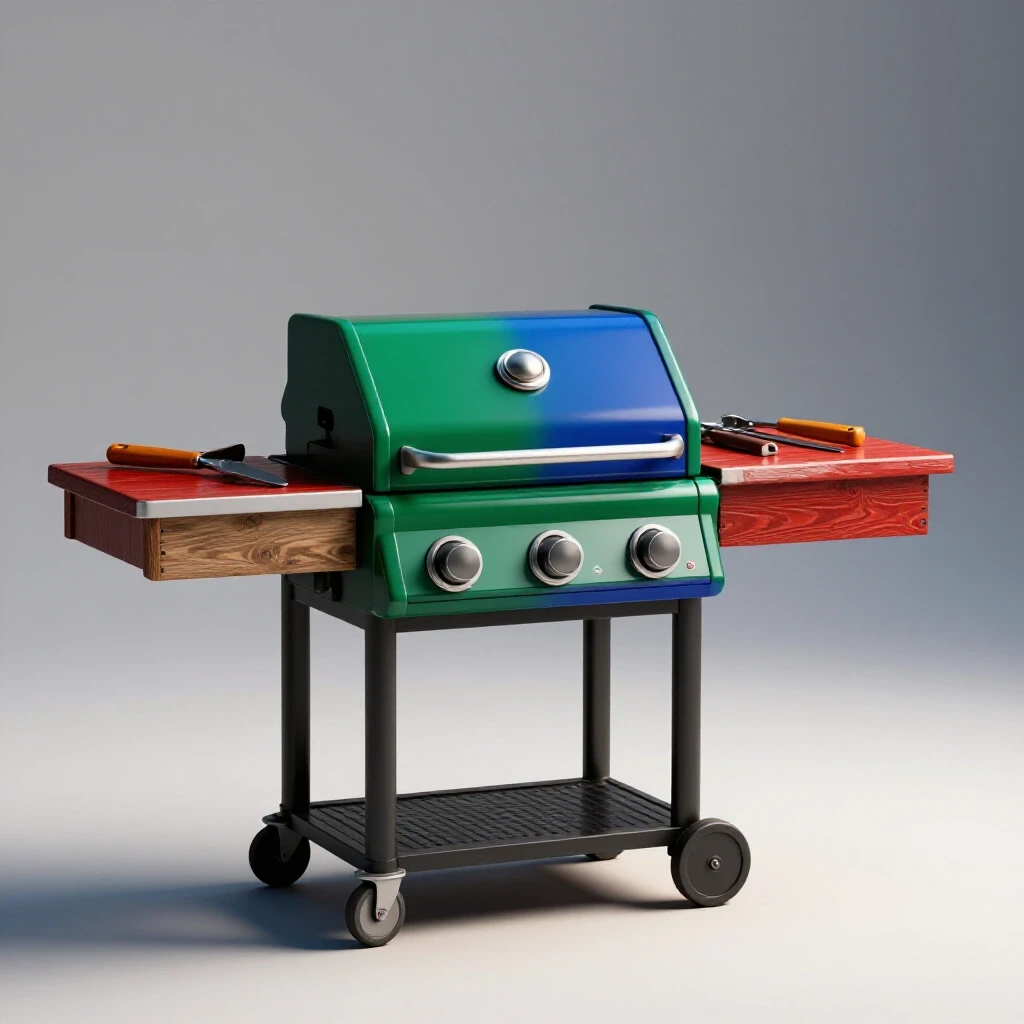
The Anatomy of a $800 Outdoor Cooking Setup
This breakdown represents a realistic budget for a modular, DIY-friendly station. It focuses on sourcing durable materials that offer the best longevity for the price.
| Category | Projected Cost | Actual Cost | Variance |
|---|---|---|---|
| Pressure-Treated Lumber | $250.00 | $265.00 | +$15.00 |
| Countertop Material (Pavers/Stone) | $150.00 | $140.00 | -$10.00 |
| Exterior Fasteners & Brackets | $75.00 | $92.00 | +$17.00 |
| Weather-Resistant Stain/Sealant | $60.00 | $55.00 | -$5.00 |
| Modular Storage Inserts | $120.00 | $130.00 | +$10.00 |
| Leveling Base (Gravel/Sand) | $45.00 | $40.00 | -$5.00 |
| Total | $700.00 | $722.00 | +$22.00 |
Utilizing a Remodeling Expense Tracker for Small Projects
A remodeling expense tracker is a live document, usually a spreadsheet, where every transaction is recorded in real-time. It compares the initial “bid” or estimate against the actual receipt to show financial performance throughout the project.
During my summer build, I used a simple spreadsheet on my phone. Every time I left the hardware store, I entered the total. This habit is vital for cost-conscious home planners because it provides an early warning system. If you spend 40% of your budget on just the frame, you know you need to find a more affordable option for the countertop. This real-time data allows for “value engineering”—the process of swapping expensive materials for more cost-effective ones without losing functionality.
Strategic Material Sourcing to Protect Your Budget
Strategic sourcing involves identifying the most durable materials for your local climate and finding the best price points through regional suppliers or reclaimed sources. It balances upfront cost with long-term maintenance expenses.
I always advise clients to look at the “cost per year of life” for materials. For an outdoor station, using standard interior-grade wood is a financial mistake; it will rot in three years. Spending 20% more on cedar or pressure-treated lumber extends the life of the project to over a decade. For my project, I sourced “seconds” or slightly chipped stone pavers for the countertop. Since they were being used in a rustic outdoor setting, the minor imperfections didn’t matter, but the 30% discount certainly did.
- Check local “B-grade” lumber bins: Often, slightly warped boards are fine for short structural spans.
- Compare big-box stores vs. local yards: Local yards often have better bulk pricing on gravel or sand.
- Avoid specialized “outdoor kitchen” branded accessories: These carry a heavy markup. Look for generic stainless steel modular units instead.
Calculating the Sweat Equity Value of Your Labor
Sweat equity is the non-monetary contribution a homeowner makes to a project through their own labor. In financial planning, we value this by comparing the DIY cost to the market rate of a professional installation.
According to data from the U.S. Bureau of Labor Statistics, general carpentry and landscaping labor can range from $25 to $60 per hour depending on the region. For my summer project, I spent approximately 16 hours on design and assembly. If I had hired a local handyman at a $40/hour rate, the labor alone would have cost $640. By doing the work myself, I essentially “earned” that money, which I then reinvested into higher-quality weather-resistant finishes. This is a key metric for homeowners: if your DIY labor takes you away from your actual job or causes physical strain, the “cost” might be higher than you think.
Analyzing Regional Cost Factors and Market Ceilings
Regional cost factors are multipliers applied to national averages to account for local labor and material pricing. A market ceiling is the maximum price a buyer is willing to pay for a home in a specific neighborhood, regardless of improvements.
Before I started my build, I looked at the Remodeling Magazine’s Cost vs. Value reports. While they often focus on large-scale kitchens, the data for “backyard transformations” shows that over-improving is a real risk. In a neighborhood where the median home price is $300,000, spending $15,000 on a stone-encased outdoor kitchen is a poor financial move. You likely won’t see that money back at resale. However, a $800 modular station is a “safe” investment. It adds utility and “curb appeal” in the backyard without pushing the home’s value past the neighborhood’s natural ceiling.
Avoiding the Common Financial Traps of Outdoor Builds
Financial traps in home improvement are hidden costs or psychological triggers that lead to overspending. These include “while-we-are-at-it” syndrome and failing to account for ongoing maintenance.
The most common trap I see is the “upgrade spiral.” You buy a nice grill, so you feel you need a granite countertop. Then the granite makes the old patio look bad, so you decide to re-pave the whole area. I avoided this by setting a strict scope of work. My spreadsheet only had rows for the cooking station, not the surrounding landscape. By sticking to the “Summer Spend” limit, I ensured the project remained a success rather than a source of financial stress.
- Define the Scope: Write down exactly what is included (and what isn’t).
- Set a “Stop-Loss” Limit: If the project hits a certain dollar amount, you stop or simplify.
- Account for Maintenance: Budget $50 a year for resealing or cleaning supplies to protect the initial investment.
Practical Steps to Start Your Budget-Friendly Project
Getting started requires moving from the “dreaming” phase to the “accounting” phase. This involves creating a physical or digital folder for all your research and quotes.
First, measurements are your best friend. A station that is 4 feet wide is significantly cheaper than one that is 6 feet wide because lumber often comes in 8-foot lengths. By designing for 4 feet, I had zero waste. Second, use a bidding template even if you are buying the materials yourself. List the item, the store, the price, and the tax. This prevents “sticker shock” at the register. Finally, I recommend using a dedicated “house” account or a specific sub-savings account to fund the project. This keeps your renovation money separate from your daily living expenses.
Essential Tools for Financial Tracking
- Google Sheets or Excel: For real-time expense logging and variance analysis.
- Project Management Apps: To track timelines and ensure you aren’t wasting daylight (which is a form of currency).
- Local Price Indexes: Check online inventory at local stores weekly to catch sales on lumber or stone.
Finalizing the Project and Reviewing the Ledger
The final step is the “post-mortem” analysis. This is where you look at your actual spending versus your initial goals and determine if the project met its financial objectives.
When I finished my summer project, I sat down with my spreadsheet one last time. I was $22 over my $700 base budget but well within my $100 contingency. The station was sturdy, looked professional, and most importantly, it was paid for in cash. For a cost-conscious homeowner, the peace of mind that comes from a debt-free improvement is worth more than any high-end appliance. By following a strict financial framework, I turned a simple backyard upgrade into a masterclass in domestic budgeting.
Frequently Asked Questions
What is the most cost-effective wood for an outdoor cooking station? Pressure-treated lumber is generally the most budget-friendly option that offers resistance to rot and insects. While cedar and redwood are naturally beautiful and durable, they can cost two to three times more. For a project under $800, pressure-treated wood provides the best balance of longevity and initial cost, especially if you apply a high-quality exterior stain.
How much should I really set aside for a contingency fund? For small DIY projects, a 15% to 20% contingency is standard. This covers small errors, such as a miscut board or a broken tile, and accounts for the rising cost of fasteners and finishes. If your base material estimate is $600, having an extra $90 to $120 ensures you won’t have to pull from your grocery budget to finish the build.
Will a DIY outdoor station actually increase my home’s resale value? It is unlikely to increase the appraised value significantly, but it does increase “marketability.” Prospective buyers often view a well-maintained outdoor cooking area as a high-value lifestyle feature. As long as you don’t over-improve—meaning you don’t spend $5,000 in a neighborhood where $500 is the norm—it is a safe investment for your own enjoyment and future sale speed.
What is the “labor-to-material ratio” for a project like this? In professional construction, the ratio is often 50/50 or 60/40 (labor being the higher cost). For a DIY project, your labor cost is $0, but your time has value. If the materials cost $700 and it takes you 20 hours to build, you are essentially “paying” yourself $35 an hour. If you value your time higher than that, or if the project takes 60 hours, the DIY route might actually be “more expensive” than buying a pre-made modular unit.
How do I avoid “budget creep” once the project has started? Budget creep is avoided through a strict “Scope of Work” document. Before buying a single board, list exactly what the project includes. If you decide halfway through that you want to add LED lighting or a built-in sink, you must create a separate budget for those items rather than dipping into the original funds.
Is it cheaper to buy a pre-made station or build one from scratch? Building from scratch is almost always cheaper in terms of raw material costs, especially if you want a custom size. However, pre-made modular kits can be cost-effective if you catch them on clearance at the end of the summer season. Always compare the cost of raw lumber and stone against a kit price before deciding.
What are the hidden costs of an outdoor cooking area? The most common hidden costs are leveling the ground and weatherproofing. If your patio isn’t perfectly flat, you may need to spend $50-$100 on gravel, sand, or adjustable feet. Additionally, a high-quality waterproof cover is essential to protect your investment; skipping this can lead to the wood warping or the grill rusting prematurely.
How do I track my expenses if I’m buying things over several weeks? Use a dedicated folder for physical receipts and a simple spreadsheet for digital tracking. Categorize expenses into “Structure,” “Surfaces,” and “Finishes.” This allows you to see exactly where the money is going and helps you identify if you are overspending in one specific area before the project is finished.
(This article was written by one of our staff writers, Steven Fletcher. Visit our Meet the Team page to learn more about the author and their expertise.)