How to Organize a Home Repair Supply Bin for Easy Access (Guide)

Imagine waking up to a home where every small fix is effortless. When a cabinet door wobbles or a picture frame tilts, you do not spend twenty minutes digging through a cluttered “junk drawer.” Instead, you walk to a designated spot, grab exactly what you need, and finish the task in seconds. This isn’t about having a perfect house; it is about creating a functional environment that supports your busy life rather than draining your energy.
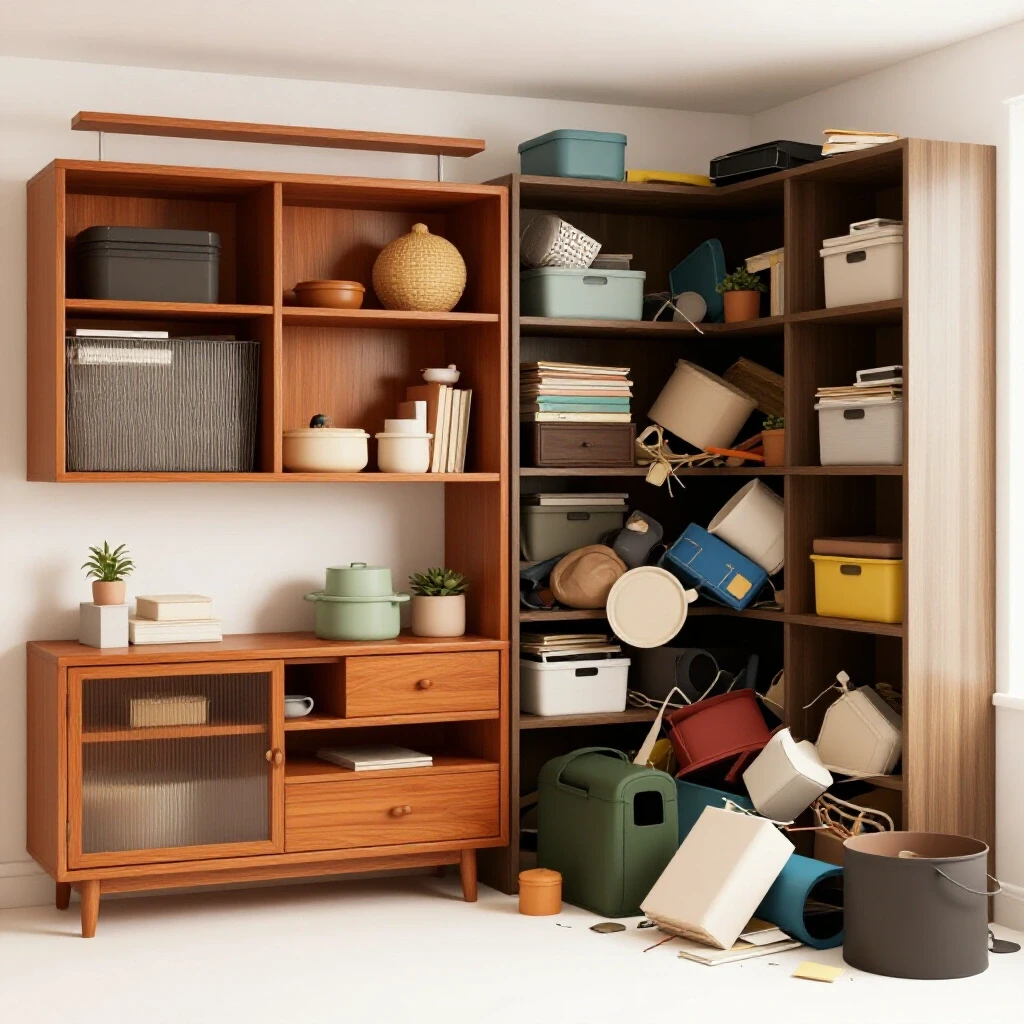
In my eleven years working in operations and logistics, I have learned that systems fail when they ignore human behavior. At work, if a warehouse is disorganized, it costs money. At home, if your essential maintenance tools are scattered, it costs you time and mental peace. My family used to struggle with this constantly. We would buy a new set of screwdrivers because we couldn’t find the old ones, only to have the new ones vanish into the same pile of clutter. By applying spatial management principles, we transformed our approach to household upkeep. We shifted from “tidying up” to building a low-friction system that anyone in the family can use.
Why Traditional Tool Storage Fails Busy Families
Retrieval friction refers to the amount of effort, time, and number of steps required to find and access a specific item. In a household setting, high retrieval friction is the primary reason why organization systems fall apart. If you have to move three boxes to find a roll of tape, you are less likely to put that tape back where it belongs.
Environmental psychology research shows that visual noise—the clutter we see every day—increases cortisol levels, especially in parents. When our basic maintenance supplies are a tangled mess, we experience “decision fatigue” before we even start a repair. I remember a Saturday when I wanted to hang a simple shelf. I spent forty-five minutes looking for the right wall anchors and a level. By the time I found them, I was too frustrated to finish the job. This is a classic logistics bottleneck. We have the supplies, but the “flow rate” of our home is blocked by poor spatial logic.
To fix this, we must understand the difference between visual and functional organization. Visual organization focuses on how things look in a photo. Functional organization focuses on how quickly you can get an item out and put it back away. For a busy family, function must always come first.
The Psychological Cost of Household Disorganization
Cognitive load is the total amount of mental effort being used in the working memory. A cluttered home forces the brain to process unnecessary information constantly, leading to exhaustion and irritability. When your maintenance supplies are disorganized, every small household problem feels like a major project.
Studies in organizational behavior suggest that people are more likely to maintain a system when the “path of least resistance” leads to order. If your fasteners and adhesives are easy to reach, you will use them and return them. If they are buried, they stay on the counter, adding to the visual clutter that wears you down.
The Logistics of a High-Efficiency Maintenance Hub
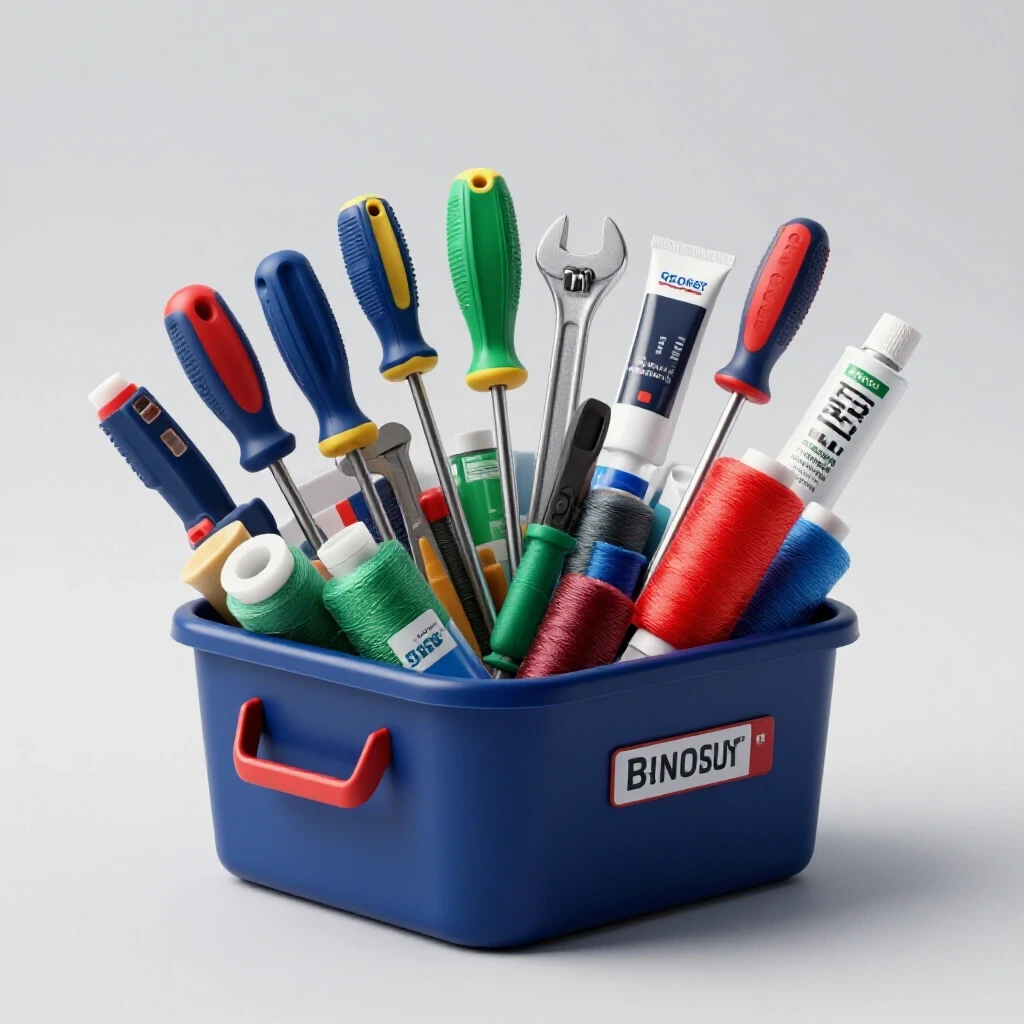
A maintenance hub is a centralized, accessible location where all materials for basic household repairs are stored and categorized. It functions as the “nerve center” for home upkeep, ensuring that tools and supplies are always ready for immediate use. This system reduces the time spent searching and prevents duplicate purchases.
In logistics, we look at “inflow” and “outflow.” Inflow is when new items enter the house. Outflow is when items are used or discarded. Most homes have an inflow problem; we buy things but don’t have a specific “home” for them. By creating a dedicated station for DIY upkeep, you create a permanent home for these items. This limits the “spatial capacity,” meaning once the bin is full, you know you have enough supplies.
Calculating Your Storage Friction Index
The Storage Friction Index is a metric used to measure how difficult it is to access an item based on its location and container type. A low score means the item is easy to grab, while a high score indicates a system that is likely to fail over time. We aim for the lowest possible friction for frequently used items.
| Container Type | Steps to Access | Visual Clarity | Friction Score (1-10) |
|---|---|---|---|
| Open Bin (No Lid) | 1 step | High | 1 |
| Clear Labeled Tote | 2 steps | High | 3 |
| Opaque Box with Lid | 3 steps | Low | 7 |
| Stacked Opaque Totes | 5+ steps | None | 10 |
As shown in the table, stacking opaque bins is a recipe for clutter. In my home, we switched to clear, modular units. Interestingly, research in spatial ergonomics suggests that seeing the contents of a container reduces the mental energy required to start a task.
Categorizing Your Essential Upkeep Materials
Categorization is the process of grouping items based on their shared function or the frequency with which they are used together. For home maintenance, this means keeping all adhesives in one spot and all fasteners in another. Proper grouping allows for “macro-sorting,” which is much easier for children and busy adults to maintain than hyper-detailed systems.
When I redesigned our family’s repair station, I focused on four main categories. These cover 90% of the small tasks that pop up in a lived-in home. By keeping these groups distinct, we reduced our sorting time by nearly 60%.
- Fasteners: This includes various sizes of nails, screws, and wall anchors. Use a divided organizer so you don’t have to sift through a “tin of mystery hardware.”
- Adhesives and Tapes: Keep wood glue, super glue, painter’s tape, and duct tape together. These are high-use items that often get lost in drawers.
- Measuring and Leveling: A standard tape measure and a small level are essential. Keeping them in the maintenance hub prevents them from wandering into the kitchen or garage.
- Basic Manual Tools: A multi-bit screwdriver, a pair of pliers, and a small hammer. You don’t need a full mechanic’s set for daily life; you just need the basics within reach.
Decluttering Sorting Log for Maintenance Supplies
A sorting log helps you track what you actually use versus what is just taking up space. By documenting your supplies, you can identify “dead stock”—items that have sat untouched for years and are only contributing to your mental fatigue.
| Item Category | Quantity Owned | Frequency of Use | Action Taken |
|---|---|---|---|
| Screws/Nails | 200+ (mixed) | Monthly | Sorted into divided bin |
| Old Glue Bottles | 5 | Never | Discarded (dried out) |
| Tape Measures | 4 | Weekly | Kept 2, donated 2 |
| Picture Wire | 1 roll | Yearly | Moved to “Long-term” zone |
Reducing Retrieval Friction with Smart Container Choice
Container selection is the act of choosing storage vessels that match the physical requirements of the items and the behavioral habits of the users. The best containers for a maintenance hub are those that provide visibility and ease of access. They should be durable enough for hardware but simple enough for a child to handle.
I have seen many families buy expensive, beautiful wooden boxes that end up becoming “black holes” for clutter. If you can’t see it, it doesn’t exist. We use clear, stackable drawers for our household repair station. This allows us to see when we are running low on a specific screw size without even opening the drawer.
- Transparency is Key: Use clear plastic or wire mesh. This eliminates the “search” phase of a project.
- Modular Sizing: Choose bins that fit together like a puzzle. This maximizes your “space utilization percentage,” which should ideally stay around 85% to allow for easy movement.
- No-Lid Options: For items used daily, consider open-top bins. This reduces the access steps from two to one.
- Heavy-Duty Materials: Maintenance items can be heavy. Ensure your shelving and bins are rated for the weight of hardware and tools.
Visual vs. Functional Organization Systems
Understanding the difference between these two systems is vital for long-term success. Visual systems are designed for aesthetics, while functional systems are designed for the “flow of life.” A family home needs a system that can survive a Tuesday night rush, not just look good for a photo.
| Feature | Visual-Focused System | Functional-Focused System |
|---|---|---|
| Primary Goal | Aesthetic appeal | Ease of use/return |
| Labeling | Small, pretty labels | Large, bold, clear text |
| Placement | Hidden in cabinets | At the “Point of Use” |
| Maintenance | High (requires constant resetting) | Low (designed for speed) |
Implementing Sustainable Maintenance Loops
A maintenance loop is a set of recurring habits and checks that ensure an organization system remains functional over time. It involves scheduled intervals for “resetting” a space and evaluating whether the current setup still meets the family’s needs. Without a loop, even the best system will eventually revert to chaos.
In our house, we use a “One-In, One-Out” rule for our repair hub. If I buy a new type of heavy-duty adhesive, an old, nearly empty bottle must go. This prevents “inventory creep,” where the volume of items slowly exceeds the storage capacity. We also perform a five-minute “zone sweep” every Sunday evening to ensure tools returned during the week are in their correct slots.
- Daily Check (1 minute): Ensure the repair bin is closed and in its designated spot.
- Weekly Reset (5 minutes): Put away any stray fasteners or tools left on counters.
- Monthly Audit (15 minutes): Check adhesive levels and replenish common screw sizes.
- Yearly Purge (30 minutes): Remove items for projects that are no longer relevant to your home.
Daily Maintenance Timelines by Family Size
The amount of time required to maintain your organization system depends heavily on the number of people using the space. A larger family generates more “touches” on the system, which requires more frequent, though not necessarily longer, resets.
| Family Size | Daily Reset Time | Weekly Reset Time | System Stability |
|---|---|---|---|
| 1-2 People | 2 Minutes | 10 Minutes | High |
| 3-4 People | 5 Minutes | 20 Minutes | Moderate |
| 5+ People | 10 Minutes | 30 Minutes | Low (Requires more labels) |
Designing Your Custom Zoning Map
A zoning map is a spatial plan that designates specific areas of the home for different activities and their associated supplies. For household maintenance, this means placing your repair hub in a “Zone 1” area—somewhere central and easily accessible, like a laundry room or a utility closet, rather than a basement or high garage shelf.
When we mapped our home, we realized our basic tools were stored in the furthest corner of the garage. This meant that if a kitchen chair was loose, the tool was 50 feet away. We moved our essential maintenance kit to a small cabinet in the hallway. Our “retrieval step count” dropped from 120 steps to 10 steps. This simple change in spatial logistics made it five times more likely that we would actually fix things when we noticed them.
- Identify High-Traffic Areas: Where do repairs usually happen? (Kitchen, bathrooms, bedrooms).
- Pick a Central Anchor: Choose a spot equidistant from these areas.
- Measure the Volume: Ensure the chosen cabinet or shelf can hold your categorized bins with room to breathe.
- Label the Zone: Make sure everyone in the house knows this is the “Fix-It Station.”
Actionable Steps for Building Your Maintenance Hub
Building a sustainable system is a process of small, logical steps. Don’t try to organize the whole house in a weekend. Start with this one hub. By focusing on the tools that keep your home running, you create a “win” that builds momentum for other areas of your life.
- Step 1: The Great Gather (30 mins). Walk through every room and collect every loose screw, roll of tape, and screwdriver. Put them all in one pile.
- Step 2: The Functional Sort (30 mins). Group them into the four categories: Fasteners, Adhesives, Measuring, and Basic Tools. Throw away anything broken or dried out.
- Step 3: Container Selection. Purchase clear, modular bins based on the volume of your sorted piles. Do not buy the bins first.
- Step 4: The Labeling Sprint. Use a label maker or a bold marker. Label the front of every bin. “Fasteners” is better than “Misc.”
- Step 5: The Family Briefing. Show every family member where the hub is. Explain that everything must return to its labeled home.
Standard Item-Density Guidelines
In logistics, we avoid “over-stuffing.” A bin that is too full is hard to search and even harder to maintain. Aim for an item-density that allows you to see the bottom of the container or at least move items around without them spilling over the edges.
- Hardware Bins: 70% full (allows for easy finger-sorting).
- Tool Drawers: 60% surface coverage (prevents layering).
- Adhesive Bins: 80% full (items should stand upright).
Conclusion: Sustainable Order Through Logical Systems
Creating a central hub for your household maintenance supplies is not about achieving a magazine-perfect look. It is about reducing the friction of daily life. By applying logistical principles—like lowering retrieval steps and managing inflow—you protect your time and your mental health.
My family’s journey from a cluttered junk drawer to a functional repair station didn’t happen overnight. It required us to be honest about our habits and to choose systems that worked for us, not against us. When you build a system based on function, visibility, and ease of use, you create a home that supports you. Start today by gathering your supplies and choosing one central spot. Your future, less-stressed self will thank you.
Frequently Asked Questions
What are the most important items to keep in a basic household repair kit?
Focus on high-utility items: a multi-bit screwdriver, a 16oz hammer, a 25-foot tape measure, needle-nose pliers, an assortment of wall anchors/screws, wood glue, and painter’s tape. These cover the vast majority of common residential tasks like hanging pictures or tightening furniture.
How can I stop my family from moving tools and not putting them back?
The key is reducing “return friction.” Ensure the storage spot is central and the bins are clearly labeled. If a bin is easy to open and its location is convenient, family members are statistically more likely to return items. Use “Zone 1” storage for these high-use tools.
Why do clear bins work better than decorative ones for home maintenance?
Clear bins utilize “visual processing” to help you find items instantly. Decorative, opaque bins require your brain to remember what is inside, which adds to your cognitive load. For maintenance supplies, seeing the specific screw or tape roll you need saves time and reduces frustration.
How much space do I really need for a functional upkeep station?
Most families can fit a comprehensive maintenance hub in about 2 to 3 cubic feet of space. This usually translates to one dedicated shelf in a utility closet or a stack of four to five modular drawers. The goal is density without overcrowding.
What is the best way to organize small fasteners like nails and screws?
Use a divided organizer with removable cups. This allows you to take just the cup of “1-inch wood screws” to your project site rather than the whole heavy box. Sorting by size and type prevents the “needle in a haystack” scenario.
How often should I audit my household supplies?
A quick monthly check is usually enough to see if you are low on adhesives or common fasteners. A deeper purge should happen once a year to remove items from finished projects or materials that have expired, such as old caulking or glue.
Can I use a digital inventory app for my home tools?
While digital tracking is great for large warehouses, it often adds too much friction for a family home. A visual system—where you can see your stock levels through clear bins—is usually more sustainable for busy parents and professionals.
Where is the best place in a house to store these supplies?
The “Point of Use” principle suggests storing items near where they are used. Since repairs happen all over, a central “Zone 1” location like a laundry room, hallway closet, or a pantry shelf is ideal. Avoid the garage or basement if it feels like a “trek” to get there.
How do I handle “specialty” items that don’t fit the main categories?
Create a “Project Bin” for items related to a specific, ongoing task. Once that task is done, the items should either be integrated into the main categories or moved to long-term storage (Zone 3) if they aren’t needed for daily maintenance.
What should I do if my storage space is extremely limited?
Focus on “verticality” and “multi-functional tools.” Use a wall-mounted pegboard or a slim, rolling cart that can tuck into a closet. A single multi-bit screwdriver replaces ten individual ones, saving significant spatial volume.
(This article was written by one of our staff writers, Christopher Bennett. Visit our Meet the Team page to learn more about the author and their expertise.)