How to Reorganize a Room for Lasting Results (Proven Strategies)

In recent years, the home organization industry has exploded into a multi-billion dollar market. We see beautiful images of rainbow-sorted pantries and perfectly labeled bins on social media, yet many families find these setups impossible to maintain. As a logistics professional with over a decade of experience, I have learned that the most aesthetically pleasing systems often fail because they ignore the fundamental principles of human movement and spatial flow.
My own journey into sustainable decluttering began when I realized that my family was spending nearly four hours every weekend simply resetting our living room. We had the bins, the labels, and the shelves, but the clutter returned within forty-eight hours. By applying the same operational metrics I use to manage supply chains, I began to analyze why our initial storage solutions for families were breaking down. The transition from a “pretty” home to a functional one required a deep dive into retrieval friction and spatial capacity.
Understanding Why Initial Home Organization Efforts Often Fail
System failure in a household occurs when the energy required to maintain an order exceeds the daily energy available to the residents. This often happens because systems are designed for how we wish we lived rather than how we actually move through our homes. When a storage method requires too many steps, it is naturally abandoned.
In logistics, we look at “dwell time”—how long an item sits in a transition zone before reaching its final destination. In many homes, the “first pass” at organizing fails because it creates high-dwell zones. For example, we once installed a beautiful set of nested baskets for our children’s building blocks. To put them away, a child had to remove a lid, place the blocks inside, and stack the basket back on a shelf. This created three distinct steps of friction.
Research in environmental psychology suggests that visual clutter acts as a constant low-grade stressor, taxing our cognitive load. When a system is too complex, we experience decision fatigue. Instead of deciding where an item goes, we leave it on the counter. During our second attempt at managing this space, we replaced the nested baskets with a single, large, open-top floor bin. We reduced the retrieval and storage steps from three to one. This simple shift in home organization systems meant the blocks actually stayed off the floor.
The Science of Retrieval Friction in Family Storage Systems
Retrieval friction is the measurable resistance encountered when trying to access or put away an item. It is calculated by counting the physical actions—such as opening doors, moving other items, or unlatching lids—required to complete a task. Lowering this friction is the key to reducing household clutter long-term.
When I audited our kitchen for the second time, I realized our “functional” pantry was actually a high-friction zone. We had cereal in airtight containers that looked sleek but required two hands to open and a specific shelf placement to fit. For a busy professional rushing through breakfast, those extra four seconds of effort were enough to leave the box on the counter.
Measuring Movement in the Modern Home
Spatial ergonomics studies show that the most frequently used items should be stored between knee and shoulder height. During our system redesign, we categorized every item in our high-traffic zones by its “velocity”—how often it was touched. Items used daily were moved to the “strike zone” (chest level), while items used once a month were moved to higher or lower shelves.
- High-Velocity Items: Keys, shoes, school bags, daily vitamins.
- Medium-Velocity Items: Baking supplies, library books, gym gear.
- Low-Velocity Items: Holiday decor, seasonal clothing, spare linens.
By mapping these velocities, we reduced the average daily “search time” in our house by approximately 15 minutes per person. That is over an hour of collective family time recovered every single day.
Mapping Spatial Capacity to Real-World Family Traffic
Spatial capacity is the maximum amount of volume a storage area can hold before it loses its functional utility. Once a shelf is more than 80% full, the “retrieval effort” increases exponentially because you must move items to reach what is behind them. Maintaining a buffer is essential for a sustainable decluttering journey.
In our first attempt to organize the mudroom, we utilized 100% of the shelf space. It looked efficient, but it left no room for the “inflow” of new items, like a guest’s coat or a new pair of boots. This led to an immediate spillover onto the floor. In our revised plan, we strictly enforced a 25% “air gap” rule on every shelf.
| Storage Metric | Initial System (Phase 1) | Revised System (Phase 2) | Improvement |
|---|---|---|---|
| Steps to put away shoes | 4 steps (Open closet, find bin, place, close) | 1 step (Drop in open cubby) | 75% faster |
| Shelf Density | 95% (Packed tight) | 70% (Visible gaps) | Easier retrieval |
| Label Type | Decorative Cursive | Bold Block / Icon Labels | Faster recognition |
| Weekly Reset Time | 120 Minutes | 20 Minutes | 83% reduction |
This table illustrates how shifting from a “maximized” space to a “functional” space dramatically reduces the time spent on maintenance.
Selecting Durable Storage Solutions for Families
Functional home storage must be able to withstand the physical demands of a busy household while remaining easy to clean and navigate. Choosing the wrong materials often leads to a system’s physical collapse, prompting a need for a second, more robust intervention.
When we first organized our utility closet, we used inexpensive fabric bins. Within six months, the sides had bowed, and the fabric was stained. They were difficult to slide on the wire shelving, which added friction. In our second iteration, we switched to heavy-duty, ventilated plastic bins with integrated handles. These units are “low-friction” because they slide easily and allow the user to see the contents without pulling the bin all the way out.
The Problem with Opaque Containers
While opaque bins hide visual “noise,” they often lead to “out of sight, out of mind” syndrome. For families, this results in rebuying items they already own because they cannot find them. We found that clear bins are superior for high-turnover items like craft supplies or pantry snacks. For items that are visually messy but necessary—like tangled charging cables—we used semi-transparent frosted bins. This balanced the need for visibility with the desire for a calm environment.
- Industrial Grade Totes: Use for garage and attic storage to prevent pest damage and stacking failures.
- Clear Acrylic Dividers: Use in drawers to keep “like with like” without hiding the inventory.
- Open-Front “Hopper” Bins: These are excellent for toy rooms because they allow for “toss-in” cleanup while keeping items categorized.
- Smart Label Systems: For deep storage, we implemented QR code labels that link to a digital photo of the bin’s contents, eliminating the need to dig through boxes.
Implementing Feedback Loops for Long-Term Maintenance
A feedback loop in home management is a regular interval where the system is checked for “drift” and adjusted. No system is static; as children grow or hobbies change, the storage must evolve. Without these loops, even the best-designed home organization systems will eventually fail.
In our home, we established a “Sunday Logistics Sync.” This is not a deep clean, but a 10-minute walk-through to identify where the system is breaking. If we notice shoes piling up in a specific corner, we don’t scold the kids; we ask if the current shoe bin is too full or too far away. This shift from “blaming the person” to “blaming the process” is a core tenet of industrial operations that works wonders for family harmony.
Reducing Decision Fatigue in Sorting
Decision fatigue is the psychological exhaustion caused by making too many choices. When we face a pile of clutter, our brains must decide: Keep? Toss? Donate? Where does it go? To combat this, we created a “Sorting Matrix” that we keep on the inside of our utility door. It removes the need for deep thought during a quick cleanup.
- Does it have a home? Yes -> Put it there immediately.
- Does it have a home? No -> Place in the “Transit Bin” for weekly processing.
- Is it broken/expired? Yes -> Trash/Recycle.
- Is it high-value but unused? Yes -> Donate bin.
By using this framework, we reduced the mental energy required to tidy up. We no longer have to “think” about organizing; we simply follow the protocol.
Designing Child-Friendly Zoning for Shared Spaces
Zoning is the practice of dedicating specific areas to specific activities and ensuring all related tools are stored within that zone. In our first attempt at a playroom, we had “general” toy bins. In the second version, we created “activity stations.” This reduced the amount of “cross-contamination” between toy sets, which is a major source of visual overwhelm.
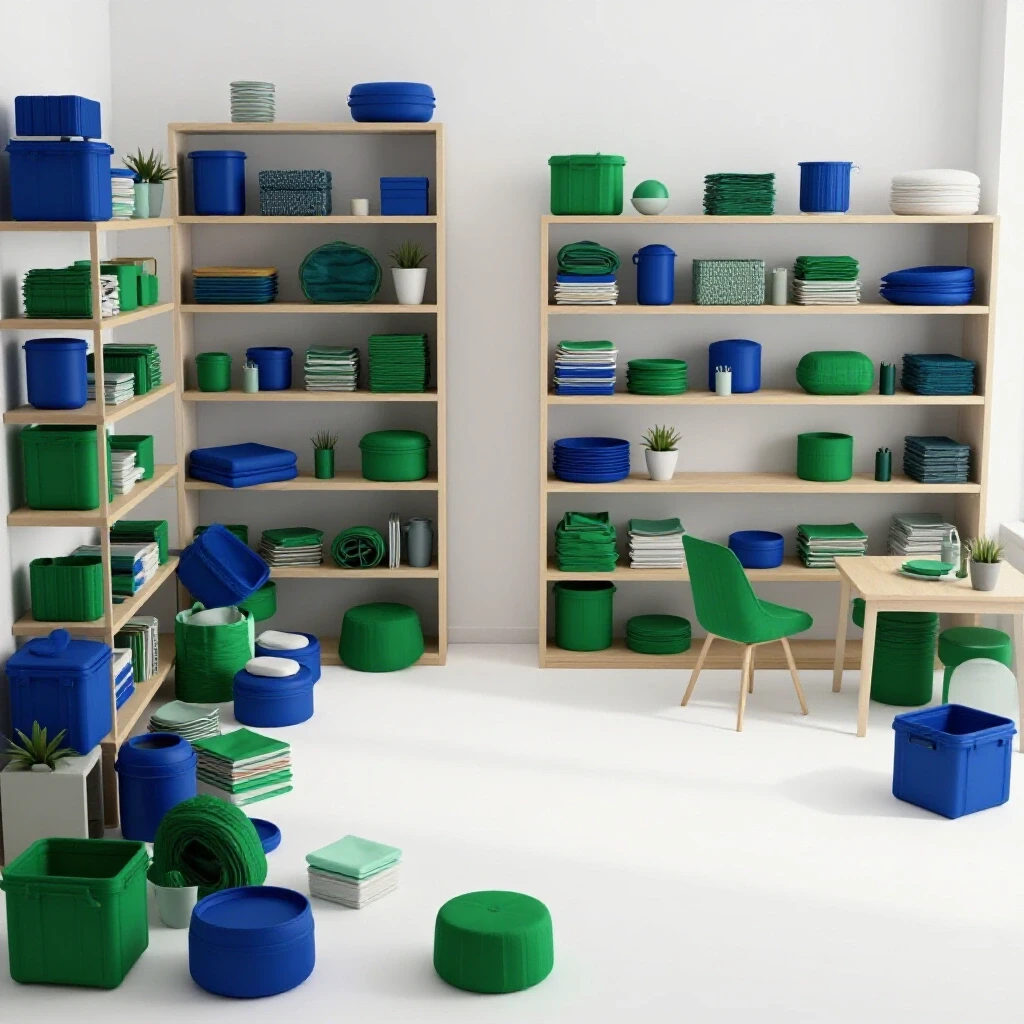
Environmental psychology research indicates that children are more likely to participate in cleanup when they understand the “spatial boundaries” of their belongings. We used color-coded zones: the “Blue Zone” for building blocks, the “Yellow Zone” for art, and the “Green Zone” for books.
- Zone Accessibility: Ensure the most used toys are at the child’s eye level (roughly 30-40 inches from the floor).
- Weight Limits: Never store heavy items above a child’s waist height to prevent accidents and make retrieval easier.
- Visual Cues: Use picture labels alongside text for younger children who are not yet fluent readers.
Actionable Metrics for a Functional Household
To ensure our storage solutions for families remain effective, we track a few simple metrics. These aren’t meant to be rigid, but rather to serve as a “check engine light” for our home’s organization.
- The Two-Minute Rule: If any room takes more than two minutes to “reset” to its baseline state, the system in that room is too complex and needs a friction audit.
- The One-In, One-Out Ratio: For high-volume categories like clothing or toys, we maintain a strict 1:1 ratio to prevent spatial capacity overages.
- The Touch Count: We aim for a maximum of two “touches” to put any daily-use item away. (Touch 1: Pick up. Touch 2: Place in bin).
By focusing on these numbers, we have moved away from the cycle of “binge cleaning” followed by “clutter reversion.” Instead, we have a steady, low-maintenance flow that accommodates the reality of our busy lives.
Final Steps Toward a Sustainable Home
The transition from a cluttered home to an organized one is rarely a straight line. It is an iterative process of trial and error. If your first attempt at organizing failed, it likely wasn’t because you were “lazy” or “messy.” It was likely because the system was too rigid for the fluid nature of family life.
Start by choosing one high-friction area—perhaps the “junk drawer” or the shoe rack. Audit the number of steps it takes to use that space. Look for ways to remove even one step. Switch a lidded box for an open one. Move a shelf up three inches. These small, logistical adjustments are the foundation of a home that stays tidy because it is easy to live in.
Frequently Asked Questions
Why does my house get messy again so quickly after I organize it? Clutter reversion usually happens because the storage system has too much “friction.” If it takes more than two or three steps to put an item away (like opening a closet, then a bin, then a bag), people will naturally leave the item on a flat surface instead. To fix this, simplify the storage to a single step, like an open basket.
How do I get my kids to follow the organization system? Design the system for the “laziest” member of the family. Use open-top bins at their height and use picture labels. If a child has to struggle with a heavy lid or a high shelf, they won’t do it. Make the “path of least resistance” the one that leads to the bin.
Is it better to have clear bins or hidden storage? For items you use every day, clear bins are usually better because they reduce the “search time” and cognitive load of remembering where things are. For items that look messy (like cords or tools), use opaque or frosted bins to reduce visual noise, but ensure they are clearly labeled.
What is the “80% Rule” in home organization? The 80% Rule suggests that you should never fill a shelf or bin more than 80% full. This extra 20% of “white space” allows you to remove and replace items without knocking others over. It also provides a buffer for new items entering the home.
How often should I update my home organization systems? You should perform a “friction audit” every six months or whenever you notice a specific area is constantly messy. As children grow or your daily routines change, your storage needs will evolve. A system that worked for a toddler will not work for a school-aged child.
What are the best labels for a busy family? Bold, sans-serif block fonts are easiest for the brain to process quickly. For shared spaces, use labels that describe the category (e.g., “Snacks”) rather than the specific item (e.g., “Granola Bars”). This makes the system more flexible as your inventory changes.
How do I handle “sentimental clutter” that I can’t throw away? Treat sentimental items as “low-velocity” inventory. Store them in high-quality, airtight bins in a less accessible area like a top shelf or a climate-controlled attic. Limit yourself to a specific volume (e.g., one bin per person) to prevent it from encroaching on your daily living space.
What is “zoning” and why does it matter? Zoning means keeping all the items needed for a specific activity in one place. For example, a “Coffee Zone” should have the machine, mugs, sugar, and spoons all within arm’s reach. This reduces the amount of walking and searching required to complete a task, which keeps the rest of the house tidier.
How can I reduce the amount of stuff coming into my house? Implement a “one-in, one-out” policy. If you buy a new pair of shoes, one old pair must be donated or recycled. This keeps your total inventory within your home’s spatial capacity and prevents the “slow creep” of clutter.
Are expensive organizing products necessary for a functional home? No. Functionality is about the system, not the container. While high-quality bins can be more durable, you can achieve the same reduction in friction using cardboard boxes or repurposed containers, provided they fit the space and the workflow of your family.
(This article was written by one of our staff writers, Christopher Bennett. Visit our Meet the Team page to learn more about the author and their expertise.)