How to Reduce Stress by Decluttering Your Home (Step-by-Step Guide)

Changing the way a home functions is often more about logistics than aesthetics. For 11 years, I have managed complex supply chains and operations, but my biggest challenge was managing the flow of items in my own house. I found that most systems fail because they require too much effort to maintain during a busy week. By focusing on how easily we can put things away, rather than how perfect they look, we can create a home that supports our daily lives instead of draining our energy.
Why Household Systems Fail Under Pressure
Spatial logistics involves the flow of items through a home. When the volume of items exceeds the capacity to manage them, bottlenecks occur. This causes visual noise that drains mental energy. Understanding the “why” behind clutter helps us build systems that survive the daily rush of family life.
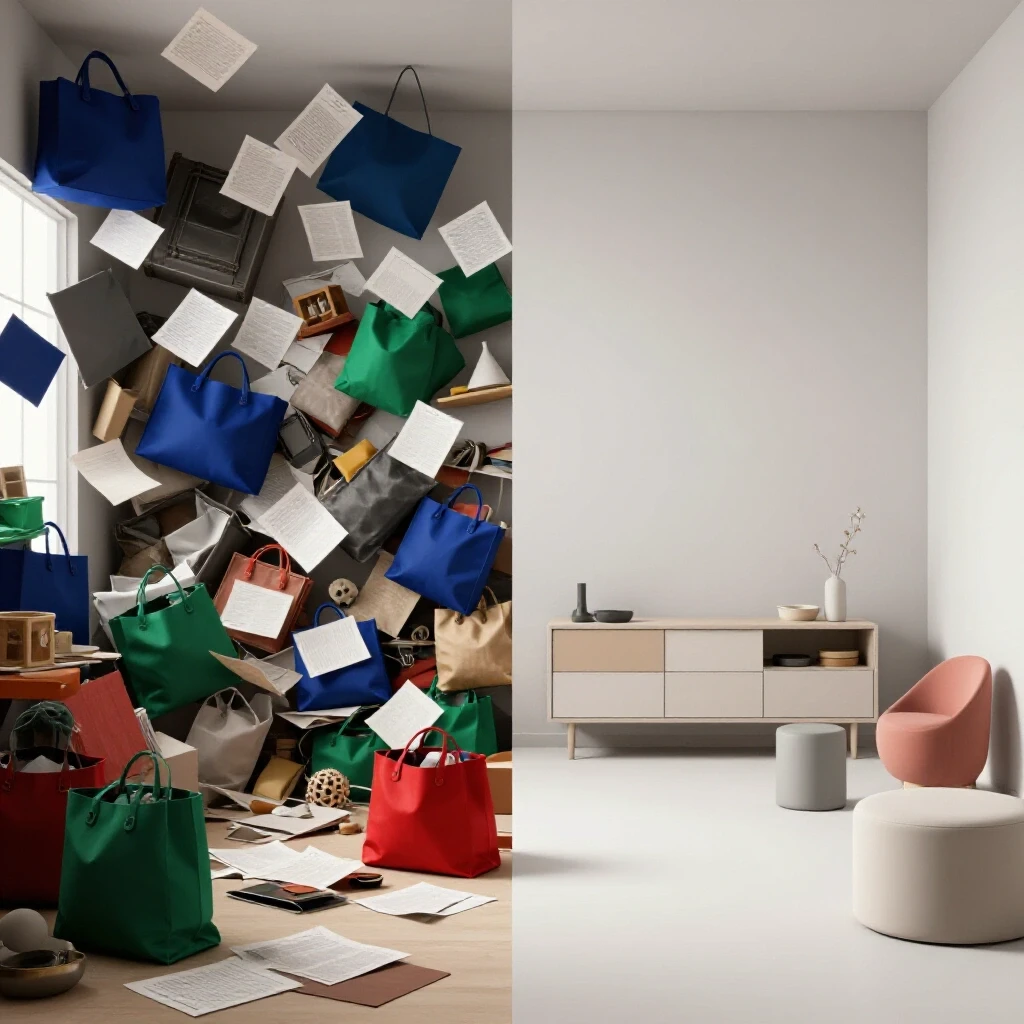
In my professional life, a bottleneck is a point where the flow of work is slowed down. At home, a bottleneck is often a flat surface like a kitchen island or a hallway bench. When I analyzed our home, I realized that we were treating our living spaces like long-term storage instead of active work zones.
Research in environmental psychology suggests that “visual noise” acts as a constant distraction. Every item left out is a visual reminder of an unfinished task. For a busy parent, seeing a pile of mail or a basket of unsorted laundry creates a “to-do” list that never ends. This leads to a state of constant low-level tension.
Visual Processing and Cognitive Load
Visual processing refers to how our brains interpret the physical environment. A cluttered room forces the brain to constantly scan and identify objects, leading to decision fatigue. By reducing the number of visible items, we lower the cognitive load required to simply exist in and navigate our living spaces.
When my family first started our decluttering journey, we noticed that we were making hundreds of micro-decisions every hour. Where is the remote? Where are the keys? Who left this toy here? By applying industrial sorting principles, we reduced these decisions. We aimed for “spatial clarity,” where every item has a fixed address that is easy to remember.
Identifying Retrieval and Reset Friction
Friction is the amount of physical and mental effort required to complete a task. In home organization, retrieval friction is how hard it is to get something out, while reset friction is how hard it is to put it back. High-friction systems, like stacked boxes with lids, almost always fail in busy homes.
I tracked how long it took my children to clean up their play area. Using heavy bins with difficult latches, it took them 15 minutes, and they needed constant prompting. When we switched to open-top baskets, the “reset” time dropped to four minutes. We moved from a high-friction system to a low-friction one, which significantly lowered the daily stress of evening cleanups.
The High-Speed Sorting Framework
A sorting framework is a logical process for categorizing items based on their utility and frequency of use. Instead of moving clutter from one room to another, this method forces a decision on every object. It creates a clear path for items to either stay in a functional zone or leave the home.
To start, I used a “logistics audit” on our most cluttered rooms. We didn’t look for what to throw away; we looked for what was actually “active.” Active items are used daily or weekly. Everything else is “static” and should be moved to deep storage or removed entirely.
Calculating Your Storage Capacity Limits
Spatial capacity is the maximum amount of “stuff” a room can hold while remaining functional. Most professionals recommend keeping storage units at about 70% capacity. This allows for the easy movement of items and prevents the “Tetris effect,” where you have to move three things to reach one.
In our home, we measured our shelf space and realized we were at 110% capacity. We were literally shoving items behind others. By reducing our inventory to fit the 70% rule, we eliminated the frustration of items falling out every time we opened a cabinet.
- Active Storage: Items used 5-7 times per week (stored at eye level).
- Frequent Storage: Items used 1-4 times per week (stored in easy-reach drawers).
- Occasional Storage: Items used monthly (stored on high shelves).
- Deep Storage: Seasonal items (stored in garage or attic).
The Three-Second Rule for Sorting
The three-second rule is a decision-making metric used to prevent sorting fatigue. If you cannot decide where an item belongs or if it is useful within three seconds, it is placed in a “quarantine” box. This keeps the momentum of the decluttering process high and prevents emotional stalling.
| Item Category | Sorting Action | Required Decision Time |
|---|---|---|
| Daily Essentials | Assign to “Prime Zone” | < 1 second |
| Sentimental Items | Place in “Review Later” bin | 3 seconds |
| Trash/Recycling | Immediate Disposal | < 1 second |
| Donations | Place in “Outflow” box | 2 seconds |
| Uncertain | Quarantine for 30 days | 3 seconds |
Designing Functional Zones for the Whole Family
Zoning is the practice of grouping related activities and their required tools in one specific area. This reduces the “travel time” within a house. When a home is zoned correctly, the family knows exactly where an activity starts and ends, which naturally keeps the mess contained to one area.
My family struggled with school papers and work gear taking over the dining table. We created a “Landing Zone” near the entrance. This zone was designed to handle the “inflow” of the day. By creating a dedicated spot for bags and mail, we protected the rest of the house from the daily clutter creep.
Point-of-Use Storage Strategies
Point-of-use storage means keeping items exactly where they are used. While this sounds simple, many homes store items based on category rather than utility. For example, keeping coffee pods near the machine instead of in a distant pantry reduces steps and keeps the counter clear of unnecessary movement.
We mapped our morning routine and found we were walking across the kitchen multiple times just to make breakfast. By rearranging our cabinets so that all breakfast items were in one “Breakfast Zone,” we saved about five minutes every morning. This small logistical change reduced the “morning rush” friction that used to start our day with stress.
Creating Low-Friction Zones for Children
Children have different spatial needs and physical limitations than adults. A child-friendly zone uses storage that is at their height and requires zero complex maneuvers. Using open bins and clear labels (or pictures for younger kids) allows them to participate in maintaining the home without constant adult help.
- Height Check: All toy bins should be below the child’s waist height.
- No Lids: Remove lids from daily-use toy containers to encourage easy resets.
- Visual Cues: Use picture labels so children can identify where items go without reading.
- Volume Control: Limit the number of items in a zone to what the child can clean up in five minutes.
Selecting Low-Friction Storage Gear
The right storage gear is defined by its functionality rather than its appearance. Low-friction containers are easy to open, easy to see into, and easy to clean. Selecting gear based on these logistical traits ensures that the system remains sustainable long after the initial organization project is finished.
I once bought a set of beautiful, matching wooden boxes with heavy lids. Within two weeks, they were empty, and the items were piled on top of them. The “friction” of lifting the lid was too high for a quick cleanup. We replaced them with clear, stackable drawers, and the clutter disappeared because we could see the contents and access them with one hand.
The Storage Friction Index
The Friction Index measures how many physical steps are required to put an item away. A “one-motion” system (like a hook) is the lowest friction. A “four-motion” system (move a box, open the lid, place the item, replace the lid) is the highest friction.
| Storage Type | Motion Count | Friction Level | Best Use Case |
|---|---|---|---|
| Wall Hooks | 1 | Very Low | Coats, bags, towels |
| Open Baskets | 1 | Low | Toys, shoes, laundry |
| Clear Drawers | 2 | Medium | Office supplies, crafts |
| Lidded Bins | 3-4 | High | Seasonal clothes, holiday decor |
| Stacked Totes | 5+ | Very High | Long-term archival storage |
Why Transparency Matters in Storage
Visual transparency reduces the mental effort of searching. When you can see through a container, your brain doesn’t have to “remember” what is inside. This is especially helpful for households with multiple people who may not all remember where every item was placed during the last organization sprint.
In our pantry, we switched from solid baskets to wire ones. Suddenly, we stopped buying “extra” jars of pasta sauce because we could see exactly how many we had left. This saved us money and reduced the physical volume of items we had to manage. Transparency creates an automatic inventory management system.
Building Sustainable Maintenance Habit Loops
A habit loop is a routine that becomes automatic over time. In a home, these loops are the “maintenance” tasks that prevent clutter from returning. By building small, five-minute routines into our day, we can manage the “inflow” of items before they become an overwhelming backlog.
The key to our success was the “Evening Reset.” This is not a deep clean. It is a 10-minute logistical sweep where we move items back to their designated zones. Because we had already lowered the friction of our storage, this 10-minute task felt manageable even after a long day at work.
Managing Inflow and Outflow
Inflow is everything that enters the home, from groceries to junk mail. Outflow is the process of removing items that are no longer needed. A balanced home requires that outflow equals or exceeds inflow. If you bring in a new toy, an old one must be donated or recycled.
- The “One-In, One-Out” Rule: For every new item purchased, one item must leave the house.
- Daily Mail Sort: Sort mail over the recycling bin to prevent paper buildup.
- Donation Station: Keep a permanent box in a closet for items to be donated; once full, take it immediately to a center.
- Digital Inventory: Use a simple phone app to take photos of receipts or kids’ artwork to reduce physical paper clutter.
The Power of the Five-Minute Sweep
A five-minute sweep is a timed interval where every family member focuses on returning items to their zones. This prevents the “reversion effect,” where a home becomes messy again within days of being organized. By timing the task, it feels less like a chore and more like a quick transition.
We found that doing this right before dinner worked best for us. It signaled the transition from the “busy” part of the day to the “relaxing” part of the evening. Our average cleanup time for a family of four is now 12 minutes per day, down from nearly 45 minutes before we simplified our systems.
Practical Metrics for a Functional Home
Measuring success helps maintain motivation. Instead of aiming for “perfection,” we measure “efficiency.” If we can find what we need in under 30 seconds and put it away in under 10 seconds, the system is working. These metrics provide a realistic goal for busy families.
- Retrieval Time: Goal is < 30 seconds for daily items.
- Reset Time: Goal is < 15 minutes for the entire main living area.
- Density: Goal is < 70% shelf/drawer occupancy.
- Decision Speed: Goal is < 3 seconds per item during sorting.
By applying these logistics principles, I transformed our home from a source of stress into a place of recovery. We stopped fighting the clutter and started managing the flow. The result wasn’t just a tidier house; it was a significant reduction in the mental fatigue that comes from living in a disorganized space.
Frequently Asked Questions
Why does my house get messy again just days after I organize it?
Most homes revert to clutter because the storage systems have too much “friction.” If it takes more than two steps to put an item away, people will likely leave it on a counter instead. To fix this, simplify your containers and move storage closer to where items are actually used.
How can I get my kids to help with the organization?
Focus on low-friction, “one-motion” storage. Use open bins at their height and label them with pictures. When the system is easy enough for a child to use without thinking, they are much more likely to follow it. Keep the cleanup sessions short, ideally under ten minutes.
What is the best way to start when I feel completely overwhelmed?
Start with a “spatial audit” of one small area, like a single drawer or a “landing zone” by the door. Use the three-second rule to make quick decisions. Seeing immediate progress in a high-traffic area provides the momentum needed to tackle larger rooms.
How do I decide what to keep and what to get rid of?
Use a “frequency of use” metric. If you haven’t used an item in the last year, it is likely “static inventory” and is taking up valuable space. If you are unsure, place the items in a “quarantine box” for 30 days. If you don’t reach for them in that time, you can safely donate them.
Do I need to buy expensive bins and labels to be organized?
No. In fact, many expensive systems are too complex for daily life. The most effective storage is often the simplest, such as basic clear bins or sturdy wall hooks. Focus on the functionality and “motion count” of the storage rather than the brand or style.
How do I manage the constant influx of paper and mail?
Establish a “Landing Zone” with a dedicated recycling bin. Process mail immediately by tossing junk and filing only what is necessary. For kids’ school papers, choose one or two “masterpieces” to keep and digitize the rest by taking a photo.
What is “decision fatigue” and how does it relate to clutter?
Decision fatigue happens when your brain is exhausted from making too many choices. A cluttered home forces you to decide what to do with every item you see. By creating fixed “addresses” for items, you eliminate these micro-decisions and save your mental energy for more important tasks.
How can I maintain a tidy home when I work full-time?
The key is the “Evening Reset.” Spend 10-12 minutes each night returning items to their zones. Because you have designed a low-friction system, this should be a quick, low-energy task. It prevents the small messes from accumulating into a weekend-long project.
Is it possible to be organized in a small house with no storage?
Yes. In small spaces, “spatial capacity” is even more important. You must be stricter with the “one-in, one-out” rule and utilize vertical space with hooks and shelving. Focus on keeping only the “active” items in your living areas and moving everything else out.
What should I do with sentimental items that I don’t use?
Sentimental items should be kept in “Deep Storage” rather than your active living zones. Limit yourself to one “memory box” per person. This allows you to keep the most meaningful items without letting them interfere with the functionality of your daily life.
(This article was written by one of our staff writers, Christopher Bennett. Visit our Meet the Team page to learn more about the author and their expertise.)