How to Fix Home Maintenance Issues Efficiently (Expert Tips)

You find a damp spot on the basement floor or notice a window that sticks every July. Does this require a total system replacement, or can a minor adjustment solve the root cause? After 17 years as a facilities technician, I have learned that the most effective repairs are often the most restrained. Most homeowners overreact by replacing entire components when a simple, data-driven calibration would have sufficed. My method involves using building science to identify the smallest possible intervention that restores mechanical balance and structural integrity.
The Science of Systematic Property Assessments
Building science is the study of how heat, air, and moisture move through a structure. It treats a house as a set of interconnected systems rather than isolated parts. Understanding these physical laws allows us to diagnose issues by looking at the “why” behind a symptom, such as how air pressure affects moisture levels.

When I walk into an older property, I do not look for what is broken first. Instead, I look for how the building is currently breathing and shedding water. I start with a baseline assessment of the envelope, which is the physical separator between the conditioned and unconditioned environment. If the envelope is compromised, even the most expensive HVAC system will struggle to maintain efficiency.
I rely on the “minimum effective dose” of repair. For example, if a room is drafty, I do not immediately suggest new windows. I check the weatherstripping and use a smoke pen to find the specific point of air infiltration. Often, a five-dollar tube of sealant or a minor hinge adjustment solves a problem that a five-thousand-dollar window replacement was intended to fix.
Understanding Moisture Migration and Capillary Action
Capillary action is the ability of a liquid to flow in narrow spaces without the assistance of, or even in opposition to, external forces like gravity. In home maintenance, this explains how groundwater travels upward through porous concrete foundations or brickwork. This process can lead to hidden rot and mold if not managed correctly.
In my experience, moisture is the primary enemy of structural longevity. To address it without over-repairing, you must understand how water moves through materials. I once tracked a “roof leak” that turned out to be condensation from a poorly insulated bath fan duct. By simply wrapping the duct in R-6 insulation, the “leak” vanished.
To manage moisture, I use a moisture meter to check the moisture content (MC) of framing lumber. Ideally, interior wood should stay between 6% and 12%. If I see readings above 15%, I know the environment is ripe for fungal growth. Rather than tearing out the wall, I first look for the source of the high humidity or the exterior entry point.
| Symptom | Potential Root Cause | Diagnostic Test |
|---|---|---|
| Efflorescence on brick | Capillary rise from soil | Moisture meter at base of wall |
| Peeling paint near windows | Vapor pressure imbalances | Thermal camera check for air leaks |
| Musty smell in basement | High relative humidity | Hygrometer monitoring (target <50%) |
| Sagging floor joists | Chronic moisture absorption | Wood moisture content (MC%) probe |
Essential Diagnostic Tools for Precise Interventions
Precise home care requires moving beyond guesswork and using tools that provide objective data. These instruments allow us to see through walls and measure invisible forces like electrical resistance or thermal bridging. By using data, we avoid the trap of “replacing parts until it works,” which is both expensive and inefficient.
I have spent nearly two decades refining my toolkit to focus on diagnostic accuracy. You do not need industrial-grade equipment, but you do need tools that provide repeatable results. These tools help you establish a baseline for your home so you can detect subtle changes before they become catastrophic failures.
- Digital Hygrometer: Measures relative humidity and temperature. I keep these in basements and attics to ensure humidity stays below 50% to prevent mold.
- Pinless Moisture Meter: Uses electromagnetic signals to detect moisture behind tile or under flooring without damaging the surface.
- Infrared (IR) Thermometer: Measures surface temperatures to identify “cold spots” where insulation may have settled or air is leaking.
- Circuit Analyzer: Tests for proper wiring, ground integrity, and voltage drops under load, which is critical for older electrical systems.
- Water Pressure Gauge: Screws onto a hose bib to check if the home’s PSI is within the safe range of 40 to 80 PSI.
Thermal Imaging and Moisture Detection Metrics
Thermal bridging occurs when a more conductive material allows heat to bypass an insulation layer. This creates temperature differentials that can cause localized condensation and structural decay. Identifying these bridges allows for targeted insulation fixes rather than whole-house retrofits.
When I use a thermal camera, I am looking for “cold signatures” during the winter. A cold line along a ceiling joist indicates a thermal bridge. Instead of blowing in more attic insulation everywhere, I might only need to add a small piece of rigid foam over that specific bridge. This targeted approach saves money and maintains the building’s original design intent.
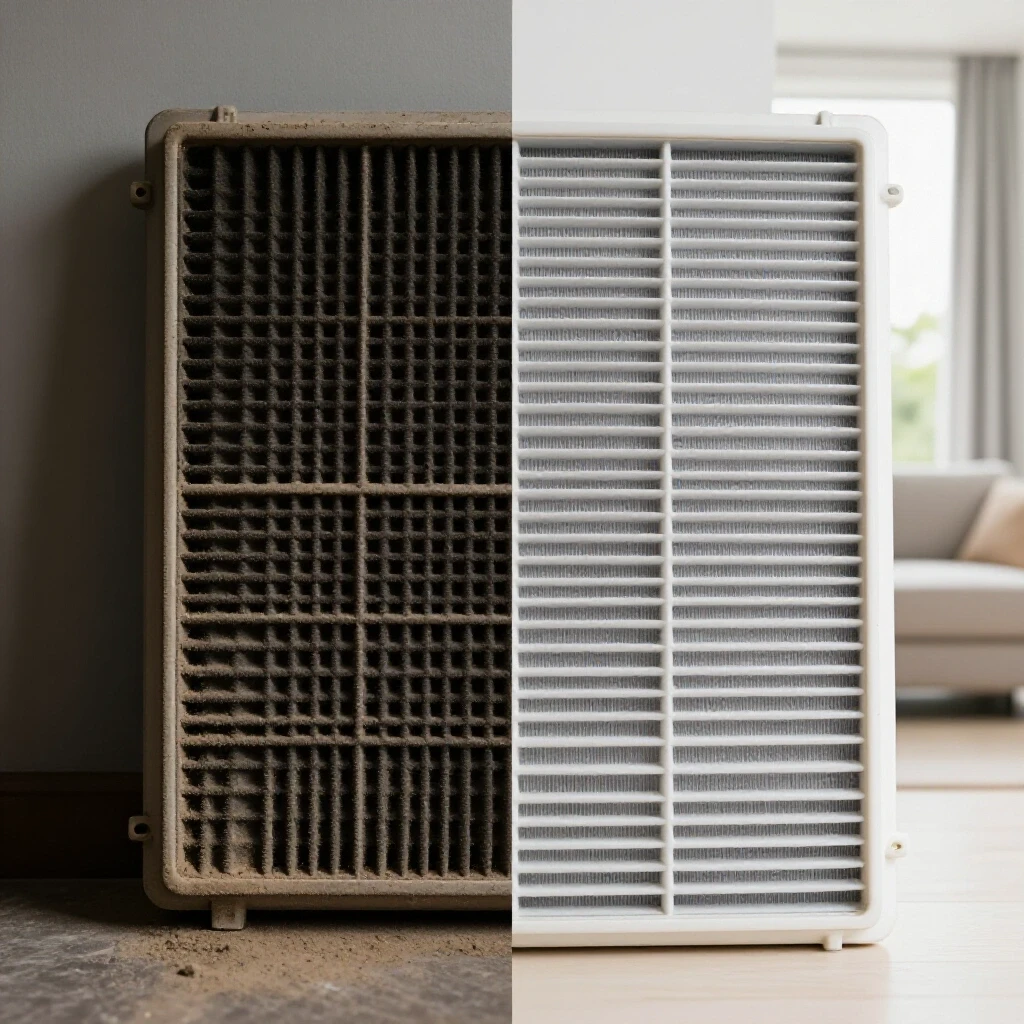
I also monitor the “delta-T” or temperature difference across HVAC coils. A healthy system usually shows a 16°F to 22°F difference between the return and supply air. If the delta-T is lower, I check the air filter or the cleanliness of the evaporator coil before calling a technician for a refrigerant check.
Managing Water Flow and Drainage Pathways
Drainage pathways are the planned routes that water takes to move away from a structure, including gutters, downspouts, and site grading. Effective drainage relies on gravity and the maintenance of a consistent slope to prevent water from pooling near the foundation. Proper management prevents hydrostatic pressure from damaging basement walls.
I have seen many homeowners spend thousands on interior basement waterproofing systems. In about 70% of those cases, the issue could have been solved by cleaning the gutters and extending downspouts six feet away from the house. If water is allowed to saturate the soil next to the foundation, it creates immense pressure that will eventually find a way through the smallest crack.
A simple way to test your drainage is to observe the property during a heavy rain. Look for “ponding” or areas where water sits for more than an hour after the rain stops. I aim for a grading slope of at least one inch of drop per foot of distance away from the house for the first six feet.
Hydrostatic Pressure and Foundation Health
Hydrostatic pressure is the pressure exerted by a fluid at rest due to the force of gravity. In a residential context, saturated soil pushes against foundation walls with significant force. This pressure can cause basement walls to bow or crack over time if the water is not diverted.
To address this without over-engineering a solution, I focus on the “top-down” approach. I ensure the roof drainage system is sized correctly for the roof’s square footage. A standard 5-inch K-style gutter can handle a lot of water, but only if the downspouts are clear. I use a mirror to look up into downspouts to check for hidden debris.
If I find a crack in a foundation wall, I monitor it before jumping to a repair. I mark the ends of the crack with a pencil and date it. If the crack does not grow over a full season, it may be a stable settlement crack that only needs a flexible sealant. If it expands, that is when I investigate the exterior drainage more closely.
Electrical Integrity and Circuit Troubleshooting
Electrical integrity refers to the ability of a circuit to safely carry its rated current without overheating or failing. In older homes, this is often compromised by loose connections, aged insulation, or “over-fusing,” where a fuse or breaker is too large for the wire size. Maintaining this system requires a focus on resistance and heat.
I treat electrical systems with extreme caution. The Consumer Product Safety Commission (CPSC) notes that many home fires start in the electrical distribution system. My approach to electrical care is purely preventative. I check the temperature of my breaker panel with an IR thermometer while heavy appliances are running. Any breaker significantly warmer than the others indicates a loose connection or an overloaded circuit.
I also perform “receptacle tension” tests. If a plug falls out of an outlet easily, the internal contacts are worn. This creates high resistance, which generates heat and can start a fire. Replacing a two-dollar outlet is a simple fix that prevents a major emergency.
Resistance and Voltage Drop in Aging Systems
Electrical resistance is the opposition to the flow of current in a circuit, measured in ohms. When resistance increases due to corrosion or loose wires, it causes a voltage drop and generates heat. This can damage sensitive electronics and reduce the lifespan of motors in appliances like refrigerators.
I use a circuit analyzer to check for voltage drops. If I see a drop of more than 5% when a load is applied, I know there is a weak point in the wiring. Often, this is just a loose screw terminal on an outlet. By tightening those connections, I restore the circuit’s efficiency without needing to pull new wires through the walls.
For older homes with “knob and tube” or ungrounded wiring, I do not always recommend a full rewire immediately. Instead, I suggest installing Ground Fault Circuit Interrupter (GFCI) protection at the beginning of each circuit. This provides a high level of life safety by shutting off power if a leak to ground is detected, even without a dedicated ground wire.
| Task | Frequency | Metric/Goal |
|---|---|---|
| Check water pressure | Bi-annually | 40–80 PSI |
| Test GFCI/AFCI outlets | Monthly | Immediate trip on test |
| Inspect HVAC filters | Every 90 days | No visible light blockage |
| Measure wood moisture | Annually | <15% MC in sill plates |
| Clear gutter debris | Quarterly | Unobstructed flow to grade |
Creating a Prevention-First Maintenance Framework
A maintenance framework is a structured schedule of inspections and minor repairs designed to extend the life of home systems. It shifts the homeowner’s role from “repairman” to “facilities manager.” This proactive stance focuses on small, regular actions that prevent the need for large-scale interventions.
In my 17 years of facility care, I found that a simple checklist prevents the “out of sight, out of mind” syndrome. I break my home care into seasonal tasks. In the spring, I focus on the exterior envelope and drainage. In the fall, I focus on the heating system and weatherization. This prevents me from feeling overwhelmed by the needs of an older property.
I also keep a “house log.” This is a simple notebook where I record the dates of every filter change, the age of the water heater, and any unusual observations. This data is invaluable when trying to diagnose a slow-developing issue, like a slow drain that gradually gets worse over three years.
A Case Study in Incremental Repair
I once worked on a property where the owner was convinced the main sewer line was collapsing because the drains were slow. A plumber had quoted several thousand dollars for an excavation. Before digging, I used a simple hand auger and discovered a massive buildup of hair and soap scum just three feet into the pipe.
After clearing the blockage, I implemented a monthly maintenance routine using an enzyme-based cleaner that eats organic matter without damaging the pipes. We also installed high-quality hair catchers in every tub. Total cost was under fifty dollars. Three years later, the drains are still running perfectly. This is the power of a measured, diagnostic approach over an immediate, expensive replacement.
FAQ
How do I know if a basement wall crack is serious? Monitor the crack for movement. Use a pencil to mark the ends and check if it widens or lengthens over six months. Horizontal cracks or those wider than 1/4 inch often indicate structural pressure and should be evaluated for drainage issues immediately.
What is the most common cause of high indoor humidity? In many older homes, the primary cause is moisture migrating from the soil through a crawlspace or basement floor. Ensure your gutters are clear and the ground slopes away from the foundation to reduce the amount of water sitting under the house.
How often should I test my home’s water pressure? I recommend testing it twice a year. High pressure (over 80 PSI) can silently damage your water heater, faucet seals, and washing machine hoses. If it is high, you likely need to replace your pressure-reducing valve (PRV).
Can I use a thermal camera to find leaks? Yes, but it does not see “water.” It sees temperature differences. Evaporating water cools the surface it is on. If you see a cold spot on a ceiling that doesn’t align with a joist, it is likely a moisture intrusion.
Why do my lights flicker when the vacuum turns on? This usually indicates a “voltage drop” caused by a loose connection or an undersized circuit. It is a sign of high resistance. Check the outlet and the breaker panel for loose wires, as these can create heat risks.
Is it safe to put GFCI outlets in a house with no ground wire? Yes, the National Electrical Code (NEC) allows this as a safety measure. The GFCI will still trip if it detects a current imbalance, providing protection against shocks even without a copper ground wire present.
How do I stop condensation on my windows in winter? Condensation happens when warm, moist air hits a cold surface. You can either lower the indoor humidity using a dehumidifier or increase the window’s surface temperature by using interior storm window kits or cellular shades.
What is the “stack effect” in a home? The stack effect is the movement of air into and out of buildings. Warm air rises and escapes through the attic, creating a vacuum that pulls cold air in through the basement. Sealing leaks in the attic is often the best way to stop drafts in the basement.
How do I safely clean my AC condenser coils? Turn off the power at the outdoor disconnect. Use a garden hose with a gentle spray—never a pressure washer—to rinse away dust and grass clippings from the fins. This improves heat transfer and lowers your energy bill.
What does “R-value” mean for my insulation? R-value measures the material’s resistance to heat flow. The higher the R-value, the better the insulation. In older homes, adding insulation to the attic (aiming for R-49 to R-60) is the most cost-effective way to improve comfort.
(This article was written by one of our staff writers, Daniel Whitaker. Visit our Meet the Team page to learn more about the author and their expertise.)