How to Detect Shower Pan Leaks: Warning Signs & Solutions (Guide)

True craftsmanship in home maintenance is not just about the visible finish; it is about the integrity of the systems hidden behind the walls. During my 17 years as a facilities technician, I have learned that the most expensive failures in older properties rarely happen overnight. They are the result of tiny, ignored signals that eventually compromise the structural envelope. In one 1930s estate I managed, a microscopic failure in a bathroom floor system went unnoticed for years until the dining room ceiling below finally collapsed. The homeowner had ignored a slight “crunch” in the tile and a faint, earthy smell. My goal is to teach you how to see those signals before the damage becomes catastrophic.
Understanding the Dynamics of Water Containment in Older Homes
The containment system in a bathroom is a multi-layered assembly designed to direct every drop of water toward a central drain. When this system fails, water utilizes gravity and capillary action to find a path into the subfloor, joists, and wall cavities.
Building science tells us that water is a persistent force. In a residential setting, we primarily deal with hydrostatic pressure and capillary action. Hydrostatic pressure is the force exerted by standing water. If a drain is slow and water pools in the basin, that pressure pushes against every seal and joint. Capillary action is even more subtle; it is the ability of water to “climb” through narrow spaces, such as porous grout or tiny cracks in a waterproof liner, moving against the pull of gravity.
In older legacy properties, these systems often rely on lead pans, copper liners, or early thick-bed mortar techniques. These materials have different lifespans and failure modes than modern topical membranes. Understanding how these layers interact is the first step in residential diagnostics and structural protection.
Interpreting Physical Signs of Basin Failure
Early detection of a moisture barrier breach requires a keen eye for subtle changes in the bathroom’s environment. These indicators often appear long before a visible puddle forms on the floor.
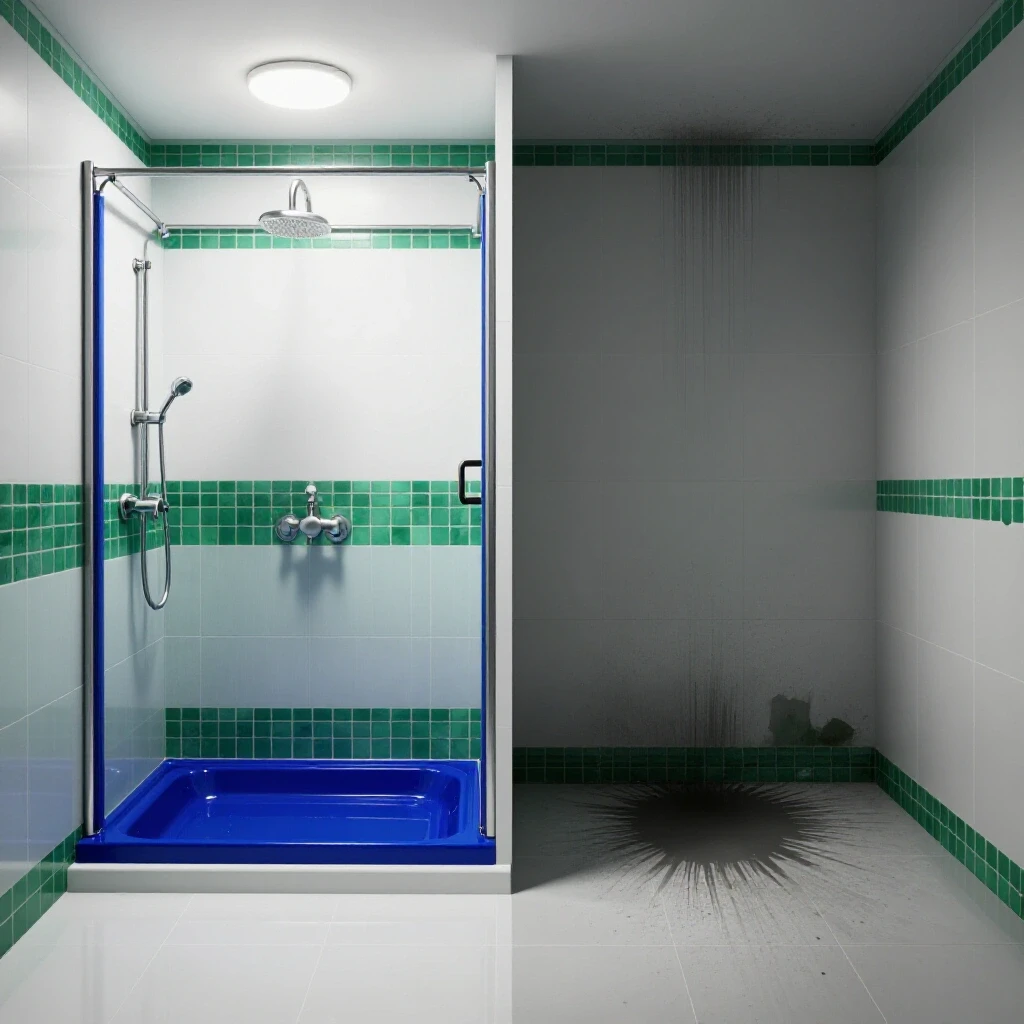
One of the most common signs is persistent discoloration of the grout. If certain sections of your floor stay dark long after the shower has dried, it suggests that the material underneath is saturated. This moisture is trapped between the decorative surface and the underlying waterproof membrane. Another red flag is the presence of “efflorescence,” which is a white, powdery mineral deposit that forms when water moves through cement-based materials and evaporates at the surface.
| Symptom | Potential Root Cause | Severity Level |
|---|---|---|
| Dark, damp grout lines | Saturated mortar bed or failed liner | Moderate |
| Spongy or “bouncy” floor | Subfloor rot or joist degradation | High |
| Peeling paint on baseboards | Capillary wicking from the subfloor | High |
| Faint, musty odor | Hidden fungal growth or stagnant water | Moderate |
| Bubbling ceiling paint below | Active breach of the primary containment | Critical |
Why Moisture Control Matters Most—And How to Safely Track Hidden Leaks
Effective moisture detection is the cornerstone of preventative home care. When water escapes its intended path, it changes the physical properties of the building materials it touches.
I have found that tracking these changes requires a systematic approach. You aren’t just looking for water; you are looking for the effects of water. For example, wood has a natural moisture content. In a stable, dry home, framing lumber usually sits between 8% and 12%. When a containment system fails, that percentage can spike to 20% or higher. At 19% moisture content, wood-decay fungi begin to colonize, leading to dry rot and structural instability.
Analyzing Subfloor Deflection and Movement
Deflection refers to the degree to which a structural element bows under a load. In a bathroom, the floor should feel rigid. If you notice a “squish” or a slight dip when you step near the drain, the subfloor may have lost its structural integrity due to prolonged dampness.
In my facility logs, I recorded a case where a homeowner noticed the shower door was suddenly sticking. Upon inspection, I found that the subfloor had swollen by nearly 1/4 inch (6.35 mm) due to a slow breach in the underlying pan. The swelling shifted the entire frame of the shower, providing a clear mechanical signal of a hidden plumbing issue.
Technical Tools for Residential Moisture Detection
To move beyond guesswork, I recommend using the same tools professionals use to audit building envelopes. These devices allow you to “see” through surfaces and quantify the extent of a problem.
- Pinless Moisture Meter: This tool uses electromagnetic signals to detect moisture up to 3/4 inch deep without marring the surface. It is essential for checking for dampness behind tiles or under vinyl flooring.
- Thermal Imaging Camera: This device detects temperature differentials. Because water-saturated materials change temperature more slowly than dry ones, a leak will often appear as a “cold spot” on the camera screen.
- High-Intensity LED Inspection Light: Using a light at a low angle (raking light) across the floor can reveal subtle bubbling or warping in the floor material that is invisible under overhead lighting.
- Electronic Acoustic Leak Detector: While more advanced, these tools can sometimes pick up the sound of water dripping onto a subfloor or inside a wall cavity.
Systematic Inspection Sequences for Multi-Level Properties
If your bathroom is located on a second floor, the most reliable diagnostic evidence often exists in the room directly below. A systematic property assessment involves checking the “path of least resistance” for escaping water.
When water breaches a containment liner, it typically follows the slope of the subfloor until it hits a wall or a penetrations point, like a light fixture or a plumbing stack. I always start by inspecting the ceiling below the bathroom with a thermal camera. I look for anomalies around the drain assembly and the perimeter of the shower footprint.
Evaluating the Ceiling Below for Secondary Evidence
- Check for “crow’s foot” cracking in the plaster or drywall.
- Look for brown or yellow staining, which indicates tannins being leached out of the wood framing by water.
- Observe the texture of the paint; “alligatoring” or bubbling often precedes a full drip.
- Use a moisture meter on the ceiling; any reading above 15% in a climate-controlled room is a cause for immediate investigation.
Establishing a Preventative Maintenance Framework
Mastering routine care means moving from a reactive mindset to a proactive one. A home maintenance checklist should include specific intervals for auditing the bathroom’s structural protection.
I suggest a quarterly “stress test” of your bathroom’s perimeter. This involves more than just a quick glance. You should physically press on the walls and floors to check for changes in resistance. In older properties, the transition between the floor and the wall is a common failure point. If the caulking or grout at this junction is cracked, it can allow water to bypass the pan entirely through capillary action.
| Maintenance Task | Frequency | Target Metric |
|---|---|---|
| Visual Grout/Caulk Audit | Monthly | Zero visible cracks or gaps |
| Subfloor Deflection Check | Quarterly | No movement under 200lb load |
| Ceiling Moisture Scan | Bi-Annually | <12% moisture content |
| Drain Flow Rate Test | Quarterly | No standing water after 30 seconds |
| Perimeter Wicking Test | Annually | Dry baseboards at wall junctions |
Real-World Diagnostic Workflows: The “Dry-Down” Method
In my years of residential diagnostics, I developed a simple testing sequence to isolate whether a leak is coming from the supply lines, the drain, or the containment pan itself. This is a critical safety check before any demolition occurs.
First, stop using the shower for 48 to 72 hours. Use a moisture meter to establish a baseline reading on the suspect areas. If the moisture levels drop significantly during this period, the leak is likely related to the use of the shower (the drain or the pan). If the moisture levels remain constant or increase despite no use, the issue is likely a pressurized supply line behind the wall.
Second, if the leak is use-related, perform a “plug test.” Block the drain completely and fill the basin with two inches of water. Mark the water level with a piece of tape. Wait 24 hours. If the water level drops, the containment liner or pan is breached. If the level stays the same but a leak appears when you eventually pull the plug, the failure is in the drain pipe or the connection to the pan.
Critical Diagnostic Mistakes to Avoid
One of the biggest mistakes I see homeowners make is assuming that a “dry” floor means there is no leak. Water is heavy; it pulls downward. In many older homes with thick mortar beds, the top three inches of the floor can feel bone-dry while the bottom inch is a swamp of stagnant water and rotting wood.
Another error is ignoring “ghost” smells. A musty or “earthy” odor in a bathroom that is otherwise clean is a biochemical signal of anaerobic bacteria. These bacteria thrive in the dark, damp space between a failed liner and a subfloor. If you smell it, the water is already there.
- Do not ignore a single “pop” or “crack” sound when walking on tile.
- Do not assume new caulking will fix a structural dampness issue.
- Do not wait for a ceiling to drip before investigating a soft spot.
- Do not rely solely on visual inspections; use tools to verify.
Actionable Metrics for Structural Protection
To maintain your property like a facilities professional, you need to understand the standard operational parameters of your plumbing and structure.
- Standard Water Pressure: Ensure your home’s PSI is between 40 and 60. High pressure can stress joints and lead to failures.
- Lumber Moisture: Keep framing below 16%. Rot starts at 19-20%.
- Drain Slope: A shower floor should have a minimum slope of 1/4 inch per foot toward the drain to prevent hydrostatic pressure buildup.
- Grout Integrity: Any gap larger than 0.5 mm is a potential entry point for capillary water migration.
By following these systematic guidelines, you can protect your home from one of the most insidious forms of property damage. Early diagnosis is the difference between a minor maintenance task and a five-figure structural repair. Stay vigilant, use the right tools, and trust the data over your eyes.
FAQ: Identifying and Diagnosing Hidden Bathroom Leaks
How can I tell if my shower floor is failing without tearing up the tile? You can use a pinless moisture meter to check for elevated moisture levels beneath the tile. Additionally, look for dark grout lines that do not dry out, a musty odor that persists after cleaning, or a “spongy” feeling when you step near the drain. A thermal camera can also reveal cold spots where water is pooling under the surface.
What does it mean if my bathroom floor feels “bouncy”? A “bouncy” or “springy” floor, known as deflection, often indicates that the wooden subfloor or the joists underneath have been weakened by moisture. When wood stays wet, its fibers break down, losing their ability to support weight. This is a serious structural warning sign that requires immediate investigation.
Is a musty smell always a sign of a structural leak? While a musty smell can sometimes be caused by a dirty drain or poor ventilation, a persistent “earthy” odor in a clean bathroom is a classic sign of hidden water. This smell is often caused by mold or bacteria growing in the damp space between the waterproof liner and the subfloor.
Why is my ceiling paint bubbling if there are no wet spots on the floor above? Water rarely travels in a straight line. If the containment system in your shower fails, the water will follow the easiest path, which might be along a floor joist or a plumbing pipe. It may travel several feet away from the shower before pooling enough to cause the paint on the ceiling below to bubble or peel.
Can a slow drain cause a leak in the shower base? Yes. A slow drain causes water to pool, which increases the hydrostatic pressure on the seals and the waterproof liner. If there is a tiny weakness or a pinhole in the liner, this increased pressure can force water through the gap, leading to a leak that might not occur if the water were draining freely.
What is the “plug test,” and how do I do it safely? The plug test involves blocking the shower drain with a rubber stopper and filling the base with about two inches of water. Mark the water level and wait 24 hours. If the water level drops, the leak is likely in the shower pan or liner. If the level stays the same, the leak is likely in the drain plumbing itself.
How much moisture is “normal” in a bathroom floor? In a dry, well-ventilated bathroom, the moisture content of the subfloor and framing should be between 8% and 12%. Readings between 13% and 17% are a cause for concern, and anything above 19% indicates a high risk of wood rot and structural damage.
Why do my baseboards look like they are “sucking up” water? This is caused by capillary action. If the subfloor is saturated due to a breach in the shower pan, the wood or MDF baseboards will pull that moisture upward like a sponge. This results in peeling paint, swelling, or a “fuzzy” texture on the baseboards near the shower.
Are older homes more prone to these types of failures? Older homes often use lead or copper pans, which have a finite lifespan of 30 to 50 years. As these metals age, they can corrode or crack due to house settling. Furthermore, older mortar-bed showers rely on a “weep hole” system in the drain that can become clogged, trapping water in the floor system.
Can I use a thermal camera to find a leak if the shower hasn’t been used? Thermal cameras work best when there is a temperature difference. To find a leak, it is often helpful to run hot water for several minutes. The hot water will warm the leaking area, making the “path” of the water more visible on the camera as it escapes the containment system.
(This article was written by one of our staff writers, Daniel Whitaker. Visit our Meet the Team page to learn more about the author and their expertise.)