How to Choose Paint After Moving: Avoid Common Mistakes (Guide)

Did you know that nearly 60% of homeowners regret at least one interior color choice within the first year of moving into a new space? It is a staggering number that points to a common struggle during home transition planning. Over the last 19 years, I have navigated four major family relocations, moving across state lines and into vastly different architectural styles. Each time, I thought I had mastered the art of selecting the right hues, only to find that a “perfect” shade in my old house looked completely different in the new one.
Choosing how to refresh your walls is about more than just aesthetics. It is a core part of spatial layout adaptation. The colors you choose can make a cramped room feel airy or a large, cold space feel grounded. However, making these decisions while surrounded by half-unpacked boxes and the stress of a home moving checklist is where most of us stumble. I have learned the hard way that the biggest regrets often come from rushing the process before understanding how the new environment actually functions.
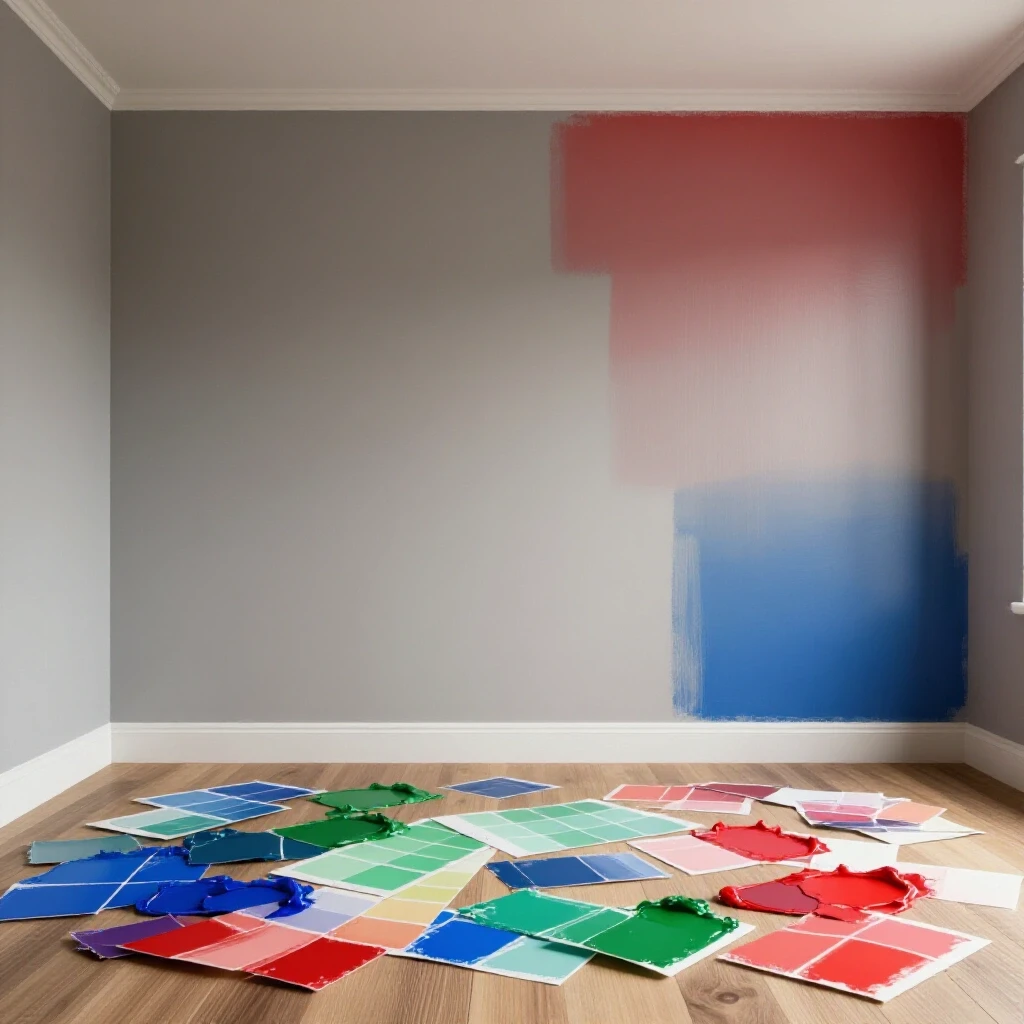
Analyzing Environmental Light Before Selecting Your Palette
Environmental light analysis is the process of observing how natural and artificial light sources interact with a room’s surfaces throughout the day. This step is crucial because light is the single most important factor in how a color actually appears once it is on the wall.
When we moved into our third home, a 1920s bungalow with small windows, I picked a trendy “greige” for the living room. In the store, it looked like a warm, sandy tan. Once applied to our walls, the northern exposure turned it into a cold, muddy purple. I had ignored the most basic rule of spatial layout: light defines color. North-facing rooms receive cool, bluish light, which can make warm colors look flat or “off.” South-facing rooms are flooded with warm light, which can make even subtle yellows feel overwhelming.
To avoid this, you must test your options in the actual environment. Never choose a color based on a small paper swatch in a retail store. Instead, use large peel-and-stick samples or paint two-foot squares directly on different walls. Observe them at 8:00 AM, 12:00 PM, and 8:00 PM. This “living with the light” phase is a vital part of a new home adjustment guide. It prevents the frustration of realizing your new bedroom looks like a hospital ward once the sun goes down.
Aligning Color Choices with Functional Room Zoning
Functional room zoning involves using visual cues, such as color and furniture placement, to define the purpose of different areas within a home, especially in open-concept layouts.
In our current home, we struggled with a large, “awkward” Great Room that served as a kitchen, dining area, and play space. Initially, we painted the entire area one uniform off-white. The result was a space that felt unanchored and chaotic. We eventually realized that we needed to use color to create “zones.” By applying a slightly deeper tone to the wall behind the dining table, we mentally separated the eating area from the high-traffic kitchen zone.
This strategy is particularly helpful for a small room furniture layout. If you are trying to fit a home office into a corner of your bedroom, a subtle shift in wall color can help your brain switch from “rest mode” to “work mode.” This helps in establishing comfortable daily routines by providing clear visual boundaries for different activities.
- Zoning Strategy 1: Use an accent wall to anchor large furniture pieces like a sofa or a headboard.
- Zoning Strategy 2: Maintain a consistent trim color throughout the house to provide a sense of continuity.
- Zoning Strategy 3: Use darker tones in “retreat” areas like dens or bedrooms to encourage relaxation.
Avoiding Common Pitfalls in Surface Durability and Finish
Surface durability refers to the ability of a paint finish to withstand physical contact, cleaning, and environmental wear without losing its appearance or integrity.
One of my biggest regrets from our second move was choosing a beautiful matte finish for the entryway and hallways. I loved the velvety look, but within three months, the walls were covered in scuffs from moving boxes, muddy dog prints, and fingerprints. Matte paint is notoriously difficult to clean; scrubbing often leaves “burnish” marks where the finish becomes shiny.
For families or anyone in a high-traffic transition, the sheen is just as important as the shade. A satin or eggshell finish provides a soft look while remaining wipeable. For kitchens and bathrooms, a semi-gloss is often necessary to resist moisture. Understanding these technical aspects is a key part of spatial layout adaptation because it ensures your home stays looking fresh even as you navigate the chaos of settling in.
| Room Type | Recommended Finish | Durability Level | Best For |
|---|---|---|---|
| Living/Bedrooms | Eggshell | Medium | Low-traffic, soft look |
| Hallways/Entry | Satin | High | Scuff resistance, cleaning |
| Kitchen/Bath | Semi-Gloss | Very High | Moisture and grease resistance |
| Ceilings | Flat/Matte | Low | Hiding imperfections |
Integrating Furniture Layouts with Your New Color Scheme
Integrating layouts involves coordinating the physical dimensions and colors of your furniture with the wall tones to ensure the room feels balanced rather than cluttered.
A common mistake during home transition planning is forgetting to account for the “visual weight” of existing furniture. In our last move, we had a heavy, dark oak dining set. We moved it into a room we had painted a deep navy blue. The combination made the room feel incredibly small and heavy. We had to backtrack and choose a much lighter, airier color to balance the massive furniture.
When you are arranging furniture in awkward or small rooms, remember that light colors generally make objects feel further away, while dark colors bring them closer. If you have a lot of large, dark furniture, lighter walls can provide the “breathing room” needed to keep the space from feeling cramped. Conversely, if your furniture is light and modern, a darker wall can provide the contrast needed to make the room feel intentional and designed.
The First-Month Spatial Adjustment Timeline
Adjusting to a new home is a marathon, not a sprint. Rushing into permanent color decisions during the first week is a recipe for regret. I recommend a structured timeline to ensure your choices reflect how you actually live in the space.
- Week 1: The Neutral Baseline. Keep the walls as they are or use a simple, temporary neutral. Focus on the home moving checklist and getting the boxes unpacked.
- Week 2: Circulation Mapping. Observe where people walk and where the light hits. Are there “dead zones” that feel dark and uninviting?
- Week 3: Sample Testing. Apply your top three choices to various walls. Move your existing furniture into its rough layout to see how it interacts with the samples.
- Week 4: Final Selection. By now, you know which rooms feel too small and which ones feel too bright. Make your choice based on three weeks of data, not a single afternoon of guessing.
This timeline helps reduce the high stress of moving logistics by removing the pressure to “fix” everything immediately. It allows you to build a neighborhood community building mindset because you aren’t stuck inside painting every weekend of your first month.
Why Blind Furniture Placement Fails Without Color Planning
Blind furniture placement occurs when items are moved into a new home based on their old positions rather than the unique light and dimensions of the new space.
When we moved across the country, I tried to force our old living room layout into a new, narrower space. I didn’t account for how the wall color would interact with the new traffic patterns. Because the walls were a dark, “warm” white, the room felt even narrower than it was. By switching to a “cool” white with blue undertones, we visually pushed the walls back, making the 30–36 inch hallways feel less like tunnels.
Effective spatial layout adaptation requires looking at the room as a whole. You should measure your furniture footprints and compare them to the room’s dimensions, but you must also consider the “atmospheric” effect of your wall choices. A room with 10-foot ceilings can handle much bolder colors than a room with 8-foot ceilings, which might feel “caved in” by dark tones.
Digital Tools and Resources for Space Mapping
In the modern era, you don’t have to guess. There are several tools that can help you visualize both your small room furniture layout and your color transitions before you ever open a can of paint.
- Mobile Color Matchers: Use apps that allow you to take a photo of your furniture or a piece of fabric and find the closest matching paint shades.
- Virtual Room Visualizers: Many retailers offer web-based tools where you can upload a photo of your actual room and “paint” the walls digitally.
- Digital Floor Plan Creators: Tools like MagicPlan or Floorplanner allow you to input your room dimensions and drag-and-drop furniture to test clearances.
- Lighting Simulators: Some advanced design apps allow you to change the “time of day” to see how shadows will fall across your chosen colors.
Using these tools is a smart part of any new home adjustment guide. They provide a low-risk way to experiment with “visual weight” and “traffic flow” before committing to a physical change.
Metrics for a Successful Transition
When you are deep in the process of home transition planning, it helps to have concrete numbers to guide your decisions. These metrics are based on standard ergonomic and design guidelines that I have used across my 19 years of moving.
- The 60-30-10 Rule: For a balanced room, 60% should be your dominant wall color, 30% a secondary color (upholstery/furniture), and 10% an accent color (pillows/art).
- Clearance Margins: Always maintain at least 30–36 inches of walking space in hallways and between major furniture pieces. Darker colors on the walls can make these gaps feel smaller.
- Sample Size: Never test a sample smaller than 12×12 inches. A tiny swatch is not enough to show how the light changes across the surface.
- Drying Time: Always wait at least 4 hours between coats. Rushing this leads to “dragging” the paint, which creates an uneven texture that is visible in bright light.
Building Community and Overcoming Isolation Through Your Home Environment
It might seem strange to link paint choices to neighborhood community building, but the two are deeply connected. When you feel “at home” in your space—when the layout works and the colors feel right—you are much more likely to invite new neighbors over for coffee or a meal.
In our second move, I was so unhappy with the “regretful” colors I had chosen that I didn’t want anyone to see the house. I felt isolated because my environment didn’t reflect who I was. Once we took the time to correct the spatial layout and the wall tones, the house felt like a sanctuary. That confidence allowed us to open our doors and start building the relationships that make a new place feel like a community.
Key Takeaways for a Smooth Transition
Moving is inherently stressful, but your environment shouldn’t add to that burden. By taking a methodical approach to your interior choices, you can create a space that supports your family’s needs.
- Prioritize Light: Observe your new home’s light for at least a week before deciding on colors.
- Test for Durability: Choose finishes based on how you use the room, not just how it looks.
- Zone Your Space: Use color to define activities in open-concept or awkward layouts.
- Measure Twice: Ensure your furniture fits the “visual volume” of the room as well as the physical square footage.
- Be Patient: Your first-month timeline should focus on function first, then final aesthetics.
Frequently Asked Questions
How long should I wait after moving before I start painting? Ideally, you should wait at least two to four weeks. This allows you to see how the natural light moves through the house during different times of the day and how your furniture fits into the new spatial layout. Rushing this process often leads to choosing colors that don’t match the room’s actual “vibe” once it is lived-in.
Why does the color I picked look so different on my walls than it did in the store? This is due to a phenomenon called metamerism. Retail stores use cool fluorescent lighting, while your home likely has a mix of warm incandescent bulbs and natural sunlight. Additionally, colors are influenced by their surroundings; a green tree outside your window can “bounce” green light onto your white walls, changing their appearance.
What is the best way to test paint samples without ruining the walls? Peel-and-stick samples are the best modern solution. They use real paint and can be moved from wall to wall. If you prefer liquid samples, paint them onto large pieces of white foam board rather than the wall itself. This allows you to move the board around the room and see how the color looks in dark corners versus next to windows.
How can color help me fix an awkward or narrow room layout? To make a narrow room feel wider, use a light, cool color on the long walls and a slightly darker or warmer shade on the short end walls. This “pulls” the ends toward you and “pushes” the sides out. For rooms with very high ceilings that feel “cold,” painting the ceiling a slightly darker shade than the walls can make the space feel more intimate.
Should I paint the whole house one color to make it feel bigger? While a “whole-house neutral” provides great continuity, it can also make a home feel flat. A better approach is to use a “consistent palette”—a group of 3 to 5 colors that complement each other. This allows you to give each room its own personality while maintaining a cohesive flow that aids in spatial layout adaptation.
What finish is best for a home with young children and pets? Satin is generally the “goldilocks” finish for families. It has enough sheen to be scrubbable and water-resistant, but it isn’t so shiny that it highlights every imperfection in the drywall. It is much more durable than eggshell but looks more sophisticated than semi-gloss.
How do I choose a color that matches my old furniture in a new house? Look at the “undertones” of your furniture. If your wood furniture has a reddish tint (like cherry or mahogany), colors with green or blue undertones will provide a pleasing contrast. If your furniture is very modern and gray, you may want “warm” wall colors to prevent the room from feeling too sterile or cold.
Can I use dark colors in a small room? Yes, but it requires careful planning. Dark colors can create a “jewel box” effect that feels very cozy and intentional. However, you must ensure you have adequate artificial lighting and that your furniture layout doesn’t block the light you do have. In a small room, a dark color works best when the ceiling and trim are kept a crisp, bright white.
What is the most common mistake people make when choosing colors after a move? The most common mistake is choosing a color in isolation. People often pick a color they like without considering the floor’s color, the permanent fixtures (like cabinets or tile), or the amount of natural light. Always look at your samples horizontally against your flooring and vertically against your trim to see the full picture.
How does wall color affect my daily routine? Color has a documented psychological impact. Blue and green tones are known to lower heart rates and are excellent for bedrooms or home offices. Bright yellows or oranges can increase energy and are great for kitchens but might be too stimulating for a room meant for relaxation. Choosing the right “mood” for each zone helps in establishing comfortable daily routines.
(This article was written by one of our staff writers, Kevin Thompson. Visit our Meet the Team page to learn more about the author and their expertise.)