How to Make Use of Dead Corners in Your Home (Practical Guide)

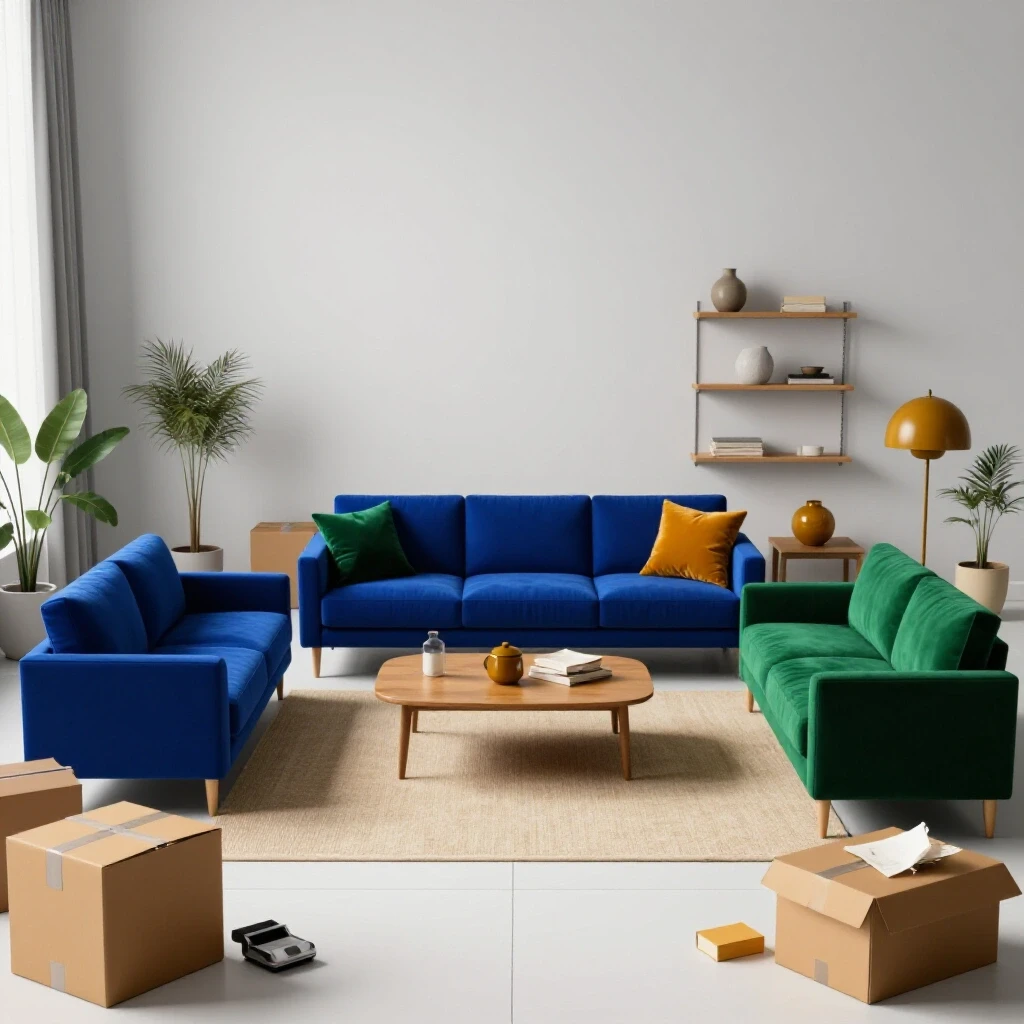
More people are moving today than at any point in the last decade, often trading larger suburban footprints for smaller, more efficient urban spaces. This shift frequently leaves movers with furniture that no longer fits and odd, empty gaps in their floor plans that feel like wasted square footage. Over my 19 years of navigating four major relocations with my family, I have learned that the most stressful part of a move isn’t just the heavy lifting. It is the mental load of trying to make an old life fit into a new, often awkward, layout. We often focus on the big rooms, but the secret to a comfortable home lies in how we handle the small, forgotten spots that initially seem useless.

Auditing Your Floor Plan for Underused Spatial Footprints
This phase involves a deep dive into your new home’s dimensions to identify areas where traffic flow stops or furniture cannot easily reach. By measuring the “dead zones” between windows, doors, and large furniture pieces, you can spot opportunities to add function to the home without cluttering the main living areas.
When I moved my family of four from a spacious three-bedroom house to a compact city apartment, I felt the immediate pressure of our home moving checklist. We had a corner in the dining area that sat between a radiator and a window. For the first two weeks, it was just a place where we piled empty boxes. Research into housing adaptation shows that “spatial friction”—the frustration caused by poorly used space—is a leading cause of post-move stress.
To combat this, I started by mapping the “circulation paths.” These are the 30-to-36-inch-wide lanes you need to walk comfortably through a room. Once I drew these paths on a simple paper floor plan, I noticed a 42-inch by 42-inch square that was completely outside the walking zone. It was effectively “dead” space. Identifying these footprints early prevents you from forcing a large sofa into a spot where it blocks a walkway, which is a common mistake in small room furniture layout.
Why Blind Furniture Placement Fails—And How to Draft Your First Spatial Layout Blueprint
A spatial layout blueprint is a bird’s-eye view of your room that accounts for every vent, outlet, and door swing before you move a single chair. Drafting this prevents “furniture tetris,” where you move heavy items multiple times, causing physical fatigue and potential damage to your new flooring or walls.
In our second move, we tried to “eyeball” the living room. We ended up moving a heavy oak desk three times because we kept blocking the only ethernet port in the room. Now, I use a new home adjustment guide approach: I measure the room and then measure my furniture. If a piece of furniture has a “visual weight” that overwhelms a small corner, it doesn’t go there.
Interestingly, ergonomics guidelines suggest that a room feels “crowded” when more than 40% of the floor is covered by furniture. By drafting a blueprint, you can see that a corner isn’t just empty; it is an opportunity for a “micro-zone.” In our city apartment, that radiator corner became a “morning station” with a small, narrow console table for coffee and keys. This simple spatial layout adaptation turned a source of frustration into the most used spot in the house.
Transforming an Awkward Nook into a Functional Living Zone
This process focuses on giving a specific purpose to a small area that would otherwise collect dust or clutter. By choosing a single activity—like reading, charging electronics, or storing shoes—you can select the right-sized items to fill the gap without needing expensive custom-built solutions or professional contractors.
During my 19 years of moving, I’ve found that the “deadest” corners are often the ones we try to ignore. In our third home, we had a triangular wedge of space under a staircase. It was too small for a chair and too deep for a standard bookshelf. Instead of leaving it empty, we looked at our family’s daily needs. We needed a place for the kids to drop their backpacks.
We used a few simple, non-structural additions: * Three heavy-duty adhesive hooks. * A small, low-profile bench that fit the 36-inch width. * A battery-operated LED puck light for visibility.
This wasn’t a major renovation, but it solved a “logistics” problem. By using the home transition planning mindset, we stopped the “backpack explosion” in the hallway. This is a prime example of how a small adjustment can reduce the social friction of a move. When everyone knows where their gear belongs, the morning routine becomes significantly calmer.
Spatial Blueprint Compatibility Matrix
| Furniture Type | Minimum Clearance Needed | Ideal “Dead Zone” Use | Visual Weight Impact |
|---|---|---|---|
| Accent Chair | 36″ x 36″ | Reading Nook | Medium |
| Console Table | 12″ Deep | Entryway/Drop Zone | Low |
| Floor Lamp | 12″ x 12″ | Lighting Dark Corners | Very Low |
| Small Desk | 42″ Wide | Micro-Office | High |
| Floating Shelves | 0″ Floor Space | Vertical Storage | Low |
Practical Metrics for Small Room Furniture Layout and Flow
Using standardized measurements ensures that your furniture choices don’t create safety hazards or block natural light. These metrics, such as keeping 18 inches between a coffee table and a sofa, provide a framework for a home that feels professional and organized without the need for an interior designer.
When you are in the middle of a move, it is easy to forget about “clearance margins.” I once pushed a dresser into a corner only to realize I couldn’t open the bottom drawer because it hit the door frame. To avoid this, I follow strict spatial layout adaptation rules.
- Hallways and Walkways: Maintain at least 30 to 36 inches of width.
- Seating Areas: Leave 14 to 18 inches between the edge of a seat and a table.
- Work Zones: A desk needs at least 30 inches of “push-back” space for a chair.
- Door Swings: Always measure the arc of the door (usually 30-36 inches) and keep it clear.
Following these numbers makes a small home feel larger. In our current home, we had a corner that felt “off.” By moving a chair just 4 inches to meet the 18-inch clearance rule, the entire room suddenly felt more “correct.” This is what housing experts call “spatial legibility”—the ability for a person to understand how to move through a room without thinking about it.
Low-Cost DIY Techniques for Spatial Layout Adaptation
These methods involve using affordable, accessible items like rugs, lighting, and modular furniture to redefine a space. These changes are temporary and non-structural, making them perfect for those who are still testing out how they want to live in their new environment during the first few months.
You don’t need a contractor to fix a “dead” corner. In fact, over four moves, I’ve found that the best solutions are often the simplest. In one move, we had a dark corner that felt like a “black hole” in the living room. It made the whole room feel smaller. Instead of buying new furniture, we used “visual weight” tricks.
- Light it up: We added a $20 floor lamp. Lighting the vertical corner makes the walls feel further apart.
- Define with a rug: A small, round rug can “anchor” a corner, signaling to your brain that this is a separate zone, like a reading spot.
- Use the walls: Floating shelves take up zero floor space but provide a home for books or plants, drawing the eye upward.
These neighborhood community building and home-settling tasks are vital. When your home feels “finished” and functional, you have more emotional energy to go out and meet your neighbors. A cluttered, awkward home keeps you trapped in “moving mode” for far too long.
Integrating New Household Routines into Your Transition Planning
This stage links your physical layout to your daily habits, ensuring that your home supports your life rather than complicating it. By deliberately placing items where they are most needed—like a charging station near the bed or a shoe rack by the door—you establish a sense of order and comfort.
A move is the best time to “reset” your habits. In our most recent transition, we realized our old routine of dumping mail on the kitchen counter didn’t work in the new, smaller kitchen. We had a “dead” 2-foot section of wall near the entrance. We turned it into a “Command Center.”
We spent the first month testing this. We didn’t drill holes or buy expensive organizers immediately. We used temporary hooks and a simple cardboard box for mail. Once we proved the routine worked, we upgraded to a nice wooden bin. This “testing phase” is a key part of any new home adjustment guide. It allows the family to adapt to the space naturally rather than forcing a layout that doesn’t fit their actual behavior.
First-Month Spatial Adjustment Timeline
- Week 1: Identify “friction points” (e.g., where people trip, where clutter piles up).
- Week 2: Map circulation paths and identify the “dead zones” that could be useful.
- Week 3: Implement temporary, low-cost solutions (e.g., floor lamps, small tables).
- Week 4: Finalize the layout and replace temporary fixes with permanent furniture.
Navigating the Social Friction of a New Neighborhood
Building a sense of belonging requires moving beyond the physical house and engaging with the surrounding community. This involves practical steps like visiting local parks, joining neighborhood digital groups, and understanding the “flow” of the local area to reduce the feeling of being an outsider.
While you are fixing your corners, don’t forget to fix your connection to the outside world. Moving stress often comes from a feeling of isolation. In my 19 years of moving, I’ve found that the faster you establish a “local routine,” the better you feel.
I make it a point to find my “third place” within the first week. This is a spot that isn’t home or work—usually a local coffee shop or park. I use a neighborhood community building map. I mark the grocery store, the library, and a good walking path.
When you feel comfortable in your neighborhood, the small frustrations of a “dead corner” in your house seem much smaller. You aren’t just a “mover” anymore; you are a resident. This psychological shift is just as important as where you put your sofa.
Resource List and Moving Trackers
These digital and physical tools provide a structured way to manage the overwhelming details of a relocation. From virtual room planners to inventory logs, these resources help keep the logistics organized so you can focus on the creative side of making your new house a home.
- Magicplan (App): Uses your phone’s camera to create an instant 2D/3D floor plan. Great for checking if your old furniture will fit in a new corner.
- Floorplanner.com: A web-based tool for more detailed room designs. It helps you visualize “visual weight” before you move heavy items.
- Sortly: A visual inventory app. Use it to track what is in every box so you can find your “corner-filler” items (like lamps or rugs) quickly.
- Trello or Notion: I use these for my home moving checklist. Create a column for “Layout Problems” and “Routine Adjustments.”
- Nextdoor or Facebook Groups: Essential for neighborhood community building. Ask neighbors for recommendations on local hardware stores or thrift shops for small furniture finds.
Furniture Clearance Guidelines by Room Footprint
- Living Room: Keep 3 feet of space between large pieces (sofa to TV).
- Bedroom: Leave 2 feet on either side of the bed for easy making and walking.
- Dining Room: Ensure 36 inches between the table and the wall so chairs can slide out.
- Entryway: Keep at least 42 inches clear near the front door for multiple people to stand.
Conclusion: Taking the First Step Toward Functional Living
Transitioning into a new home is a marathon, not a sprint. It is perfectly normal to feel “out of place” for the first six months. The key is to stop looking at your home as a finished product and start looking at it as a flexible environment.
Start small. Find one “dead corner” this week. Measure it. Think about one thing your family needs—a place for shoes, a spot for a plant, or a quiet corner for a phone call. Use what you already have to fill that space. As you solve these small spatial puzzles, you’ll find that the “moving stress” begins to fade, replaced by the comfort of a home that actually works for you.
Frequently Asked Questions
How do I know if a corner is truly “dead space” or just a necessary gap?
A corner is “dead” if it doesn’t serve a functional purpose and isn’t part of a primary walking path. If you find yourself walking around it or if it consistently collects “random” clutter like mail or laundry, it’s a candidate for a layout adaptation. If it’s within 30 inches of a door or hallway, it should likely remain clear for safety and flow.
What is the most affordable way to fill an awkward gap in a rental?
Lighting and greenery are the most effective low-cost tools. A tall floor lamp or a large potted plant (even a high-quality faux one) can fill the visual void without requiring permanent changes. Modular shelving units that don’t need to be anchored to the wall are also excellent for creating storage in odd nooks.
How can I tell if my old furniture is too big for the new room before I move it?
Use the “40% rule.” Measure the total square footage of your new room and then calculate the footprint of your furniture. If your furniture covers more than 40-45% of the floor, the room will feel cramped. You can also use painter’s tape to “draw” the furniture’s footprint on the floor of the new house to see how much walking space remains.
How do I deal with the “visual weight” of a dark corner?
Visual weight refers to how “heavy” or “busy” an area looks. A dark corner feels heavy. You can “lighten” it by using mirrors to reflect light, painting that small section a lighter color (if allowed), or adding a light-colored rug. Using furniture with thin legs (rather than solid bases) also makes the corner feel airier and less “stuck.”
What should I do if my “dead corner” has a radiator or a vent?
Never block a heat source or air return with solid furniture. Instead, use “breathable” solutions. A floating shelf placed 12 inches above a radiator can act as a mantel for keys or decor without blocking heat. Alternatively, a mesh-backed cart can provide storage while still allowing air to circulate.
How long does it usually take to feel “settled” in a new layout?
Research suggests it takes about 21 days to form new physical habits and up to six months to feel emotionally settled in a new neighborhood. Don’t rush the process. Let your layout evolve as you discover how you actually use the space during the first few weeks of your new home adjustment guide phase.
Can a corner be “too small” to be useful?
Almost no space is too small if you think vertically. A 12-inch gap can hold a slim “rolling pantry” in a kitchen or a vertical shoe rack in an entryway. Even a 6-inch space behind a door can be turned into a gift-wrap station or a cleaning supply rack using wall-mounted organizers.
Is it better to leave a corner empty or fill it with something “just okay”?
If you don’t have a functional need for the space, it is often better to leave it empty than to fill it with “clutter.” An empty space provides “visual breathing room.” Only fill the corner if it solves a specific problem, like a lack of lighting or a need for a “drop zone” for daily items.
How do I involve my family in these layout changes?
The best way is to observe their “friction points.” If your spouse always leaves their bag on the dining chair, that’s a sign you need a “drop zone” in a nearby corner. Involving the family in the “testing phase” ensures the new layout actually supports everyone’s routines, reducing the social friction of the move.
What is the biggest mistake people make with awkward floor plans?
The most common mistake is trying to recreate their old home’s layout in a new space. Each house has its own “logic.” Forcing a large sectional into a room designed for a smaller sofa will make the entire home feel dysfunctional. Be willing to let go of furniture that no longer fits the “spatial logistics” of your new life.
(This article was written by one of our staff writers, Kevin Thompson. Visit our Meet the Team page to learn more about the author and their expertise.)