How to Install a Bidet and Get Your Family Comfortable (Guide)

Why did the toilet paper roll down the hill? To get to the bottom! While that joke usually gets a groan from my kids, it highlights a central fixture of our homes that we often take for granted until we decide to upgrade it. As a facilities manager, I spend my days overseeing complex mechanical systems, but my weekends are reserved for the tactile satisfaction of improving my own home, one project at a time.
Over 12 years of maintaining two different properties, I have learned that the most successful weekend DIY projects are those that balance technical precision with the reality of family life. Adding a non-electric wash station to a standard toilet is a prime example of a functional, cost-saving upgrade. It is a task that looks simple on paper but requires a careful eye for plumbing seals and a strategy for how your household will actually use the new equipment.
Assessing Bathroom Fixture Compatibility
This phase involves inspecting your current toilet and water supply line to ensure they can accept a secondary attachment without leaking or causing mechanical stress. You must verify the shape of your toilet bowl and the flexibility of your existing plumbing connections before purchasing any new components.
In my experience, the biggest hurdle for most DIY home improvement tasks is the “hidden” incompatibility. Before you start, check if your toilet is a one-piece or two-piece model. A two-piece toilet has a visible gap between the tank and the bowl, which usually makes it easier to install mounting brackets. If you have a one-piece toilet where the tank and bowl are a single continuous mold, the curves of the porcelain might interfere with the flat plate of a seat attachment.
I once spent an entire Saturday morning fighting with a sleek, modern toilet in our guest bath only to realize the mounting bolts were proprietary and wouldn’t fit a standard bracket. To avoid this, perform a “dry-fit” check. This means holding the new device against the fixture without any tools or water changes to see if the holes align.
Understanding Water Supply Connections
The water supply connection is the point where the flexible hose from your wall meets the threaded fill valve at the bottom of your toilet tank. Most residential toilets use a 7/8-inch ballcock thread, which is a standard size, but older homes might have rigid chrome pipes instead of flexible braided hoses.
If you see a solid metal pipe connecting your wall valve to your toilet, you will likely need to replace it with a flexible stainless steel braided hose. Rigid pipes are not forgiving; they cannot be easily moved to accommodate the extra height of a T-valve. A T-valve is a three-way metal or plastic fitting that diverts a portion of the water flow to your new attachment while keeping the main flow directed into the tank.
| Feature | Standard Requirement | DIY Difficulty |
|---|---|---|
| Toilet Type | Two-piece (usually) | Low |
| Supply Line | Flexible Braided Steel | Medium |
| Connection Size | 7/8-inch Ballcock | Low |
| Wall Clearance | At least 2 inches | Low |
Essential Tool Kit and Workspace Preparation
A well-organized tool list prevents the frustration of mid-project hardware store runs and ensures you have the right leverage for plumbing connections. Preparing your workspace involves more than just clearing the floor; it requires protecting your surfaces and organizing your small parts.
Plumbing projects in tight spaces, like a small bathroom, require tools that offer high torque in restricted areas. I always keep a “plumber’s bucket” ready, which includes a few specific items that make these weekend DIY projects go much smoother. You do not need a massive power tool collection for this, but you do need quality hand tools that won’t strip plastic threads.
- Adjustable Wrench (Crescent Wrench): Used for tightening metal hex nuts without marring the finish.
- Tongue-and-Groove Pliers (Channellocks): Helpful for gripping smooth plastic nuts, though they should be used with a light touch.
- PTFE Thread Seal Tape (Teflon Tape): A thin, white film wrapped around threads to create a watertight seal and prevent galling.
- Small Bucket or Basin: To catch the “trickle” of water left in the supply line after the valve is shut off.
- Microfiber Towels: Essential for immediate cleanup and for checking for tiny, slow leaks that are hard to see.
- Measuring Tape: To verify the distance between the seat bolts and the edge of the bowl.
Defining Technical Terms for the DIYer
Before we dive into the assembly, let’s define a few terms. A “gasket” is a rubber or silicone ring that creates a seal between two flat surfaces. In many bidet kits, the gasket does the heavy lifting, not the tightness of the screw. “Hand-tight” is a common instruction that means tightening a nut as far as you can with your fingers, then perhaps adding a quarter-turn with a wrench. Over-tightening is a leading cause of cracked plastic nuts and failed seals.
Step-by-Step Integration of the Water Diverter
The water diverter, or T-valve, is the heart of the system, responsible for splitting the incoming water stream between the toilet tank and the wash wand. This step requires the most attention to detail because a cross-threaded connection here can lead to a slow leak behind your toilet.
First, turn off the water supply valve located on the wall behind the toilet. Turn it clockwise until it stops. Flush the toilet and hold the handle down to drain as much water as possible from the tank. There will still be about an inch of water at the bottom; use a sponge or towel to soak this up if you want to avoid any mess on the floor.
Disconnect the existing supply hose from the bottom of the toilet tank. This is where your small bucket comes in handy. Once the hose is off, inspect the threads on the bottom of the tank. If they are plastic, be very careful. Screw the T-valve onto the tank threads first. Ensure it is going on straight. If you feel resistance in the first half-turn, back it off and start again. This is called avoiding “cross-threading,” which is when the threads of two parts don’t align and cut into each other.
Applying Thread Seal Tape Correctly
Many beginners wrap Teflon tape in the wrong direction. You should always wrap the tape clockwise around the male threads (the ones sticking out). This way, when you screw the female nut on, the rotation of the nut tightens the tape rather than unravelling it. Two to three wraps are usually sufficient; too much tape can actually cause the fitting to crack or prevent it from seating properly against the gasket.
- Step 1: Shut off the water and drain the tank.
- Step 2: Disconnect the supply line from the tank.
- Step 3: Install the T-valve onto the tank fill valve.
- Step 4: Reconnect the supply line to the bottom of the T-valve.
- Step 5: Connect the bidet-specific hose to the side outlet of the T-valve.
Securing the Attachment and Restoring the Seat
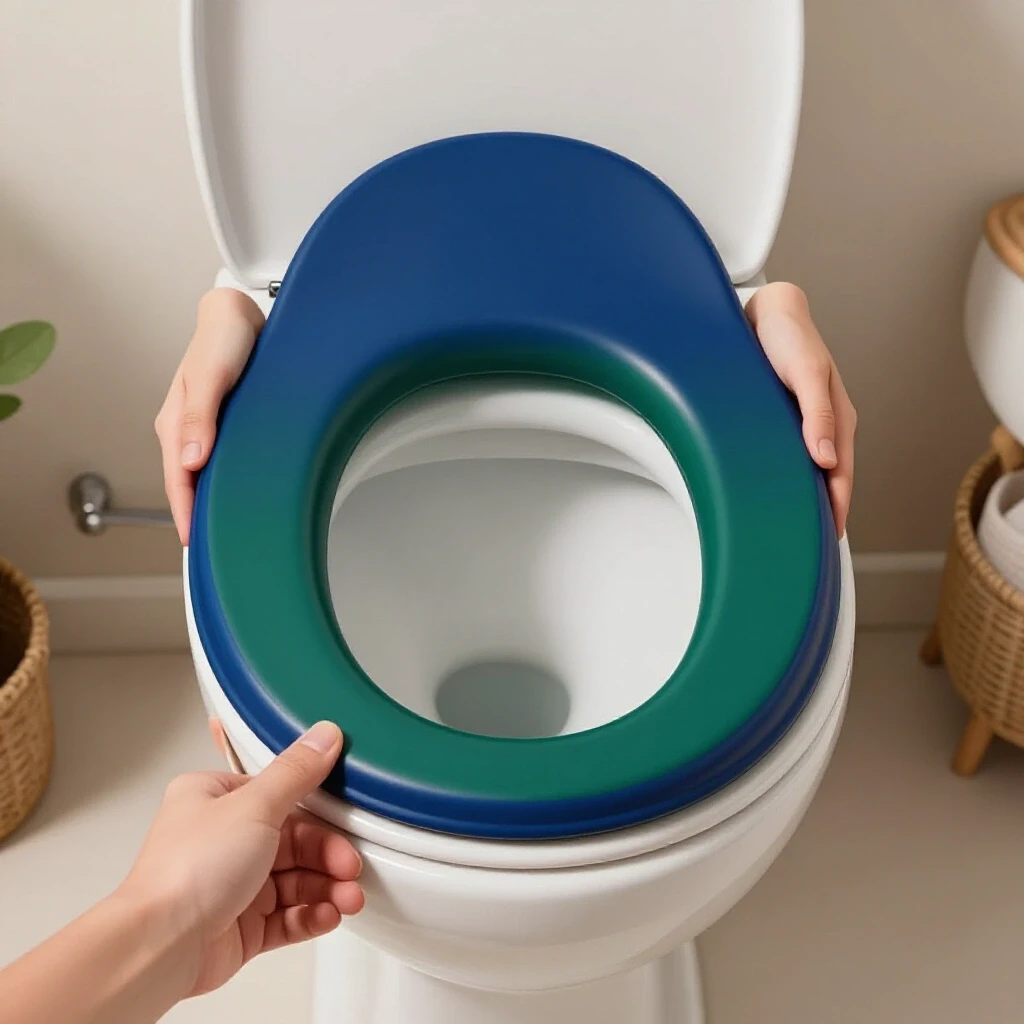
This phase involves removing the existing toilet seat, positioning the wash unit, and re-securing everything so it doesn’t shift during use. Stability is the goal here, as a sliding seat is not only annoying but can put stress on the plastic water connections.
Unscrew the bolts holding your toilet seat in place. These are often located under plastic caps at the back of the bowl. Once the seat is removed, clean the area thoroughly. This is a rare chance to reach parts of the porcelain that are usually hidden. Place the bidet attachment over the mounting holes. Most units have adjustable circular plates that allow you to slide the unit forward or backward to line up with the center of the bowl.
Place the original toilet seat back on top of the attachment. Insert the bolts through both the seat and the attachment brackets. Before tightening, check the alignment. You want the spray nozzle to be centered and the seat to sit flat. Some toilets have a slight “lip” that might cause the seat to angle upward. If this happens, you may need “toilet seat bumpers,” which are small adhesive spacers that level the seat.
Managing Mechanical Stress on Plastic Parts
Most non-electric attachments are made of high-impact plastic. While durable, they cannot withstand the same torque as brass plumbing. When you are securing the bolts, tighten them enough so the seat doesn’t wiggle, but stop before the plastic brackets begin to bow or flex. I have seen many DIYers crack their new upgrade by trying to make it “permanent.” Remember, the rubber gaskets do the sealing; the threads just hold things in place.
| Action | Recommended Torque | Potential Failure |
|---|---|---|
| Metal T-Valve to Tank | Hand-tight + 1/4 turn | Cracked fill valve |
| Plastic Nut to T-Valve | Hand-tight | Stripped threads |
| Seat Bolts | Snug (no wiggle) | Cracked mounting plate |
| Supply Line to Wall | Firm with wrench | Slow drip at valve |
Testing for Leaks and Adjusting Water Pressure
Testing is the most critical phase of any safe home repair, requiring a slow and methodical approach to prevent water damage. You must monitor the connections under full pressure for several minutes to ensure no “weeping” occurs at the joints.
Slowly turn the wall valve counter-clockwise to restore water flow. Do not blast it open all at once. Listen for the sound of the tank filling. While it fills, take a dry microfiber towel and wipe every single connection: the wall valve, both ends of the supply line, and the T-valve connections. If the towel comes away even slightly damp, you have a leak.
Often, a small leak can be fixed by tightening the nut another eighth of a turn. If that doesn’t work, you must shut the water off, drain the system, and check if the gasket is seated flat. Interestingly, the most common cause of leaks in my 12 years of facility work isn’t a lack of tightness, but a twisted or pinched rubber gasket.
Calibrating the Spray for Household Members
Once the plumbing is watertight, it is time for the functional test. Most non-electric units have a pressure control knob. Start with the knob at the lowest setting. Since these units use the house’s cold water pressure, the stream can be quite strong depending on your home’s PSI (pounds per square inch).
If your home has high water pressure (above 60 PSI), the spray might be too intense. You can mitigate this by partially closing the T-valve or the wall shut-off valve to limit the flow, though a dedicated pressure-reducing valve is the professional way to handle whole-house pressure issues. For a weekend DIYer, simply learning the “sweet spot” on the control dial is usually the most practical solution.
Observing the Household Transition to New Habits
Upgrading a shared bathroom fixture is as much about social engineering as it is about plumbing. In my home, the reaction from my family was a mix of curiosity, skepticism, and eventually, total acceptance. Understanding how different age groups interact with new technology is key to a successful home upgrade.
My youngest kids initially viewed the new attachment as a toy. I had to explain that the “fountain” was not for washing hands or playing. From a safety perspective, ensure your children know how to turn the dial slowly. A sudden blast of cold water can be a shock, and if they turn it on while standing next to the toilet instead of sitting on it, you will end up with a wet ceiling.
My spouse was initially concerned about the aesthetics and the “cold water factor.” However, most people find that the ambient temperature of the water in the pipes is perfectly fine for a quick cycle. The cost-saving aspect became clear within the first month when our household paper consumption dropped by nearly 70%. This measurable outcome is what makes these functional home upgrades so satisfying for a busy professional.
Maintenance and Long-Term Reliability
Like any plumbing fixture, these attachments require occasional maintenance. Every six months, I recommend checking the tightness of the mounting bolts. The vibrations of daily use can slowly loosen the plastic nuts. Additionally, if you live in an area with hard water, mineral deposits (calcium and lime) can clog the tiny nozzles.
To clean the nozzles, most units have a “self-clean” setting that flushes the housing. If yours doesn’t, a quick spray with a mild vinegar solution will dissolve the minerals without damaging the plastic. Avoid using harsh bleach-based cleaners on the plastic components, as they can make the material brittle over time, leading to cracks and eventual failure.
Project Planning Checklist
Use this checklist to ensure you are prepared for the project from start to finish.
- Pre-Purchase:
- Measure the distance between seat bolts (standard is 5.5 inches).
- Confirm the toilet is a two-piece model or check one-piece compatibility.
- Identify if the supply line is flexible or rigid.
- Installation Day:
- Clear the area and lay down a towel.
- Shut off the water and flush the tank.
- Hand-tighten all connections first.
- Wrap Teflon tape clockwise on all male threads.
- Post-Installation:
- Perform the “dry towel test” for leaks.
- Test the nozzle pressure on the lowest setting.
- Brief family members on how to operate the dial.
Troubleshooting Common Issues
Even with careful planning, you might encounter a few hiccups. Here is how to handle the most common failures reported by DIYers.
The Seat is Tilted or Uneven: This usually happens because the bidet bracket is thicker than the original seat hinges. The solution is to install adhesive seat bumpers on the underside of the front of the toilet seat. This levels the seat and prevents the hinges from snapping under the weight of a user.
The Nozzle Doesn’t Retract: If the spray wand stays down after you turn off the water, there might be debris in the housing or the water pressure might be too low to trigger the internal spring. Check for any grit in the T-valve filter and ensure your wall valve is fully open.
A Slow Drip from the T-Valve: If you see a drip, don’t just keep tightening. Take it apart. Check if the rubber washer inside the T-valve nut has fallen out or is sitting crooked. This is a very common mistake during the “fumbling” phase of installation in tight spaces.
Final Thoughts on the Weekend Upgrade
Completing a functional upgrade like this provides a sense of accomplishment that lasts far longer than the few hours spent on the bathroom floor. By following manufacturer specs and respecting the limits of your plumbing materials, you create a code-compliant, reliable system that improves your home’s utility.
The transition for my family was quick. Once the initial novelty wore off, the attachment became just another part of our daily routine. For the busy professional, the ROI (return on investment) is clear: less money spent on disposables and the satisfaction of knowing the job was done right without the $200 bill from a professional plumber.
Frequently Asked Questions
Do I need to hire a plumber to install a non-electric bidet?
For most standard non-electric attachments, a homeowner with basic hand tools can complete the task. These units are designed to tap into existing lines without permanent alterations to the home’s plumbing. However, if your shut-off valve is stuck or your pipes are corroded, calling a professional is a safe choice to avoid a broken pipe.
Will the cold water be too uncomfortable?
Most users find the ambient temperature of the water stored in the home’s internal pipes to be refreshing rather than shocking. Since the cycle only lasts a few seconds, the water doesn’t usually stay cold enough to be a deterrent. For those in extremely cold climates, there are models that connect to the hot water line under the sink, though that is a significantly more complex DIY task.
How much time should I realistically set aside for this?
If you have all your tools ready and your toilet is compatible, the actual mechanical work takes about 30 to 45 minutes. However, I always recommend blocking out two hours. This gives you plenty of time for deep cleaning the fixture, troubleshooting any minor drips, and ensuring the seat is perfectly aligned.
Can I install this on a skirted toilet?
Skirted toilets, where the sides are smooth and hide the trapway, are notoriously difficult for these upgrades. The mounting bolts are often inaccessible from the bottom. You may need special “top-mount” expanding bolts to secure the seat and attachment from above. Check your toilet manufacturer’s guide before starting.
Does this upgrade meet residential building standards?
Non-electric attachments that use a T-valve are generally considered “aftermarket accessories” rather than permanent plumbing fixtures. As long as you use the provided backflow prevention features (most modern units have a built-in check valve or air gap) and don’t modify the wall piping, they are a safe addition to a standard residential bathroom.
Will the bidet attachment cause the toilet seat to crack?
If the attachment creates a large gap between the seat and the bowl, the seat will flex when someone sits on it, which can eventually lead to a crack. Using sturdy seat bumpers to fill that gap and provide support is the best way to prevent this mechanical failure.
What should I do if my wall shut-off valve leaks when I turn it?
Older valves that haven’t been turned in years often leak from the “packing nut” (the nut right behind the handle) when they are finally moved. You can often stop this by using a wrench to tighten that packing nut a tiny bit (1/8 turn) clockwise. If it continues to leak, the valve itself may need to be replaced by a professional.
Is Teflon tape always necessary?
Teflon tape is necessary for permanent metal-to-metal pipe threads. However, many bidet T-valves use a rubber cone washer to seal the connection. If there is a rubber washer present, you often don’t need tape, as the washer creates the seal. In fact, tape can sometimes interfere with the washer’s ability to sit flush. Always check the manufacturer’s specific instructions.
How do I prevent my kids from making a mess with it?
Education is the first step, but you can also look for models that have a “nozzle guard” or a “gate.” This keeps the spray wand behind a plastic shield when not in use. Some units also have a lockout feature or a very stiff dial that is harder for small children to turn accidentally.
Can I take the bidet with me if I move?
Yes, this is one of the best parts of this specific DIY project. Since no permanent changes were made to the plumbing, you can simply reverse the process, reinstall the original seat, and take the attachment to your new home. Just be sure to keep the original supply line if you replaced it with a different length.
(This article was written by one of our staff writers, Robert Callahan. Visit our Meet the Team page to learn more about the author and their expertise.)