How to Install a Shower Niche with Tile (Step-by-Step Guide)

In many regions across the country, moisture management is the single most important factor in home longevity. Whether you are dealing with the high humidity of the Gulf Coast or the persistent dampness of the Pacific Northwest, your bathroom walls take a beating. As a facilities manager, I have seen how a tiny pinhole in a seal can lead to thousands of dollars in structural rot over time. When I decided to add a recessed storage area to my own shower, I knew that aesthetic appeal was secondary to structural integrity.
My journey into DIY home improvement started twelve years ago in a small fixer-upper. I remember trying to balance a demanding career with the need to update a cramped bathroom. I made the classic mistake of following a “quick-fix” tutorial that ignored waterproofing behind the tile. Three years later, I was tearing that same wall down to replace moldy studs. That experience taught me to prioritize manufacturer specifications and building codes over speed. Today, I approach every weekend project with the mindset of a building inspector, ensuring that every layer—from the framing to the final grout line—is built to last.
Assessing the Scope of the Wall Storage Project
This phase involves evaluating your existing wall structure to determine where a recessed shelf can safely fit without compromising the home’s integrity. It requires checking for plumbing lines, electrical wires, and load-bearing studs before any demolition begins. Proper planning ensures the final result is both functional and safe.
Before you pick up a hammer, you must understand what lies behind your shower walls. In my current home, I found a vent pipe exactly where I wanted my recessed shelf. Because I am a busy professional, I had to decide if I wanted to reroute that pipe or move my shelf over six inches. I chose the latter to save time. You should use a high-quality stud finder to map out your wall. If the wall is a load-bearing one, you cannot simply cut a stud without adding a header to support the weight of the house.
| Aspect | DIY Execution | Professional Equivalent (Estimated) |
|---|---|---|
| Total Active Labor | 12–16 Hours | 6–8 Hours |
| Material Cost | $150 – $300 | Included in Labor |
| Skill Level | Intermediate | Advanced/Trade |
| Tools Required | Wet Saw, Level, Drill | Commercial Grade Equipment |
| Potential Savings | $600 – $1,200 | $0 |
Understanding Building Code and Structural Safety
Building codes, such as the International Residential Code (IRC), dictate how we modify the internal structure of our homes to ensure they remain stable. For a non-load-bearing wall, you can usually span the space between two studs (typically 16 inches on center). However, if you need a wider shelf, you must frame it like a small window.
I always recommend checking local amendments to the Uniform Plumbing Code (UPC). You must never install a recessed shelf on an exterior wall in cold climates. Doing so removes necessary insulation, which can lead to frozen pipes or heavy condensation inside the wall cavity. This condensation eventually causes the very mold issues we aim to avoid.
Essential Tool Inventory for Tiling a Wall Insert
A successful project relies on having the right diagnostic and execution tools ready before the first cut is made. This list covers everything from safety gear to specialized tiling equipment needed to achieve a flush finish. Using the correct tools prevents common DIY frustrations like jagged tile edges.
- Wet Tile Saw: This tool uses a diamond blade and a water cooling system to make clean cuts through ceramic or porcelain without cracking the material.
- Notched Trowel: Used to apply thin-set mortar. For small wall inserts, a 1/4″ x 1/4″ square notch is standard.
- Laser Level: This device projects a perfectly straight line across your wall, ensuring your shelf is level with the surrounding tile rows.
- Cordless Drill with Mixing Paddle: Essential for mixing mortar to a “peanut butter” consistency without air bubbles.
- Waterproof Backer Board: A moisture-stable substrate that serves as the foundation for your tile.
- Silicone Caulk and Gun: For sealing the transition between the shelf and the wall to allow for slight movement.
- Rubber Grout Float: A flat tool used to press grout into the joints between tiles.
- Personal Protective Equipment (PPE): This includes N95 masks for dust, safety glasses for tile shards, and waterproof gloves.
Evaluating Tool ROI for Weekend Projects
As a DIYer, I look at tool purchases as an investment. A decent wet saw might cost $100, but it pays for itself in one project by preventing wasted, broken tiles. If you are balancing a career and family, you don’t have time to run back to the store because you tried to “make do” with a manual snap cutter on a hard porcelain tile.
Framing and Substrate Preparation
Framing involves creating a solid “box” within the wall studs to support the weight of the shelf and the tile. The substrate is the waterproof material attached to this frame that provides a flat surface for the adhesive. Proper preparation here prevents the tile from cracking or sagging later.
When I frame a recessed area, I use pressure-treated lumber or scrap pieces of 2x4s. You need to install a “sill” at the bottom and a “header” at the top. The most critical measurement is the width. If your tile is 12 inches wide, you want your finished opening to accommodate that tile with minimal cuts. I always dry-fit my tiles against the wall before I finalize the framing.
Why Dry-Fitting Prevents Project Failure
Dry-fitting is the process of laying out your tiles without any mortar to see how they fit. Interestingly, many DIYers skip this and end up with a tiny “sliver” of tile at the edge of the shelf. This looks unprofessional and is difficult to cut. By dry-fitting, you can adjust the height of your framing so that the shelf lines up perfectly with a full row of tile.
Waterproofing the Recessed Area
Waterproofing is the most technical part of the project, requiring a 100% airtight seal to prevent leaks. It involves using specialized membranes or liquid sealants to cover every seam and screw hole in the substrate. This step is non-negotiable for any wet-area installation.
In my years of facilities maintenance, I have seen that “water-resistant” is not the same as “waterproof.” You must use a dedicated waterproofing system. This often involves a liquid-applied membrane that you paint on, or a fabric membrane that you embed in thin-set.
- Apply Seam Tape: Every corner of your recessed box must be reinforced with alkali-resistant mesh tape.
- Layering: Apply at least two coats of waterproofing liquid, allowing the first to dry completely (usually 2 to 4 hours).
- Screw Heads: Don’t forget to cover every single screw head with sealant.
- The “Flood” Logic: Imagine filling your shelf with water. If there is any path for that water to reach the wood studs, your waterproofing is incomplete.
Managing the Sealing Process
The Tile Council of North America (TCNA) suggests that waterproofing should be a continuous layer. When I work on my own home, I extend the waterproofing at least 6 inches beyond the opening of the shelf. This creates an “apron” that ensures water running down the wall cannot seep behind the edges of the insert.
Setting the Tile and Managing Slopes
Setting the tile involves applying mortar and carefully placing each piece to ensure they are level and flush. A critical part of this stage is creating a slight downward slope on the bottom shelf. This ensures that water drains back into the shower instead of pooling in the corners.
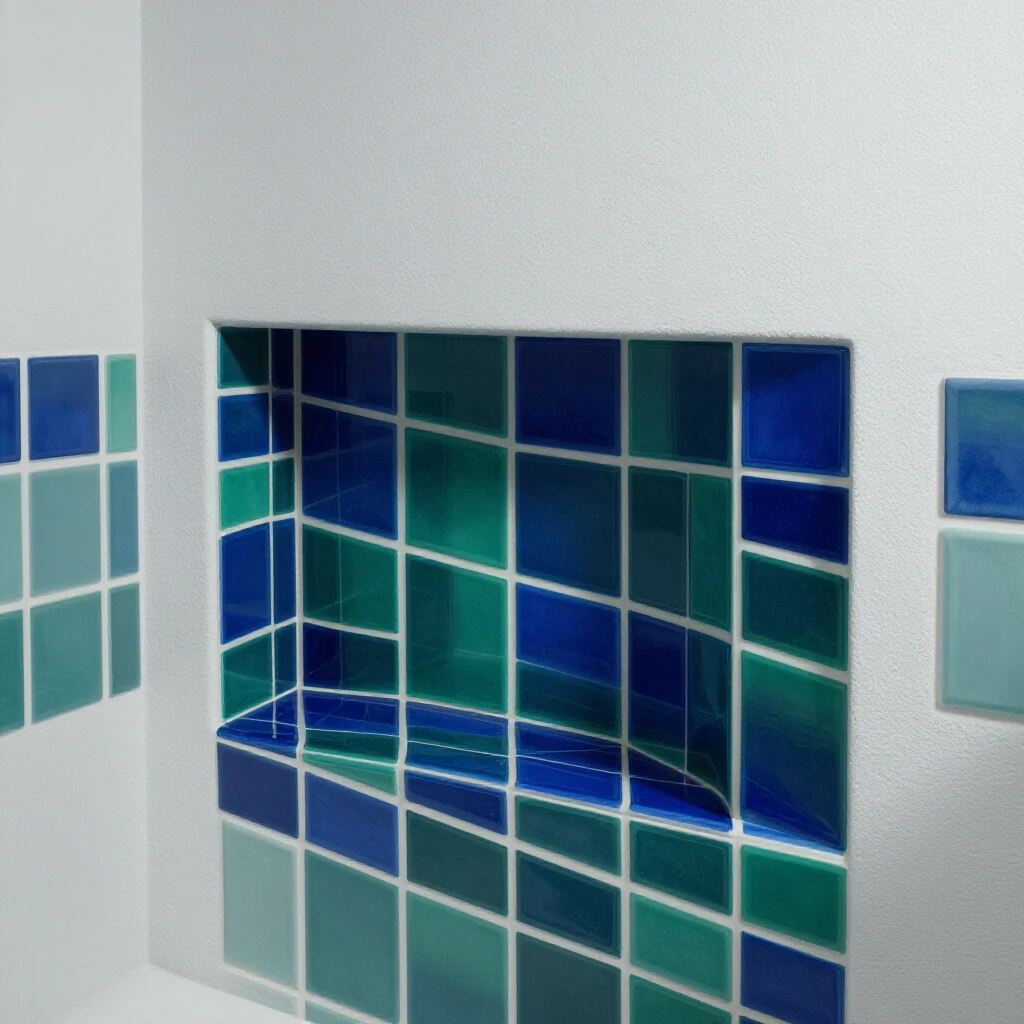
The biggest mistake I see in DIY shower projects is a perfectly level bottom shelf. If the shelf is level, water will sit there, leading to mold and grout erosion. I always aim for a 1/8-inch to 1/4-inch downward slope toward the shower floor. You can achieve this by applying a slightly thicker layer of mortar at the back of the shelf than at the front.
| Step | Action | Metric/Standard |
|---|---|---|
| Mixing Mortar | Use a paddle mixer at low RPM | Consistency of thick peanut butter |
| Bottom Slope | Angle the bottom tile downward | 1/8″ per foot minimum |
| Spacing | Use plastic tile spacers | Match the surrounding wall grout lines |
| Curing | Wait before grouting | 24 hours minimum at 70°F |
Solving the Drainage Problem
When you set the bottom piece of tile, use a small torpedo level. The bubble should be slightly off-center, indicating the slope. I once rushed this step in a guest bathroom and ended up having to “squeegee” the shelf after every shower until I finally got frustrated enough to redo it. Doing it right the first time saves hours of maintenance later.
Troubleshooting Common Installation Errors
Even with careful planning, issues like lippage (uneven tile edges) or mortar shrinkage can occur. This section addresses how to identify these problems early and fix them before the mortar sets. Troubleshooting is about maintaining high standards even when things don’t go according to plan.
If you notice a tile is “lipping”—meaning one edge sticks out further than the one next to it—remove it immediately. This usually happens because there is too much mortar in one spot. Scrape the mortar off the wall and the tile, then reapply. Once the mortar hardens, you cannot fix lippage without a hammer and chisel.
- Mortar is too dry: If the mortar skin over (looks dull), it won’t bond. Scrape it off and apply fresh mix.
- Tiles are sliding: Use painters’ tape to hold the tiles in place while the mortar sets. Gravity is your enemy on vertical walls.
- Grout color mismatch: Always mix the entire bag of grout at once if possible, or measure precisely by weight. Slight variations in water-to-powder ratios can change the final color.
Finishing and Long-Term Maintenance
The final stage includes grouting the joints and applying a flexible silicone sealant to the corners. This provides the final decorative touch and the last line of defense against water. Proper maintenance involves regular cleaning and inspecting the seals for wear.
After the mortar has cured for 24 hours, it is time to grout. I use a rubber float at a 45-degree angle to the joints. This ensures the grout is packed tightly. About 15 to 20 minutes after grouting, wipe the tiles with a damp (not dripping) sponge. If the sponge is too wet, you will wash the pigment out of the grout.
The Importance of Flexible Sealant
In any corner where two planes meet (like the inside corners of your shelf), you should use 100% silicone caulk instead of grout. Houses shift and vibrate. Grout is rigid and will crack in corners. Silicone is flexible and will maintain the waterproof seal even as the house settles. I check my silicone seals every 12 months and replace them if I see any peeling or mold growth.
Project Planning Checklist
Use this checklist to keep your weekend project on track and ensure no safety steps are missed.
- [ ] Verify Wall Contents: Use a stud finder and check for plumbing/electrical.
- [ ] Procure Materials: Buy 10% extra tile for breakage.
- [ ] Frame the Opening: Ensure the header and sill are level.
- [ ] Waterproof Substrate: Apply two coats of membrane; verify total coverage.
- [ ] Dry-Fit Tiles: Check the layout and adjust for the best visual alignment.
- [ ] Set Tiles: Apply mortar with the correct slope on the bottom shelf.
- [ ] Grout and Seal: Wait 24 hours to grout, then apply silicone to all corners.
Conclusion
Building a functional, recessed storage space in your shower is a rewarding project that adds significant value to your daily routine. By focusing on the “invisible” steps—like structural framing and multi-layer waterproofing—you ensure that your work remains a permanent part of your home. As a busy professional, the key is to break the project into manageable blocks: Friday for prep, Saturday for tiling, and Sunday for grouting. This structured approach minimizes stress and prevents the “DIY fatigue” that leads to mistakes. Start by mapping out your wall today, and remember that in the world of home improvement, the preparation is just as important as the finish.
Frequently Asked Questions
Can I install a recessed shelf in an existing tiled wall?
Yes, but it is significantly more difficult. You must carefully cut out the existing tile and backer board with a diamond blade grinder, which creates a massive amount of dust. You then have to frame the opening from the front and ensure the new waterproofing overlaps with the old system. It is usually better to do this during a full wall retiling.
How do I know if a wall is load-bearing?
Generally, exterior walls are load-bearing. Interior walls that run perpendicular to your floor joists are also often load-bearing. If you are unsure, look in your attic or crawlspace to see where the weight of the house is being transferred. When in doubt, do not cut a stud without consulting a structural guide.
What is the best height for a shower shelf?
The standard height is between 48 and 60 inches from the floor. I personally prefer to align the bottom of the shelf with my elbow height, which makes it easy to reach soap and shampoo without bending over or reaching too high.
Why is my grout cracking in the corners of the shelf?
Grout is a cement-based product and does not flex. Because the shelf is a separate structure from the wall, they expand and contract at different rates. You must use color-matched 100% silicone caulk in all internal corners to prevent this cracking.
Do I really need a wet saw for such a small area?
While you can use a manual snapper for some tiles, a wet saw is necessary for the L-shaped cuts often required around a recessed shelf. It also provides much smoother edges, which are highly visible in a small, eye-level area like a shelf.
How long must I wait to use the shower after finishing?
You should wait at least 24 hours after grouting and another 24 hours after applying silicone caulk. Most manufacturers recommend a total of 48 to 72 hours before the area is exposed to heavy water to ensure everything has fully cured.
What should I do if I find a wire behind the wall?
If you find electrical wiring, you must move the shelf location or have the wire rerouted. Never “bury” a junction box or a splice behind a tiled wall. All electrical connections must remain accessible per the National Electrical Code (NEC).
Is a pre-fabricated niche better than a custom-built one?
Pre-fabricated foam inserts are excellent for DIYers because they are already waterproof and sloped. They save about 2 to 3 hours of framing and waterproofing labor. However, they come in fixed sizes, so they may not perfectly match your tile layout.
How do I prevent mold inside the shelf?
Mold grows where water sits. Ensure the bottom tile has a 1/8-inch slope and that you use a grout with an antimicrobial additive. Regularly cleaning the shelf with a pH-neutral cleaner will also prevent soap scum buildup, which acts as food for mold.
Can I use regular drywall behind the tile in the shelf?
Absolutely not. Regular drywall will disintegrate when exposed to the moisture levels found in a shower. You must use a cement-based backer board or a specialized waterproof foam board designed for wet environments.
(This article was written by one of our staff writers, Robert Callahan. Visit our Meet the Team page to learn more about the author and their expertise.)