How to Install a Sink P-Trap for Leak Prevention (Step-by-Step)

Replacing a leaking drain under your bathroom or kitchen sink is one of the fastest ways to see a win in your home. I remember a Saturday morning when a small puddle under my guest bathroom vanity threatened to ruin the expensive cabinetry. By spending less than twenty dollars on a few plastic components and thirty minutes of my time, I stopped the damage and restored the sink to full use. This type of DIY home improvement provides immediate satisfaction because you can see the results of your labor right away.
In my twelve years as a facilities manager, I have seen how small drips lead to massive repair bills. When water sits on particle board or plywood, it acts like a sponge. The wood swells, loses its structural strength, and eventually grows mold. Mastering the assembly of a standard curved drain trap is a fundamental skill for anyone interested in step-by-step home upgrades. It saves you the high cost of a service call while ensuring your home remains dry and functional.
Preparing for Your Under-Sink Drain Upgrade
Setting the stage for a plumbing task is just as important as the installation itself. This phase involves clearing out the cabinet to give yourself room to move and identifying the exact size of the pipes currently in place. Taking five minutes to prepare prevents the frustration of reaching for a tool that is not there while you are lying on your back.
Before you start, you must determine if you are working with a 1-1/4 inch or a 1-1/2 inch pipe. Most bathroom sinks use the smaller 1-1/4 inch size, while kitchen sinks and some modern high-flow bathroom basins use the 1-1/2 inch version. I always recommend buying a kit that includes a “reducing washer.” This special washer allows a 1-1/2 inch trap to connect to a 1-1/4 inch tailpiece, which is the pipe coming down from the sink drain.
Project Benchmarks and Expectations
- Active Project Time: 45 to 90 minutes.
- Difficulty Rating: 3/10 (Requires basic hand strength and attention to detail).
- Material Cost: $10 – $25 depending on the material (PVC vs. Polypropylene).
- Potential Savings: $150 – $250 compared to professional labor rates.
| Feature | DIY Approach | Professional Service |
|---|---|---|
| Total Cost | $15 – $30 | $175 – $350 |
| Time Spent | 1 – 2 hours | 4 – 6 hour window |
| Tools Needed | Basic Hand Tools | Specialized Equipment |
| Skill Level | Beginner | Licensed Expert |
Essential Equipment for a Successful Drain Assembly
Having the right tools on hand is the difference between a quick repair and a long weekend of frustration. While modern plastic drain kits are designed to be tightened by hand, older metal pipes or stubborn plastic nuts often require mechanical help. I keep a dedicated plumbing bucket in my garage that holds all these items so I can grab them the moment I spot a leak.
The most important item in your kit is not a tool at all, but a way to manage the mess. When you remove the old curved pipe, water will pour out. This is water that stays in the trap specifically to block sewer gases from entering your home. You need a shallow bucket or a large bowl that fits under the pipes to catch this residual liquid.
- Tongue-and-Groove Pliers: These are often called Channellocks. They have adjustable jaws that allow you to grip large plastic nuts without crushing them.
- Small Hacksaw or PVC Cutter: Sometimes the new pipes are slightly longer than the ones you are replacing. You will need to trim them to fit your specific cabinet layout.
- Sandpaper (Medium Grit): After cutting a pipe, the edges are often ragged. Sanding these smooth ensures the washers can seat properly against the pipe wall.
- Rags and Surface Cleaner: You will want to wipe down the tailpiece and the wall exit pipe to remove old gunk, hair, and mineral deposits.
- Headlamp or Magnetic Work Light: Cabinets are dark. Being able to see the threads on the back of the pipe prevents cross-threading.
Step-by-Step Execution of the Curved Pipe Replacement
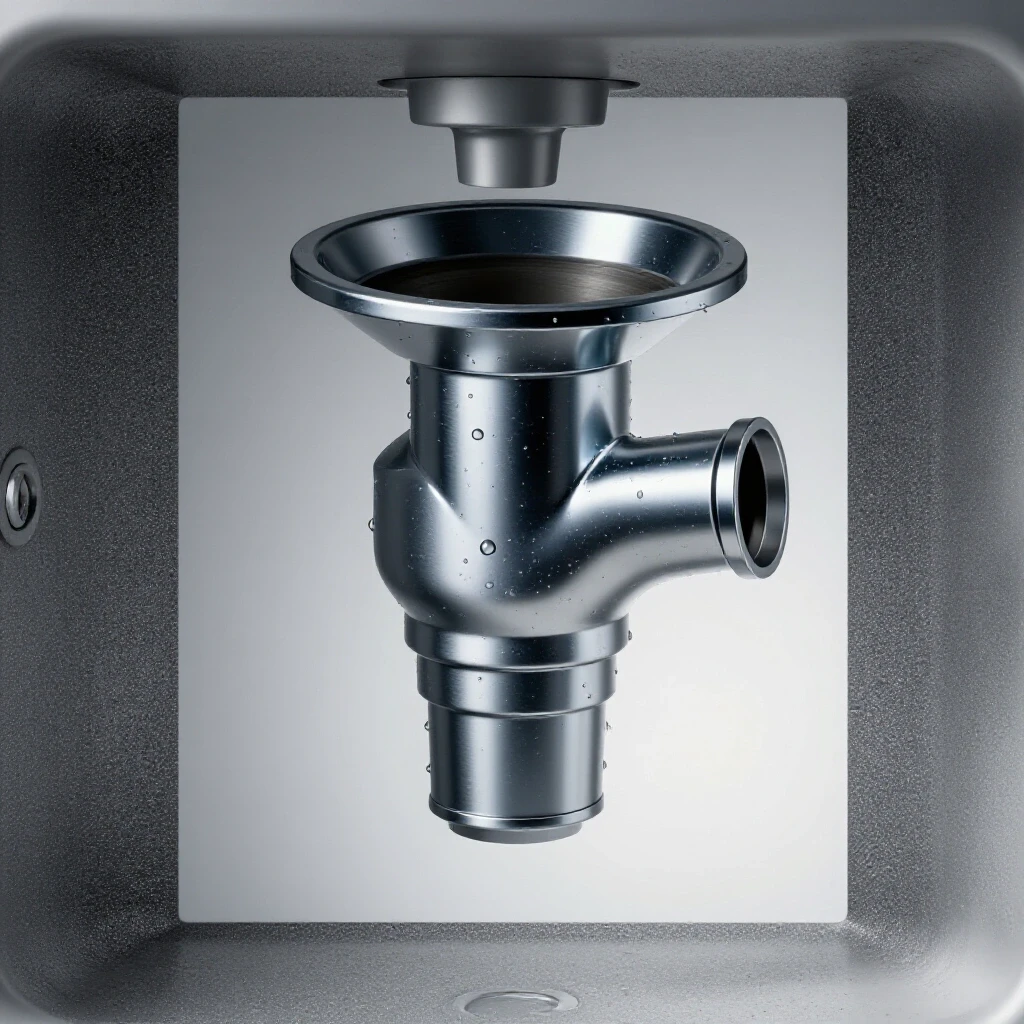
The process of swapping out the drain trap relies on the “slip-joint” connection. This system uses a threaded nut to compress a tapered washer against the pipe, creating a watertight seal. If you understand how the washer sits, the rest of the project is straightforward. I have found that most DIY failures happen because the washer was installed upside down or backwards.
Start by placing your bucket under the trap. Use your pliers to loosen the two nuts holding the J-shaped pipe in place. One nut connects to the vertical tailpiece coming from the sink, and the other connects to the arm going into the wall. Once loosened, slide the nuts away from the joints and pull the J-bend down. Water will fall into your bucket.
The Installation Sequence
- Clean the Connections: Use a damp rag to wipe the vertical sink tailpiece and the horizontal wall pipe. Any grit left behind will create a path for water to escape.
- Position the Nuts: Slide a new slip nut onto the sink tailpiece with the threads facing down. Then, slide a nut onto the wall arm with the threads facing toward the wall.
- Install the Washers: This is the most critical step. Slide the tapered washer onto the pipe after the nut. The “thick” end of the washer must face the nut, and the “pointed” or tapered end must face the joint where the pipes meet.
- Seat the J-Bend: Push the new curved pipe up onto the sink tailpiece and align it with the wall arm. You may need to wiggle the pipes to get them to sit flush.
- Hand-Tighten Only: Thread the nuts onto the trap by hand. Do not use pliers yet. Turn them until they are snug. Hand-tightening allows you to feel if the threads are aligned correctly.
Why Dry-Fitting the Trap Components Prevents Misalignment
Dry-fitting is the practice of assembling your parts without fully tightening them to ensure everything lines up. In my experience with weekend DIY projects, skipping this step usually leads to a trip back to the store. Sink drains are rarely perfectly centered over the wall outlet, and the distance from the sink to the wall varies in every home.
When you dry-fit, you are looking for “tension.” If you have to pull or push the pipes forcefully to get the threads to meet, the seal will eventually fail. The pipes should rest naturally in a position where the nuts can spin freely. If the new J-bend is too long and hits the bottom of the cabinet, or if the wall arm is too long, use your hacksaw to trim the straight sections. Always leave at least two inches of pipe for the washer to grip.
Interestingly, many people think they need to use “plumber’s putty” or “Teflon tape” on these plastic threads. In a slip-joint system, the threads do not provide the seal; the washer does. Adding tape can actually prevent the nut from tightening fully against the washer. Keep the threads clean and dry for the best result.
Troubleshooting Common Seal Failures and Drips
Even after a careful installation, you might notice a small bead of water forming at a joint. This is a normal part of safe home repairs and does not mean you have failed. Usually, it indicates that a washer is slightly skewed or the nut needs a quarter-turn of additional pressure.
If a leak persists, the first thing I check is the alignment. If the pipe enters the joint at a slight angle, the washer cannot compress evenly. Loosen the nut, straighten the pipe, and retighten. If that doesn’t work, inspect the washer for “flashing”—small bits of leftover plastic from the manufacturing process. You can scrape these off with your fingernail to create a smooth surface.
Common Failure Points Analysis
- Overtightening: Using pliers to crank down on plastic nuts can distort the circular shape of the pipe. This creates a gap where water can leak.
- Cross-Threading: If the nut is hard to turn from the very first rotation, stop. You are likely cutting new, crooked threads into the plastic. Back it off and try again.
- Old Tailpieces: If your sink drain is old metal and the new plastic trap is leaking at that connection, the metal might be corroded. You may need to sand the metal tailpiece until it is shiny and smooth.
Final Testing and Maintenance for Long-Term Performance
Once everything is snug, it is time for the “Full Sink Dump” test. This is a standard procedure I use in facility management to stress-test a system. A small trickle of water might not reveal a leak, but a large volume of water creates pressure that finds any weakness in your seals.
Close the sink stopper and fill the basin to the overflow line. Place a dry paper towel under the new pipes. Open the stopper and let the water rush out all at once. While the water is draining, watch the joints closely. After the sink is empty, run your hand along the bottom of the pipes and check the paper towel. If it is bone dry, your project is a success.
For long-term maintenance, I recommend checking these connections every six months. Temperature changes in the water (alternating between boiling pasta water and cold tap water) cause the plastic to expand and contract. Over time, this can slightly loosen the slip nuts. A quick hand-check to ensure they are still snug can prevent a surprise leak in the middle of the night.
Conclusion and Next Steps
Completing this drain assembly is a significant step toward becoming a more self-reliant homeowner. You have transitioned from someone who worries about a leak to someone who knows exactly how to fix it. This project builds the confidence needed for more complex tasks, like replacing a faucet or installing a garbage disposal.
Your next step is simple: Go to your bathroom or kitchen and look under the sink. Check for any signs of moisture or white mineral buildup around the nuts. If you see these signs, you now have the knowledge and the tool list to address the issue before it becomes an emergency. Keep a spare 1-1/2 inch trap kit in your workshop; it is a small investment that provides peace of mind for the future.
Frequently Asked Questions
What is the difference between a P-trap and a J-bend? The J-bend is the specific U-shaped pipe that holds water. The P-trap is the entire assembly, which includes the J-bend and the straight “wall arm” that connects to the house’s main drain line. Most people use the terms interchangeably in casual conversation.
Do I need to use glue on my under-sink pipes? No. Under-sink drain assemblies for kitchens and bathrooms are designed to be “removable” for cleaning and maintenance. They use slip-joint nuts and washers rather than PVC cement. Never glue these parts, as you will not be able to clear a clog or replace the trap easily in the future.
Why does my new trap smell like sewer gas? If you smell gas, the trap is likely dry. The curve must be filled with water to create a seal against gases. If the sink hasn’t been used in weeks, the water may have evaporated. Simply running the water for ten seconds will refill the trap and stop the smell.
Can I use a flexible “accordion-style” pipe? While these are sold at hardware stores, I recommend avoiding them. The ridges inside flexible pipes catch hair, grease, and food particles very easily. This leads to frequent clogs and foul odors. Rigid, smooth-walled pipes are much more reliable and easier to keep clean.
What if the nut on my old metal pipe won’t budge? Old metal nuts often suffer from “galvanic corrosion,” which essentially welds them in place. You can apply a penetrating oil (like WD-40 Specialist or PB Blaster) and let it sit for twenty minutes. If it still won’t move, you may need to use a hacksaw to carefully cut the nut off.
My wall pipe is lower than my new trap. Is that okay? The wall exit must always be lower than the bottom of the sink but higher than the bottom of the J-bend. If the wall pipe is higher than the trap, water will sit in the sink and won’t drain. This is a common issue when people switch to deeper “farmhouse” style sinks.
How tight should I turn the plastic nuts? You should tighten them as far as you can with your bare hands. If you still see a drip during the water test, use your pliers to turn the nut just another 1/8th or 1/4th of a turn. Over-tightening is a leading cause of cracked nuts and failed seals.
What should I do if the pipe from the wall is a different material? It is common to see a plastic trap connecting to a metal pipe coming out of the wall. In this case, use a specialized “transition” washer. These are often made of thick rubber and are designed to bridge the gap between different materials while maintaining a watertight seal.
Why is there a small plastic ring in my kit that doesn’t seem to fit? That is likely a “reducing washer.” It is used when you are connecting a 1-1/2 inch trap to a 1-1/4 inch sink tailpiece. If your pipes are the same size, you can set that washer aside as a spare.
Can I reuse the old washers if they look okay? I strongly advise against this. Washers are made of soft plastic or rubber that conforms to the shape of the pipe over time. Once they are compressed and then removed, they rarely seal as well the second time. Always use the new washers provided in your kit.
What if the tailpiece from the sink is too short to reach the trap? You can purchase a “tailpiece extension.” This is a straight piece of pipe with a slip-joint connection on one end. It allows you to bridge the gap between the sink drain and the curved J-bend without having to replace the entire drain assembly.
Does it matter which way the J-bend faces? Yes. One side of the J-bend is usually deeper than the other. The deeper side should connect to the wall arm to ensure enough water stays in the trap to block gases. Most kits are designed so that they only fit properly in one orientation.
(This article was written by one of our staff writers, Robert Callahan. Visit our Meet the Team page to learn more about the author and their expertise.)