How to Build a Wall-Mounted Shelf Desk for Small Spaces (Guide)

Why did the DIYer get kicked out of the library? Because he kept trying to “level” the bookshelves. While that joke might fall flat at a dinner party, in my world of facilities management, a level is basically a sacred object. Over the last 12 years, I have learned that the difference between a successful weekend DIY project and a structural disaster usually comes down to three inches of wood and a few well-placed screws.
In my first home, I tried to install a heavy floating surface without checking for studs. I used plastic drywall anchors, thinking they were “good enough.” Two days later, my morning coffee and my laptop were on the floor, along with a sizable chunk of my drywall. That failure taught me more about building code compliance and structural load than any manual ever could. Today, I want to help you avoid those same mistakes while creating a functional, space-saving workspace that stays on the wall where it belongs.
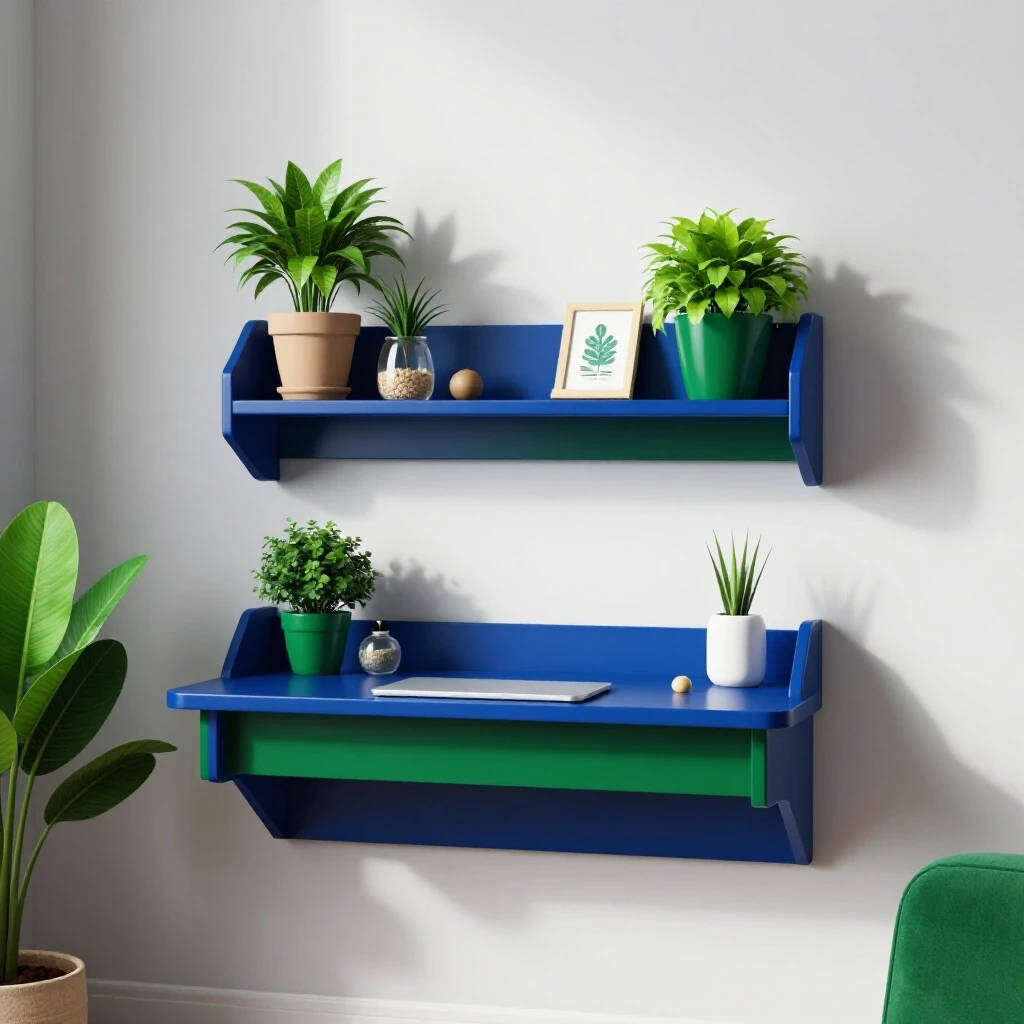
Planning Your Compact Floating Workspace
Planning is the phase where you determine the dimensions, location, and material requirements for a wall-anchored desk and shelving unit to ensure it fits your physical space and ergonomic needs.
Before you even pick up a saw, you need to understand your “site.” In facilities management, we call this a site survey. For a home office upgrade, this means identifying exactly where your wall studs are located. Most modern American homes use 16-inch “on-center” spacing for studs. This means the center of one vertical wood beam is exactly 16 inches from the center of the next.
Your workspace needs to be anchored into at least two of these studs. A standard desk height is 29 to 30 inches from the floor. If you are taller or shorter, you can adjust this, which is the beauty of DIY home improvement. However, keep in mind that the higher you go, the more leverage the unit exerts on the wall fasteners.
Understanding Material Selection and Load Limits
Material selection involves choosing between solid wood, plywood, or medium-density fiberboard (MDF) based on the weight the shelf must support and the desired aesthetic.
For a sturdy work surface, I recommend 3/4-inch birch plywood or solid pine. Avoid particle board for the main desk surface; it tends to sag over time under the weight of a monitor or a heavy pair of arms. If you use plywood, you will need to finish the edges with iron-on edge banding or a thin strip of solid wood trim to hide the layers.
| Material Type | Weight Capacity | Durability | Best Use |
|---|---|---|---|
| 3/4″ Birch Plywood | High | High | Main desk surface and structural supports |
| Solid Pine | Medium | Medium | Upper decorative shelving |
| MDF (Medium Density Fiberboard) | Low | Low | Light-duty shelving only; avoid for desks |
| 2×4 Construction Lumber | Very High | High | Internal bracing or “cleats” |
Essential Equipment for a Structural Wall Attachment
A tool inventory is a list of manual and power-operated devices required to cut, join, and mount your project safely and accurately.
I have spent a decade refining my tool kit. For this project, you don’t need a professional workshop, but you do need tools that provide precision. A “dry-fit” is a term we use to describe assembling the project without glue or permanent screws to see if everything aligns. To do that correctly, your measurements must be exact.
- Stud Finder: An electronic device used to locate the wooden framing members behind your drywall.
- Circular Saw or Miter Saw: Used for making clean, straight cuts in your lumber.
- Power Drill and Driver: Used for boring pilot holes (small holes that prevent wood from splitting) and driving screws.
- 4-Foot Level: A tool with a bubble vial used to ensure your desk is perfectly horizontal.
- Speed Square: A triangular marking tool used to guide 90-degree and 45-degree cuts.
- Tape Measure: Essential for the “measure twice, cut once” rule.
- Non-Contact Voltage Tester: A safety tool that detects live electrical wires behind the wall before you drill.
Tool Investment and ROI Matrix
| Tool | Necessity | Estimated Cost | Long-term Value |
|---|---|---|---|
| Cordless Drill | Essential | $80 – $150 | Used for almost every home repair |
| 4-Foot Level | Essential | $20 – $40 | Critical for shelving and flooring |
| Electronic Stud Finder | Essential | $25 – $50 | Prevents wall damage and project failure |
| Kreg Pocket Hole Jig | Optional | $40 – $100 | Makes professional-looking joints easily |
Safety Protocols and Code Compliance for Wall-Hung Furniture
Safety protocols are the specific actions taken to prevent personal injury and property damage, including the use of personal protective equipment (PPE) and adherence to local building standards.
When you attach anything to a wall, you are entering a “danger zone” for hidden utilities. In my years of facilities work, I have seen people drill straight into a 1/2-inch copper water line or a 120-volt electrical wire. Before you drill, use a voltage tester. If the wall feels unusually warm or you are near a bathroom or kitchen, proceed with extreme caution.
International Residential Code (IRC) doesn’t have a specific “desk” section, but it does cover “dead loads” (the weight of the shelf) and “live loads” (the weight of you leaning on it). For safe home repairs, your fasteners must penetrate the wall stud by at least 1.5 to 2 inches. This means if you have 1/2-inch drywall, you need a screw that is at least 3 inches long to ensure a secure bite into the wood.
Critical Safety Checklist
- Wear ANSI-approved safety glasses when cutting wood to prevent eye injuries from flying splinters.
- Use a dust mask or respirator, especially when sanding MDF or plywood, which contains adhesives.
- Verify the absence of plumbing or electrical lines using a high-quality sensor.
- Ensure the work area is well-lit to avoid measurement errors.
Step-by-Step Construction of the Floating Desk and Shelves
This section details the chronological stages of the project, from the initial “cleat” installation to the final attachment of the work surface.
Building a wall-attached unit is essentially about creating a “cleat” system. A cleat is a strip of wood bolted to the wall that acts as a shelf or desk support. Think of it as the foundation of your house, but for your laptop.
Phase 1: Installing the Wall Cleats
First, mark your stud locations using a pencil. Once you have found at least two studs, use your level to draw a straight horizontal line at your desired desk height. Cut a 2×2 or 2×4 piece of wood to the length of your desk. This is your back cleat.
Drill pilot holes through the cleat that match the spacing of your studs. Hold the cleat against the wall, check the level one last time, and drive 3-inch deck screws through the cleat and into the studs. If you miss the stud, the desk will eventually fall. There is no middle ground here.
Phase 2: Building the Desk Frame
Building the frame involves creating a rectangular support structure that will sit on top of your wall cleats and provide a base for the desktop.
I prefer a “torsion box” or a simple “U-frame” for small-space upgrades. This involves two side pieces (arms) that extend out from the wall. These arms should be attached to the back cleat using pocket holes or heavy-duty wood screws. Building on this, you can add a front piece to complete the rectangle, giving the desk a finished, chunky look.
Phase 3: Attaching the Desktop and Shelving
Once the frame is secure, apply a bead of wood glue to the top edges. Lay your 3/4-inch plywood over the frame. Use 1.25-inch finish nails or screws to secure the top to the frame. For the upper shelves, repeat the cleat process, but you can use smaller 1×2 cleats for a more “floating” appearance, as shelves typically hold less weight than a desk.
- Pro Tip: Always “countersink” your screws. This means drilling a slightly wider hole at the top so the screw head sits flush with or below the wood surface. You can then hide the screw with wood filler.
Load Capacity and Structural Integrity Testing
Load testing is the process of applying weight to the finished structure to ensure it can handle daily use without sagging or pulling away from the wall.
In a professional setting, we calculate the “moment arm” or leverage. A desk that sticks out 20 inches from the wall creates a lot of pull on the top screws. Once your glue has dried (usually 24 hours), perform a graduated weight test.
Start by placing a few heavy books on the desk. Watch the point where the desk meets the wall. Is there a gap forming? If so, your fasteners aren’t tight enough or you missed the stud. Interestingly, most DIY failures happen because the user used “drywall anchors” instead of hitting the wooden studs. A drywall anchor is rated for static weight (like a picture frame), not the dynamic weight of a human typing or leaning.
| Test Phase | Weight Applied | Duration | What to Look For |
|---|---|---|---|
| Phase 1 | 10 lbs (Laptop/Lamp) | 1 Hour | Initial settling |
| Phase 2 | 30 lbs (Books/Monitor) | 4 Hours | Visible sagging in the center |
| Phase 3 | 50 lbs (Leaning pressure) | 5 Minutes | Movement at the wall connection |
Troubleshooting Common Installation Errors
Troubleshooting is the systematic identification of mistakes made during the build and the application of corrective measures to restore structural integrity.
One common issue is the “slanted desk” syndrome. This happens when your wall isn’t perfectly flat (most aren’t). If you find your desk is sloping forward, you may need to use “shims.” Shims are thin, tapered pieces of wood used to fill small gaps and level out surfaces. Slide a shim behind the lower part of your cleat before tightening the screws to tilt the desk back to level.
Another frequent headache is the “stripped screw.” If you drive a screw too fast and the head rounds out, you can’t get it in or out. As a result, I always keep a “screw extractor” kit in my bag. To avoid this, use high-quality Torx (star-drive) screws instead of standard Phillips head screws. They provide better grip and rarely strip.
Finishing and Long-Term Maintenance
Finishing involves the application of protective coatings to the wood, while maintenance refers to the periodic checks required to keep the unit safe.
For a workspace, I recommend a water-based polyurethane. It dries fast (about 2 hours per coat) and doesn’t have the heavy fumes of oil-based finishes. Apply at least three coats, lightly sanding with 220-grit sandpaper between each coat. This creates a smooth surface that won’t give you splinters while you work.
Every six months, do a “shake test.” Grab the edge of the desk and give it a firm tug. If you feel any wiggle, go back in with your driver and tighten the wall screws. Wood expands and contracts with the seasons, which can occasionally loosen fasteners.
Project Timeline and Effort Estimate
Completing this project as a weekend DIY project is very realistic if you break it down into blocks.
- Saturday Morning (3 Hours): Shopping for materials and site prep (finding studs).
- Saturday Afternoon (4 Hours): Cutting lumber and installing wall cleats.
- Sunday Morning (3 Hours): Assembling the desk frame and attaching the top.
- Sunday Afternoon (2 Hours): Sanding and first coat of finish.
- Total Active Time: 12 Hours.
Knowing When to Call a Professional
While most hands-on DIYers can handle this, there are limits. If your walls are made of lath and plaster (common in homes built before 1950), finding studs is much harder and the material is very brittle. If you drill and see gray dust instead of wood shavings, you might be hitting old masonry or a void. In these cases, or if you are unsure about the structural load-bearing capacity of your wall, consulting a carpenter for an hour of advice can save you thousands in repair costs later.
By following these steps, you are not just adding a piece of furniture; you are improving your home’s utility and your own skill set. The satisfaction of sitting at a desk you built yourself—one that doesn’t wobble and didn’t cost a fortune—is the ultimate DIY win.
Frequently Asked Questions
How much weight can a floating desk actually hold? If properly anchored into two wooden studs with 3-inch screws, a standard 3/4-inch plywood desk can safely support 50 to 75 pounds. However, the depth of the desk matters. A deeper desk (over 20 inches) creates more leverage and may require additional support brackets (corbels) underneath.
Can I build this if I only have metal studs? Yes, but you cannot use standard wood screws. You must use “toggle bolts” or “snap toggles” designed for metal studs. These provide a mechanical “wing” that opens behind the metal to provide grip. Note that metal studs have lower shear strength than wood.
What is the best way to hide the ugly edges of plywood? The most professional-looking method is iron-on wood veneer edge banding. You simply run a household iron over the strip to melt the glue, press it onto the plywood edge, and trim the excess with a utility knife or a dedicated edge trimmer.
Do I really need to pre-drill pilot holes? Yes. If you drive a large screw into the end of a board without a pilot hole, the wood fibers will compress and eventually split the board. This ruins the structural integrity of your joint. Use a drill bit slightly smaller than the shank of your screw.
Is it safe to mount a desk to a drywall-only surface? No. Never mount a desk or heavy shelving only to drywall. Drywall is essentially compressed chalk and paper; it has very little structural strength. Even the best “heavy-duty” anchors can pull out under the dynamic weight of someone leaning on the desk.
What height should I mount my wall-attached desk? Standard desk height is 29 inches. To find your ergonomic height, sit in your office chair with your arms at a 90-degree angle. Measure from the floor to the underside of your forearms. This is your ideal “working” height.
How do I make sure the desk is level if my floor is crooked? Always trust your level, not the floor or the ceiling. Older homes often have “settled,” meaning the floors are slanted. If you build your desk “parallel” to a crooked floor, your pens will literally roll off the desk. Use a 4-foot level to ensure the desk is horizontal relative to the earth’s gravity.
Can I use a “cleat” made of MDF? I strongly advise against it. MDF is made of glued wood particles and can “blow out” or crumble under the high tension of a screw. For the structural cleats that hold the desk to the wall, always use solid wood like pine, fir, or oak.
What kind of screws are best for this project? Avoid cheap drywall screws; they are brittle and can snap under shear force. Use “construction screws” or “deck screws” (like GRK or Spax brands). These are made of hardened steel and often have “nibs” under the head to help them sit flush in the wood.
How do I find studs through thick plaster walls? Standard electronic stud finders often struggle with plaster and lath. Use a “magnetic” stud finder to locate the nails or screws that hold the lath to the studs. Once you find a vertical line of nails, you have found your stud. Alternatively, look for electrical outlets, which are almost always mounted to the side of a stud.
(This article was written by one of our staff writers, Robert Callahan. Visit our Meet the Team page to learn more about the author and their expertise.)