How to Paint a Home Office Desk for Durable Results (Easy Guide)

In my twelve years as a facilities manager, I have seen countless pieces of office furniture tossed into dumpsters simply because they looked a bit worn. This cycle of waste is something I try to fight in my own home by choosing to restore rather than replace. Giving a second life to a workstation surface is a sustainable choice that keeps high-quality materials out of landfills while saving significant money.
Early in my DIY journey, I made the mistake of thinking a quick coat of spray paint could fix a scratched laminate top. Within a week, the paint began to peel off in large flakes every time I moved my computer mouse. That failure taught me that successful furniture refinishing is not about the paint itself, but about the chemical and mechanical bond between the surface and the coating. I now approach these weekend upgrades with the same technical rigor I use for commercial building maintenance.
Understanding the Foundations of Surface Restoration
Restoring a workspace top involves more than just aesthetics; it requires a deep understanding of material compatibility and adhesion science. This phase focuses on identifying the substrate—whether it is solid wood, veneer, or high-pressure laminate—to ensure the chosen coating will stick long-term.
Before you pick up a brush, you must determine what your furniture is made of. In my experience, most modern office desks are either melamine or laminate. These are non-porous surfaces designed to repel liquids, which means they also naturally repel paint. To overcome this, we rely on the manufacturer technical guides for “bonding primers.” These products are engineered to bite into slick surfaces.
I always recommend performing a “scratch test” on a small, inconspicuous area before committing to the whole project. Apply a small patch of primer, let it dry for 24 hours, and then try to scrape it off with a fingernail. If it lifts easily, your surface preparation was insufficient. This step saves hours of frustration and prevents a costly professional “save” later on.
Evaluating Your Current Workstation Material
Knowing if your desk is solid wood, wood veneer, or a synthetic laminate dictates every tool and chemical you will use. Solid wood allows for aggressive sanding, while thin veneers or laminates require a much gentler, more strategic approach to avoid permanent damage.
- Solid Wood: Heavy, shows grain on the underside, and can be sanded deeply.
- Veneer: A thin layer of real wood over particleboard; sanding too hard will “burn through” to the glue layer.
- Laminate/Melamine: A plastic-like coating that feels cool to the touch and has no natural grain texture.
Essential Tool Inventory and Material Selection
Selecting the right tools is the difference between a finish that looks like a factory job and one that looks like a messy craft project. This list focuses on professional-grade results using accessible hand tools and high-quality consumables found at local hardware stores.
- Random Orbital Sander: This tool uses a dual-motion sanding pattern to prevent swirl marks on the surface.
- Sanding Discs: You will need 120-grit for initial scuffing and 220-grit for smoothing between coats.
- High-Adhesion Primer: Look for “bonding” or “stix” primers specifically rated for non-porous surfaces.
- Urethane Alkyd Enamel Paint: This hybrid paint offers the durability of oil-based finishes with the easy cleanup of water-based options.
- Microfiber Rollers (4-inch): These minimize “stipple” or texture, leaving a smoother finish than a standard nap roller.
- Synthetic Bristle Brush: Used for “cutting in” edges where the roller cannot reach.
- Deglosser or TSP Substitute: A chemical cleaner that removes oils, wax, and fingerprints that prevent paint adhesion.
- Tack Cloths: Sticky cheesecloth used to remove every microscopic speck of dust after sanding.
DIY vs. Professional Surface Refinishing Comparison
| Factor | DIY Approach | Professional Service |
|---|---|---|
| Estimated Cost | $60 – $120 | $300 – $600 |
| Active Labor Time | 4 – 6 Hours | 2 – 3 Hours |
| Total Project Duration | 3 – 5 Days (Curing) | 2 – 4 Days |
| Skill Required | Intermediate | Expert |
| Tool Investment | Moderate ($50+) | High ($500+) |
The Science of Adhesion: Testing Your Surface Finish
Adhesion is the physical and chemical joining of two different materials. In furniture restoration, we rely on “mechanical tooth,” which is the microscopic roughness created by sanding that allows the primer to grip the surface firmly.
In the facilities world, we follow ASTM D3359 standards for measuring adhesion, but you can do a simplified version at home. This is what I call the “Surface Test.” After cleaning and lightly sanding a small area, apply your primer. Once dry, use a utility knife to lightly score a “X” into the primer. Place a piece of strong masking tape over the X, press it down, and pull it off quickly.
If the primer stays on the desk, you have a “pass.” If it comes off on the tape, you need to sand more or switch to a stronger bonding primer. This test is the most important step in the entire process. Skipping it is why most DIY furniture projects fail within the first month of use.
Why Surface Preparation Trumps Paint Quality
Even the most expensive paint in the world will fail if applied over a layer of skin oils or dust. Proper preparation ensures that the new finish becomes a part of the desk rather than just a layer sitting on top of it.
I once spent forty dollars on a gallon of premium cabinet paint only to have it bubble because I didn’t use a degreaser first. I learned that “clean” isn’t just about how it looks; it is about removing invisible contaminants. Using a Trisodium Phosphate (TSP) substitute is a code-compliant way to ensure the surface is chemically ready for a new bond.
Step-by-Step Execution: Sanding and Coating
This phase moves from the theoretical to the practical, requiring a steady hand and patience. Following a structured order of operations prevents common mistakes like “flashing,” where the paint dries unevenly and leaves visible lap marks.
Phase 1: Deep Cleaning and Degreasing
Start by removing all hardware and cleaning the entire surface with a TSP substitute. This removes years of built-up oils from your hands and arms that have soaked into the desk. Wipe it down twice with clean water afterward to ensure no chemical residue remains, as this can interfere with the paint’s drying process.
Phase 2: Mechanical Scuffing
Using your 120-grit sandpaper, lightly sand the entire surface. You are not trying to remove the old finish entirely; you are simply “scuffing” it to remove the shine. This creates the “mechanical tooth” I mentioned earlier. For laminate surfaces, this step is vital because the plastic is naturally too smooth for paint to grab.
Phase 3: The Priming Stage
Apply one thin, even coat of bonding primer using a microfiber roller. Do not overload the roller, as this leads to drips. If you see bubbles, go back over them lightly with an unloaded roller. Allow this to dry for at least four hours, or according to the manufacturer’s technical data sheet for your specific climate.
Phase 4: Sanding the Primer
Once the primer is dry, lightly sand it with 220-grit paper. This removes any dust nibs or roller texture. Use a tack cloth to remove every bit of dust. This is the secret to a “factory-smooth” finish that doesn’t feel gritty to the touch.
Phase 5: Applying Topcoats
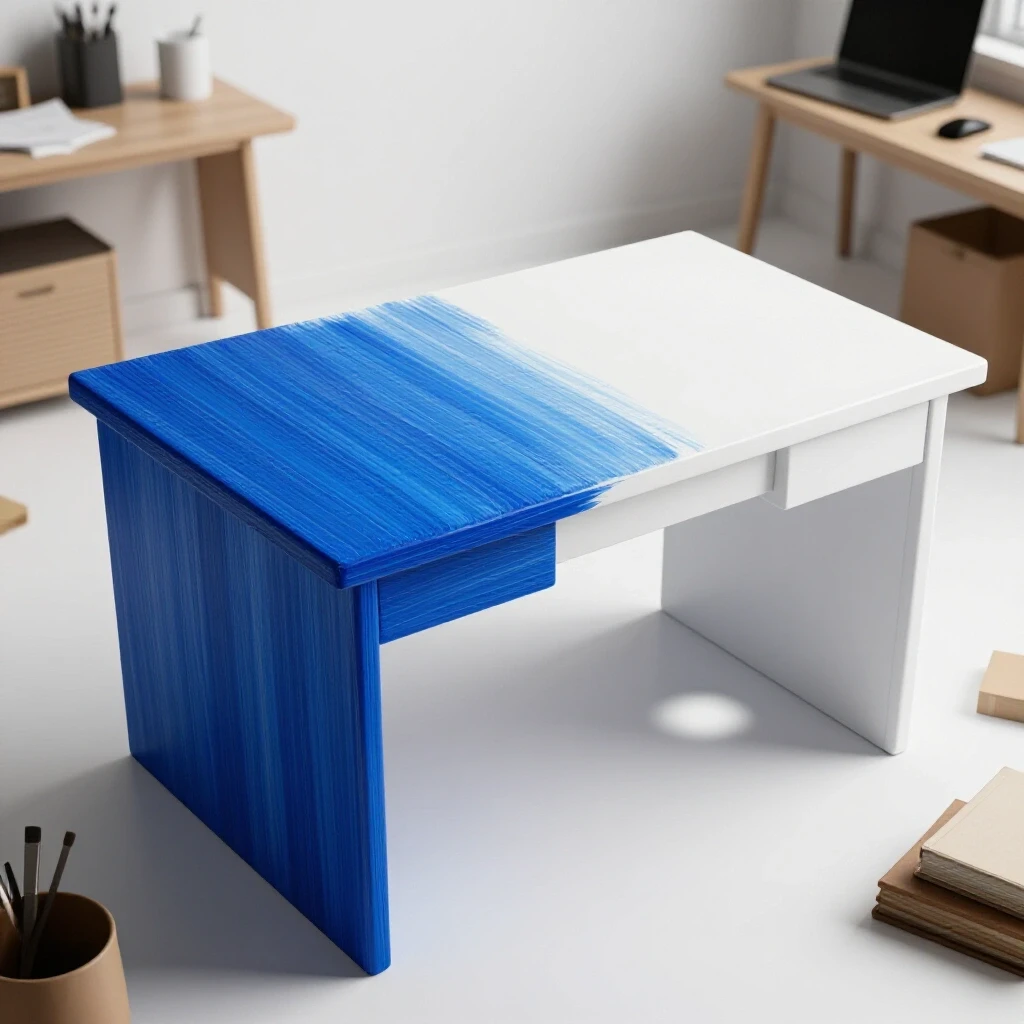
Apply the first coat of urethane alkyd enamel. Work in long, continuous strokes from one side of the desk to the other. This maintains a “wet edge,” preventing visible lines where one stroke overlaps another. Most projects will require two coats for full color coverage. Wait at least 12 to 24 hours between coats.
Safety and Environmental Standards
Working with paints and solvents requires a commitment to personal safety and proper ventilation. Following OSHA-aligned safety protocols ensures that your weekend project doesn’t result in respiratory irritation or chemical exposure.
Always work in a well-ventilated area. If you are working in a small home office, use a box fan in the window to pull air out of the room. I always wear an N95 respirator mask when sanding to avoid inhaling fine particulate matter, especially if the old finish might contain lead (common in furniture made before 1978).
- Wear nitrile gloves to protect your skin from solvents in primers.
- Keep a fire extinguisher nearby if using oil-based products, as rags soaked in oil can spontaneously combust if not disposed of correctly.
- Dispose of used rags by laying them flat outside to dry completely before putting them in the trash.
Managing Expectations: Time and Effort Metrics
A common frustration for DIYers is the “weekend warrior” trap, where a project takes twice as long as expected. Understanding the difference between “dry time” and “cure time” is essential for a functional home office.
Paint might feel dry to the touch in two hours, but it takes days or even weeks to “cure.” Curing is the chemical process where the paint reaches its maximum hardness. For a desk surface that will hold heavy monitors and equipment, you must respect these timelines to avoid permanent indentations in the finish.
- Active Work Time: 5 – 7 hours (cleaning, sanding, painting).
- Dry Time Between Coats: 12 – 24 hours.
- Time Before “Light Use”: 3 days (paperwork only).
- Time Before “Heavy Use”: 7 – 14 days (monitors, clamps, and gear).
Troubleshooting Common Finish Failures
Even with careful planning, issues can arise due to humidity, temperature, or hidden surface contaminants. Recognizing these problems early allows you to fix them before the paint fully cures.
If you notice “fisheyes”—small circular craters where the paint pulls away—it usually means there was silicone or oil on the surface. You must let the paint dry, sand the area back down to the substrate, clean it with a deglosser, and start again. If the paint feels “tacky” or sticky days later, the room is likely too humid or the coat was applied too thick. Increasing airflow with a fan is usually the best remedy.
Quality Control Checklist
- [ ] Surface passed the “X” scratch test.
- [ ] No visible dust nibs after final tack cloth wipe.
- [ ] Edges are smooth with no “fat” paint drips.
- [ ] Color is uniform with no “holidays” (missed spots).
- [ ] Surface is not tacky to the touch after 24 hours.
Final Curing and Maintenance
Once the final coat is applied, the most difficult part of the project begins: waiting. Rushing to put your computer back on the desk is the number one cause of project failure in my experience.
I recommend waiting a full week before placing anything heavy on the new surface. If you use a monitor arm that clamps to the desk, place a small piece of felt or a thin wood shim between the clamp and the painted surface to prevent the paint from sticking to the rubber pads. To clean your new finish, use only a damp microfiber cloth. Avoid harsh chemicals or abrasive sponges, which can dull the sheen over time.
Refinishing your own workspace is a rewarding way to customize your environment while practicing high-level DIY skills. By following manufacturer specs and prioritizing surface preparation, you create a professional-grade result that will withstand the rigors of daily work.
Frequently Asked Questions
Can I paint a laminate desk without sanding?
While some “no-sand” primers exist, I do not recommend them for high-touch surfaces like a desk. Mechanical scuffing with 120-grit sandpaper creates the necessary “tooth” for the primer to bond. Without sanding, the paint is much more likely to peel when subjected to the friction of a mouse or the heat of a laptop.
How long should I wait before putting my computer back on the desk?
You should wait at least 72 hours for light use, but 7 to 14 days is better for heavy equipment. Paint cures from the outside in. Even if the surface feels dry, the bottom layers are still soft. Placing a heavy monitor too early can cause the feet to “sink” into the finish, leaving permanent marks.
What is the best type of paint for a desk surface?
A water-based urethane alkyd enamel is the gold standard for DIY furniture. It levels out like an oil-based paint, meaning brush marks disappear as it dries, but it cleans up with soap and water. It dries to a very hard, durable finish that resists the “blocking” (stickiness) common with standard wall paints.
Why is my paint still sticky after 48 hours?
Stickiness, or “tack,” is usually caused by high humidity or applying coats too thickly. It can also happen if you use a standard latex wall paint, which is not designed for horizontal surfaces. Ensure the room temperature is between 65 and 80 degrees Fahrenheit and use a fan to keep air moving.
Do I need to apply a clear topcoat like polyurethane?
If you use a high-quality urethane alkyd enamel, a clear coat is often unnecessary as the paint itself is very durable. However, if you want extra protection against spills or scratches, a water-based polycrylic can be applied. Ensure the paint has cured for at least 72 hours before adding a clear coat to prevent trapped moisture.
How do I prevent brush marks on the large flat surface?
Use a high-density microfiber roller for the main surface and only use a brush for the edges. When rolling, use “back-rolling” techniques—lightly passing the roller over the wet paint in one direction without adding more paint. This pops any bubbles and flattens the texture for a smoother look.
Is it safe to paint a desk indoors?
Yes, provided you use Low-VOC (Volatile Organic Compound) products and ensure proper ventilation. Most modern water-based primers and enamels have very low odors. However, if you are sensitive to smells or have asthma, wearing a respirator and using window fans to exhaust the air is a necessary safety precaution.
What should I do if the paint starts to bubble?
Bubbling usually indicates “off-gassing” or trapped moisture. If it happens while the paint is wet, you can sometimes roll it out. If it happens as it dries, you must let it cure completely, sand the bubbles flat, and apply a thinner coat. Avoid painting in direct sunlight, as this causes the surface to dry too fast, trapping gasses underneath.
(This article was written by one of our staff writers, Robert Callahan. Visit our Meet the Team page to learn more about the author and their expertise.)