How to Paint a Ceiling Fan for a Fresh Look (Step-by-Step Guide)

Starting with a pop of color can change the entire feel of a room without the high cost of a total renovation. I have spent over a decade managing facilities and tackling home upgrades on my weekends, and I have learned that the most satisfying projects often involve breathing new life into what you already own. A dated ceiling fixture can be an eyesore, but if the motor is sound, there is no reason to scrap it.
In my guest room, I once faced a fan with polished brass accents and oak-laminate blades that looked like a relic from the early nineties. It worked perfectly, but it clashed with the modern aesthetic I was building. As a busy professional, I did not want to spend a whole Saturday wrestling with a new installation and potential wiring issues. Instead, I decided to refresh the existing unit. This project is a great way to practice surface preparation and coating techniques while saving money for more significant structural upgrades later.
Evaluating the Feasibility of a Cosmetic Refresh
Evaluating whether to keep an existing fixture involves checking the motor’s health and the structural integrity of the mounting bracket. If the fan is quiet and balanced, a cosmetic refresh is a cost-effective alternative to purchasing a new unit and dealing with complex ceiling box compatibility issues.
Before you buy supplies, you must ensure the unit is worth the effort. Turn the fan on and listen. If you hear grinding, clicking, or heavy humming, the bearings or motor may be failing. Painting will not fix mechanical issues. I once ignored a slight clicking sound in a hallway fan, only to have the motor seize two months after I finished a beautiful paint job. Now, I always perform a “stress test” by running the fan on high for thirty minutes to check for heat or noise.
Next, check the blade material. Most residential fans use medium-density fiberboard (MDF) with a laminate veneer, while some use plastic or real wood. Each material requires a slightly different approach to sanding and priming. If the blades are drooping or warped, they cannot be saved with paint. Replacing a fan typically costs between $150 and $400 for a quality unit plus your time for installation. A refresh usually costs under $30.
DIY vs. Professional Replacement Analysis
This table compares the resource investment required for a cosmetic upgrade versus a full replacement. These figures are based on my personal project logs and standard facility maintenance estimates for residential units.
| Factor | Cosmetic Refresh (DIY) | Full Replacement (DIY) | Professional Installation |
|---|---|---|---|
| Material Cost | $20 – $40 | $100 – $500 | $100 – $500 |
| Labor Cost | $0 (Self) | $0 (Self) | $150 – $250 |
| Active Time | 3 – 4 Hours | 2 – 3 Hours | 1 – 2 Hours |
| Total Duration | 24 Hours (Drying) | 3 Hours | 2 Hours |
| Skill Level | Beginner/Intermediate | Intermediate | Professional |
Essential Tool Inventory and Workspace Setup
A successful weekend DIY project requires gathering all materials before starting to prevent mid-task hardware store runs. Proper preparation involves setting up a dedicated workspace, protecting floors from overspray, and ensuring you have the correct screwdrivers and cleaning agents to handle years of accumulated dust and grease.
You will need a clean, well-ventilated area. A garage with the door open or a backyard on a calm day is best. Avoid working in direct sunlight, as this can cause the paint to dry too quickly and crack. I prefer using a pair of saw horses with a piece of plywood to create a temporary workbench. This keeps the blades at waist height, which saves your back during the sanding and painting phases.
Required Tool and Material List
- Phillips-head and flat-head screwdrivers (manual is safer than power for small screws).
- Degreasing cleaner (such as TSP-substitute or dish soap).
- Sandpaper (220-grit and 320-grit).
- Tack cloth or microfiber towels.
- Painter’s tape (multi-surface grade).
- High-quality primer (bonding primer for slick surfaces).
- Spray paint or high-quality acrylic enamel.
- Drop cloths or plastic sheeting.
- Safety glasses and a N95 respirator mask.
- Small plastic bags or containers for hardware.
Why Surface Preparation Determines Longevity
Surface preparation is the most critical phase of any coating project, as paint will not adhere to dust, oils, or kitchen grease. This process includes removing the components, cleaning them with a degreaser, and lightly sanding the surfaces to create a “tooth” for the new finish to grip.
In my experience, 90 percent of DIY coating failures happen because the user skipped the cleaning step. Ceiling fans are magnets for kitchen grease and skin oils. If you paint over these, the finish will bubble or peel within months. I use a 220-grit sandpaper to scuff the surface. You are not trying to remove the old finish entirely; you just want to take the shine off so the primer has something to hold onto.
Safety Protocols and Code Compliance
Safety in home maintenance starts with understanding the physical risks of working on a ladder and the mechanical risks of altering a rotating device. Following OSHA-style safety protocols and local residential building codes ensures the fixture remains securely attached and does not become a fire or falling hazard after modification.
While we are not touching the wiring, we must respect the National Electrical Code (NEC) guidelines regarding fixture weight and mounting. Standard ceiling boxes are rated for specific weights. Adding heavy layers of thick, textured paint can technically change the weight of the blades. Always ensure the mounting bracket is tight against the joist.
Safe Ladder Usage and Hardware Management
- Use a sturdy A-frame ladder. Never stand on the top two steps.
- Turn off the wall switch and the circuit breaker before starting. This prevents someone from accidentally turning the fan on while you are working.
- Use a “buddy system” if possible, or at least let someone in the house know you are working on a ladder.
- Label your screws. Fan hardware is often specific to the model. I use muffin tins or labeled plastic bags to keep the blade screws separate from the housing screws.
Executing the Disassembly Phase
Removing the components requires precision to ensure the unit remains stable during operation. Even a slight variation in screw tightness or paint thickness can cause a wobble, necessitating a systematic approach to reinstallation and, if necessary, the use of a balancing kit to restore smooth performance.
Start by removing the light globes and bulbs. These are fragile and should be stored in a safe place. Next, remove the blades. Most fans have two screws per blade arm. Support the blade with one hand while unscrewing with the other. If the fan has a “quick-install” feature, consult the manufacturer’s guide to release the locking mechanism.
I recommend leaving the blade arms (the metal pieces that hold the blades) attached to the motor if they are difficult to remove, but if you want a professional look, take them off too. If you must paint the motor housing while it is on the ceiling, you will need to mask off the ceiling and the motor vents very carefully. Never get paint inside the motor vents, as this can cause overheating and fire risks.
Material Selection for Rotating Parts
Selecting the correct paint involves matching the material of the fan blades—usually wood, plastic, or metal—with a compatible primer and topcoat. Because components are subject to centrifugal force and temperature changes, the finish must be durable, lightweight, and applied in thin, even layers to maintain balance.
For most DIY home improvement tasks involving metal or laminate, an aerosol (spray) paint provides the smoothest finish. However, you must choose a product rated for the substrate. For example, plastic blades require a paint specifically formulated to bond with plastic to prevent flaking.
Coating Selection Matrix
| Substrate | Recommended Primer | Recommended Topcoat | Application Method |
|---|---|---|---|
| Laminate/MDF | Bonding Primer | Satin/Semi-Gloss Enamel | Spray (Thin coats) |
| Real Wood | Wood Primer | Acrylic Latex or Oil-based | Brush or Spray |
| Metal | Self-Etching Primer | Rust-inhibitive Spray | Spray |
| Plastic | Plastic-Bonding Primer | Specialty Plastic Spray | Spray |
The Application Process: Achieving a Factory Finish
Applying the finish requires a controlled environment to avoid dust contamination and ensure even drying. Whether using a spray or brush, the goal is to build color through multiple thin coats rather than one thick layer, which prevents drips and keeps the parts light enough for the motor to turn safely.
When using spray paint, the “sweep” technique is vital. Start the spray off to the side of the blade, move across the surface in a steady motion, and stop the spray after you have passed the other side. Keep the can about 10 to 12 inches away. If you get too close, the paint will run. If you are too far, the paint will dry in the air and create a “sandpaper” texture known as orange peel.
Step-by-Step Coating Sequence
- First Primer Coat: Apply a very light “mist” coat. It should look speckled, not fully covered. Wait 15 minutes.
- Second Primer Coat: Apply a fuller coat to cover the original color. Let dry for 1 hour.
- Light Sanding: Use 320-grit sandpaper to gently knock down any dust nibs that landed in the wet primer. Wipe clean with a tack cloth.
- First Color Coat: Apply a thin, even layer of your chosen color. Focus on the edges first, then the flat surfaces.
- Second Color Coat: After the recommended “recoat window” (usually 30 minutes to an hour), apply the final coat.
- Curing: This is the hardest part. Let the parts dry for at least 24 hours. Even if the paint feels dry to the touch, it is still “off-gassing” and hardening. If you install them too soon, your fingerprints will leave permanent marks.
Reassembly and the Balancing Act
Reattaching the components requires precision to ensure the fan remains stable during operation. Even a slight variation in screw tightness or paint thickness can cause a wobble, necessitating a systematic approach to reinstallation and, if necessary, the use of a balancing kit to restore smooth performance.
When you are ready to reassemble, start by attaching the blade arms to the blades first. Ensure every screw is tightened to the same level of resistance. If one blade is loose, the fan will wobble. Once the blades are assembled, attach them to the motor. I recommend doing this in an “across-the-circle” pattern, similar to tightening lug nuts on a car tire, to distribute the weight evenly.
Troubleshooting the “Wobble”
If you turn the fan on and it shakes, do not panic. This is a common issue after a weekend DIY project. It usually happens because one blade is slightly higher or lower than the others. You can measure this by holding a yardstick against the ceiling and measuring the distance to the tip of each blade as you manually rotate it. If one blade is off by more than 1/8 of an inch, gently bend the metal blade arm back into alignment.
If the measurements are correct but it still wobbles, use a balancing kit. These consist of a small plastic clip and adhesive weights. You move the clip along the edge of each blade until the wobble stops, then stick the weight in that spot. This ensures the centrifugal force is equalized across all sides of the motor.
Troubleshooting Common Finishing Mistakes
Identifying and fixing errors like paint runs, orange peel texture, or mechanical noise is part of the learning process for any hands-on DIYer. Most issues can be resolved by allowing the paint to cure fully before sanding back imperfections or checking that all hardware is seated flush against the motor housing.
- Paint Runs: If you see a “curtain” of wet paint, do not try to wipe it. Let it dry completely. Sand it flat with 320-grit paper the next day and respray that area.
- Sticky Surface: This usually means the humidity was too high or the coats were too thick. Move the parts to a climate-controlled room and wait another 48 hours.
- Rough Texture: This is often caused by dust. Always use a tack cloth between coats. If it is already dry, a very light sanding with 400-grit paper followed by a final thin “mist” coat of paint can fix it.
- Noise after Assembly: Check the light kit. Often, the glass globes are not seated correctly in their brackets, causing a rattling sound that mimics a motor issue.
Final Quality Control Checklist
Before you call the project finished and return to your busy work week, perform a final walkthrough. This ensures your safe home repairs stay safe and functional for years to come.
- Check Clearance: Ensure the blades are at least 7 feet above the floor per standard building codes.
- Test Speeds: Run the fan on low, medium, and high for 5 minutes each.
- Inspect Finish: Look for any missed spots or unevenness under the light of the fan itself.
- Tighten Hardware: Give every screw one final turn to ensure nothing vibrated loose during the initial test run.
- Clean Up: Remove all masking tape from the motor vents and ceiling. Wipe down any dust that may have settled on the motor housing.
Conclusion and Next Steps
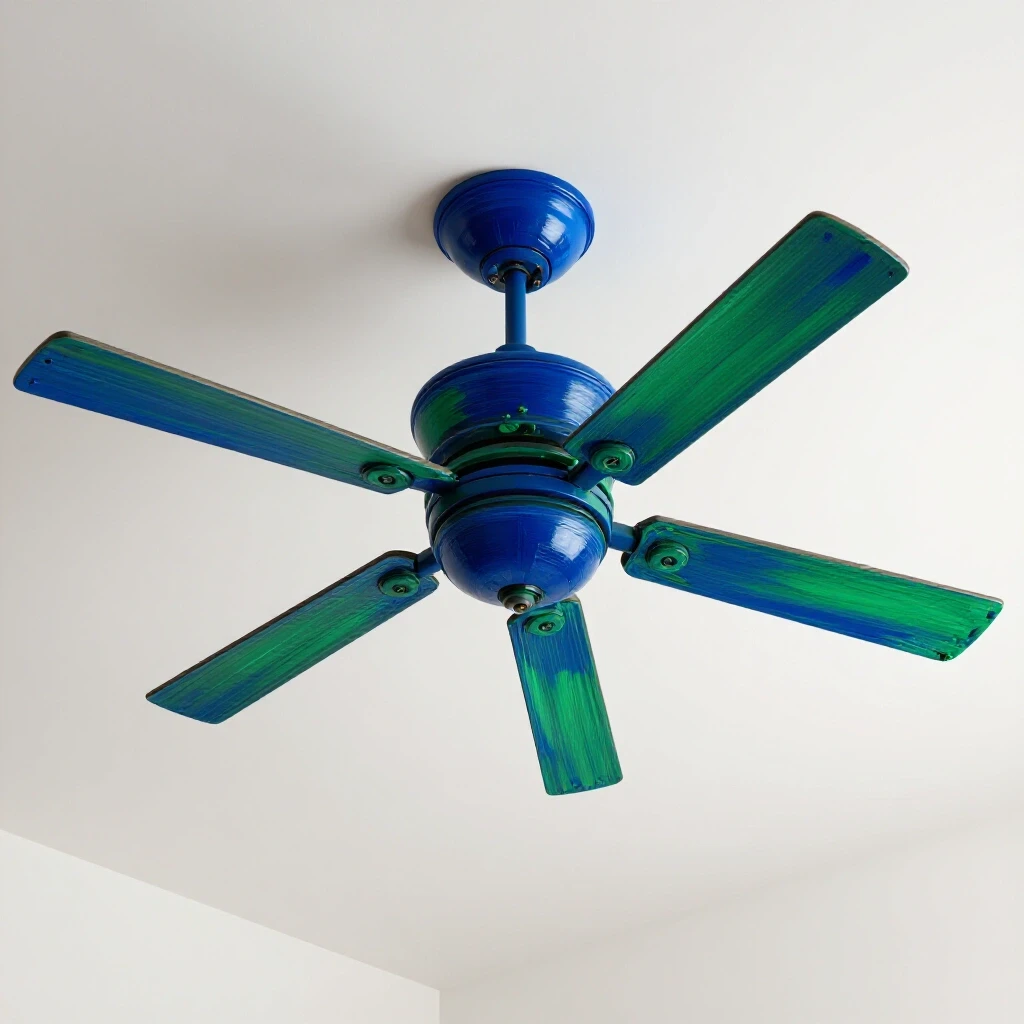
Refreshing a ceiling fixture is a high-impact, low-cost way to modernize a room. By focusing on meticulous surface preparation and following a patient coating schedule, you can achieve results that look like they came straight from the factory. This project teaches the value of “slow and steady” in DIY work—something we often forget in our busy professional lives.
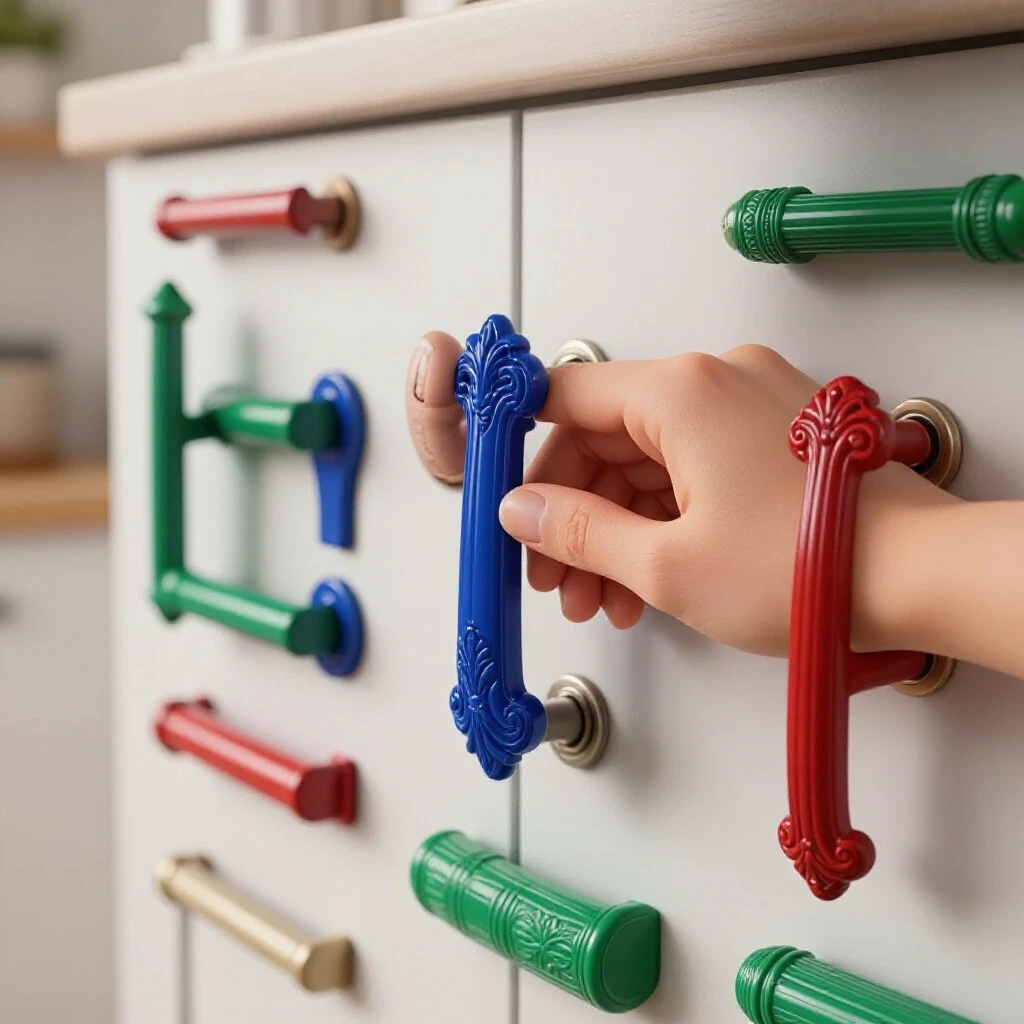
Your next step is to choose your color palette. Look at the hardware in your room (door handles, cabinet pulls) and try to match the fan’s new finish to those elements for a cohesive look. Once you have completed this upgrade, you will have the confidence to tackle more complex refinishing projects throughout your home.
FAQ: Frequently Asked Questions
Can I paint the blades without taking them down? I do not recommend this. Painting while the blades are hanging leads to drips, uneven coverage, and a high risk of getting paint inside the motor. Taking them down takes only ten minutes and ensures a much higher quality finish.
What kind of paint is safest for a ceiling fan? High-quality aerosol enamels or “all-surface” spray paints are best. They provide a thin, hard finish that does not add significant weight. Avoid heavy textured paints or thick “one-coat” house paints, as these can unbalance the fan or peel off due to the wind resistance.
Will the paint smell when I turn the fan on? If you allow the paint to cure for at least 24 to 48 hours, the smell should be minimal. If you turn it on too soon, the moving air will spread the scent of the drying solvents throughout the room.
How do I prevent the fan from wobbling after I paint it? The key is even application. Do not put three coats on one blade and five on another. Use the same number of passes for each blade. Also, ensure you do not lose any of the original balancing weights that might have been on the back of the blades.
Can I paint the metal motor housing? Yes, but you must be extremely careful. Use painter’s tape to cover every single vent hole. If paint gets onto the motor windings or the capacitor, it can create a fire hazard or cause the motor to burn out.
Do I need to sand the blades if they are plastic? Yes, but use a very fine grit like 320. You only want to create a dull surface so the primer can bond. If you sand too aggressively, you will leave deep scratches that will show through the final paint layer.
What should I do if the paint starts peeling after a month? Peeling is almost always caused by poor cleaning. You will need to remove the blades, sand off the peeling paint, clean the surface with a strong degreaser, and start the priming and painting process again.
Is it better to use a brush or spray paint? Spray paint is superior for this project because it leaves no brush marks. Since the blades are a focal point and move quickly, any texture or unevenness from a brush will be very noticeable when the fan is static.
Can I change the color of the light kit too? Yes, you can paint the metal parts of the light kit. However, never paint the light sockets, the wiring, or the inside of the reflective “cup” where the bulb sits. Use heat-resistant paint if the light kit uses high-wattage incandescent bulbs.
How long will a DIY paint job on a fan last? If prepared and cured correctly, a painted fan can last 10 years or more. The most common cause of wear is improper cleaning; always use a soft, dry microfiber cloth to dust painted blades rather than harsh chemical cleaners.
How much weight does the paint add? A typical two-coat spray job adds less than an ounce of weight across all blades. As long as the application is even, the motor will not notice the difference. The internal components are designed to handle slight variances.
Should I use a clear topcoat? A clear coat is optional but recommended if you want a high-gloss look or extra durability. Wait at least 2 hours after your last color coat before applying a clear coat to prevent the paint from “crinkling.”
(This article was written by one of our staff writers, Robert Callahan. Visit our Meet the Team page to learn more about the author and their expertise.)