How to Install a Bathroom Mirror Light for Better Brightness (Guide)

It is a curious irony of modern homeownership that we often spend thousands of dollars on high-end bathroom tile and custom cabinetry, only to leave ourselves in the dark. We meticulously choose the shade of grout, yet we frequently rely on a single, aging fixture that produces more heat than actual light. Upgrading the illumination above your bathroom mirror is one of the few projects that offers an immediate, daily improvement in functionality for a relatively small investment of a Saturday afternoon.
In my twelve years of managing facilities and maintaining my own homes, I have seen how poor lighting affects both safety and aesthetics. I remember a specific Sunday evening during my first home renovation. I had decided to swap out a dated “Hollywood-style” bulb bar for a modern three-light vanity fixture. I assumed it would take thirty minutes. Two hours later, I was staring at a junction box that was mounted off-center, realizing the new fixture’s base was too narrow to cover the old hole in the drywall. This taught me that while the electrical work is straightforward, the physical fit and preparation determine the project’s success.
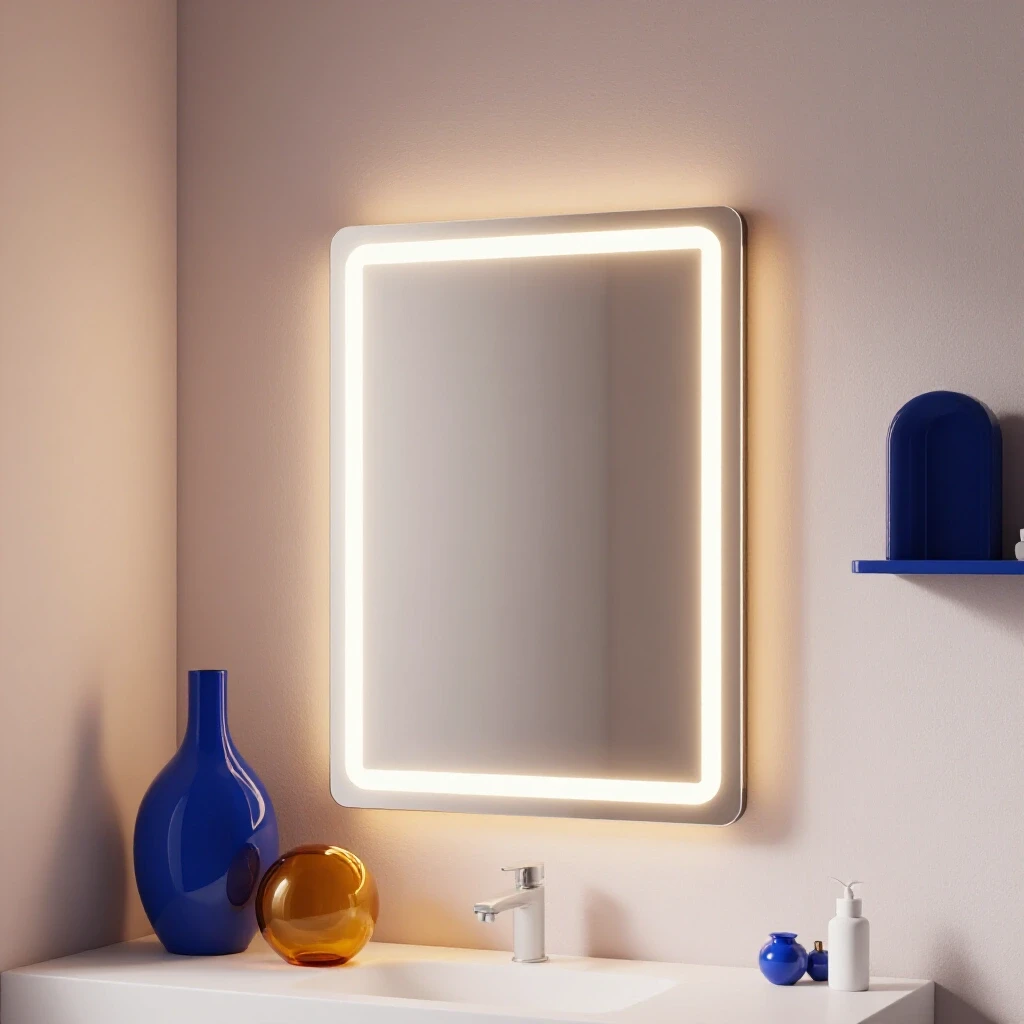
Assessing Your Current Bathroom Wall Lighting
Evaluating your existing setup involves checking the physical condition of the electrical box, the wattage capacity of the circuit, and the physical dimensions of the space. This phase ensures that the new fixture will physically fit the wall and that the internal wiring is safe for continued use without requiring a complete overhaul.
Before you buy a new fixture, you must understand what you are working with. Most bathroom vanity lights are mounted to a standard circular or octagonal junction box. This box is the plastic or metal housing tucked inside your wall that holds the wire connections. If your current light is a long bar, the box might not be centered. I always recommend removing the old fixture’s decorative plate—after turning off the power—to see exactly where that box sits.
| Project Phase | Estimated DIY Time | Physical Effort Level |
|---|---|---|
| Pre-Purchase Inspection | 30 Minutes | Low |
| Removal of Old Fixture | 45 Minutes | Moderate |
| Wiring and Mounting | 1 Hour | Moderate |
| Drywall Touch-ups | 2 Hours (plus dry time) | Moderate |
| Total Weekend Block | 4-5 Hours | Manageable |
Necessary Equipment for Mounting a New Vanity Fixture
A successful installation requires a specific set of hand tools and safety devices designed for electrical work and wall mounting. Having these items organized before you begin prevents the frustration of mid-project hardware store runs and ensures that every connection is secure and code-compliant according to standard residential practices.
- Non-contact voltage tester: This tool detects electrical fields without touching bare wires. It is your primary safety device to confirm the power is truly off.
- Wire strippers: These are specialized pliers with notches for removing the plastic insulation from wires without damaging the copper core.
- Screwdriver set: You will need both Phillips and flat-head drivers for mounting brackets and decorative nuts.
- Needle-nose pliers: These help in bending wire loops and reaching into tight junction boxes.
- Torpedo level: A small level is essential to ensure your new light sits perfectly horizontal above the mirror.
- Wire nuts: These are conical plastic caps that twist onto wire ends to create a secure electrical bond.
- Cordless drill: Useful if you need to drive new anchors into the drywall for wider fixtures.
Understanding Electrical Safety and Code Compliance
Following the National Electrical Code (NEC) is vital for any project involving water and electricity to prevent shocks or fire hazards. These regulations dictate how fixtures must be rated for damp environments and how wires must be secured within the wall to maintain a safe home environment for years to come.
In the world of facilities management, we prioritize the “damp rating.” NEC Article 410 specifies that fixtures in bathrooms must be listed for the environment they inhabit. Since bathroom mirrors are near sinks and showers, the air gets humid. Always look for a “UL Listed for Damp Locations” sticker on your new light. This ensures the internal components won’t corrode from steam.
Another critical code requirement involves the junction box. The box must be “flush” with the wall surface. If your box is recessed more than 1/4 inch behind the drywall, you should use a box extender. This prevents sparks from reaching flammable wooden studs if a wire connection ever fails. I have seen many DIYers skip this, but it is a small step that significantly increases fire safety.
Step-by-Step Removal of the Outdated Fixture
Removing the old light source requires a methodical approach to ensure the wall remains intact and the wires stay organized for the next step. This process involves disconnecting the power, labeling wires if necessary, and carefully detaching the mounting hardware to avoid cracking the bathroom mirror or damaging the surrounding drywall.
First, go to your breaker panel and turn off the circuit for the bathroom. Do not rely on the wall switch alone. I once saw a “pro” get a nasty shock because a previous owner had wired the switch to the neutral side of the circuit, leaving the fixture “hot” even when the light was off. Use your non-contact voltage tester on the fixture itself to verify zero power.
- Unscrew the decorative nuts holding the fixture to the wall.
- Pull the fixture away slowly to expose the wires.
- Unscrew the wire nuts (usually white to white, black to black).
- Untwist the ground wire (usually bare copper or green).
- Remove the old mounting bracket from the junction box.
Preparing the Wall for the New Illumination Source
Wall preparation is the bridge between removal and installation, often involving cleaning the surface and checking the stability of the existing junction box. This stage is where you address any cosmetic issues or structural needs, such as adding drywall anchors if your new light is significantly heavier or wider than the previous one.
If your new light has a smaller base than the old one, you might see “ghosting”—an outline of the old fixture or a different paint color. I suggest doing a “dry fit” now. Hold the new mounting bracket against the wall. If there are gaps or unpainted sections, you will need to patch and paint before the final install. In my experience, it is much easier to paint the wall when there is no fixture in the way.
Check the weight of your new light. If it is a heavy glass-and-metal unit, the junction box must be securely screwed to a wall stud. If the box wiggles when you touch it, tighten the internal screws. A loose box will lead to a sagging light, which is both an eyesore and a safety risk.
Wiring and Securing the New Mirror Light
The core of the project involves matching the home’s electrical supply to the fixture’s internal wiring using secure, insulated connections. This stage requires precision in stripping wires and applying torque to wire nuts to ensure a constant, flicker-free flow of electricity that meets all modern safety standards for residential lighting.
Most modern vanity lights use a standard three-wire system. You will see a black (hot) wire, a white (neutral) wire, and a green or bare copper (ground) wire. Using your wire strippers, ensure you have about 3/4 inch of bare copper exposed on each wire.
- Attach the new mounting bracket to the junction box using the provided screws.
- Connect the ground wires first. This provides a safety path for electricity immediately.
- Connect the white wires together by twisting them clockwise and securing them with a wire nut.
- Connect the black wires together in the same manner.
- Gently tuck the wires into the junction box. This is often the hardest part; do not pinch the wires against the metal bracket.
- Slide the fixture over the mounting bolts and secure it with the decorative nuts.
Maximizing Visibility with Lumens and Color Temperature
Choosing the right bulbs or integrated LED settings is what actually provides the functional gain in brightness and clarity for daily tasks. Understanding the relationship between light output and color quality allows you to customize the atmosphere of the room while ensuring you have enough light for detailed activities like grooming.
Brightness is measured in lumens, not watts. For a primary bathroom mirror, you generally want between 1,500 and 3,000 total lumens. If you use a three-bulb fixture, three 800-lumen LED bulbs will give you 2,400 lumens, which is excellent for most spaces.
Color temperature, measured in Kelvin (K), is equally important. For bathrooms, I recommend 3000K to 3500K. This “Warm White” or “Neutral White” provides enough clarity for tasks without making the room look like a cold hospital wing. Avoid 5000K “Daylight” bulbs in small bathrooms; they often highlight every skin imperfection and can feel harsh early in the morning.
Troubleshooting Common Installation Challenges
Even with careful planning, unexpected issues like flickering lights, crooked mounting, or mismatched wiring can arise during the final stages of the project. Knowing how to systematically diagnose these problems—ranging from loose connections to incompatible dimmer switches—saves time and prevents the need for professional intervention during a weekend upgrade.
If the light flickers after installation, the most common culprit is a loose wire nut. I always give each wire a “tug test” after twisting on the nut. If a wire pulls out, it wasn’t secure. Another issue is the “crooked fixture” syndrome. Even if your junction box is level, the fixture might not be. Most mounting brackets have slotted holes that allow you to rotate the bracket slightly. Use your torpedo level on the top of the fixture before you tighten the final decorative nuts.
If you are using a dimmer switch, ensure your bulbs are labeled “dimmable.” Standard LEDs will buzz or flash if used with an older dimmer. In my years of facilities work, I have found that replacing the wall switch with a modern LED-compatible dimmer is often the best way to eliminate buzzing sounds.
Final Safety Check and Clean-up
The final phase of the project involves a systematic verification of all connections and a thorough cleaning of the work area to ensure the new installation is ready for daily use. This includes testing the circuit under load and ensuring that all glass components and decorative elements are properly seated and secure.
Once the fixture is mounted and the bulbs are in, turn the power back on at the breaker. Test the light. If everything works, check the fixture for heat after ten minutes. Modern LEDs should stay relatively cool. Finally, wipe down the glass shades and the mirror. Construction dust and fingerprints can dim the output of your new light more than you might think.
- Check that all shades are tightened so they don’t rattle.
- Ensure the fixture is flush against the wall with no visible gaps.
- Verify that the wall switch operates smoothly without any popping sounds.
- Dispose of the old fixture and packaging responsibly.
Conclusion and Next Steps
Completing this upgrade provides a sense of accomplishment that goes beyond just seeing better in the mirror. You have successfully navigated electrical safety, structural mounting, and aesthetic choices. Building on this success, you might consider adding a matching towel bar or updating the cabinet hardware to complement the new finish of your light fixture.
Interestingly, once the lighting is improved, you may notice other small areas of the bathroom that need attention. This is the natural progression of DIY home improvement. Now that you have mastered the basics of wall-mounted electrical fixtures, you have the foundational skills to tackle similar upgrades in hallways or bedrooms, continuing to add value and functionality to your home one weekend at a time.
Frequently Asked Questions
Can I install a fixture that has more bulbs than my old one? Yes, as long as the total wattage of the new bulbs does not exceed the rating of the junction box or the circuit. Modern LED bulbs draw very little power, so you can usually increase the number of “light points” without overloading the electrical system.
What should I do if the wires in my wall are not black and white? In very old homes, you might see two wires of the same color or even cloth-wrapped wires. In these cases, use a multimeter to identify the “hot” wire. If you are unsure or the insulation is crumbling, this is a sign that the wiring may need more extensive repair than a simple fixture swap.
Does the light need to be the same width as my mirror? Not necessarily, but for the best visual balance, the light should be about 75% of the width of the mirror. If the light is too small, it will look out of place; if it is wider than the mirror, it can overwhelm the space.
How high above the mirror should I mount the new light? A standard height is about 75 to 80 inches from the floor. However, the most important factor is ensuring the light is centered above the mirror and high enough that the bulbs aren’t reflecting directly into your eyes when you stand in front of it.
Can I use a bathroom light in a dry room like a bedroom? Yes, you can use “damp-rated” lights in dry areas. You cannot, however, do the reverse. A light rated only for dry locations should never be used in a bathroom where steam and moisture are present.
What if my new light doesn’t come with a mounting bracket? Most fixtures include a universal mounting plate. If yours is missing, you can purchase a “universal crossbar” at any hardware store. These are designed to fit almost any standard junction box and fixture combination.
How do I handle a ground wire if my junction box is plastic? If you have a plastic box, there will be a copper ground wire coming from the house cable. Connect this directly to the green or copper wire on your new fixture using a wire nut. If the box is metal, you must also connect a small “pigtail” wire to the grounding screw inside the box.
Why is my new LED light glowing slightly even when the switch is off? This is often caused by a small amount of “stray” voltage in the circuit or an older illuminated wall switch. Replacing the wall switch with a standard, non-illuminated one usually solves this phantom glow.
Is it safe to mount a light fixture directly onto a mirror? No, you should never mount a fixture directly to the glass. The fixture must be secured to a junction box behind the mirror. If your mirror has a hole cut for a light, ensure the mounting bracket is attached to the wall box, not the mirror itself.
What is the best way to patch a hole if the new fixture is smaller? Use a mesh patch and a high-quality joint compound. Apply the compound in thin layers, sanding between each, until the surface is level with the rest of the wall. Always prime the patch before painting to ensure the texture matches the surrounding area.
(This article was written by one of our staff writers, Robert Callahan. Visit our Meet the Team page to learn more about the author and their expertise.)