How to Fix a Loose Floor Vent Quickly (Step-by-Step Guide)

Maintaining your home is a long-term investment that pays dividends in both safety and property value. While many homeowners focus on major renovations, the small details often dictate the daily comfort and safety of a living space. A loose or rattling floor register might seem like a minor annoyance, but it can quickly become a trip hazard or a source of energy loss. Taking the time to secure these components correctly ensures your heating and cooling system operates efficiently while keeping your floors smooth and professional-looking.
In my twelve years as a facilities manager, I have seen how small mechanical failures lead to larger structural issues. At my first home, a 1940s bungalow, the floor registers in the hallway were constantly shifting. Every time someone stepped on one, it would clank against the hardwood. Eventually, the movement began to chip the edges of the floor planks. I realized that a simple weekend DIY project could have prevented that damage. By applying the same standards I use in commercial buildings—focusing on flush alignment and mechanical stability—I was able to fix the issue permanently.
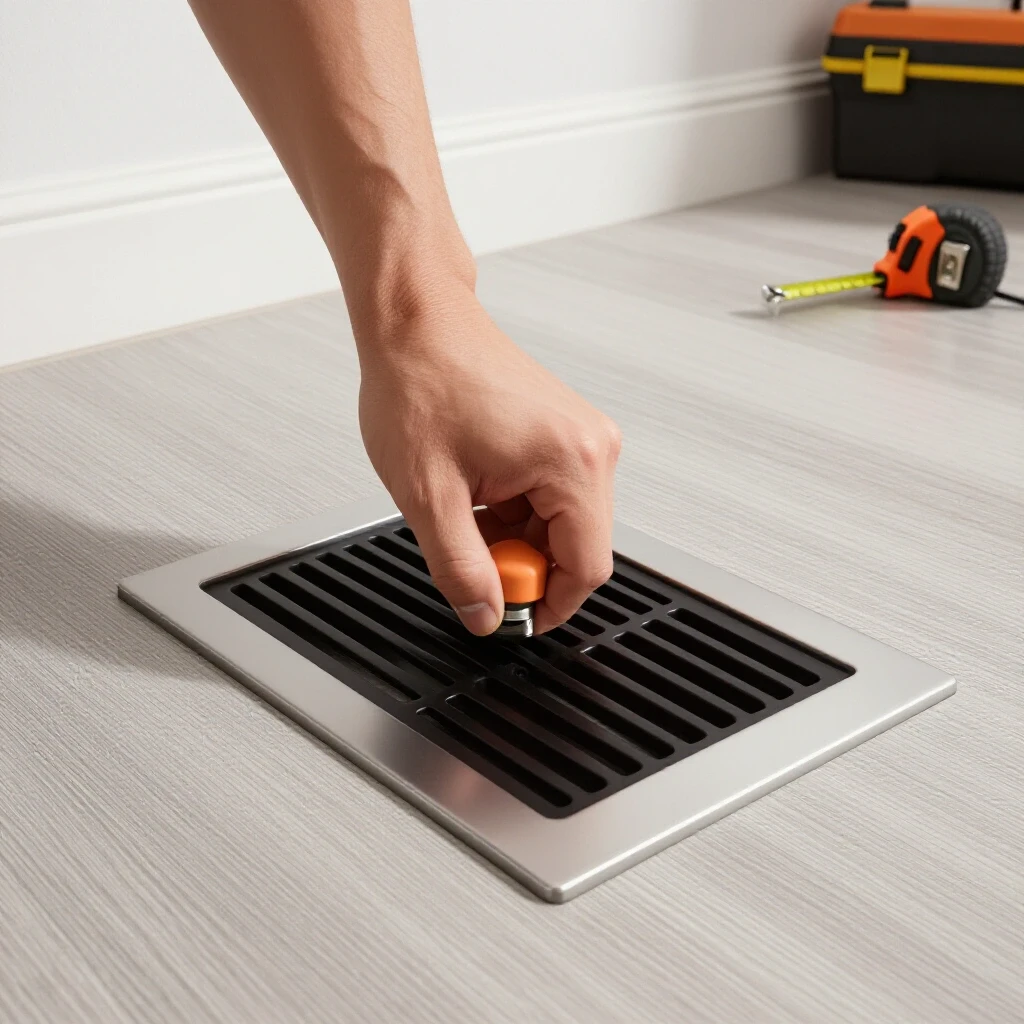
Preparing for a Stable Floor Register Installation
Effective preparation involves assessing the gap between the vent cover and the subfloor to determine why the unit moves. This stage focuses on clearing debris, checking the integrity of the duct boot, and selecting the right materials to ensure a flush, rattle-free fit that maintains proper airflow.
When you start this project, look closely at the “boot.” This is the rectangular metal end of the ductwork that meets your floor. Often, the register is loose because the boot is sitting too low or the floor cutout is slightly too large. In my experience, residential builders sometimes cut these openings with a bit too much “slop,” leading to registers that slide back and forth.
Before you buy any materials, measure the internal dimensions of the floor opening and the external flange of the cover. You want the cover to overlap the flooring by at least half an inch on all sides. If the overlap is too small, the register will never stay secure regardless of how many shims you use.
Essential Tools and Safety Equipment
Selecting the correct tools ensures a professional-grade result without damaging your flooring or ductwork. You will need basic hand tools for measurement and fastening, along with safety gear like gloves to protect against sharp metal edges often found on the internal lip of the vent opening.
I always tell my team that the right tool prevents the “ten-minute task” from turning into a four-hour ordeal. For this specific home upgrade, you won’t need a heavy-duty power kit, but precision is key.
- Safety Gloves: Duct metal is notoriously sharp. I prefer thin, cut-resistant nitrile-coated gloves that allow for dexterity.
- Shop Vacuum: You must clear the dust and debris from the boot before applying any adhesives or shims.
- Utility Knife: Used for trimming shims or adhesive strips to size.
- Multi-bit Screwdriver: Most registers use #2 Phillips or flathead screws, though many modern ones are drop-in style.
- Plastic or Wood Shims: These fill the gaps between the register box and the floor cutout.
- High-Temperature Adhesive Strips: If you choose not to use screws, these must be rated for the heat levels of a furnace.
- Small Level: To ensure the grate sits flush with the flooring surface.
Evaluating the Stability of Your Air Distribution Covers
Before applying any fixes, you must analyze the specific movement of the metal or wood register. Is it sliding horizontally, or is there a vertical gap causing it to tip? Understanding the direction of the displacement allows you to apply targeted shimming or fastening techniques.
If the register tips when you step on one side, the subfloor underneath the flange is likely uneven. If it slides side-to-side, the floor cutout is too wide. I once spent an hour trying to screw down a vent only to realize the metal boot was bent, preventing the cover from ever sitting flat. Always straighten the metal flange of the duct boot with pliers before proceeding.
DIY vs. Professional Cost & Time Analysis
| Factor | DIY Approach | Professional Service |
|---|---|---|
| Direct Material Cost | $10 – $25 | $50 – $100 (including parts) |
| Labor Cost | $0 (Your time) | $75 – $150 (Service call fee) |
| Time Investment | 1 – 2 Hours | 2 – 4 Weeks (Wait time for appointment) |
| Skill Level Required | Beginner | Professional Technician |
| Tools Needed | Basic Hand Tools | Specialized HVAC Tools |
Understanding Airflow and Building Code Constraints
While securing a cover seems simple, you must not obstruct the airflow specified for your HVAC system. Residential codes typically require that registers remain removable for duct cleaning and do not have gaps that allow debris to fall into the plenum, which could create a fire hazard.
Building codes, such as those found in the International Residential Code (IRC), emphasize that supply air must not be restricted. If you use too many shims or thick foam tape, you might inadvertently block the damper’s ability to open and close. Always ensure that your modifications stay on the outside of the air stream. Furthermore, never use flammable materials like standard cardboard as shims inside the ductwork, as the heat from the furnace can reach temperatures that may cause scorching or fire over time.
Step-by-Step Methodology for Securing Displaced Vent Covers
This systematic approach guides you through removing the cover, cleaning the mounting surface, and applying mechanical fasteners or shims. By following these phases, you ensure the register remains stationary under foot traffic while allowing for easy removal during seasonal maintenance or professional duct cleaning services.
Phase 1: Removal and Inspection Carefully lift the register out of the floor. If it is stuck, do not pry against your hardwood with a metal tool; use a plastic putty knife to avoid scratches. Once removed, inspect the “lip” of the floor. You are looking for solid wood or tile that can support the weight of someone stepping on the vent.
Phase 2: Cleaning the Substrate Use your shop vacuum to remove all dust, hair, and construction debris from the duct boot and the surrounding floor edge. Adhesives and shims will not hold if the surface is dusty. I recommend wiping the area with a damp cloth and letting it dry for 15 minutes.
Phase 3: Addressing Horizontal Gaps If the vent slides around, you need to “size down” the hole. I use thin strips of wood or specialized plastic shims. Attach these to the vertical face of the floor cutout—not to the register itself. This keeps the register removable.
Phase 4: Vertical Leveling If the vent rattles or tips, place a small level across the opening. If one side is lower, apply a thin layer of weather-stripping or a plastic shim to the underside of the register flange. This acts as a gasket, absorbing vibration and leveling the unit.
Phase 5: Mechanical Fastening Many modern registers are “drop-in” and lack screw holes. If yours has them, use 1-inch wood screws to secure the flange into the subfloor. Be careful not to over-tighten, as you can crack the finish on a wooden register or bend the metal on a steel one.
The Importance of Dry-Fitting Before Final Attachment
Dry-fitting is the process of placing your shims or fasteners without permanent adhesive to test the fit. This step prevents the frustration of a crooked installation and allows you to verify that the register sits level with the surrounding hardwood, tile, or carpet.
In my years of DIY home improvement, I have learned that “measure twice, cut once” also applies to fitting components. Put the register back into the hole with your shims in place and walk on it. If you hear a click or feel a shift, the dry-fit failed. Adjust the shims until the unit is silent under weight. Only then should you apply any adhesive or permanent screws.
Troubleshooting Common Issues with Loose Heating Grates
Sometimes a simple shim is not enough if the subfloor or duct boot is damaged. This section covers how to handle oversized floor openings, stripped screw holes in the subfloor, and bent metal flanges that prevent the vent from sitting flush against the floor surface.
One common failure I see in weekend DIY projects is trying to screw into a stripped hole. If the previous screw just spins, the wood is “blown out.” A quick fix is to jam a few toothpicks or a small wooden matchstick into the hole with a drop of wood glue. Once it dries, you can drive your screw into the hole, and it will bite into the new wood fibers.
If the duct boot itself is sagging away from the floor, you may need to reach inside and pull the metal flange upward. You can secure the metal boot to the subfloor with short, wide-head “lathe screws” before installing the register cover. This creates a solid foundation for the cover to rest upon.
Maintenance and Longevity of Floor Register Repairs
Long-term stability depends on periodic checks and using materials that withstand the thermal expansion of heating cycles. Regular inspection ensures that adhesive strips have not dried out and that mechanical fasteners remain tight, preventing the return of annoying rattles or dangerous trip hazards.
Every six months, when you change your HVAC filters, take a moment to step on each register in your home. If you notice a new rattle, it’s likely due to the wood shrinking or expanding with the seasons. This is a normal part of home ownership. Tighten the screws slightly or check if a shim has shifted.
Project Quality Control Checklist
- Register does not move when kicked lightly from the side.
- Register remains silent when 150+ lbs of weight is applied.
- The damper (the louvers that control air) moves freely without hitting shims.
- The flange sits flush against the flooring with no visible gaps.
- No sharp metal edges are exposed to bare feet or pets.
Safe Home Repairs: When to Call a Professional
While most register issues are easy to solve, there are times when the job exceeds a standard DIY tool list. If you pull up a register and see significant black mold, standing water, or disconnected ductwork that has fallen into the crawlspace, it is time to stop. These issues require an HVAC professional to ensure the air quality in your home remains safe.
Similarly, if the subfloor around the vent is rotted or crumbling, you are looking at a structural repair rather than a simple cosmetic fix. In my facility management role, I’ve learned that ignoring structural decay only makes the eventual repair ten times more expensive. If the wood won’t hold a shim, call a flooring specialist.
Conclusion and Next Steps
Securing your floor covers is a high-impact, low-cost way to improve the “feel” of your home. By following these step-by-step home upgrades, you eliminate the frustration of shifting grates and protect your flooring from unnecessary wear. Start with the room that has the most foot traffic, as that is where you will notice the biggest improvement.
Once you have mastered one vent, the rest of the house will go much faster. This project is a perfect example of how career professionals can use their weekends to execute code-compliant, functional improvements that stand the test of time. Your next step is to perform a “walk-through” of your home, identifying every register that moves or makes noise, and gathering your tools for a focused Saturday morning session.
FAQ: Common Questions About Fixing Floor Registers
Why does my floor vent rattle even after I tightened the screws? The rattle often comes from the metal louvers inside the register, not the frame itself. If the frame is tight but the noise persists, check if the damper blades are loose. A small bead of high-temperature silicone on the hinge of the blade can dampen the vibration without preventing movement.
Can I use duct tape to hold my vent in place? No. Duct tape adhesive will dry out and fail due to the constant cycle of hot and cold air. It also leaves a sticky residue that attracts dust, which can become a fire hazard. Use mechanical fasteners or high-temperature rated foam tapes instead.
What should I do if my floor hole is way too big for the vent? You can purchase “extra-wide flange” registers specifically designed for oversized holes. Alternatively, you can install “cleats”—small strips of 1×2 wood—around the inside of the floor cutout to provide a new surface for the register to rest on.
Is it safe to paint my floor registers? Yes, but you must use a heat-resistant spray paint designed for metal. Standard latex paint will peel and stick the louvers together when the heater turns on. Always remove the register and paint it outdoors, allowing it to cure for 24 hours before reinstalling.
My register is made of wood and it’s cracking. Can I fix it? If a wooden register is cracked, it is a safety hazard because it could collapse under weight. Small cracks can be repaired with wood glue and clamps, but if the structural slats are broken, the unit must be replaced to prevent injury.
How do I fix a vent that won’t stay in place on a carpeted floor? Carpet adds a layer of “squish” that makes registers unstable. You should use longer screws that reach through the carpet and padding into the wooden subfloor. If the register is a drop-in style, you may need to trim the carpet slightly around the opening so the flange sits directly on the subfloor.
Does a loose vent affect my heating bill? Indirectly, yes. If a vent is loose or poorly fitted, air can leak into the floor cavity instead of entering the room. This forces your HVAC system to run longer to reach the desired temperature. A tight seal ensures all the conditioned air goes exactly where it is intended.
What is the best material for shimming a floor vent? Plastic shims are generally better than wood because they do not shrink or expand with humidity. They are also easier to trim with a utility knife and won’t rot if there is minor condensation from the air conditioning system.
Can I use magnets to hold a metal vent down? Magnets can work if you have a metal duct boot, but they often don’t provide enough force to stop a vent from tipping when stepped on. Mechanical fasteners (screws) are always the preferred method for a code-compliant, safe installation.
How much overlap should a vent cover have on the floor? A safe benchmark is at least 3/4 of an inch on all sides. This ensures that the weight of a person is distributed onto the solid flooring rather than putting stress on the edge of the duct boot or the subfloor cutout.
(This article was written by one of our staff writers, Robert Callahan. Visit our Meet the Team page to learn more about the author and their expertise.)