How to Repair Water Stains on Drywall: Step-by-Step Guide (DIY)

Maintaining a home is a marathon, not a sprint. Over the twelve years I have spent managing commercial facilities and upgrading my own two properties, I have learned that endurance is the most important tool in any DIY kit. It is the ability to look at a recurring issue, like a stubborn yellow ring on a ceiling, and commit to fixing it correctly rather than just hiding it. Many people see a blemish on their drywall and reach for a can of white paint, only to find the stain returns within days. True home maintenance requires a methodical approach that addresses the root cause before ever touching a paintbrush.
In my early days of home ownership, I made the mistake of ignoring a small discoloration in the hallway. I assumed it was just “settling.” Two weeks later, a heavy rain turned that small ring into a sagging piece of gypsum board. That experience taught me that moisture-related damage is a diagnostic puzzle. You have to find the leak, verify the area is dry, and then use the right chemical barriers to ensure the repair lasts. This guide focuses on that systematic process, ensuring your weekend efforts lead to a permanent solution rather than a temporary mask.
Foundations of Addressing Moisture-Induced Blemishes
Before you pick up a putty knife, you must understand the environment you are working in. Drywall, or gypsum board, is essentially a core of mineral dust sandwiched between heavy paper. It is incredibly porous. When water hits it, the paper and the core soak it up like a sponge.
Initial Site Assessment and Safety Setup
Safety is the first step of any code-compliant project. When working on overhead surfaces, you are dealing with gravity and falling debris. I always start by clearing the work zone and laying down heavy-duty drop cloths. If the house was built before 1978, be aware of the potential for lead-based paint. While we are focusing on surface repairs, disturbing older layers of paint requires specific precautions according to EPA guidelines.
- Work Zone Perimeter: Maintain a 5-foot clear radius around your ladder.
- Eye Protection: Use wrap-around safety glasses to prevent drywall dust and paint splatters from entering your eyes.
- Respiratory Health: Use an N95 mask when sanding joint compound or scraping old, flaking material.
- Ladder Stability: Ensure your ladder is on a level surface. If you are working on stairs, use a specialized ladder leveler or a multi-position ladder designed for uneven terrain.
Identifying the Source of the Damage
Fixing a mark on the wall without stopping the water is a waste of your time and money. In my professional experience, these marks usually come from one of three places: a roof leak, a plumbing failure, or condensation. I once spent three hours tracking a stain in my basement only to realize it was coming from a loose wax ring on the toilet directly above it.
To find the source, check the attic if the stain is on a top-floor ceiling. Look for damp insulation or “tracking” marks along rafters. If it is a middle floor, check the nearest bathroom or kitchen. Use a non-invasive moisture meter to see if the area is still active. If the meter reads above 15-17% moisture content, the leak is likely still active, and you must resolve that plumbing or structural issue before proceeding with the cosmetic repair.
Essential Inventory for Surface Restoration
Having the right tools prevents the mid-project hardware store run that kills your momentum. Many professionals, including myself, prefer cordless systems for flexibility, but for drywall work, simple hand tools are often more precise.
Specialized Tool and Material Matrix
| Tool/Material | Purpose | ROI Rank |
|---|---|---|
| Non-Invasive Moisture Meter | Detects hidden dampness without holes | High (Prevents rework) |
| 6-inch Taping Knife | Spreading joint compound smoothly | Essential |
| Shellac-Based Primer | Blocks tannins and water-soluble stains | Essential |
| Fine-Grit Sanding Sponge | Smoothing patches without gouging | High |
| TSP (Trisodium Phosphate) | Cleaning grease and soot from the surface | Medium |
| Spray Texture (Optional) | Matches existing wall finishes | Medium |
Why Material Selection Matters
- Shellac-Based Primer: This is the most critical item in your kit. Water-based primers (like standard latex) will reactivate the stain, causing the yellow or brown discoloration to “bleed” through the new paint. Shellac creates a vapor-tight seal that traps the minerals in place.
- Joint Compound (Mud): For small repairs, a “lightweight” premixed compound is usually sufficient. However, if you are filling a deep indentation, a setting-type compound (which comes in powder form) shrinks less and hardens faster.
- Drywall Tape: If the moisture caused the paper to peel or a joint to crack, you will need fiberglass mesh or paper tape to bridge the gap. In my experience, mesh is easier for beginners but requires setting-type compound for strength.
Step-By-Step Execution: From Source Detection to Final Coat
Once you have verified that the leak is dead and the area is dry, you can begin the restoration. This process usually spans two days to allow for proper drying and curing times.
Phase 1: Surface Preparation and Cleaning
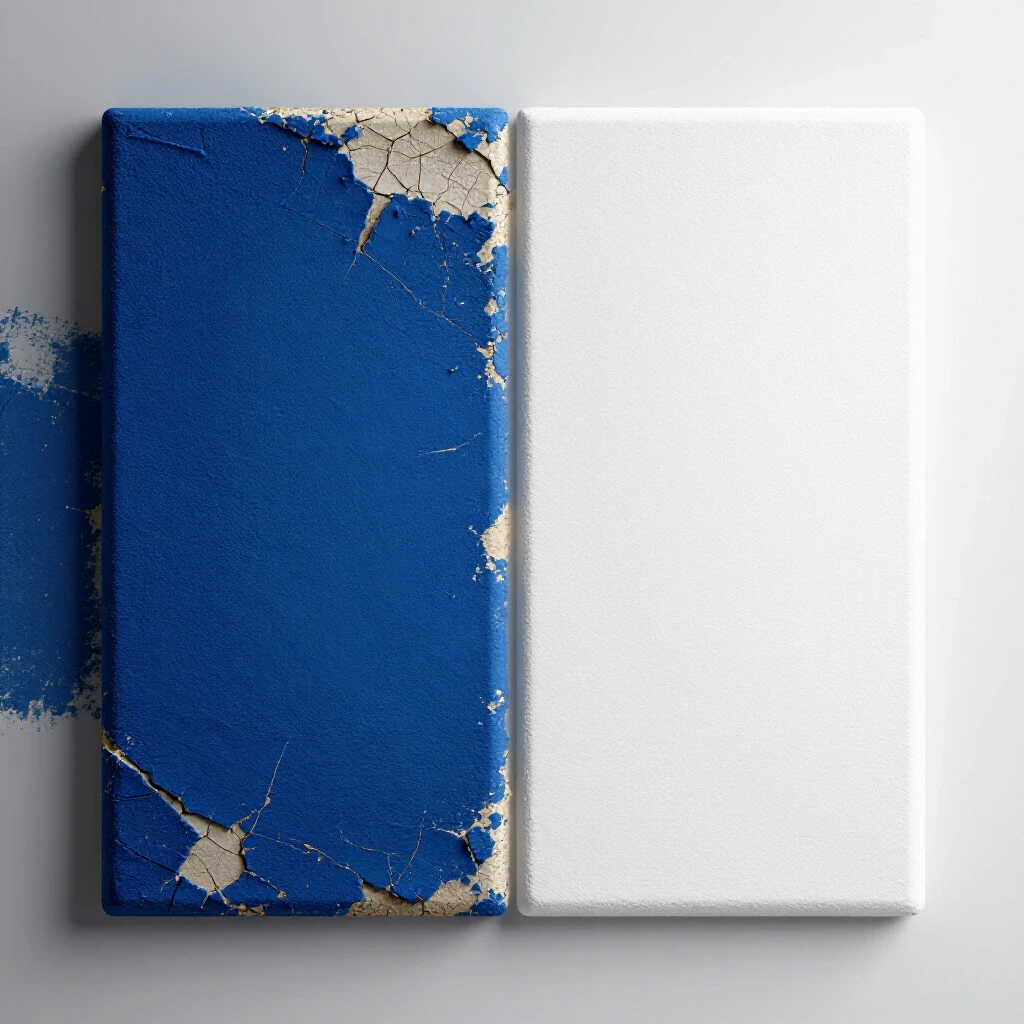
Start by removing any loose or flaking paint with your 6-inch taping knife. If the drywall feels soft or “mushy” when you press on it, that section may need to be cut out and replaced. However, if it is firm but just discolored, you can proceed. Clean the area with a solution of TSP and warm water. This removes any household oils or dust that could prevent the primer from sticking.
- Scrape: Remove any bubbling paint until you reach a solid edge.
- Clean: Wipe the area and let it dry for at least 30 minutes.
- Sand: Lightly scuff the edges of the existing paint with 120-grit sandpaper to create a “mechanical bond” for the new materials.
Phase 2: Sealing the Blemish
Apply your shellac-based primer. I prefer using a small disposable brush or a foam roller for this. You want to cover the stain and extend the primer about two inches past the edges of the damage. This ensures that no minerals can migrate sideways through the drywall paper.
Interestingly, shellac dries very quickly—usually within 15 to 30 minutes. Do not be tempted to use a standard wall primer here. I have seen countless DIY projects fail because the homeowner used a “high-hide” latex primer that simply couldn’t stop the chemical bleed of the water minerals.
Phase 3: Patching and Leveling
If the moisture caused a dip or if you had to scrape away a lot of paint, the surface will be uneven. You need to apply a thin layer of joint compound to level it out.
- First Coat: Apply a thin layer of compound over the primed area. Hold your knife at a 45-degree angle and “feather” the edges out so the patch blends into the wall.
- Drying Time: Wait about 4 to 24 hours depending on humidity. In my facility work, I use fans to speed this up, but never heat guns, which can cause the mud to crack.
- Sanding: Once dry, sand the area lightly with a 220-grit sponge. The goal is to make the transition between the patch and the wall invisible to the touch.
Phase 4: Texture Matching and Painting
If your walls have a texture (like orange peel or knockdown), you must replicate it before painting. You can buy aerosol cans of texture at most home centers. Practice on a piece of cardboard first. The distance you hold the can from the wall changes the size of the droplets.
Once the texture is dry, apply a final coat of primer (this time, a standard latex primer is fine) followed by your finish paint. For the best results, paint the entire wall or ceiling section from corner to corner. “Spot painting” almost always leaves a visible patch because paint fades over time due to UV exposure.
Managing the Timeline and Physical Effort
One of the biggest frustrations for busy professionals is underestimating how long a “small” fix takes. While the active work time is low, the waiting time is significant.
Project Time and Cost Analysis
| Phase | Active Labor | Waiting/Curing Time | Difficulty (1-10) |
|---|---|---|---|
| Source Identification | 1-2 Hours | N/A | 5 |
| Prep & Priming | 30 Minutes | 45 Minutes | 2 |
| Patching (2 coats) | 1 Hour | 8-24 Hours | 4 |
| Texturing & Painting | 1 Hour | 4 Hours | 3 |
| Total | ~4 Hours | ~1-2 Days | Overall: 4 |
By spreading this over a weekend—starting Saturday morning and finishing Sunday afternoon—you allow the chemical bonds to set correctly. This prevents the “bubbling” effect that happens when you apply paint over joint compound that is still slightly damp in the center.
Troubleshooting Common Failure Points
Even with a solid plan, things can go sideways. In my 12 years of projects, I’ve learned that most failures come from rushing.
- The Patch is Visible: This usually means you didn’t feather the joint compound far enough. A 6-inch stain often requires a 12-inch patch to blend the slope effectively.
- The Paint is Peeling: This happens if you didn’t clean the surface with TSP or if you tried to sand the joint compound before it was fully dry. If the sandpaper “clogs” with wet mud, stop immediately and wait longer.
- The Stain Returns: If the yellow ring reappears through the shellac, you likely have a persistent leak that wasn’t fully repaired. Use your moisture meter again to verify the area is dry.
Tool Maintenance and Clean-Up
Drywall mud is alkaline and can rust your steel taping knives overnight. After finishing your coats, wash your tools with warm water and dry them completely. Apply a light coat of WD-40 or similar oil to the blades if you plan on storing them for a long time. For brushes used with shellac primer, you must use denatured alcohol for cleaning; water will not work and will turn the brush into a solid brick.
Final Quality Control Checklist
Before you put your tools away, perform these checks to ensure a professional-grade finish:
- Light Test: Hold a flashlight or work light parallel to the wall. This “raking light” will reveal any humps or dips in your sanding.
- Texture Check: Stand back 5 feet. Does the repaired area reflect light the same way as the rest of the wall? If it’s too smooth, add more texture.
- Adhesion Test: Once the paint is dry to the touch (about 2 hours), gently run your hand over it. There should be no grit or flaking.
By following this code-compliant approach, you transform a frustrating blemish into a restored surface that maintains the value of your home. It takes more patience than a simple “cover-up,” but the endurance you show in doing it right the first time will save you from repeating the job next month.
Frequently Asked Questions
Can I just use a high-quality “paint and primer in one” for this?
No. Standard “paint and primer in one” products are latex-based. The water in the paint will dissolve the minerals in the stain, pulling them to the surface as the paint dries. You specifically need a solvent-based (oil or shellac) primer to create a chemical barrier that the stain cannot penetrate.
How do I know if the drywall needs to be replaced instead of repaired?
Use the “thumb test.” Press firmly on the center of the stained area. If the drywall feels soft, crumbles, or stays indented, the structural integrity of the gypsum core is gone. In this case, you should cut out the damaged section and install a new piece of drywall.
Why did my patch crack after it dried?
Cracking, often called “mud cracking,” usually happens if the joint compound was applied too thick in a single pass. It can also happen if the room is too hot or if there is a draft causing the surface to dry faster than the base. Apply multiple thin coats rather than one thick one.
Is it necessary to use TSP before priming?
While not always mandatory, it is highly recommended. Water stains often carry minerals or even old soot from inside the wall cavity. TSP ensures these contaminants are removed so your primer can form a permanent bond with the drywall paper.
What is the best way to match an “orange peel” texture?
The best way is to use a dedicated spray texture in a can that has an adjustable nozzle. Practice on a piece of scrap cardboard first to match the “splatter” size. It is better to apply two light coats of texture than one heavy coat that might run down the wall.
Can I use a hair dryer to speed up the drying of the joint compound?
I advise against this. Forced heat can cause the surface of the mud to dry and shrink while the inside remains wet, leading to cracks. A simple floor fan to circulate room-temperature air is a much safer and more effective way to speed up the process.
How long should I wait after the leak is fixed before starting the repair?
You should wait at least 24 to 48 hours after the source of the moisture is stopped. Use a moisture meter to confirm the drywall is below 15% moisture. If you seal moisture inside the wall, you risk future structural degradation.
Why is shellac primer preferred over oil-based primer?
Both work well, but shellac-based primer (like Zinsser BIN) dries much faster and is generally better at blocking the toughest odors and stains. It is also thinner, which helps it soak into the drywall paper to provide a better seal.
Do I need to prime the entire ceiling after fixing a small spot?
You don’t need to prime the whole ceiling, but you should prime the patch. However, you will likely need to paint the entire ceiling. New paint rarely matches the sheen and color of old paint perfectly, even if it’s from the same can, due to aging and dust accumulation.
What should I do if the stain is near an electrical outlet?
Safety is paramount. Turn off the breaker to that circuit before investigating. Moisture and electricity are a dangerous combination. Check the inside of the electrical box for signs of water entry or corrosion before proceeding with any drywall repairs.
(This article was written by one of our staff writers, Robert Callahan. Visit our Meet the Team page to learn more about the author and their expertise.)