Room-by-Room Decluttering: Stay Motivated and Organized (Guide)

Why did the parent cross the road? To get to the only room in the house that wasn’t covered in LEGO bricks. Many of us laugh because the alternative—looking at our actual living rooms—is often too overwhelming to handle. I have spent 11 years managing logistics for major operations, yet for a long time, my own hallway was a bottleneck that would make a shipping port manager weep. We often try to fix everything at once, only to find the mess returns within forty-eight hours.
My background in operations taught me that systemic failure usually happens when we ignore flow rates. In a home, this means stuff comes in faster than our systems can process it. When my wife and I finally stopped trying to “clean the house” and started focusing on completing isolated zones in a specific sequence, the mental fatigue began to lift. We moved away from the idea of a perfect home and toward the reality of a functional one.
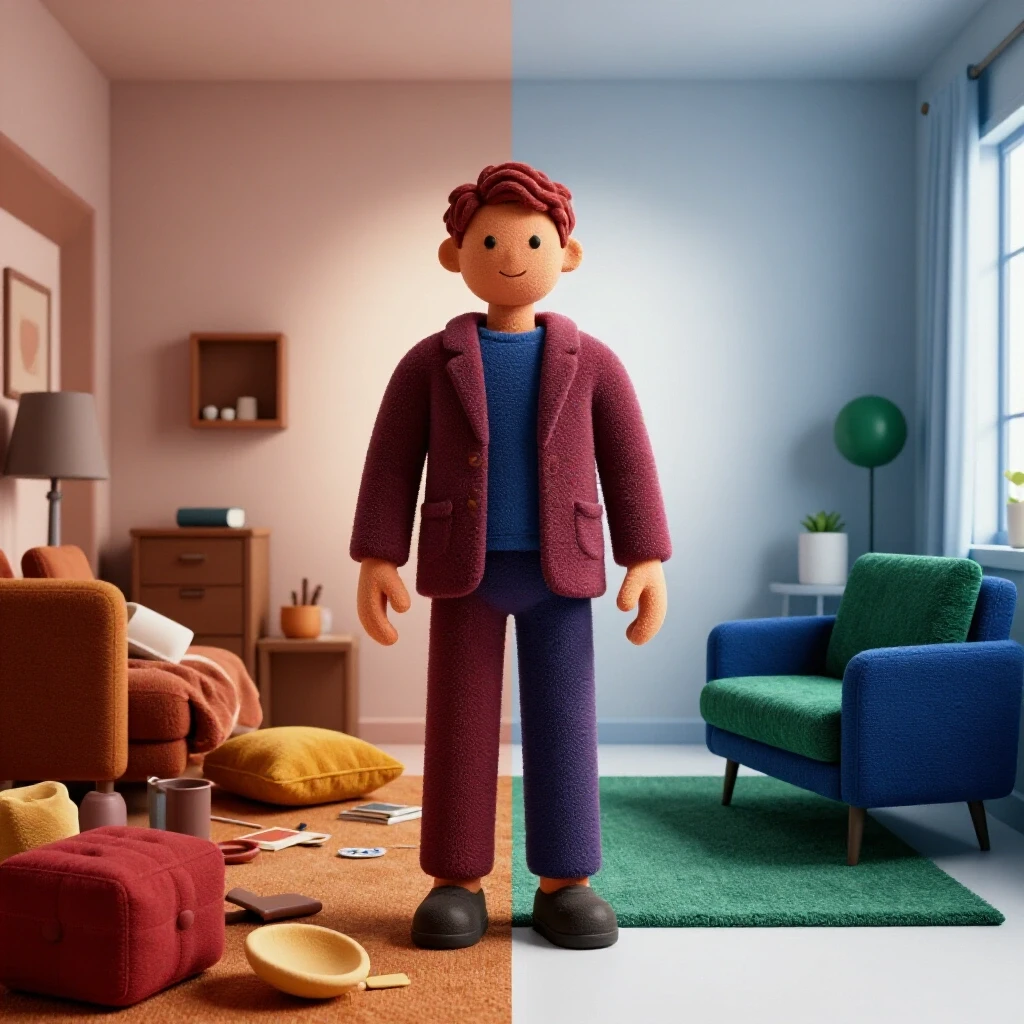
Why Focusing on Single Zones Prevents Decision Fatigue
Focusing on one specific area at a time reduces the cognitive load required to make decisions. When we try to organize a whole floor, our brains must switch between hundreds of different item categories, leading to mental exhaustion. By isolating a single room, we limit the scope of decision-making and preserve our energy for the actual work.
Research from the Princeton Neuroscience Institute shows that multiple visual stimuli—clutter—compete for our neural representation. This creates a literal “tug-of-war” in your brain, making it harder to focus. When I applied this to our kitchen, I stopped worrying about the playroom or the bedroom. I focused only on the “Zone of Influence” I was in. This narrow focus acted as a psychological buffer against the stress of the rest of the house.
The Science of Retrieval Friction in Family Homes
Retrieval friction is the measurable amount of effort, time, and physical steps required to access or put away an item. In a busy household, high friction is the primary cause of system failure. If a child has to open a lid, move a tray, and unlatch a hook to put away a toy, they simply won’t do it.
I measured the “step count” for our daily items. In our old system, putting away shoes took five distinct physical movements. By moving to open-top cubbies, we reduced that to one. This 80% reduction in friction meant the floor stayed clear for the first time in years. We weren’t “lazier”; we were just working with human nature instead of against it.
Understanding Spatial Capacity Limits
Spatial capacity is the maximum volume of items a specific area can hold while remaining functional. Most families operate at 110% capacity, meaning items are stacked or crammed. For a system to be sustainable, a room should ideally operate at 85% capacity to allow for movement and new arrivals.
When I audited our pantry, I realized we were at 120% capacity. We had three bags of flour because we couldn’t see the first two. By applying a “one-in, one-out” rule specifically within that single room, we regained the 15% “breathing room” necessary for the system to function. This buffer is what prevents a room from reverting to chaos the moment a new grocery delivery arrives.
Conducting a Strategic Room Audit Before You Start
A spatial audit is a diagnostic tool used to identify where a room’s logistics are breaking down. Instead of just “cleaning,” you look for the “hot spots” where clutter naturally accumulates. This step allows you to solve the root cause of the mess rather than just treating the symptoms.
I recommend using a simple 10-minute observation period. Sit in the room with a notepad and watch how your family moves through it. Where do they drop their mail? Where do the kids’ backpacks land? In our house, the “landing strip” was the kitchen island. By acknowledging this behavior instead of fighting it, we installed a dedicated sorting bin right at that spot.
Mapping Inflow and Outflow Points
Every room has a “mouth” where items enter and an “exit” where they should leave. Inflow is the rate at which new items enter the space, while outflow is the rate at which they are purged or moved to their proper home. If inflow exceeds outflow, the room will eventually fail.
- Inflow Points: Doorways, grocery bags, mail slots, and shopping trips.
- Outflow Points: Trash cans, donation bins, and “return to other room” baskets.
- The Bottleneck: When the “outflow” requires too much effort (e.g., the donation box is in the attic), the items stay in the room.
Identifying High-Traffic “Hot Spots”
A hot spot is a flat surface that attracts clutter like a magnet. In environmental psychology, this is known as the “broken window theory” applied to interiors—once one item is left out, it signals that the space is a valid place for more clutter.
| Surface Type | Clutter Risk Level | Recommended Fix |
|---|---|---|
| Kitchen Island | High | Clear-surface mandate; 5-minute nightly sweep. |
| Entryway Bench | Medium | Under-bench bins for immediate containment. |
| Dining Table | High | Use a centerpiece to “occupy” the space. |
| Nightstand | Low | Small tray for “daily carry” items only. |
Industrial Sorting Strategies for Busy Families
Industrial sorting, or “Red Tagging,” is a method used in lean manufacturing to clear out unnecessary items quickly. You move through a space and mark everything that hasn’t been used in a set period. This detaches the emotional weight of the item from its functional utility.
When we tackled our home office, I used a variation of this. We didn’t ask “Do I love this?” because, frankly, I don’t “love” a stapler. We asked, “Does this support the primary function of this room?” If the answer was no, it was moved to a “transit bin.” This kept us moving at a pace of roughly 50 items per hour, preventing the “stalling” that happens when you get sentimental over a 2014 tax return.
The Three-Bin Sorting Framework
This framework is designed to maximize sorting speed by reducing the number of choices you have to make. Every item must fall into one of three categories. There is no “maybe” pile, as “maybe” is where momentum goes to die.
- Active Items: Used within the last 30 days or required for the room’s function.
- Relocation Items: Items that belong in a different room (place these in a basket to be moved later).
- Outplacement Items: Items destined for trash, recycling, or donation.
Time-Boxing Your Sorting Intervals
Fatigue is the enemy of progress. In logistics, we use “sprints” to maintain high energy levels. For a single room, I recommend 25-minute intervals followed by a 5-minute break. This is known as the Pomodoro Technique, and it prevents the “mid-project slump” where you end up sitting on the floor looking at old photos.
In our experience, a standard living room can be sorted in four of these intervals. By setting a timer, you create a sense of urgency that discourages over-thinking. We found that our sorting accuracy stayed high for about 90 minutes before we needed a long-term break.
Selecting Low-Maintenance Storage Gear
The biggest mistake I see is people buying containers before they know what they are storing. Functional storage should be “low-friction,” meaning it is easy to put things away. If a storage system looks like a Pinterest board but requires a label maker and three sub-bins, it will fail in a house with children.
We transitioned to “open-system” storage. This means bins without lids for frequently used items. According to spatial ergonomics, removing a lid reduces the “work” of tidying by 50%. It sounds small, but over a year, that is thousands of seconds of saved effort that prevents clutter from hitting the floor.
Storage Friction Index by Bin Type
This table compares different storage methods based on how much effort they require to maintain. “Friction” is measured by the number of physical actions needed to store an item.
| Bin Type | Actions to Store | Friction Score (1-10) | Best Use Case |
|---|---|---|---|
| Open Basket | 1 (Drop) | 1 | Toys, Shoes, Blankets |
| Lidded Plastic Bin | 3 (Lift, Place, Snap) | 5 | Seasonal Clothing |
| Stacked Bins | 5+ (Move top, Lift, Place) | 9 | Long-term Archive |
| Drawer with Dividers | 2 (Open, Place) | 3 | Utensils, Office Supplies |
The Power of Visual Transparency
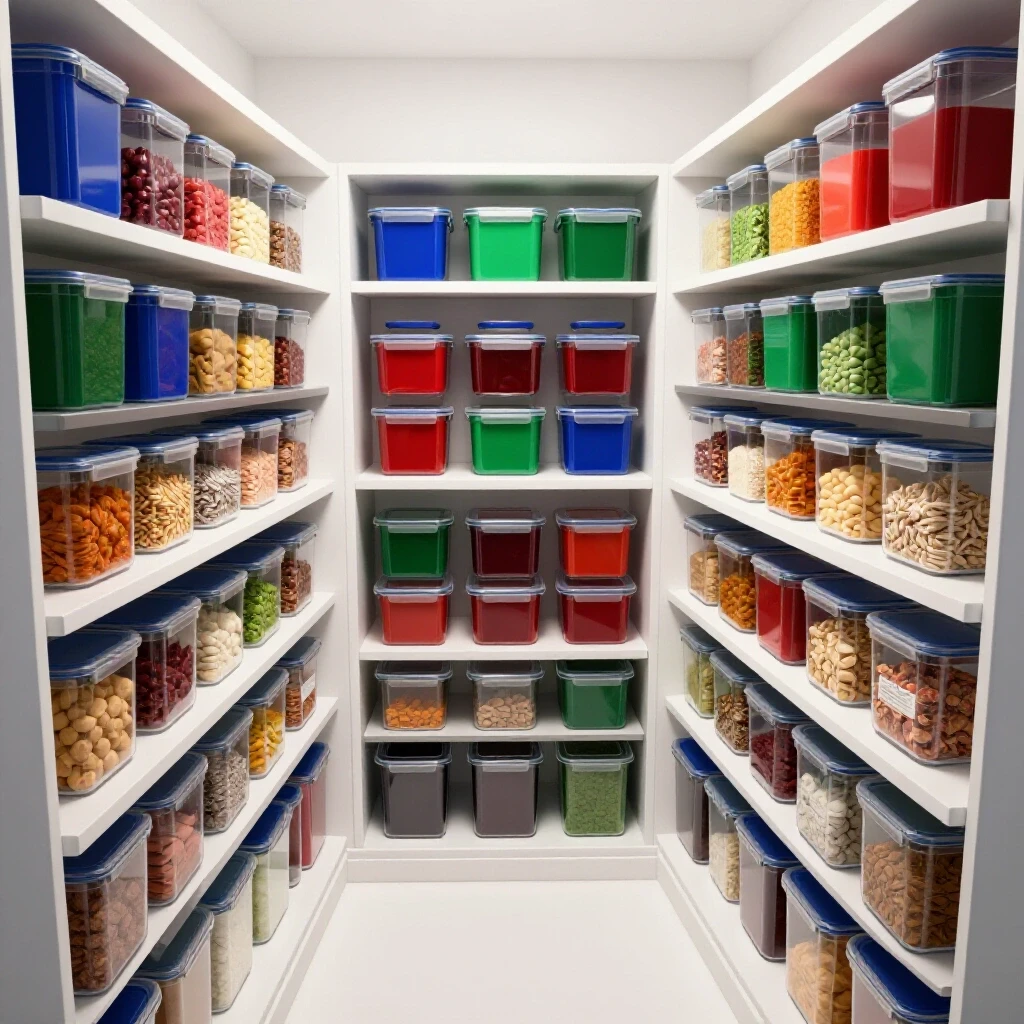
Visual transparency refers to how easily you can see the contents of a container without opening it. For families, clear bins or wire baskets are superior to opaque ones. When you can’t see what’s inside, you forget it exists, or you buy duplicates.
In our “One Room” projects, we used clear acrylic bins for the pantry and wire baskets for the mudroom. This reduced the “search time” for my kids. If they can see their soccer cleats, they don’t have to dump out three bins to find them. This keeps the room’s organization intact for longer periods.
Designing Systems for Family Behavior
A system that works for a professional organizer might not work for a six-year-old or a tired spouse. Successful systems are built around existing habits rather than trying to change them. This is what we call “behavioral alignment” in organizational behavior.
I noticed my kids always dropped their towels on the bathroom floor. Instead of fighting for years to get them to use a towel bar, I installed heavy-duty hooks. Hooks require 70% less precision than a bar. The floor stayed dry, and I stopped feeling like a drill sergeant. We didn’t change the people; we changed the hardware to match the people.
Creating High-Efficiency Zoning Maps
A zoning map divides a room into “action areas” based on what happens there. By grouping related items, you reduce the “travel distance” within the room. This is a standard principle in warehouse layout design that translates perfectly to a kitchen or hobby room.
- Zone A (Daily): Items used every day (coffee maker, keys, remote). Place these between waist and eye level.
- Zone B (Weekly): Items used once or twice a week (baking mixers, specialized tools). Place these in lower cabinets or higher shelves.
- Zone C (Monthly/Seasonal): Items used rarely (holiday platters). Place these in the “deep storage” areas of the room.
Standard Item-Density Guidelines
Item density is the number of objects per square foot of shelf space. High density leads to “visual noise” and makes it hard to retrieve items without knocking others over.
- Bookshelves: 70% items, 30% open space (to allow for easy retrieval).
- Kitchen Counters: 20% items, 80% workspace.
- Closets: 80% hang rate (crowded hangers lead to wrinkled clothes and frustration).
- Toy Bins: 60% full (kids won’t dig to the bottom; they will just dump the bin).
Building Sustainable Habit Loops
Once a room is organized, the goal shifts to maintenance. A habit loop consists of a cue, a routine, and a reward. In a home, the “cue” is often the end of a specific activity, like finishing dinner or getting home from work.
We implemented a “10-minute reset” every evening. Because we had already lowered the friction of our storage, this reset was actually possible. We weren’t “organizing”; we were just putting things back in their low-friction homes. This prevented the “reversion” that usually happens within three days of a big clean.
Daily Maintenance Timelines by Family Size
The amount of time required to maintain a single room varies based on how many people use it. These metrics are based on our own family tracking and observations of household flow.
| Family Size | Daily Reset Time (Per Room) | Key Focus Area |
|---|---|---|
| 1-2 People | 3-5 Minutes | Surface clearing |
| 3-4 People | 8-10 Minutes | Floor & Entryway |
| 5+ People | 15 Minutes | High-traffic sorting |
Using Smart-Label Tracking Systems
Modern technology can help maintain the order you’ve worked so hard to create. Smart labels, such as QR-coded stickers (like those from Tosca or Elephant Trax), allow you to scan a bin with your phone to see what’s inside.
- Label the Bin: Place a unique QR code on the outside of an opaque bin.
- Photo Inventory: Take a quick photo of the contents before closing the lid.
- Search Feature: When you need your holiday tablecloth three months later, you search the app instead of digging through five bins in the closet.
- Inflow Control: When you add an item, you update the digital log, which keeps you mindful of the room’s spatial capacity.
Lessons from the Great Mudroom Redesign
I remember our mudroom was our biggest failure point. We had a beautiful “locker” system with doors and drawers. It looked like a magazine. Within a week, it was a disaster. Shoes were in front of the doors (preventing them from opening), and coats were draped over the bench because the hangers were too “fiddly.”
We realized we had built a “High-Friction” system. We removed the doors, replaced the hangers with large, easy-to-hit hooks, and swapped the drawers for open wicker baskets. The aesthetics changed from “perfect” to “practical,” but the room stayed functional for months. This taught us that a system you can actually maintain is infinitely better than one that looks good but is too hard to use.
Actionable Metrics for Your Next Project
To keep yourself on track, use these benchmarks as you move through your home. These numbers help you stay grounded in reality rather than chasing an impossible standard of neatness.
- Sorting Speed: Aim for 30-60 items per 25-minute block.
- Spatial Buffer: Always leave 15% of a shelf or drawer empty.
- Retrieval Rule: If it takes more than 5 seconds to find an item, the system is too complex.
- The 2-Step Rule: No item should require more than two physical steps to put away (e.g., open drawer, drop item).
Sustaining Momentum Through the Process
The reason many people fail is that they view organization as a destination. In reality, it is a management of flow. By focusing on the logistics of a single room, you create a “success template” that you can move to the next space. What kept us going was the visible, measurable reduction in our daily stress within that one completed area.
When the kitchen finally worked, we had more energy for the living room. When the living room worked, we had the mental capacity for the bedrooms. It wasn’t about being “clean”; it was about reclaiming the time we used to spend looking for keys or tripping over shoes. Start with the room that causes the most daily friction, fix the flow, and let that success fuel the next step.
Frequently Asked Questions
How do I decide which room to start with? Start with the room that has the highest “frequency of use” and the most “friction.” For most families, this is the entryway/mudroom or the kitchen. Fixing these areas provides the biggest immediate reduction in daily stress, which creates the psychological momentum needed to continue.
What if my family won’t follow the new system? If a family member isn’t using a system, the system is likely too high-friction for their habits. Observe where they naturally leave things and move the storage to that location. For example, if they leave mail on the counter, put a mail bin on the counter rather than asking them to walk it to an office.
How much money should I spend on bins and organizers? Spend nothing until you have completed the sorting and auditing phases. Most people buy bins as a way to “feel” organized, but they often buy the wrong sizes or types. Only purchase storage once you know exactly what needs to be stored and where it will live.
How do I handle sentimental items without slowing down? Set a “Sentimental Buffer” bin. If an item triggers a strong emotional response that stops your sorting speed, put it in the buffer bin and move on. Revisit that specific bin only after the functional organization of the room is complete.
Is it better to have open storage or closed cabinets? For frequently used items (daily use), open storage is almost always better because it reduces retrieval friction. For items used monthly or seasonally, closed storage is better to reduce visual clutter and protect the items from dust.
How do I maintain the 15% spatial buffer when I have a small home? In small homes, you must be more aggressive with “outflow.” If you don’t have the physical space to maintain a buffer, you have exceeded the spatial capacity of your home. This requires a “one-in, two-out” rule until the 15% buffer is restored.
What is the most common mistake in home organization? The most common mistake is prioritizing aesthetics over logistics. People often choose systems that look “clean” (like opaque white boxes) but are difficult to maintain because you can’t see what’s inside. Function must always come before form in a busy family home.
How often should I re-audit a room? A quick “micro-audit” should happen every six months. Life stages change—kids grow out of toys, or hobbies shift. A system that worked for a toddler won’t work for a grade-schooler. Adjust the “zoning” to match your current lifestyle.
How do I deal with “junk drawers”? A junk drawer is actually a “utility zone” that lacks internal boundaries. Use small dividers to give every “junk” item a specific home (e.g., a spot for batteries, a spot for tape). When everything has a defined boundary, it stops being junk and starts being inventory.
What should I do if a room reverts to clutter within a week? Don’t get frustrated; look at it as data. A quick reversion means there is a “bottleneck” or a “high-friction” point you missed. Identify where the clutter is landing and ask why it didn’t make it to its home. Then, adjust the system to make the “right” choice the “easiest” choice.
(This article was written by one of our staff writers, Christopher Bennett. Visit our Meet the Team page to learn more about the author and their expertise.)