How to Paint a Hallway Ceiling for Even Coverage (Step-by-Step)

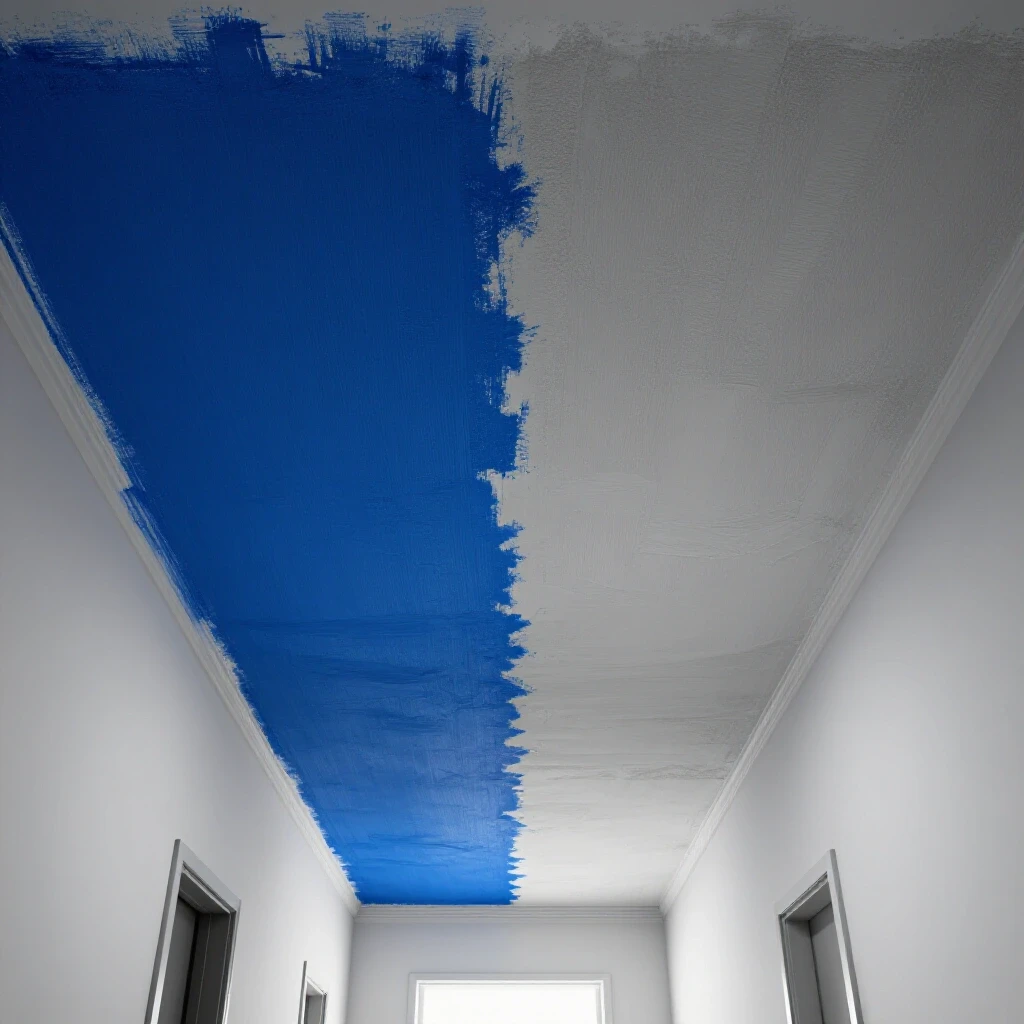
There is a quiet luxury in a hallway that feels expansive and bright. When you look up and see a smooth, uniform surface reflecting light evenly, the entire home feels more structured and professionally maintained. Achieving this result in a narrow corridor requires more than just a bucket of paint; it demands a tactical approach to overhead application and surface management.
In my twelve years as a facilities manager, I have overseen countless structural repairs, but the projects I tackle at home are where I truly refine my methods. I remember my first attempt at refreshing a long upstairs corridor. I assumed that because the square footage was small, the job would be simple. I was wrong. I didn’t use an extension pole, and I didn’t account for the way the morning light would hit the ceiling from the end-of-hall window. By the next day, the ceiling looked like a topographical map of roller marks and thin spots. That failure taught me that narrow spaces amplify every mistake. This guide is built on those lessons, focusing on the technical requirements for a streak-free, durable overhead finish.
Evaluating Project Scope and Safety Requirements
Safety in a confined hallway starts with understanding your physical limits and the constraints of the space. Working overhead puts significant strain on the neck and shoulders, while the narrow walls of a corridor limit ladder placement and movement.
Before you open a single can of material, you must assess the structural integrity of the ceiling and the safety of your work environment. This involves checking for loose plaster, identifying the location of joists, and ensuring you have a stable base for your ladder. In my experience, most DIY injuries occur when someone tries to overreach because they didn’t want to move the ladder one more time.
OSHA-Compliant Ladder Safety for Narrow Corridors
Ladder safety involves maintaining three points of contact and ensuring the equipment is rated for the user’s weight plus the weight of all tools. In a hallway, the proximity of walls can create a false sense of security, leading users to lean against surfaces rather than securing the ladder.
- Always use a fiberglass or aluminum A-frame ladder that allows you to reach the ceiling comfortably without standing on the top two steps.
- Check that the spreader bars are fully locked before ascending.
- Clear all debris and rugs from the floor to prevent the feet of the ladder from slipping on a slick surface.
- Maintain a “three-point contact” rule: two feet and one hand, or two hands and one foot on the ladder at all times.
Electrical Safety and Light Fixture Protocols
Working around ceiling-mounted light fixtures requires adherence to basic electrical safety standards to prevent shocks or mechanical damage to the wiring. According to the National Electrical Code (NEC), any work involving the removal of fixtures should begin at the breaker panel to ensure the circuit is de-energized.
- Identify the correct circuit breaker and flip it to the “off” position.
- Use a non-contact voltage tester to verify that no power is reaching the fixture before you touch any wires.
- If you are not removing the fixture entirely, loosen the mounting screws to drop the canopy slightly, allowing you to apply material behind the edge for a clean finish.
- Cover the fixture with plastic sheeting and painter’s tape to protect the housing from splatters.
Essential Tool Inventory for Overhead Application
The right tools act as a force multiplier, reducing the physical effort required and improving the consistency of the finish. For a hallway, you need equipment that allows for continuous movement to maintain a “wet edge,” which is the key to preventing visible lap marks.
Many homeowners make the mistake of using a standard hand-held roller frame for a ceiling. This is a recipe for fatigue and uneven pressure. A professional-grade extension pole and a high-quality roller cover are non-negotiable for this task. The following table outlines the investment and time expectations for this project compared to hiring a contractor.
DIY vs. Professional Labor and Resource Analysis
| Metric | DIY Approach | Professional Contractor |
|---|---|---|
| Active Labor Time | 6–8 Hours | 3–4 Hours |
| Total Duration (with Curing) | 24–48 Hours | 24 Hours |
| Tool Investment | $150 – $250 | Included in Quote |
| Skill Level Required | Intermediate | Professional |
| Risk of Lap Marks | Moderate | Low |
Specialized Equipment for Uniform Coverage
Choosing the correct roller nap and brush type is a science based on the texture of your substrate. A “nap” refers to the thickness of the fibers on the roller cover; a thicker nap holds more material but can create a heavier texture.
- Extension Pole: A 2-to-4-foot telescoping pole is ideal for hallways, providing enough reach without hitting the opposite walls.
- Roller Cover (9-inch): Use a 3/8-inch nap for smooth drywall or a 1/2-inch nap for light textures to ensure deep penetration.
- Angled Sash Brush (2.5-inch): This allows for precision when “cutting in” or applying material to the perimeter where the ceiling meets the wall.
- Paint Tray with Liner: A sturdy tray with a deep reservoir reduces the frequency of refills.
- Microfiber Cleaning Cloths: Essential for removing fine dust after sanding.
Surface Preparation and Substrate Inspection
Preparation is 70% of the work in any coating project. If the substrate is dirty, oily, or damaged, the new layer will fail to bond, leading to peeling or bubbling. In a facility management context, we call this “substrate readiness,” and it is the foundation of a long-lasting finish.
You must inspect the ceiling for “holidays”—which are missed spots from previous jobs—and mechanical damage like cracks or water stains. If you find a water stain, you must identify the source of the leak before proceeding, as moisture will eventually push through any new coating.
Cleaning and Deglossing the Surface
Over years, hallway ceilings collect dust, smoke residue, and airborne oils that create a barrier between the old and new layers. A thorough cleaning ensures that the chemical bond between the substrate and the coating is secure.
- Mix a solution of warm water and a mild detergent or a TSP (Trisodium Phosphate) substitute.
- Use a sponge mop to reach the ceiling, scrubbing gently to remove grime.
- Rinse the surface with clean water and allow it to dry for at least four hours.
- For glossy surfaces, lightly sand with 220-grit sandpaper to create a “profile” or a rougher surface that the new material can grip.
Patching and Sanding Imperfections
Small cracks and nail pops are common in hallways due to the structural vibrations of the home. These must be filled with a lightweight spackling compound and sanded flush to ensure they don’t shadow through the final coat.
- Apply spackle with a 2-inch putty knife, pressing it firmly into the defect.
- Overfill the hole slightly to account for shrinkage as the compound dries.
- Once dry, sand the area with a fine-grit sanding block until it is level with the surrounding surface.
- Wipe away all dust with a damp cloth; any remaining dust will create a gritty texture in your finish.
Step-by-Step Execution for Even Coverage
The goal of applying material to a hallway ceiling is to create a monolithic film. This means the entire surface should dry at the same rate, which is achieved by maintaining a “wet edge.” If you apply wet material over an area that has already begun to set, you will create a visible line known as a lap mark.
I have found that the best way to manage this in a long, narrow space is to work in small sections, roughly 3 feet by 3 feet. This allows you to move quickly enough to keep the edges wet while ensuring you are applying a consistent volume of material across the entire span.
Phase 1: Cutting In the Perimeter
“Cutting in” refers to the process of applying a 2-to-3-inch border around the edges of the ceiling where a roller cannot reach. This should be done one section at a time rather than doing the entire perimeter at once.
- Dip your angled brush about one-third of the way into the material and tap off the excess.
- Draw a straight line along the edge of the ceiling, keeping the brush bristles slightly away from the corner.
- Feather the inner edge of the brush stroke back toward the center of the ceiling to prevent a thick ridge of paint from forming.
- Work in 4-to-5-foot sections, then immediately transition to rolling that area.
Phase 2: The “W” Technique for Distribution
To get even coverage without thin spots, you need to distribute the material in a systematic pattern. Simply rolling back and forth in a straight line often leads to uneven pressure and “railroad tracks” (lines of excess paint at the edges of the roller).
- Load the roller evenly by rolling it into the tray reservoir and then across the ramp to remove drips.
- Start in a corner of your wet-cut area and roll a large “W” or “N” pattern across a 3-foot square.
- Fill in the gaps of the “W” without lifting the roller from the surface.
- Finish the section with “lay-off” strokes: long, light passes in one direction (usually toward the light source) to level the texture.
Phase 3: Maintaining the Wet Edge
In a hallway, the narrow width allows you to roll from one side to the other relatively quickly. Use this to your advantage by working across the width of the hall rather than down its length.
- Always overlap the previous section by about 50% to ensure no gaps are left.
- Keep the open end of the roller frame (the side without the arm) pointing toward the area you just finished to minimize pressure marks.
- Avoid over-rolling; once the area is covered and leveled, move to the next section.
- If you notice a drip or a thick spot, fix it immediately while the material is still wet.
Troubleshooting and Quality Control
Even with careful planning, issues can arise during the application process. Being able to identify and correct these problems in real-time is what separates a successful DIY project from one that requires professional intervention.
Common failures include “flashing,” where some areas appear shinier than others, and “stipple,” which is an overly bumpy texture caused by using too much pressure or the wrong roller nap. If you see these issues, stop and evaluate your technique before moving further down the hallway.
Identifying and Fixing Lap Marks
Lap marks occur when you lose your wet edge and roll over partially dried material. In a hallway, these are often visible when looking down the length of the corridor toward a window.
- If you see a lap mark forming while the paint is still tacky, try to lightly roll over it with a dry roller to blend the edges.
- If the paint is already dry, you cannot simply paint over the mark. You must wait for it to cure completely, sand the area smooth, and apply another full coat.
- To prevent this, ensure the room is not too hot or drafty, which can cause the material to dry prematurely.
Managing Drips and Roller Splatter
Overloading the roller or moving too fast will result in fine droplets of paint falling onto your clothes or the floor. While you should have drop cloths in place, preventing the splatter at the source is more efficient.
- Slow down your rolling speed; the centrifugal force of a fast-spinning roller is what creates the spray.
- Check the ends of the roller for “beads” of paint that can cause drips.
- If a drip lands on the ceiling, use your brush to feather it out immediately.
- If a drip dries, it must be sanded flat before the second coat is applied.
Final Inspection and Clean-up
Once the final coat is applied, the temptation is to immediately tear down the tape and move back in. However, the curing process is critical for the durability of the finish. Most modern water-based coatings are dry to the touch in an hour but take up to 30 days to fully cure to their maximum hardness.
During my years in facility maintenance, I’ve seen many finishes ruined because someone tried to clean a smudge too early. Patience during the drying phase is just as important as the application itself.
Tool Maintenance and Storage
Properly cleaning your tools ensures they will be ready for your next weekend project. High-quality brushes and roller frames can last for years if maintained correctly.
- Brushes: Rinse with lukewarm water and a mild soap until the water runs clear. Use a brush comb to straighten the bristles and store them in their original heavy-paper sheath to maintain their shape.
- Roller Covers: While some pros discard covers, high-quality microfiber ones can be cleaned by scraping off excess paint and using a roller spinner under running water.
- Paint Cans: Wipe the rim of the can clean before resealing. Use a rubber mallet to tap the lid down firmly to prevent air from entering and drying out the remaining material.
When to Call a Professional
While most hallway ceiling projects are within the reach of a determined DIYer, there are times when the complexity outweighs the cost savings.
- If the ceiling has significant structural cracking or signs of sagging, a structural engineer or professional plasterer should be consulted.
- If the ceiling contains asbestos (common in homes built before the late 1970s), do not sand or disturb the surface; hire a certified abatement professional.
- If you have a vaulted hallway ceiling that requires scaffolding, the risk of a fall may outweigh the benefits of doing it yourself.
Project Planning Checklist
- [ ] Circuit breaker identified and turned off for light fixtures.
- [ ] Ceiling inspected for moisture, cracks, and peeling.
- [ ] Surface cleaned with TSP substitute and allowed to dry.
- [ ] Floors and walls protected with drop cloths and tape.
- [ ] Extension pole and correct roller nap selected.
- [ ] “W” pattern used for even distribution.
- [ ] Final “lay-off” strokes completed toward the light source.
- [ ] Tools cleaned and material stored at room temperature.
By following these steps, you can transform a dim, streaky hallway into a bright, clean passage that enhances the rest of your home. The key is not speed, but the methodical application of material and a strict adherence to safety and preparation.
Frequently Asked Questions
How many coats are typically needed for a hallway ceiling? Most projects require two coats to achieve full opacity and a uniform sheen. Even if the first coat looks good, a second coat ensures that “holidays” or thin spots are covered and provides a more durable finish that resists dust and moisture.
Why does my ceiling look patchy after it dries? Patchiness, or flashing, usually happens due to uneven application thickness or failing to maintain a wet edge. It can also occur if the surface wasn’t primed over patches, causing the paint to soak into the porous spackle differently than the surrounding paint.
Can I use a ladder on top of a drop cloth? Yes, but you must be extremely careful. Canvas drop cloths can be slippery on hardwood or tile. It is safer to use “stay-put” or rubber-backed drop cloths, or to ensure the ladder feet are in direct contact with the floor by cutting small holes in the plastic if necessary.
How long should I wait between the first and second coat? Refer to the manufacturer’s technical data sheet, but generally, wait 2 to 4 hours. If the humidity is high or the temperature is below 50 degrees Fahrenheit, the drying time will increase significantly. Applying a second coat too early can pull up the first layer.
What is the best way to handle a popcorn or textured ceiling? Textured surfaces require a thicker roller nap (3/4-inch or 1-inch) to reach into the crevices. Be careful not to over-saturate the ceiling, as moisture can cause the texture to soften and fall off. A light touch is essential.
Do I really need to remove the light fixtures? You don’t have to remove the entire electrical box, but lowering the decorative canopy is highly recommended. This allows you to paint the area the canopy covers, ensuring no old color shows through if the fixture shifts or is replaced later.
How do I prevent paint from dripping down the extension pole? Avoid over-loading the roller. If you find paint running down the pole, you are likely dipping the roller too deep into the tray. You can also wrap a small rag around the top of the pole near the roller frame to catch any stray drips.
Is it better to roll toward or away from the light source? Ideally, your final “lay-off” strokes should be directed toward the primary light source (like a window). This helps hide any minor texture variations or overlaps that might be highlighted by the angle of the light hitting the ceiling.
(This article was written by one of our staff writers, Robert Callahan. Visit our Meet the Team page to learn more about the author and their expertise.)