How to Replace a Bathroom GFCI Outlet Safely (Step-by-Step Guide)

Can you trust your bathroom outlet to save your life if a hair dryer falls into a sink full of water? Most of us assume the safety features in our homes are working until they fail, but in high-moisture areas like bathrooms, a malfunctioning safety receptacle is a risk you cannot afford to ignore. Upgrading these components is a fundamental skill for any homeowner looking to maintain a safe and functional living space.
During my 12 years in facilities management, I have seen how small electrical components can degrade over time due to humidity and frequent use. In my second home, built in the late 1980s, I discovered that a previous owner had bypassed a safety device, leaving the entire master bathroom unprotected. It took me a full Saturday morning to untangle the wiring and restore the circuit to code. That experience taught me that while these projects are manageable for a DIYer, they require a disciplined approach to safety and a clear understanding of how electricity moves through your walls.
Understanding the Role of Shock Protection in Wet Environments
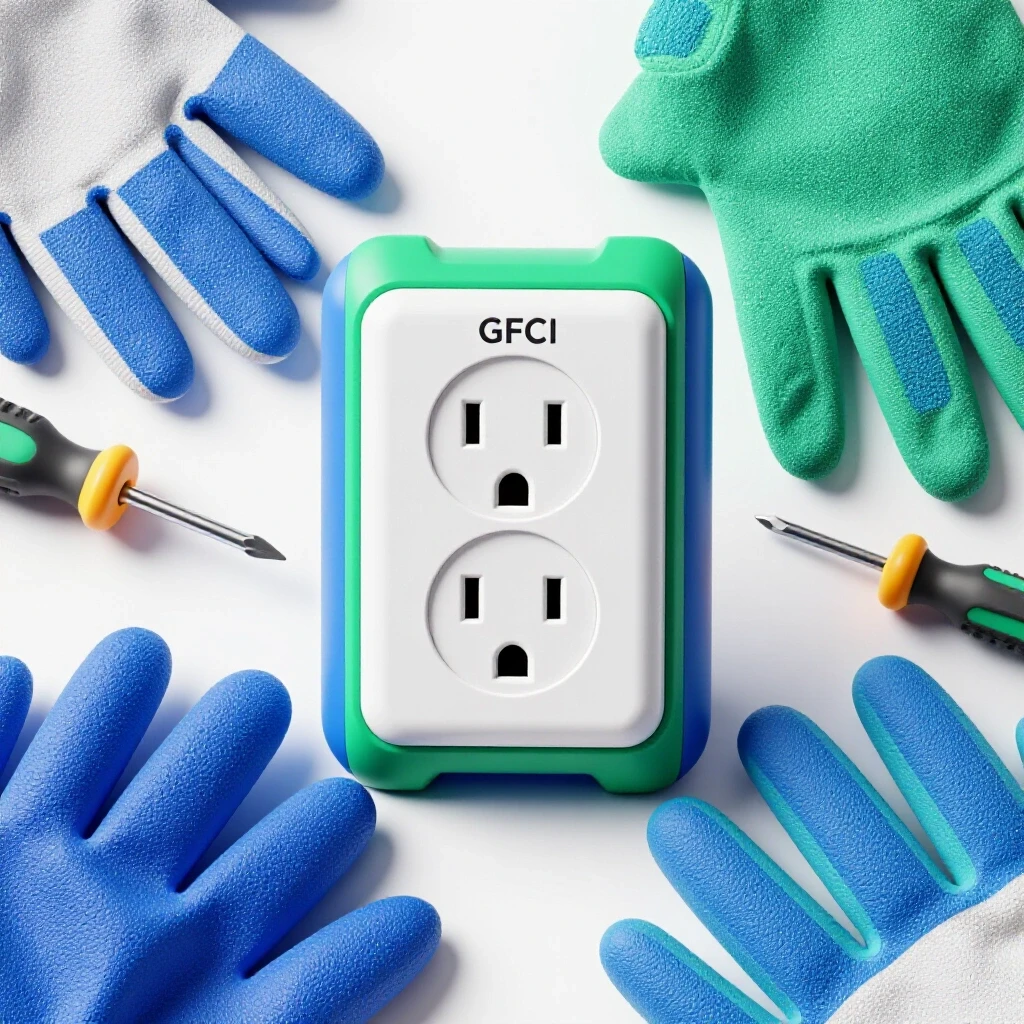
A Ground Fault Circuit Interrupter (GFCI) is a specialized device designed to shut off electric power in the event of a ground fault. It monitors the flow of electricity between the hot and neutral wires. If it detects a tiny leak of current, it trips the circuit in a fraction of a second to prevent a lethal shock.
The National Electrical Code (NEC) Section 210.8 strictly mandates that all 125-volt, single-phase, 15- and 20-ampere receptacles installed in bathrooms must have this protection. This is because water is an excellent conductor of electricity. If you are touching a wet surface and a faulty appliance at the same time, your body could become the path to the ground. The safety device acts as a silent sentinel, cutting power faster than a standard breaker ever could.
Essential Gear for Safe Electrical Component Swaps
Having the correct equipment is the difference between a successful upgrade and a frustrating afternoon. You need diagnostic tools to verify power status and hand tools designed for precision electrical work. Using the right gear ensures your connections are secure and your measurements are accurate before you restore power to the circuit.
To complete this task effectively, you should assemble a dedicated kit. I prefer using insulated hand tools for an extra layer of protection, even when I am certain the power is off. Below is a breakdown of the tools you will need to manage this project.
- Non-Contact Voltage Tester: This is your most important safety tool. It senses electrical fields and chirps or lights up if a wire is live without you having to touch it.
- Digital Multimeter: While a simple tester tells you if power is present, a multimeter provides the exact voltage. This is vital for troubleshooting unexpected readings.
- Wire Strippers: Use these to remove the plastic insulation from wires without nicking the copper underneath. Most bathroom circuits use 12-gauge or 14-gauge wire.
- Insulated Screwdrivers: A #2 Phillips and a flat-head screwdriver are standard. Ensure the handles are rated for electrical work.
- Needle-Nose Pliers: These are perfect for bending the ends of wires into “J” hooks for secure terminal connections.
- Electrical Tape: Use this to wrap the sides of the device after wiring to prevent the terminals from touching the metal sides of the electrical box.
- Flashlight or Headlamp: Since you will be turning off the power, you will need a reliable light source to see inside the dark electrical box.
| Tool Category | Essential Tool | ROI for DIYer |
|---|---|---|
| Diagnostic | Non-Contact Voltage Tester | High (Prevents injury) |
| Diagnostic | Digital Multimeter | Medium (Great for troubleshooting) |
| Hand Tool | Wire Strippers | High (Saves time/effort) |
| Hand Tool | Insulated Screwdrivers | High (Versatile for all projects) |
| Safety | Electrical Tape | High (Low cost, high safety) |
Navigating the National Electrical Code for Bathroom Safety
Building codes exist to ensure that every home meets a minimum safety standard to protect occupants from fire and shock. The NEC is updated every three years, and staying compliant is essential for your safety and your home’s resale value. In a bathroom setting, the rules are very specific about where and how power is delivered.
According to NEC 210.11(C)(3), at least one 20-ampere branch circuit must be provided to supply the bathroom receptacle outlets. This circuit should not have any other outlets outside of the bathroom. If you find that your bathroom lights flicker when you turn on a hair dryer, your circuit might be overloaded or shared with another room, which was common in older homes. When replacing a device, you must ensure the new unit matches the amperage of the circuit. A 20-amp circuit should ideally use a 20-amp rated safety device, though a 15-amp device is often permissible on a 20-amp circuit if there are multiple outlets.
Step-by-Step Replacement of a Faulty Safety Receptacle
Executing the swap requires a methodical approach to ensure every wire connects to its designated terminal. This phase covers everything from safely removing the old hardware to identifying the incoming power lines. Following these specific steps prevents common wiring mistakes that could lead to circuit failures or safety hazards in your home.
Phase 1: Power De-energization and Verification
Start by locating your main electrical panel. Identify the breaker labeled for the bathroom. Flip it to the “Off” position. Return to the bathroom and try to turn on the lights or plug in a lamp to confirm the power is out. Use your non-contact voltage tester directly against the outlet face to ensure no current is present.
Phase 2: Removing the Old Device
Unscrew the wall plate and set it aside. Carefully unscrew the mounting screws holding the outlet in the box. Pull the device out slowly. Before disconnecting anything, use your voltage tester one more time on the wires themselves. In some older homes, a single box might contain wires from two different circuits.
Phase 3: Identifying Line and Load Wires
This is where most DIYers get frustrated. A safety receptacle has two sets of terminals: “Line” and “Load.” The “Line” terminals are for the wires that bring power from the breaker panel. The “Load” terminals send protected power to other outlets downstream.
- Disconnect all wires and spread them apart so they aren’t touching.
- Turn the breaker back on briefly.
- Use your voltage tester to see which black wire is “hot.” That is your Line wire.
- Turn the breaker back off and label that wire with a piece of tape.
Phase 4: Wiring the New Device
Look at the back of your new device. The “Line” terminals are usually covered with a yellow sticker from the manufacturer. Remove the sticker only when you are ready to connect the Line wires.
- Grounding: Connect the bare copper or green wire to the green grounding screw. This is your safety path for stray electricity.
- Neutral (Line): Connect the white wire from your power source to the silver terminal marked “Line White.”
- Hot (Line): Connect the black wire from your power source to the brass terminal marked “Line Hot.”
- Load Connections: If you have a second set of wires that feed other outlets, connect the white wire to the silver “Load” terminal and the black wire to the brass “Load” terminal. If you don’t have other wires, leave the tape over the Load terminals.
Troubleshooting Common Installation Errors
Even with careful planning, you might encounter issues like a device that will not reset or a circuit that remains dead. Understanding how to diagnose these problems helps you identify if the issue is a loose connection or a reversed wire. This section provides solutions for the most frequent installation hurdles.
One of the most common failures I see is “Reverse Polarity.” This happens when the hot and neutral wires are swapped. Most modern safety devices have an internal lockout feature that prevents them from resetting if they are wired incorrectly. If you restore power and the “Reset” button won’t stay in, or if a red light appears, double-check your Line and Load connections.
Another frequent problem is a “Ground Fault” occurring during installation. If the bare ground wire touches the silver neutral terminal while you are pushing the device back into the box, it will trip immediately. I always wrap the sides of the device with two layers of electrical tape. This covers the terminal screws and prevents accidental contact with the ground wire or the metal box itself.
| Symptom | Potential Cause | Solution |
|---|---|---|
| Reset button won’t click | Line/Load wires swapped | Verify power source and move wires to “Line” terminals. |
| Device trips immediately | Ground touching Neutral | Pull out device and check for wire contact; use electrical tape. |
| No power to downstream outlets | Load wires disconnected | Ensure downstream wires are on “Load” terminals. |
| Red light is glowing | Internal device failure | Replace the unit; it has reached its end of life. |
Final Verification and Long-Term Maintenance
Once the physical installation is complete, you must confirm the device functions as intended to protect against electrical faults. Testing involves using built-in buttons and external diagnostic tools to simulate a ground fault. This final check ensures your bathroom remains a safe environment for your family and meets modern standards.
After you have screwed the device back into the box and replaced the wall plate, turn the breaker on. The device may start in the “Tripped” state. Press the “Reset” button. It should stay in, and power should flow. Plug in a dedicated GFCI tester—a small tool with three lights. It will confirm if the wiring is correct (two amber lights usually mean “Correct”). Press the “Test” button on the device itself; the “Reset” button should pop out, and the power should cut off.
Manufacturer guidelines recommend testing these devices once a month. Over time, the internal sensing circuitry can wear out, especially in humid bathroom environments. If the “Test” button fails to trip the device, it is no longer providing protection and must be replaced immediately.
Project Planning and Cost Analysis
Estimating the time and cost for this project helps you fit it into a busy weekend schedule. For a single bathroom outlet, the active work time is usually under an hour once you have your tools ready. However, if you are doing this for the first time, allow two hours to account for labeling wires and carefully reading the manufacturer’s diagram.
In terms of cost, a high-quality safety receptacle typically costs between $15 and $25. If you already own basic tools like screwdrivers and a voltage tester, your total investment is minimal. Compared to a professional service call, which can range from $150 to $300 depending on your location, the ROI for this DIY upgrade is significant.
- Active Work Time: 45–60 minutes.
- Total Weekend Block: 2 hours (includes tool setup and cleanup).
- Material Cost: $20 per outlet.
- Professional Savings: $150+ per project.
When to Call a Professional
While most homeowners can handle a straightforward device swap, some situations require an expert. If you open the electrical box and find crumbling insulation on the wires, this is a sign of extreme age or overheating. Do not attempt to wire a new device to damaged conductors.
Additionally, if your bathroom box contains more than two sets of wires (six wires total, excluding the ground), the circuit logic becomes much more complex. Managing multiple “Load” paths requires a deep understanding of circuit mapping that goes beyond a standard weekend project. If you feel overwhelmed by the number of wires or if the breaker continues to trip even after a correct installation, it is time to consult a pro.
Frequently Asked Questions
Why does my new outlet have a red light on it? A red light typically indicates that the device has failed its internal self-test or has reached the end of its functional life. Modern units are designed to “fail safe,” meaning they will stop providing power if they can no longer provide protection. You should replace the unit immediately.
Can I install a 15-amp safety device on a 20-amp circuit? Yes, the NEC allows 15-amp receptacles to be installed on 20-amp circuits, provided there is more than one outlet on that circuit. Since most bathrooms have multiple outlets or a combination of lights and outlets, this is a standard practice. However, if it is a dedicated single outlet circuit, matching the amperage is better.
What is the difference between “Line” and “Load”? “Line” refers to the wires coming directly from your electrical panel. They provide the “incoming” power. “Load” refers to the wires that carry that power to other outlets further down the line. If you want those other outlets to be protected, they must be connected to the “Load” terminals.
Do I need a safety outlet if my circuit breaker is already a GFCI type? If the circuit breaker in your main panel is a GFCI breaker, it protects every outlet on that entire circuit. In this case, you do not need a specialized safety outlet in the bathroom; a standard outlet will be protected by the breaker. However, having the reset button in the bathroom is often more convenient than walking to the garage or basement.
Why are there two white wires and two black wires in my box? This usually means your bathroom outlet is “daisy-chained” to another outlet or a light fixture. One pair is the “Line” (power in) and the other is the “Load” (power out to the next device). You must identify which is which to ensure the downstream devices are properly protected.
What happens if I don’t connect the ground wire? The device will still function and trip during a ground fault because it measures the difference between hot and neutral. However, the NEC requires the ground wire to be connected for safety. The ground provides a path for electricity if a metal component of an appliance becomes energized, preventing the exterior of the tool from becoming “hot.”
Can I use a safety outlet to protect an ungrounded two-prong outlet? Yes, this is a code-approved way to add safety to older homes with two-wire systems. You can install the safety device without a ground wire, but you must apply the included sticker that says “No Equipment Ground” to the face of the outlet.
How often should I press the test button? Most manufacturers and safety organizations recommend testing the device once a month. This ensures the internal mechanical parts haven’t seized up due to dust or moisture, which is common in bathrooms.
Will a safety outlet prevent all electrical fires? No. While they are excellent at preventing shocks from ground faults, they do not necessarily protect against “arc faults” or overloaded circuits. For comprehensive fire protection, Arc Fault Circuit Interrupters (AFCI) are often required in other areas of the home, like bedrooms.
Can moisture in the bathroom cause the outlet to trip? Yes. High humidity or steam from a long shower can sometimes create a path for current to leak, causing a “nuisance trip.” If this happens frequently, ensure your bathroom has proper ventilation, such as an exhaust fan, to keep the air dry.
(This article was written by one of our staff writers, Robert Callahan. Visit our Meet the Team page to learn more about the author and their expertise.)