How to Repair Ceiling Cracks for Long-Lasting Results (Guide)

Future-proofing a home involves more than just selecting durable appliances or installing efficient insulation. It requires a commitment to structural integrity and the foresight to address small issues before they evolve into costly failures. When I look at an overhead surface and see a thin, jagged line stretching across the plaster or drywall, I don’t see a cosmetic blemish; I see a project that demands a permanent, engineered solution rather than a temporary patch.
In my twelve years of managing facilities and maintaining my own properties, I have learned that the most frustrating part of home maintenance is doing the same job twice. Early in my journey, I attempted to fix a recurring split in my living room ceiling by simply smearing some lightweight spackle over it. Within three months, as the seasons changed and the house shifted, the split returned. That failure taught me that overhead surfaces are under constant tension. To achieve a result that lasts for years, you must understand the physics of the house and the chemistry of the materials you use. This guide focuses on a high-durability approach to restoring overhead surfaces, ensuring that your weekend efforts provide a stable, seamless finish for the long haul.
Assessing the Root Causes of Overhead Surface Fractures
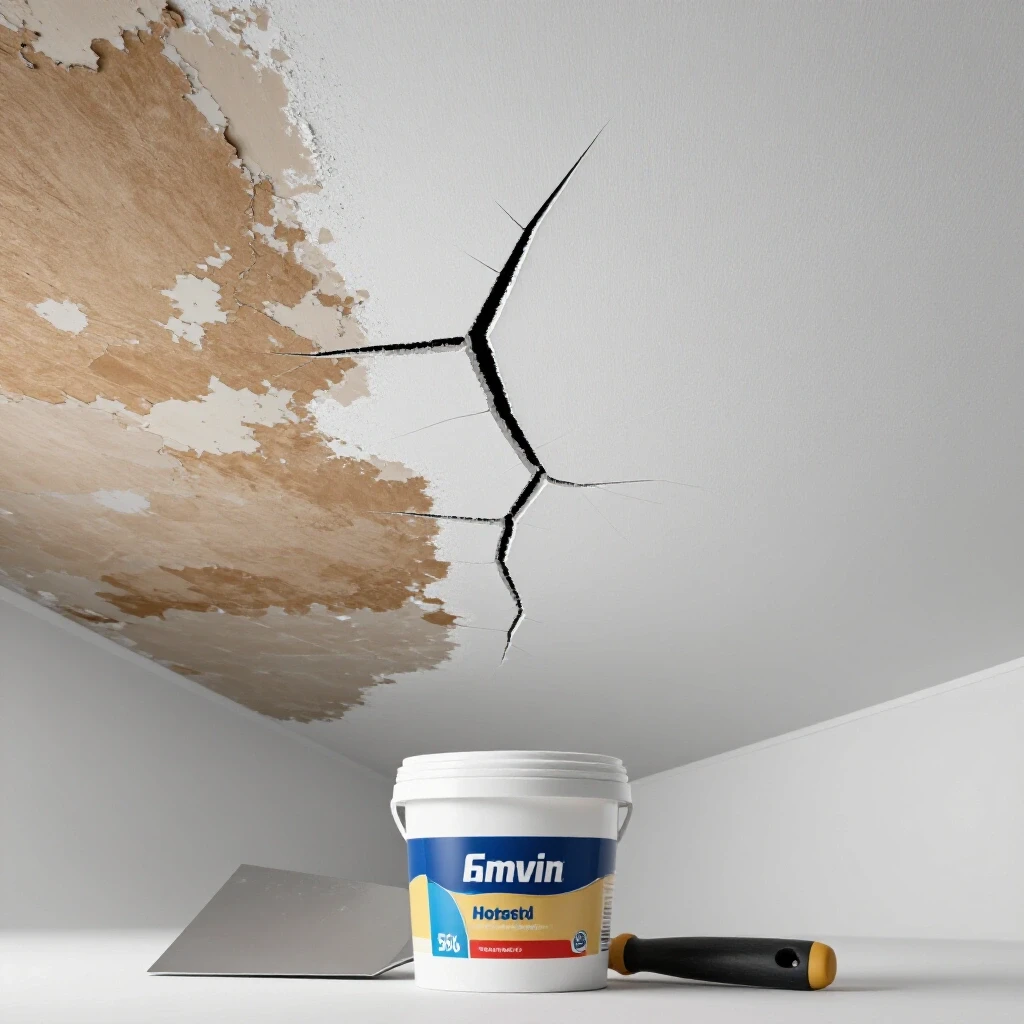
Understanding why a ceiling develops gaps is the first step in ensuring a permanent fix. These fractures often result from seasonal humidity changes, building settlement, or the natural expansion and contraction of wooden framing members. Identifying the type of movement helps you choose the right reinforcement strategy to prevent the issue from returning.
When I evaluate a project in a facility or at home, I first look for the “why.” If a crack is wider than 1/8 inch or if one side of the crack sits lower than the other, I check for structural issues like a failing joist or water damage. For standard stress fractures, the goal is to create a “bridge” that can withstand the minor movements of the home. In my experience, most DIY failures happen because the person tries to fill the gap without reinforcing it. Think of it like a bridge: the filler is the concrete, but without the rebar (tape), the concrete will eventually snap under pressure.
- Stress Fractures: Usually thin and caused by minor house settling.
- Joint Failures: Occur where two sheets of drywall meet, often due to poor initial taping.
- Plaster Delamination: Common in older homes where the plaster pulls away from the wooden lath.
Essential Gear and Materials for Permanent Restoration
Selecting the right tools is the difference between a messy, visible patch and a professional-grade restoration. You need specialized knives for spreading compound, high-strength reinforcement tape, and safety gear to protect yourself from falling debris. Investing in quality hand tools pays dividends in the smoothness of your final coat.
I have a dedicated “drywall kit” in my workshop because searching for tools mid-project is a recipe for frustration. For overhead work, I recommend a stainless steel mud pan. Unlike plastic ones, steel pans allow you to scrape your knife clean, which prevents dried bits of mud from ruining your finish. I also prioritize fiberglass mesh tape or high-strength paper tape. While some tutorials suggest mesh is easier, I find that for ceiling joints, a heavy-duty paper tape provides better sheer strength if you embed it correctly in a setting-type compound.
- 6-inch Taping Knife: Used for the initial “V-groove” and the first coat of mud.
- 12-inch Finishing Knife: Essential for feathering the edges to make the repair invisible.
- Stainless Steel Mud Pan: Holds your compound and provides a sharp edge for cleaning blades.
- Utility Knife with Fresh Blades: For widening the crack to create a bonding surface.
- Sanding Pole or Block: To smooth the surface without creating uneven dips.
- Setting-Type Joint Compound: Often called “hot mud,” this chemical-set powder is much stronger than pre-mixed buckets.
Comparison of DIY vs. Professional Restoration Metrics
| Metric | DIY Approach (High Quality) | Professional Standard |
|---|---|---|
| Active Labor Time | 4 – 6 Hours (Spread over 2 days) | 3 – 4 Hours |
| Drying/Curing Time | 24 – 48 Hours | 12 – 24 Hours (Fast-set products) |
| Material Cost | $45 – $75 | $150 – $300 (Materials + Overhead) |
| Tool Investment | $60 (One-time purchase) | N/A |
| Longevity Expectation | 5 – 10+ Years | 5 – 10+ Years |
Safety Protocols and Workspace Preparation
Working overhead presents unique hazards, including falling dust, eye irritation, and the risk of ladder falls. Proper site preparation involves clearing the room of furniture and laying down heavy-duty drop cloths to catch fine gypsum dust. Following safety standards ensures you finish the project without injury or a ruined carpet.
In my professional role, I follow OSHA-aligned safety practices even for small tasks. When working on a ceiling, your eyes are naturally directed upward, making them prime targets for falling debris. I always wear wrap-around safety glasses and a N95 respirator. Drywall dust is incredibly fine and can irritate your lungs and linger in your HVAC system for weeks. I also make sure my ladder is on a level, solid surface. A common mistake is reaching too far to one side; if your belt buckle goes past the ladder rails, you are at risk of tipping.
- Dust Containment: Tape plastic sheeting over doorways and HVAC vents to prevent dust migration.
- Furniture Protection: Use canvas drop cloths rather than plastic; plastic is slippery and can lead to falls.
- Lighting: Set up a high-lumen work light at an angle to the ceiling. This “raking light” reveals shadows and imperfections you would otherwise miss.
Step-by-Step Execution: Stabilizing and Filling
The core of a long-term repair involves preparing the substrate so the new material can bond deeply. This process starts with widening the crack, followed by applying a structural bridge of tape and multiple layers of compound. Each layer must be progressively wider to “feather” the repair into the surrounding ceiling.
Phase 1: The V-Groove Technique
I never just put mud over a crack. I use a utility knife to carve a “V” shape into the length of the fracture. This might feel like you are making the problem worse, but you are actually creating more surface area for the compound to grip. If you leave the crack tight, the mud only sits on the surface and will pop off the next time the house moves. After cutting, I use a vacuum with a brush attachment to remove every speck of dust from the groove.
Phase 2: Embedding the Reinforcement
This is where the strength comes from. I prefer using a setting-type compound for this stage because it hardens through a chemical reaction rather than just evaporation. I apply a thin layer of mud into the V-groove, then press my tape firmly into it. Using the 6-inch knife, I squeeze out the excess mud from under the tape. The goal is to have the tape as close to the ceiling surface as possible without it being dry.
Phase 3: The Feathering Process
Once the base layer is hard, I apply the second and third coats. The second coat should be about 2 to 3 inches wider than the first on both sides. The third coat, using the 12-inch knife, should extend even further. I focus on keeping the edges paper-thin. This creates a very gradual “hump” that is invisible to the eye once painted.
The Science of Compound Selection and Curing
Not all mud is created equal, and choosing the wrong type can lead to shrinkage or cracking. Setting-type compounds offer superior strength and lower shrinkage, while drying-type compounds are easier to sand for a final finish. Understanding the cure times and temperature requirements is vital for a project that doesn’t fail.
In my facilities work, I’ve seen many DIYers use “all-purpose” pre-mixed mud for everything. The problem is that pre-mixed mud contains a lot of water. As that water evaporates, the mud shrinks. On a ceiling crack, that shrinkage creates tension that can pull the tape away. I always use a “90-minute” setting compound for the first two coats. It provides a rock-hard base that won’t shrink. I save the pre-mixed “topping” mud only for the final, very thin skim coat because it sands much smoother.
- Cure Time Variables: High humidity can double the drying time of evaporation-based muds.
- Mixing Ratios: When using powder, always add the powder to the water, not the other way around, to avoid lumps.
- Temperature: Avoid working in rooms colder than 55 degrees Fahrenheit, as this can interfere with the chemical bonding of the compound.
Troubleshooting Common Failure Points
Even with the best intentions, overhead repairs can go wrong if specific details are ignored. Issues like “tape bubbling,” “edge flashing,” or “re-cracking” are usually symptoms of poor preparation or rushed timelines. Learning how to identify and fix these issues mid-project saves you from starting over.
One of the most common issues I encounter is tape bubbling. This happens when there isn’t enough mud under the tape, or the mud dried too fast. If I see a bubble, I don’t try to hide it with more mud. I cut the bubble out with a sharp blade and re-apply a small patch of tape and mud. Another failure point is “flashing,” where the texture of the repair looks different from the rest of the ceiling after painting. To avoid this, I always use a high-quality primer before the final paint coat to seal the porous mud.
- Re-cracking: Often caused by skipping the V-groove or using weak mesh tape with drying-type mud.
- Visible Ridges: Usually a result of not using a wide enough finishing knife or failing to sand between coats.
- Sanding Divots: Caused by applying too much pressure. Let the sandpaper do the work.
Project Planning Checklist
- [ ] Inspect the crack for signs of moisture or structural movement.
- [ ] Purchase setting-type compound, tape, and sanding supplies.
- [ ] Clear the room and set up dust containment (plastic and drop cloths).
- [ ] Verify ladder stability and assemble PPE (eyes and lungs).
- [ ] V-groove the crack and remove all loose debris.
- [ ] Apply the first coat and embed tape; allow to cure fully.
- [ ] Apply second coat (8-10 inches wide); allow to dry.
- [ ] Apply third coat (12-14 inches wide); allow to dry.
- [ ] Lightly sand and check with raking light.
- [ ] Prime and paint to match the existing ceiling.
Final Finishing and Texture Integration
The final step is making the repair disappear into the existing ceiling. This involves light sanding, priming, and matching the texture of the surrounding area. Since most ceilings are not perfectly flat, a bit of artistry is required to blend the new work with the old.
If your ceiling has a texture—like a “knockdown” or “orange peel” finish—you will need to replicate it. I’ve found that using a texture sponge or a spray-can texture product works well for small areas. The trick is to practice on a piece of scrap cardboard first. Once the texture is dry, I apply a coat of primer. This is a non-negotiable step. Without primer, the repair will absorb paint differently than the rest of the ceiling, making the patch stand out like a sore thumb.
- Sanding: Use 150-grit or 220-grit sandpaper for the final pass.
- Priming: Use a high-hide primer to ensure color uniformity.
- Painting: Paint the entire ceiling section from corner to corner if possible. This prevents “patch marks” where the new paint meets the old.
Knowing When to Seek Further Guidance
While most overhead fissures can be handled by a diligent DIYer, some situations indicate deeper problems. If you notice the crack is growing rapidly, if there is a brown stain indicating a leak, or if the ceiling is visibly sagging more than half an inch, it is time to stop and investigate further. These are often signs of plumbing failures or structural load issues that go beyond surface restoration.
In my properties, I always check the attic above a ceiling crack if access is available. I want to see if a joist has twisted or if a roof leak is trickling down a rafter. If the wood is damp or the framing is split, no amount of mud and tape will fix the problem. Always address the source of moisture or movement before you spend your weekend finishing the surface.
FAQs on Durable Overhead Surface Restoration
Why shouldn’t I just use caulk to fill a ceiling crack?
Caulk is flexible, but it cannot be sanded and does not bond well with ceiling paint. Over time, caulk will shrink and attract dust, leaving a visible, rubbery line that looks unprofessional. A proper mud-and-tape repair becomes part of the ceiling structure, whereas caulk remains a surface-level patch that will eventually fail.
Is mesh tape or paper tape better for ceiling repairs?
For long-term results on a ceiling, paper tape is often superior when used with a setting-type compound. Paper is non-elastic, meaning it won’t stretch when the house shifts. Mesh tape is easier to apply because it is self-adhesive, but it has a slight “give” that can allow a crack to reappear if the house moves significantly.
What is “hot mud,” and why is it recommended?
“Hot mud” is a nickname for setting-type joint compound. It comes in a powder form and hardens through a chemical reaction, similar to concrete. It is much stronger than the pre-mixed mud in buckets and does not shrink as it hardens. This makes it ideal for filling deep grooves and embedding tape.
How do I match the ceiling paint if I don’t have the original can?
The best method is to take a small flake of the existing paint (about the size of a quarter) to a paint store for a computer color match. Even then, paint fades over time. I usually recommend painting the entire ceiling in that room to ensure the color is perfectly uniform.
Can I skip the V-grooving step if the crack is very thin?
I strongly advise against skipping it. A thin crack doesn’t allow enough compound to penetrate and create a mechanical bond. By widening the crack into a “V” shape, you ensure the compound is anchored inside the ceiling material, which is essential for a repair that lasts for several years.
How long should I wait between coats of compound?
If you are using a 90-minute setting compound, you can often apply the next coat as soon as the previous one feels hard to the touch (usually 2-3 hours). However, for the final skim coat of drying-type mud, you should wait a full 24 hours to ensure all moisture has evaporated before sanding and priming.
What should I do if the crack returns after I fixed it?
If a crack returns despite proper taping and mudding, it indicates significant structural movement. You may need to install “drywall clips” to stabilize the edges of the drywall sheets or check the framing in the attic for loose fasteners. Sometimes, adding a few drywall screws into the joists on either side of the crack can provide the necessary stability.
Why is my repair showing through the paint?
This is called “flashing.” It happens because the joint compound is more porous than the surrounding painted ceiling. The compound “sucks up” the paint, changing its sheen. To prevent this, you must apply a dedicated sealer or primer over the repair before you apply your finish paint.
Can I use a power sander for the finish work?
I generally discourage power sanders for ceiling repairs. They are very aggressive and can easily sand right through the tape you just installed. A hand-sanding block or a pole sander gives you much better control and allows you to feel the transition between the patch and the ceiling.
How do I handle a crack that goes through a textured ceiling?
Repairing textured ceilings is a two-step process. First, perform the structural repair as if it were a flat ceiling. Once the repair is flat and smooth, you must apply a matching texture. You can buy texture sponges or aerosol cans that allow you to “splatter” the mud to match orange peel or knockdown finishes. Practice on cardboard first to match the density of the existing texture.
(This article was written by one of our staff writers, Robert Callahan. Visit our Meet the Team page to learn more about the author and their expertise.)