How to Replace a Kitchen Sink Faucet Aerator (Step-by-Step Guide)

Focusing on accessibility, I have spent over a decade managing large-scale building systems while simultaneously tackling the constant demands of home ownership. My dual life as a facilities manager and a dedicated DIYer has taught me that the smallest components often cause the most significant headaches. I remember a specific Tuesday evening after a ten-hour shift at the plant. I walked into my kitchen to fill a pot for pasta, only to be greeted by a jagged, splashing stream of water that took forever to fill the vessel. It was a classic case of a neglected faucet screen. Instead of calling a professional for a hundred-dollar service visit, I knew this was a fifteen-minute fix that required more patience than specialized skill.
In my professional career, I oversee the maintenance of hundreds of fixtures. At home, however, the stakes feel different because it is my own time and money on the line. Busy professionals often overlook these small upgrades because they seem trivial, but a clogged or failing flow regulator can waste gallons of water and lead to unnecessary frustration. By understanding how to properly swap these parts and verify their performance, you can maintain your home’s efficiency without the need for an expensive contractor.
Understanding the Mechanics of the Faucet Flow Regulator
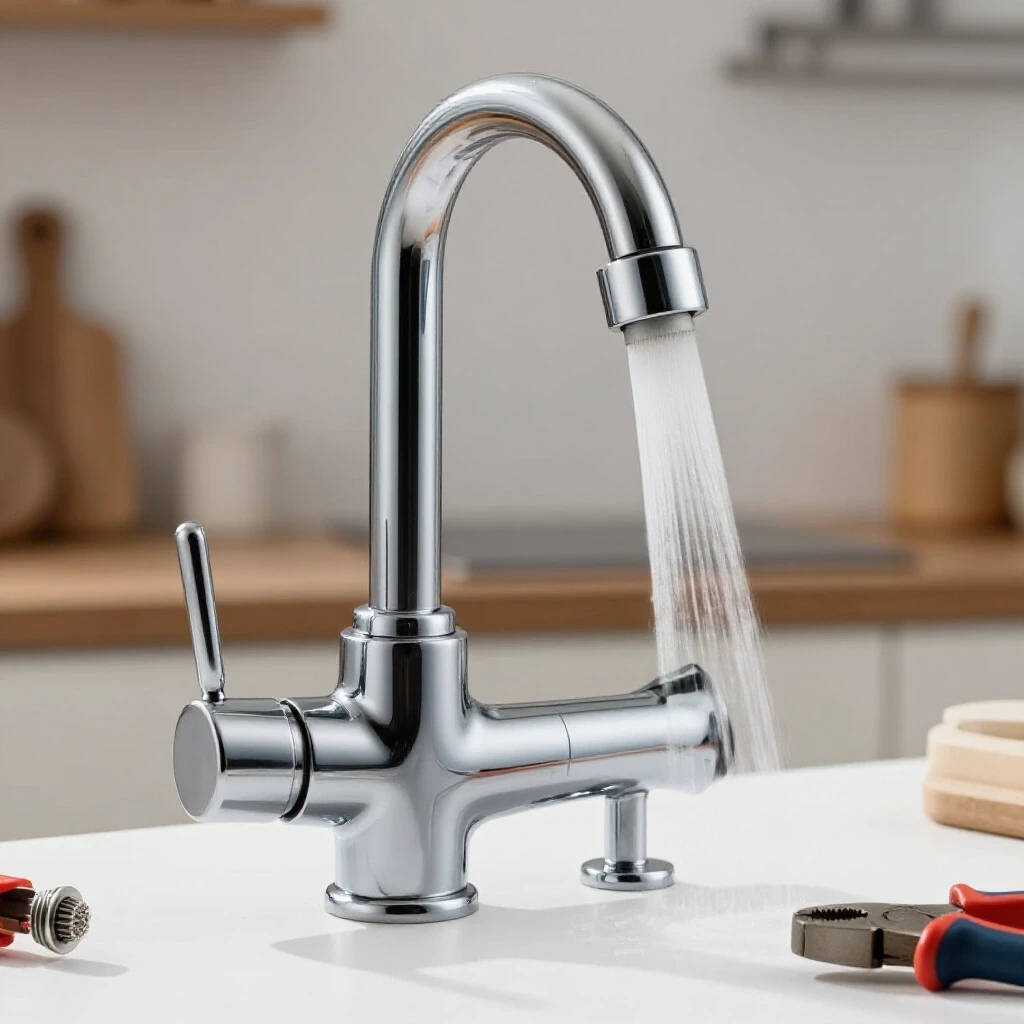
The flow regulator, often located at the very tip of your kitchen tap, is a small but sophisticated assembly designed to mix air with water. This process creates a non-splashing, pressurized stream that feels substantial while actually using less water. It also serves as a final filter for debris that might travel through your home’s piping system.
Most modern residential fixtures are governed by the Uniform Plumbing Code (UPC), which sets limits on how much water can flow through a kitchen sink. Currently, the standard is often 2.2 gallons per minute (GPM), though many newer “green” models or those in specific states like California are capped at 1.8 GPM. When this component becomes clogged with mineral scale or grit, the flow rate drops significantly, and the spray pattern becomes erratic. Understanding these basics helps you realize that a poor stream is rarely a sign of a failing faucet and is usually just a sign that the tip needs a fresh insert.
Preparing Your Workspace and Tool Inventory
Before you start any plumbing task, even one this small, you must organize your workspace to prevent losing small parts or damaging your sink’s finish. In my early DIY days, I once dropped a tiny rubber washer down the drain because I didn’t take thirty seconds to plug the sink. That mistake turned a five-minute job into a two-hour ordeal involving the P-trap.
You do not need a massive rolling toolbox for this project. In fact, using the wrong tools, like heavy pipe wrenches, can easily mar the delicate finish of your kitchen fixture. A focused, high-quality tool list ensures you complete the task safely and effectively.
Essential Tool and Material Matrix
| Tool/Material | Purpose | Necessity |
|---|---|---|
| Replacement Insert | The new screen and regulator assembly | Mandatory |
| Masking Tape or Cloth | Protects the faucet finish from tool marks | Mandatory |
| Adjustable Wrench | To loosen the housing if it is stuck | Optional (Hand-tight is best) |
| Measuring Pitcher | To conduct the volume measurement test | Mandatory |
| Stopwatch or Phone | To time the water flow for testing | Mandatory |
| Small Brush | To clean out the housing threads | Recommended |
Safety Protocols and Avoiding Common Plumbing Pitfalls
Safety in DIY home improvement is not just about personal injury; it is also about protecting the integrity of your home’s infrastructure. When working with plumbing fixtures, the primary risks involve over-tightening or cross-threading delicate parts. Most kitchen faucet tips are made of thin-walled brass or plastic, which can deform if you apply too much force.
Always begin by closing the sink drain or placing a towel over it. This simple step is a hallmark of a seasoned pro. Furthermore, be aware of the “hand-tight” rule. In my facility maintenance experience, I have seen more leaks caused by over-tightening than by under-tightening. Over-tightening can crush the rubber gasket, leading to a slow drip that might go unnoticed until it causes water damage behind the sink.
Identifying the Correct Replacement Component
Not all faucet tips are created equal. Before you head to the hardware store, you need to know if your faucet has male or female threads. A male faucet has threads on the outside, while a female faucet has threads on the inside. This determines which type of replacement housing or insert you need to purchase.
Interestingly, many modern pull-down or pull-out kitchen faucets use “hidden” or “cache” regulators that require a specific plastic key to remove. If you don’t see flat sides on the tip of your faucet for a wrench to grab, you likely have one of these recessed models. Checking the manufacturer’s technical guide online using your faucet’s model number can save you three trips to the store.
Replacement Part Compatibility Check
- Thread Type: Identify if the threads are on the faucet body or the removable tip.
- Size: Standard sizes are usually 15/16-inch for male and 55/64-inch for female, but “junior” and “tom thumb” sizes also exist.
- Flow Rate: Look for the GPM rating stamped on the side of the old part. Matching this ensures your sink continues to perform as designed.
- Stream Type: Decide if you want an aerated stream (bubbly and soft) or a laminar flow (clear and splash-free).
Executing the Screen Removal and Replacement
This is the core of the project. Most of the time, you can unscrew the housing at the end of the faucet by hand. If it is stuck due to mineral buildup, do not force it. This is where your masking tape comes in. Wrap a layer of tape around the housing to protect the finish, then use your adjustable wrench for a gentle turn.
Once the housing is off, you will likely find a stack of components: a rubber washer, a plastic flow restrictor, and a metal or plastic mesh screen. Take a photo of the order in which they come out. Building on this, I always recommend cleaning the internal threads of the faucet arm with a small brush or a damp cloth before installing the new parts. This ensures a clean seal and prevents leaks from the top of the housing.
Step-by-Step Installation Phases
- Disassembly: Carefully unscrew the tip and remove the old internal components.
- Cleaning: Wipe away any grit or white mineral crust from the faucet neck.
- Assembly: Place the new insert into the housing, ensuring the rubber gasket is on top.
- Seating: Screw the assembly back onto the faucet by hand.
- Tightening: Turn it until it is snug. If it leaks when you turn the water on, give it another quarter-turn by hand.
Conducting a Practical Water Flow Measurement Test
Once the new part is installed, it is time to verify the results. This is the “science” part of the project that many people skip, but it provides measurable proof of your success. A flow test tells you if the new part is performing to its rated GPM and if your home’s water pressure is sufficient.
To do this, you will need a container of a known volume, such as a half-gallon pitcher or a one-gallon bucket. Place the container under the faucet and turn the cold water on full blast. Start your stopwatch the moment the water hits the container and stop it the moment the container is full.
Calculating Your Gallons Per Minute (GPM)
To find your GPM, use this simple formula: (60 / Seconds to fill) x Gallons in container. For example, if it takes 30 seconds to fill a one-gallon bucket, your flow rate is 2.0 GPM. If it takes 15 seconds to fill a half-gallon pitcher, your flow rate is also 2.0 GPM. If your result is significantly lower than the rating on the part (e.g., you get 1.0 GPM on a 2.2 GPM part), you may have a clog further up the line or a pressure issue in the house.
Troubleshooting Weak Streams and Erratic Spray Patterns
Even with a brand-new insert, you might still encounter issues. If the water comes out in a crooked spray, there is likely a tiny piece of grit trapped in the new screen. This often happens after plumbing work elsewhere in the house, as sediment gets knocked loose in the pipes. Simply remove the tip, rinse it out, and reinstall it.
If the flow remains weak, the problem might be in the shut-off valves under the sink. Sometimes, these valves don’t open all the way, or the flexible supply lines have become kinked. As a facilities manager, I always check the “upstream” components whenever an “at-the-tap” fix doesn’t yield the expected results. It is a logical progression that prevents you from over-analyzing a single part.
Why DIY Maintenance Outperforms Professional Calls
For a busy professional, time is the most valuable currency. Calling a plumber for a faucet screen issue involves scheduling a window, taking time off work, and paying a service fee that usually starts at $75 to $150. In contrast, the materials for this project cost less than $10 and the active work time is under 20 minutes.
DIY vs. Professional Cost & Time Analysis
| Metric | DIY Approach | Professional Service |
|---|---|---|
| Material Cost | $3 – $12 | $10 – $20 (Marked up) |
| Labor Cost | $0 | $75 – $150 |
| Active Time | 15 – 30 Minutes | 1 – 4 Hour Window |
| Required Skill | Beginner | Licensed Professional |
| Tool Investment | Minimal ($10) | N/A |
The ROI on this project is incredibly high. Not only do you save money, but you also gain the satisfaction of maintaining your home’s functionality. This builds the confidence needed for mid-scale projects like swapping a light fixture or tiling a backsplash.
Building Code Compliance and Flow Standards
When you replace plumbing components, you should be aware of the local codes and federal standards. The Energy Policy Act of 1992 was a turning point for home water efficiency, mandating the 2.2 GPM cap. Today, many manufacturers produce “high-efficiency” inserts that go as low as 1.0 or 1.5 GPM.
While it might be tempting to find an “old stock” high-flow insert to get more water, this can actually be counterproductive. High-flow inserts lead to more splashing and higher water bills. Sticking to code-compliant, 1.8 or 2.2 GPM parts ensures your drainage system can keep up and your water heater isn’t needlessly taxed. In my 12 years of experience, I’ve found that the modern 1.8 GPM aerated streams provide plenty of pressure for daily kitchen tasks while being much kinder to the environment.
Real-World Case Study: Recovering from a Common Mistake
A few years ago, I was helping a neighbor refresh their kitchen hardware. We bought a standard replacement kit, but when I went to install it, the threads just wouldn’t catch. Instead of forcing it, I stopped and looked closer. The previous owner had used a non-standard, decorative housing that required a specific internal insert rather than a full housing replacement.
Had I used a wrench to force the new housing on, I would have stripped the threads on the faucet neck, requiring a full faucet replacement—a $200 mistake. The lesson here is that if a part doesn’t thread easily by hand, something is wrong. Stop, re-evaluate, and check your measurements. This analytical approach is what separates a successful DIYer from someone who ends up calling an emergency plumber at 9:00 PM on a Sunday.
Final Quality Control Checklist
Before you consider the job finished, run through this checklist to ensure everything is safe and functional.
- Leak Check: Dry the faucet with a towel, turn the water on, and run your finger around the connection. It should be bone dry.
- Stream Alignment: The water should fall in a straight, centered column without side sprays.
- Temperature Response: Switch from cold to hot to ensure the flow remains consistent as the water temperature changes.
- Volume Verification: Does the “feel” of the water match your timed flow test results?
- Tool Storage: Clean your wrench and return it to its place so it’s ready for the next weekend project.
Conclusion and Practical Next Steps
Refreshing the output of your kitchen tap is one of the most accessible and rewarding weekend DIY projects. It requires very little in terms of financial investment but offers immediate, tangible results every time you wash your hands or fill a glass of water. By following a structured approach—identifying the part, protecting the finish, and verifying the flow—you ensure the job is done to a professional standard.
Your next step is to perform a quick visual inspection of all the faucets in your home. If you see white crusty buildup or notice a “split” stream, it’s time to head to the hardware store. Grab a few spare inserts while you are there; they are cheap to stock and having them on hand means you won’t have to live with a poor water stream for a single day longer than necessary.
Frequently Asked Questions
How do I know if my faucet needs a new internal screen?
If you notice the water pressure has dropped significantly at one specific sink, or if the water is spraying out at odd angles, the internal screen is likely clogged with mineral deposits or pipe scale. A visual check of the tip will often reveal white or green crusty buildup.
Can I just clean the old parts instead of buying new ones?
While you can soak the parts in vinegar to dissolve minerals, the plastic components and rubber gaskets often degrade over time. Given that a new insert costs only a few dollars, replacement is usually more effective and provides a more consistent flow pattern.
What does GPM mean and why does it matter?
GPM stands for Gallons Per Minute. It is a measure of the volume of water flowing through the fixture. It matters because building codes limit this flow to conserve water, and the regulator is specifically designed to make a low GPM feel like a high-pressure stream.
Is a wrench always necessary for this task?
No. In most cases, you should be able to remove and install the housing by hand. A wrench should only be used as a last resort if the part is stuck due to mineral buildup, and always with protection to avoid scratching the metal.
What if my faucet tip is hidden inside the spout?
You have a “cache” or hidden regulator. You will need a specific key, which usually looks like a small plastic circle with teeth, to unscrew it. These keys are often included with the faucet or can be purchased in a multi-pack at hardware stores.
Why is my new faucet screen leaking from the top of the threads?
This usually happens if the old rubber washer is still stuck inside the faucet neck or if the new washer isn’t seated flat. Remove the tip, ensure there is only one washer present, and make sure it is sitting level before re-tightening.
Will a new regulator fix low water pressure in the whole house?
No. This component only affects the flow at that specific faucet. If you have low pressure everywhere, the issue is likely with your main pressure-reducing valve, a leak in the main line, or an issue with the municipal supply.
How often should these components be checked?
In areas with hard water, you might need to check or replace them every 6 to 12 months. In areas with soft water, they can last for years. A simple flow test once a year is a good maintenance habit.
Can I use pliers instead of an adjustable wrench?
Pliers can be used, but they are more likely to slip and cause deep gouges in the finish. An adjustable wrench provides more surface contact and is much safer for the fixture if used with a protective cloth or tape.
What if the flow is still slow after I replace the parts?
Check the supply valves under the sink to ensure they are fully open. If the problem persists, there may be debris trapped inside the faucet body itself, which might require a more in-depth cleaning of the faucet cartridge.
(This article was written by one of our staff writers, Robert Callahan. Visit our Meet the Team page to learn more about the author and their expertise.)