How to Install a New Door Jamb Easily (Step-by-Step Guide)

Few things in a home are as frustrating as a door that refuses to stay open or one that rubs against the floor every time you move it. We often think a quick hinge adjustment will fix the issue, but frequently, the problem lies deeper within the wooden structure surrounding the door itself.
In my twelve years as a facilities manager, I have seen how small shifts in a building can turn a functional entryway into a daily headache. During my first major home renovation, I spent an entire Saturday fighting with a bedroom door that I thought just needed a new coat of paint. It turned out the side members, known as the jambs, had bowed over time. I tried to force it back into place, but without understanding how to properly reset the frame, I only made the problem worse. This guide is built on those hard-earned lessons, focusing on the practical steps required to replace an interior wood frame correctly.
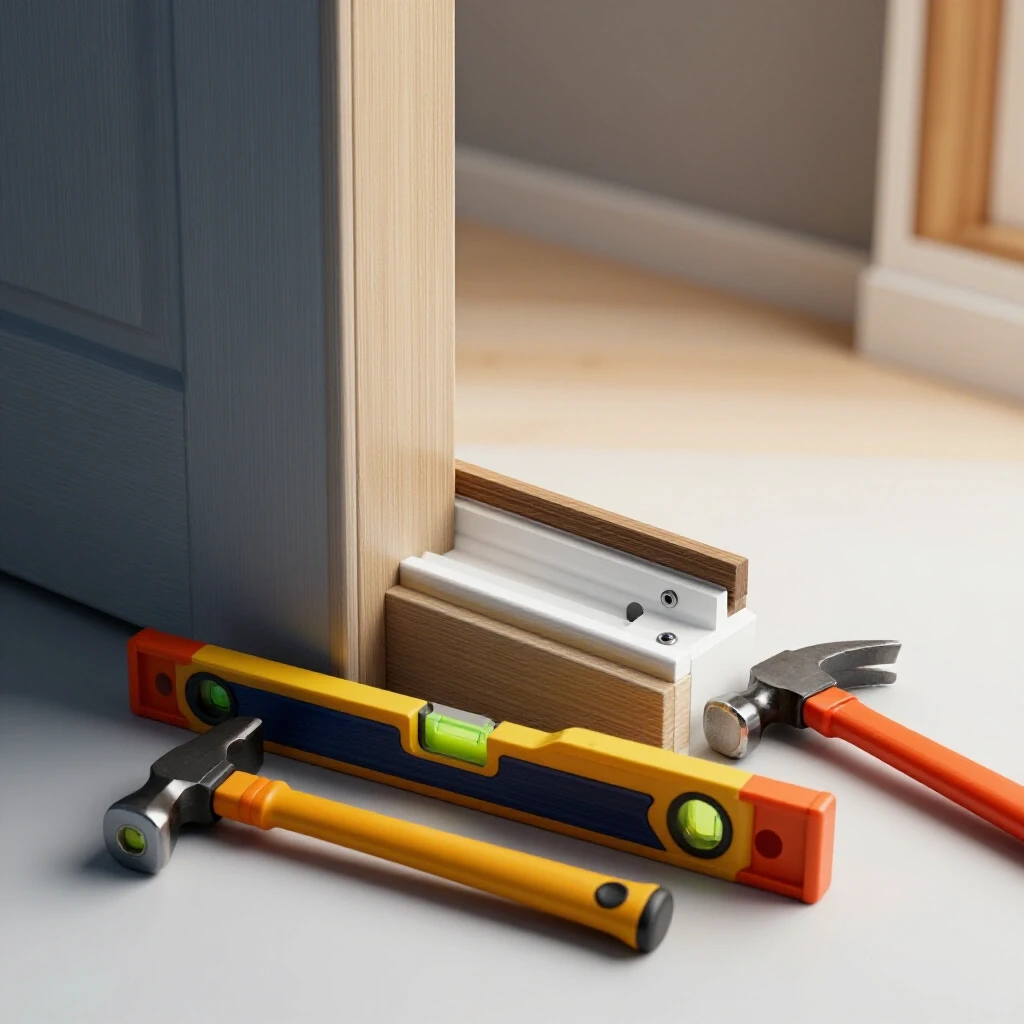
Assessing the Condition of Your Existing Door Frame
Evaluating the structural integrity of your current doorway is the first step toward a successful upgrade. You must determine if the wood is warped, cracked, or simply out of alignment before deciding to replace the entire assembly. This assessment helps you plan the necessary time and budget for the project ahead.
When I look at a doorway that is failing, I start by checking for “plumb” and “level.” Plumb refers to a perfectly vertical line, while level refers to a perfectly horizontal one. In my second home, a 1940s bungalow, the foundation had settled so much that the top of the door frame was nearly an inch lower on one side. No amount of sanding was going to fix that. I had to remove the old wood and start fresh.
Before you buy materials, use a four-foot level to check both side jambs. If the bubble is not centered, the frame is tilted. Next, check the “square” by measuring the opening diagonally from corner to corner. If the two measurements are not identical, the frame is a parallelogram rather than a rectangle. Identifying these issues early prevents you from trying to install a straight door into a crooked hole.
Essential Tools for Accurate Doorway Reconstruction
Having the right tools on hand is the difference between a functional weekend project and a frustrating trip back to the hardware store. For this task, precision is more important than raw power, as even a sixteenth of an inch can cause a door to bind. These tools ensure your work meets professional standards.
In my facility maintenance kits, I always prioritize high-quality measuring and leveling devices. I once tried to use a small torpedo level for a full-height frame, and the cumulative error resulted in a door that swung shut on its own every time I walked away.
- Four-foot or six-foot level: Essential for ensuring the side jambs are perfectly vertical.
- Combination square: Used to mark hinge depths and check corner angles.
- Hammer and nail set: For driving finish nails below the wood surface.
- Cordless drill/driver: Helpful for pre-drilling holes to prevent wood splitting.
- Pry bar: Used to gently remove old casing and trim without damaging the drywall.
- Handsaw or miter saw: For cutting the jamb material to the exact height required.
- Wood shims: Tapered pieces of wood used to fill gaps between the frame and the wall studs.
- Tape measure: A high-quality steel tape is necessary for accurate rough opening checks.
- Utility knife: For scoring paint lines so the drywall does not tear during demolition.
- Safety glasses and ear protection: Standard PPE for any task involving hammers or saws.
Understanding Rough Opening Dimensions and Clearances
The rough opening is the unfinished wall space where the door assembly will be placed. It must be larger than the frame itself to allow for adjustments and shimming during the installation process. Understanding these clearances is vital for ensuring the new wood fits comfortably without being forced.
Most standard interior doors require a rough opening that is roughly two inches wider and two and a half inches taller than the door itself. For example, a 30-inch door usually needs a 32-inch wide opening. This extra space is not a mistake; it is your “wiggle room.” In my experience, home improvers often try to make this gap too tight, which leaves no room for the shims needed to get the frame plumb.
| Feature | DIY Effort | Professional Cost | DIY Savings |
|---|---|---|---|
| Tool Investment | $150 – $300 | $0 (Included) | -$200 (Initial) |
| Labor Time | 4 – 6 Hours | 1 – 2 Hours | $250 – $500 |
| Material Cost | $80 – $150 | $150 – $250 | $70 – $100 |
| Total Value | High Learning | Convenience | ~$400 Average |
Safety Protocol and Site Preparation
Creating a safe workspace is the most overlooked part of home improvement. Before you swing a hammer, you must ensure the area is clear of debris and that you have a plan for managing the heavy materials. Proper preparation reduces the risk of injury and protects the rest of your home from damage.
I follow a strict “clean as you go” policy in my facility work, and I apply that at home too. When you pull off old trim, there will be hundreds of tiny finish nails sticking out. I make it a habit to bend these over or pull them out immediately. Stepping on a rusty nail will end your weekend project faster than any tool failure.
- Clear a five-foot radius around the doorway to allow for movement.
- Lay down drop cloths to catch wood shavings and old plaster dust.
- Check the floor for levelness; if the floor is uneven, you will need to trim one side of the jamb shorter than the other.
- Keep a trash bin nearby for immediate disposal of old materials.
- Ensure the room has adequate lighting so you can see your level bubbles clearly.
Executing the Installation: A Detailed Walkthrough
The actual process of setting the new wood frame into the wall requires patience and a methodical approach. You will work from the hinge side first, as this side carries the weight of the door and dictates the overall alignment. Rushing this stage often leads to a door that sticks or won’t latch.
Step 1: The Dry Fit. Before applying any fasteners, place the three pieces of the jamb (two sides and a top head) into the opening. This allows you to see where the wall might be thick or where the studs are bowed. I once skipped this and realized too late that my wall was actually 1/2 inch thicker than standard, meaning my jamb was too narrow for the casing to sit flush.
Step 2: Setting the Hinge Side. This is the most critical part of the job. Place the hinge-side jamb into the opening. Use your level to ensure it is plumb on both the front face and the side. Slide wood shims behind the hinge locations. Shims should always be used in pairs, pointing toward each other, to create a flat, solid block of wood.
Step 3: Fastening the Wood. Once the hinge side is plumb, drive a finish nail through the jamb and the shims into the wall stud. Start at the top hinge, then the bottom, and finally the middle. Re-check for plumb after every nail. If the nail pulls the wood out of alignment, loosen it and adjust your shims.
Step 4: Aligning the Strike Side. Now, move to the side where the door will latch. The goal here is to keep the distance between the two side jambs consistent from top to bottom. Use a spacer block or your tape measure to ensure the width at the bottom matches the width at the top. Shim and nail this side just like the first.
Step 5: The Header. The top piece of the frame should be level. If your side jambs are the correct height and the floor is level, the header should fall into place naturally. Add a shim in the center of the header to prevent it from sagging over time.
Solving Alignment and Swing Problems Post-Installation
Even with careful leveling, you might find that the door does not behave as expected once it is hung. Troubleshooting these issues involves small, incremental changes to the shims or the hinge positions. Understanding why a door “ghosts” or binds will help you make the final adjustments with confidence.
A common issue I see is “cross-leg,” where the bottom of one jamb is slightly further forward or backward than the other. This causes the door to hit the stop at the top but stay open at the bottom. To fix this, you may need to gently tap the bottom of one jamb with a hammer and a block of wood to bring it into the same plane as the other side.
| Problem | Likely Cause | Fix |
|---|---|---|
| Door swings shut alone | Hinge side is not plumb | Adjust top or bottom shims |
| Door rubs at the top | Header is sagging | Add a shim to the center of the header |
| Gap is uneven at top | Jambs are different heights | Trim the long jamb at the floor |
| Door won’t latch | Strike side is bowed | Re-shim the center of the strike jamb |
Final Trim and Maintenance for Long-Term Function
Once the frame is secure and the door operates smoothly, the final step is to apply the casing and finish the wood. This not only makes the project look professional but also adds structural rigidity to the entire assembly. Choosing the right materials here ensures the doorway stays functional for years.
In my home projects, I prefer using a nail set to sink the nail heads about 1/8 inch below the surface. Then, I fill the holes with a high-quality wood filler. This prevents the nails from “popping” out if the wood expands or contracts with the seasons. Interestingly, humidity plays a massive role in door function. If you install a frame in the dry winter, leave a slightly larger gap (about 1/8 inch) to account for wood expansion during the humid summer months.
- Casing: Install the decorative trim around the frame to hide the gap and the shims.
- Caulking: Use a paintable caulk between the casing and the wall for a seamless look.
- Sanding: Lightly sand the jamb before painting to remove any oils from your hands.
- Painting: Seal all six sides of the wood (including the top and bottom edges) to prevent moisture absorption.
Knowing When to Call a Professional
While most interior doorway repairs are well within the reach of a determined DIYer, there are times when the scope of work exceeds standard home improvement skills. Recognizing these limits saves you money and prevents structural damage to your home.
If you remove the old casing and find that the wall studs are rotted or have significant insect damage, stop immediately. Replacing a jamb in a compromised wall is like building a house on sand. Similarly, if the floor is so unlevel that it requires major subfloor reconstruction, a professional carpenter or flooring specialist should be consulted to ensure the base is stable.
Project Completion Checklist
Before you pack away your tools, walk through this final checklist to ensure the installation meets safety and functional standards. A well-installed frame should feel solid and require very little effort to operate.
- Does the door stay in whatever position you leave it (no ghost swinging)?
- Is there a consistent 1/8-inch gap (the “reveal”) between the door and the frame on all sides?
- Does the latch click into the strike plate without having to push or pull the door?
- Are all shims trimmed flush with the wall so the casing sits flat?
- Are all nails countersunk and filled?
- Is the floor clear of all debris and stray nails?
Frequently Asked Questions
How long does it take to replace a single interior door frame? For a busy professional, I recommend blocking out four to six hours. This includes the time to remove the old trim, pull the old jamb, prep the opening, and install the new wood. If you are doing this for the first time, don’t be surprised if it takes a full Saturday to get the alignment exactly right.
Why shouldn’t I just nail the jamb directly to the studs? Wall studs are rarely perfectly straight or plumb. If you nail the jamb directly to the stud, the jamb will follow the curve of the stud, resulting in a bowed frame. Shims create a bridge that allows the jamb to remain perfectly straight regardless of what the wall is doing behind it.
What kind of wood is best for a new interior jamb? For most homes, finger-jointed pine or solid poplar are excellent choices. They are stable, easy to cut, and take paint very well. Avoid MDF (medium-density fiberboard) in high-moisture areas like bathrooms, as it can swell if it gets wet.
Can I reuse the old trim or casing? Yes, if you are careful during the removal process. Use a wide pry bar and a wood block to protect the wall. However, old wood is often brittle and may crack. I usually plan to buy new casing just in case the old pieces don’t survive the demolition.
What is the most common mistake beginners make? The most common error is over-shimming. If you drive the shims in too hard, you will bow the jamb toward the door. This narrows the opening and causes the door to bind. Always use light taps and check the width of the opening frequently with a tape measure.
Do I need a permit to replace an interior door frame? In most jurisdictions, replacing a non-load-bearing interior door frame is considered a cosmetic repair and does not require a permit. However, always check your local building codes, especially if you are changing the width of the opening or working in a multi-family building.
How do I handle a floor that is significantly out of level? You will need to “scribe” the bottom of the jambs. Determine which side of the floor is higher, then trim the jamb on the lower side to be longer, or the higher side to be shorter, so that the header remains perfectly level. This is a common challenge in older homes.
What size nails should I use for the installation? I recommend 2-1/2 inch 15-gauge or 16-gauge finish nails for securing the jamb through the shims into the studs. For the casing, 1-1/2 inch or 2-inch nails are usually sufficient to hold the trim to the jamb and the wall.
Is it better to buy a pre-hung door or build the jamb myself? A pre-hung door comes with the jamb already attached and the hinges mortised, which saves significant time. However, if you have a custom-sized opening or a high-quality door you want to keep, building the frame from scratch is the better, more cost-effective option.
How do I prevent the wood from splitting when I nail it? If you are working near the end of a board or using thick nails, always pre-drill a pilot hole that is slightly smaller than the diameter of the nail. This is especially important with hardwoods like oak or poplar.
What should I do if the wall is thicker than the standard jamb? You can buy “jamb extensions,” which are thin strips of wood that you nail to the edge of the frame to make it flush with the drywall. This is common in older homes with plaster walls or when adding a door to a wall with extra layers of material.
How do I ensure the door doesn’t “rattle” when it’s closed? The position of the strike plate is key. If the door rattles, the strike plate is likely too far toward the stop. You can adjust the small tab inside the strike plate or move the plate slightly to create a tighter fit against the door’s latch.
(This article was written by one of our staff writers, Robert Callahan. Visit our Meet the Team page to learn more about the author and their expertise.)