How to Add DIY Bathroom Wall Storage for Daily Essentials (Guide)

How many times have you reached for your toothbrush in the morning only to knock over three other bottles on a cluttered countertop? In my twelve years managing commercial facilities and upgrading my own homes, I have found that the bathroom is often the most disorganized room because we prioritize floor space over vertical potential. Most of us work demanding jobs and want our homes to function efficiently, yet we hesitate to drill into bathroom walls for fear of hitting a pipe or creating a mess that requires a professional fix.
During my first master bath upgrade, I spent three hours nervously hovering a stud finder over a wall, certain that the plumbing for the shower was exactly where I wanted to mount a heavy oak shelf. I eventually learned that by consulting the original blueprints and understanding standard framing distances, I could navigate these hidden obstacles with confidence. Balancing a full-time career means I do not have time for “do-overs,” and I suspect you feel the same. This guide provides a structured approach to adding vertical utility to your space while adhering to safety standards and realistic timelines.
Evaluating Your Space for Vertical Bathroom Organization
Before picking up a drill, you must analyze the structural and environmental conditions of your bathroom walls. This phase involves identifying wall types—such as drywall or plaster—and locating hidden utilities like water lines and electrical conduits that could lead to catastrophic failures if breached. Proper planning ensures your upgrades are both safe and durable.
In my experience, the biggest mistake weekend warriors make is assuming every wall is the same. In older homes, you might encounter lath and plaster, which requires different drill bits and anchoring strategies than modern 5/8-inch moisture-resistant drywall. I always start by “mapping” the wall. This involves using a high-quality stud finder and a non-contact voltage tester to ensure I am not about to drive a screw into a 120-volt line.
- Project Skill and Difficulty Rating Scale
| Project Type | Difficulty (1-10) | Active Labor Time | Total Time (inc. Curing) |
|---|---|---|---|
| Simple Wire Basket Mounts | 2 | 1 Hour | 1 Hour |
| Floating Wood Shelves | 4 | 3 Hours | 24 Hours |
| Recessed Wall Niche | 7 | 6 Hours | 48 Hours |
| Over-the-Toilet Cabinet | 3 | 2 Hours | 2 Hours |
When evaluating your site, consider the “splash zone.” Any organizer placed within three feet of a shower or sink will be subject to high humidity and direct water contact. This affects your choice of materials and finishes. I once installed a beautiful pine shelf without a proper moisture seal, only to see it warp and grow mildew within six months. Now, I strictly follow manufacturer specs for marine-grade polyurethanes or naturally rot-resistant woods like cedar or teak.
Essential Tool List for Safe Home Repairs and Upgrades
Success in DIY home improvement depends heavily on having the right diagnostic and execution tools before the first hole is drilled. A well-stocked kit prevents mid-project hardware store runs and ensures that every fastener is driven with the correct amount of torque and precision. Investing in quality tools provides a measurable return on investment over years of maintenance.
I have learned the hard way that a cheap level can ruin an entire Saturday. If your shelf is off by even an eighth of an inch, it will be all you see every morning while you shave. Below is a matrix of what you actually need versus what is nice to have for these types of weekend DIY projects.
- Essential vs. Optional Tool Matrix
| Tool Name | Purpose | Necessity |
|---|---|---|
| Stud Finder | Locating framing members | Essential |
| Torpedo Level | Ensuring horizontal accuracy | Essential |
| Impact Driver | Driving long screws into studs | Essential |
| Oscillating Multi-Tool | Cutting drywall for recessed units | Optional |
| Laser Level | Aligning multiple shelf units | Optional |
| Non-Contact Voltage Tester | Detecting live wires behind walls | Essential |
- Stud Finder: Look for a model with “deep scan” and “wire warning” modes. This is your primary defense against hitting a PVC vent pipe or a copper supply line.
- Power Drill and Impact Driver: While a standard drill works for making pilot holes, an impact driver provides the rotational torque needed to seat long 3-inch screws into aged Douglas Fir studs without stripping the heads.
- Drill Bit Set: Ensure you have high-speed steel (HSS) bits for wood and carbide-tipped bits if you are mounting through ceramic tile.
- Wall Anchors: Never rely on the cheap plastic “plugs” that come in the box. I recommend toggle bolts or “snaptoggles” for any load exceeding 10 pounds where a stud is unavailable.
Navigating Building Codes and Hidden Utilities
Every modification to a permanent structure must respect local residential building codes to ensure the safety of the occupants and the integrity of the home. In the bathroom, this specifically involves the Uniform Plumbing Code (UPC) and the National Electrical Code (NEC), which dictate where pipes and wires must be located relative to wall surfaces.
When I am working on a project that involves cutting into the wall, such as a recessed niche, I keep the “1.25-inch rule” in mind. Building codes generally require that if a hole is bored through a stud for a pipe or wire, it must be at least 1.25 inches from the edge of the stud. If it is closer, a metal “nail plate” must be installed to protect it. Interestingly, if you hit something hard that isn’t wood, stop immediately. It is likely a protector plate doing its job.
- UPC 402.5: This code section often references the required clearance around fixtures. When adding wall units, ensure they do not encroach on the 15-inch minimum clearance from the center of the toilet to any side wall or obstruction.
- NEC 210.8: This covers GFCI protection. If you are installing metal shelving or organizers near a sink, ensure you are not creating a path to ground that could interfere with your electrical safety outlets.
I remember a project where I ignored a slight resistance while drilling. I had nicked a grey plastic greywater vent. It didn’t leak water, but it allowed sewer gases into the bathroom. Fixing that mistake required cutting out a massive section of drywall I hadn’t planned to touch. Always use a “drill stop” or a piece of tape on your bit to ensure you only go as deep as the drywall thickness plus the shelf bracket.
Step-by-Step Installation of Wall-Mounted Toiletry Shelves
Executing a clean installation requires a methodical approach that prioritizes alignment and structural “bite.” This phase moves from the initial layout to the final tightening of fasteners, ensuring that the finished product can handle the weight of heavy glass jars and daily-use items. Following a repeatable process reduces the chance of aesthetic errors.
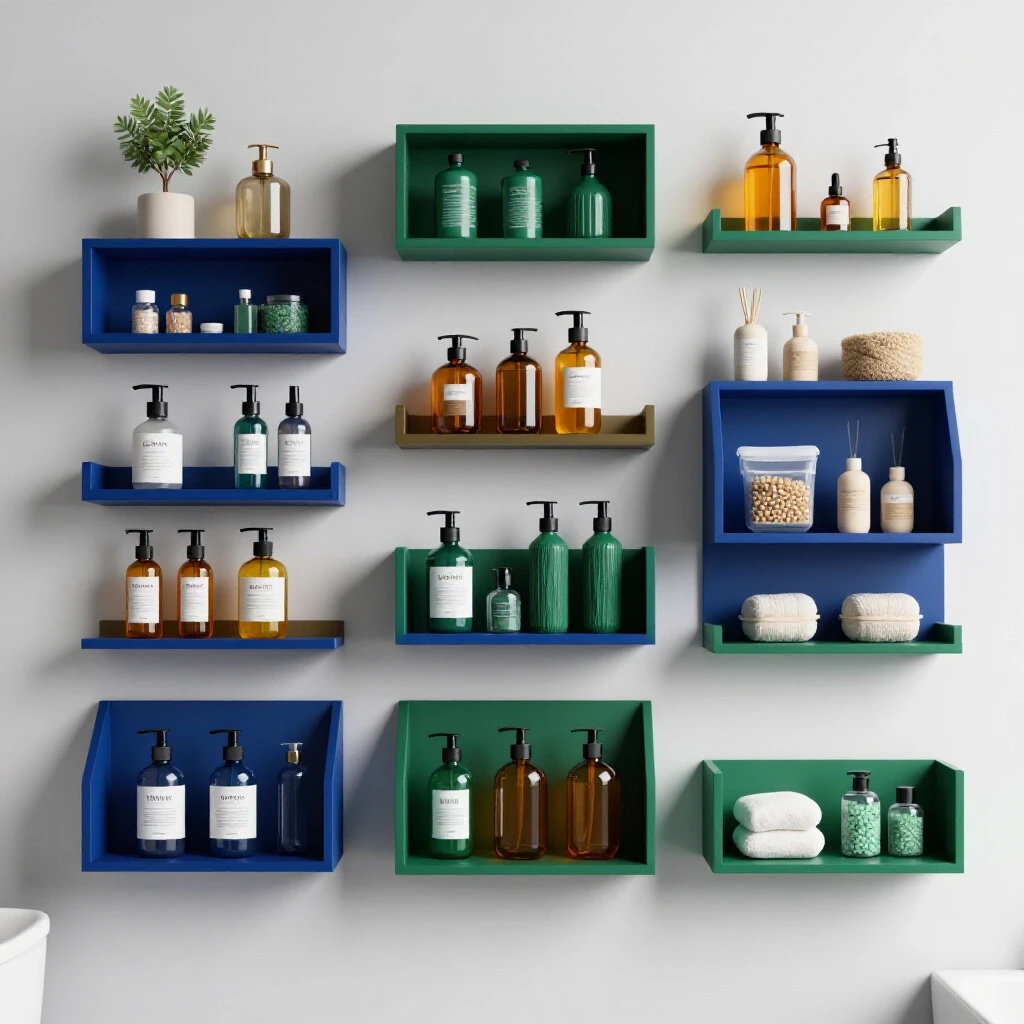
- The Layout: Use your level and a pencil to mark a light horizontal line where the bottom of the shelf will sit. Do not trust the ceiling or the floor to be level; in most homes, they are not.
- Locating the Studs: Move your stud finder across the line. Mark the center of each stud. Standard framing is usually 16 inches apart from center to center.
- The Dry-Fit Test: This is a critical step I never skip. Hold the shelf or the brackets up to your marks without any fasteners. This allows you to visualize the height. Is it too high for your spouse to reach? Does it interfere with the medicine cabinet door?
- Drilling Pilot Holes: A pilot hole is a small hole drilled before the screw to prevent the wood from splitting and to ensure the screw follows a straight path. Use a bit slightly smaller than the shank of your screw.
- Securing the Brackets: If you hit a stud, use a 2.5-inch or 3-inch wood screw. If you miss a stud, you must use a toggle bolt. A toggle bolt has a metal wing that expands behind the drywall, spreading the load across a larger surface area.
- Mounting the Surface: Place your shelf on the brackets. Use shorter screws (usually 1/2-inch to 3/4-inch) to secure the shelf to the bracket so it cannot slide off.
Building a Recessed Wall Niche for Daily Essentials
A recessed niche is a more advanced weekend DIY project that involves cutting into the wall cavity to create storage between the studs. This method is excellent for small bathrooms because it adds storage without taking up any physical room in the walking area. It requires a higher level of precision and a firm understanding of what lies behind the drywall.
Before you cut, perform an “exploration hole.” Drill a small 1/2-inch hole in the center of where you want the niche. Insert a bent coat hanger and rotate it to feel for obstructions like pipes or wires. If the path is clear, you can proceed with a drywall saw or an oscillating tool.
- Material Cure and Drying Timelines
| Material | Application | Working Time | Full Cure/Dry Time |
|---|---|---|---|
| Wood Glue | Joint Assembly | 10 Minutes | 24 Hours |
| Silicone Caulk | Waterproofing Edges | 20 Minutes | 24 Hours |
| Water-Based Poly | Surface Protection | 2 Hours | 72 Hours |
| Joint Compound | Patching Drywall | 30 Minutes | 12-24 Hours |
Building the box for the niche should be done on your workbench first. I recommend using 1×4 common board or pre-primed MDF if the area is dry. Measure the distance between your studs—usually about 14.5 inches—and build the box to be 1/4-inch smaller than that opening. This “expansion gap” allows you to shim the box so it sits perfectly level even if your studs are slightly crooked.
Once the box is inserted, secure it by driving screws through the sides of the niche into the studs. This creates a very strong bond. Finish the edges with a decorative “picture frame” molding to hide the cut edges of the drywall. This is a trick I use in facility maintenance to make quick repairs look like intentional architectural features.
Managing Moisture and Weight Loads in Damp Environments
Bathroom environments are uniquely hostile to DIY home improvement projects due to the constant cycle of steam and condensation. Understanding load tolerances and material science is necessary to prevent your organizers from sagging or corroding over time. High-quality finishes and appropriate hardware choices are the keys to longevity.
Weight capacity is often misunderstood. A shelf might be rated for 50 pounds, but that rating usually assumes the load is evenly distributed and the shelf is anchored into solid wood. If you are using drywall anchors, I suggest cutting that rating in half for safety.
-
Load Tolerances for Common Fasteners
-
Plastic Ribbed Anchors: 5–10 lbs (Best for light mirrors or small hooks).
- Self-Drilling Zinc Anchors: 25–40 lbs (Good for single shelves with light toiletries).
- Toggle Bolts (3/16″): 50–100 lbs (The gold standard for heavy storage units).
- Direct Stud Mounting: 150+ lbs (Required for towel racks and heavy cabinetry).
To combat rust, I avoid standard steel screws. Instead, I opt for stainless steel or “deck screws” which have a corrosion-resistant coating. For the wood itself, applying three coats of a water-based polyurethane provides a barrier against steam. Between coats, I lightly sand with 220-grit sandpaper to ensure a smooth finish that won’t snag your towels or linens.
Correcting Mistakes and Structural Troubleshooting
Even with careful planning, errors occur. A screw might strip, a stud might be slightly out of reach, or you might find that the wall is too thin for the anchors you bought. Troubleshooting is the process of identifying the failure point and applying a code-compliant fix rather than forcing a solution that might fail later.
One common issue is the “spinning anchor.” This happens when the hole in the drywall is drilled too large, and the plastic anchor just spins when you try to drive the screw. The fix is not more glue; it is to remove the anchor and upgrade to a toggle bolt. As a facilities manager, I have seen many “quick fixes” fail and cause more damage. It is always better to take thirty minutes to do it right than to spend Sunday night patching a hole where a shelf fell down.
If you accidentally drill into a stud and feel the drill “jump,” you may have hit a knot or a nail. Do not force it. Back the bit out and inspect the hole. If you see shiny metal, you have hit a nail or a protector plate. Move your bracket up or down by an inch to avoid the obstacle. This is why I always keep a small tub of spackle and a touch-up paint pen nearby—mistakes happen, but they don’t have to be permanent.
Final Finishing and Maintenance
The final phase of any weekend DIY project is the “punch list.” This involves checking for level one last time, wiping down surfaces, and ensuring that all fasteners are tight but not over-torqued. Maintenance in a bathroom setting involves periodic checks for moisture damage and ensuring that the weight on the shelves hasn’t caused the anchors to pull away from the wall.
I recommend a “stress test” before you fully load your new organizers. Apply a small amount of downward pressure with your hand to see if there is any flex in the wall. If the drywall bows, you need more points of contact or a different anchoring system. Once satisfied, seal any gaps where the organizer meets the wall with a thin bead of 100% silicone caulk. This prevents water from seeping behind the unit and causing hidden mold growth.
-
Project Completion Checklist
-
Verify all shelves are level within 1/16 of an inch.
- Ensure all screws are countersunk or flush with the surface.
- Check that no shelving interferes with the swing of doors or drawers.
- Apply a final coat of moisture-resistant sealer if using raw wood.
- Clean all dust from the floor and walls to prevent tracking it through the house.
By taking these steps, you transform a simple storage project into a professional-grade upgrade. The satisfaction of seeing a clean, organized bathroom every morning is well worth the six to eight hours of focused effort over a weekend.
Frequently Asked Questions
What is the best height for wall-mounted organizers?
Standard eye level is approximately 60 inches from the floor, which is ideal for daily-use items. However, for over-the-toilet units, ensure you leave at least 10 to 12 inches of clearance above the tank lid to allow for future plumbing repairs inside the tank.
Can I install shelves over a fiberglass shower surround?
It is generally not recommended to drill into a fiberglass surround unless you are an experienced DIYer. These units are often backed by an air gap, and improper sealing can lead to water leaks behind the shower, causing structural rot. Stick to the drywall areas above or beside the surround.
How do I know if I hit a pipe instead of a stud?
A stud finder will usually give a solid, consistent reading over a 1.5-inch width. A pipe often gives a “fuzzier” or narrower reading. If you are unsure, use a small finishing nail and a hammer to tap into the wall; wood feels solid and “grips” the nail, while a pipe will feel like a hard, unyielding stop or a hollow thud.
What wood is best for high-humidity bathrooms?
Teak, cedar, and mahogany are naturally resistant to rot. If you prefer common lumber like pine or oak, you must seal all six sides of every board with at least three coats of polyurethane to prevent moisture absorption and warping.
Is it safe to mount organizers near the vanity mirror?
Yes, but be cautious of the electrical wires feeding the vanity light. These wires usually run vertically from the light fixture up toward the ceiling or down toward the switch. Avoid drilling in the direct vertical path of any light fixture or outlet.
My bathroom walls are plaster; how do I prevent cracking?
When working with lath and plaster, always use a masonry bit to drill through the plaster layer first, then switch to a wood bit for the lath. Apply a piece of masking tape over the spot where you intend to drill to help keep the plaster from flaking or spider-cracking.
How much weight can a standard floating shelf hold?
A floating shelf anchored into two studs can typically hold 40 to 50 pounds. If you are only using drywall anchors, keep the load under 15 to 20 pounds to avoid putting too much “leverage” on the drywall, which can cause the fasteners to pull through.
Do I need to use a GFCI tester before starting?
It is a good safety practice. Use a GFCI outlet tester to ensure your bathroom circuits are properly grounded and protected before you begin any work that involves opening a wall or working near electrical boxes.
What should I do if my drill bit gets hot?
If the bit is smoking or hot to the touch, you are likely drilling into a metal plate or very hard old-growth wood. Slow down the drill speed, apply steady pressure, and let the bit cool down. If you hit a metal plate, stop—it is there to protect a pipe or wire.
Can I use “no-drill” adhesive shelves?
Adhesive shelves are suitable for very light items like sponges or toothbrushes on smooth surfaces like tile. However, for daily-use storage involving glass bottles or heavy toiletries, mechanical fasteners (screws and anchors) are far more reliable and safer.
(This article was written by one of our staff writers, Robert Callahan. Visit our Meet the Team page to learn more about the author and their expertise.)