Plate Rack vs Cabinet Stack: Which Is Better for Dish Storage? (Guide)

When evaluating the layout of a kitchen, homeowners often prioritize aesthetics over the long-term ease of care required for different storage systems. Over my 13 years as a supply chain analyst, I have learned that how you store your daily-use items dictates the rhythm of your home and the lifespan of your cabinetry. Choosing between visible vertical storage and traditional enclosed shelving involves more than just a style preference; it is a technical decision regarding material durability and maintenance cycles.
In my second home renovation, I opted for a custom-built vertical slat system for my stoneware. I wanted to see if the immediate accessibility would outweigh the potential for dust accumulation. Meanwhile, in my previous property, I relied on standard tiered cabinetry. This comparison taught me that the physics of how we move heavy ceramic plates daily can either preserve or degrade the finish of our storage materials over time.
Understanding Material Science in Kitchen Storage Solutions
Material science in kitchen storage involves analyzing the density and moisture-resistance of substrates like high-density fiberboard (HDF) or solid hardwoods. Understanding these properties helps determine how a storage unit reacts to the weight of heavy stoneware and the humidity of a kitchen environment. These factors are critical for long-term structural integrity.
When we talk about durability in storage, we must look at the Janka hardness rating of the wood used. For instance, Hard Maple has a Janka rating of 1,450 lbf, making it highly resistant to the dings and scratches caused by sliding plates. In contrast, softer woods or low-grade particle boards may show signs of wear within three to five years of heavy use.
Porosity is another key metric. A non-porous surface, or one sealed with a high-performance conversion varnish, prevents moisture from damp dishes from seeping into the wood fibers. According to ASTM D1210 standards, the fineness of the grind in the finish determines how smooth and cleanable the surface remains. A lower porosity rate means less time spent scrubbing and a lower risk of mold or warping.
Technical Specifications of Open Vertical Plate Racks
Open vertical storage systems use a series of dowels or slats to hold plates upright, allowing for air circulation and immediate access. These systems are often evaluated based on the tensile strength of the supports and the moisture-resistance of the finish. They eliminate the need for door hardware but expose contents to the environment.
From a supply chain perspective, the quality of a vertical rack depends on the joinery. Mortise and tenon joints provide much higher structural stability than simple glued dowels. When I inspected a series of prefabricated birch racks, I found that many lacked the necessary reinforcement to handle a full load of 12-inch stoneware plates, which can weigh up to 3 pounds each.
- Material Thickness: Look for slats at least 15mm thick to prevent bowing.
- Finish Adhesion: Ensure the coating meets ASTM D3359 standards for cross-cut tape adhesion.
- Spacing: A standard 25mm to 30mm gap is required for most modern ceramic profiles.
- Load Capacity: A well-built wall-mounted rack should support at least 50 lbs per linear foot.
The primary trade-off here is the cleaning regimen. While you save time by not opening doors, you may spend more time dusting items that aren’t used daily. In my experience, these systems work best for “high-turnover” items that are washed and used every 24 to 48 hours.
Performance Metrics of Enclosed Cabinet Stacking
Enclosed shelving systems utilize horizontal surfaces protected by doors to store dishes in stacks. This method relies on the weight-bearing capacity of the shelf pins and the cycle-life of the hinges. It provides a controlled environment that protects dishes from airborne grease and household dust.
The National Association of Home Builders (NAHB) notes that standard kitchen cabinets have a life expectancy of up to 50 years, but the functional components often fail much sooner. The hinges, typically tested to 25,000 or 50,000 cycles, are the primary point of failure. If you open a cabinet four times a day, a 25,000-cycle hinge should theoretically last about 17 years.
- Shelf Deflection: According to KCMA (Kitchen Cabinet Manufacturers Association) standards, a shelf should not deflect more than 1/16th of an inch per foot under a load of 15 lbs per square foot.
- Hinge Quality: Opt for soft-close hinges with integrated deactivation switches for heavy doors.
- Surface Hardness: Melamine surfaces provide excellent scratch resistance but can chip at the edges if struck by heavy plates.
- Volatile Organic Compounds (VOCs): Ensure the cabinet box meets CARB Phase 2 requirements for air quality.
In my 13 years of evaluating materials, I have seen that enclosed stacks are superior for long-term storage of heirloom pieces. However, the “reach-in” motion required for the bottom plate in a stack of twelve creates significant friction. This friction can lead to “shelf-wear” on the glaze of your dishes over a decade of use.
Side-by-Side Material Performance Specifications
This comparison table outlines the technical differences between open-access slats and enclosed shelving systems. It focuses on the physical demands placed on the materials and the expected maintenance requirements over a 15-year period.
| Performance Metric | Open Vertical Slats (Hardwood) | Enclosed Shelving (HDF/Melamine) |
|---|---|---|
| Primary Material | Solid Maple or Oak | High-Density Fiberboard (HDF) |
| Maintenance Cycle | Annual oiling/waxing | Hinge adjustment every 3 years |
| Dust Accumulation | High (Requires weekly wipe) | Low (Protected environment) |
| Scratch Resistance | High (Janka 1,450+) | Moderate (Melamine 3H-5H hardness) |
| Moisture Sensitivity | Moderate (Depends on sealant) | High (Edge banding is a weak point) |
| Accessibility Rating | Excellent (One-handed) | Fair (Requires lifting/stacking) |
Why Higher Upfront Costs Don’t Always Guarantee Durability
In the world of high-end home materials, price is often driven by aesthetics and brand rather than technical specs. A hand-carved walnut plate rack may cost three times more than a stainless steel insert, but its performance in a high-moisture kitchen may actually be inferior if the finish isn’t marine-grade.
I once evaluated a luxury kitchen where the homeowner spent $4,000 on custom-integrated dish slots. Within two years, the steam from a nearby dishwasher caused the wood to swell, making it impossible to slide the plates in. This was a failure of the supply chain—the wood wasn’t properly kiln-dried to the necessary 6-8% moisture content for interior furniture.
When performing a trade-off analysis, look at the “cost per touch.” If a vertical rack saves you five seconds every time you set the table, and you do that 700 times a year, the efficiency gain is measurable. However, if that rack requires a $200 professional refinishing every five years, the long-term value decreases.
Installation Demands and Structural Requirements
The installation of dish storage systems requires an understanding of wall stud placement and fastener shear strength. Because dishes are dense, the storage unit must be anchored to handle both the static load of the plates and the dynamic load of a person pulling on the unit.
For a wall-mounted vertical rack, I recommend using #10 or #12 stainless steel screws that penetrate at least 1.5 inches into solid wood studs. If you are installing into metal studs, toggle bolts with a high shear-strength rating are necessary. Never rely on simple plastic drywall anchors for dish storage; the risk of catastrophic failure is too high.
- Locate Studs: Use a deep-scan stud finder to identify the center of the framing.
- Leveling: Use a 4-foot level to ensure the horizontal supports are perfectly plumb.
- Pilot Holes: Drill pilot holes to 75% of the screw diameter to prevent wood splitting.
- Load Test: Apply gradual weight to the unit before loading your expensive stoneware.
Enclosed cabinets have their own challenges. If the cabinet box is made of 1/2-inch particle board, the “hanging rail” at the back is a significant weak point. I always look for cabinets with a 3/4-inch solid wood hanging rail or a full-back panel for maximum durability.
Long-Term Cleaning Regimens and Finish Maintenance
Maintaining the appearance and hygiene of your dish storage requires different strategies depending on the exposure level. Open systems require a proactive approach to prevent “grease-dust,” a sticky film that forms when cooking oils aerosolize and settle on surfaces.
For open wood racks, a monthly wipe-down with a damp microfiber cloth followed by a dry cloth is standard. Every six months, I recommend a light application of a food-safe mineral oil or beeswax blend to keep the wood from drying out. This prevents the micro-cracking that can harbor bacteria.
Enclosed cabinets are easier to maintain on a weekly basis, but they hide problems. Every six months, you should remove all dishes to inspect the shelf pins for bending and the corners for any signs of moisture damage. If you notice the edge banding on a melamine shelf is peeling, it should be resealed immediately with a high-heat adhesive to prevent the core from blowing out.
Financial Evaluation: Upfront Cost vs. 15-Year Outlay
A true appliance buying guide or material comparison must include the total cost of ownership. This includes the initial purchase, the cost of installation, and the estimated maintenance or replacement costs over a decade and a half.
-
Open Vertical Rack (Solid Wood):
- Initial Cost: $600 – $1,200
- Installation: $150
- Maintenance (Oils/Cleaners): $150 over 15 years
- Total: $900 – $1,500
-
Standard Cabinet Stack (Semi-Custom):
- Initial Cost: $400 – $800 (per 24-inch section)
- Installation: $100
- Maintenance (Hinge replacement/Adjustments): $100 over 15 years
- Total: $600 – $1,000
While the enclosed cabinet is cheaper, the “soft costs” of daily friction—lifting heavy stacks and the wear on dish glazes—are harder to quantify but very real for those with high-end dinnerware.
Technical Spec Tracker for Purchasing Decisions
Before you finalize your purchase, use this checklist to compare the technical specifications of your storage options. This ensures you are buying based on data rather than marketing.
- Substrate Check: Is it solid wood, plywood, or particle board? (Plywood is the best balance of cost and stability).
- Finish Rating: Does the manufacturer provide a KCMA or ASTM rating for the finish?
- Hardware Grade: Are the hinges or supports rated for the weight of your specific dish set?
- Warranty Limits: Does the warranty cover moisture damage or finish fading?
- Sourcing Origin: Where was the wood harvested and processed? (Domestic hardwoods often have stricter kiln-drying standards).
By focusing on these metrics, you can avoid the common mistake of buying a system that looks good in a showroom but fails under the daily stress of a functional kitchen.
Final Supply Chain and Material Recommendations
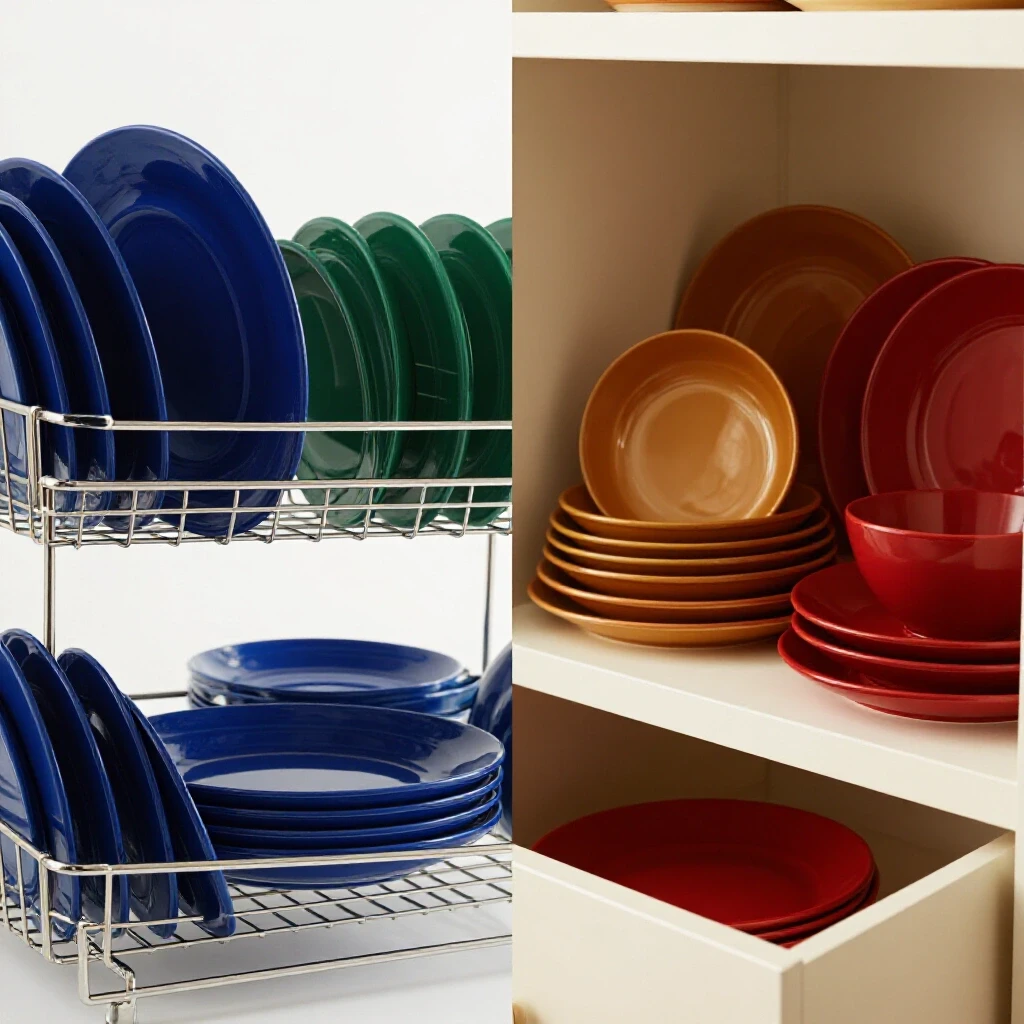
Choosing between visible access and enclosed protection comes down to your personal routine and your tolerance for maintenance. If you use the same set of 8 plates every day, a vertical rack offers unmatched efficiency and reduces the risk of chipping that occurs when unstacking items. However, if you have a large collection of dishes used infrequently, the protection of a cabinet is essential.
I recommend a hybrid approach for most high-end kitchens. Use a high-quality, solid-wood vertical rack for your daily dinner plates and bowls, located near the dishwasher or sink for easy loading. For your serving platters and fine china, stick with enclosed cabinetry featuring adjustable 3/4-inch plywood shelving. This strategy optimizes for both ease of care and long-term material preservation.
Frequently Asked Questions
Are open plate racks harder to clean than cabinets? Yes, from a frequency standpoint. Because the surfaces and the dishes themselves are exposed to the kitchen air, they will accumulate dust and aerosolized cooking oils. However, the cleaning is often easier to perform because there are no doors or deep corners to navigate.
What is the maximum weight a standard kitchen shelf can hold? Most standard 3/4-inch plywood shelves are rated for 15 to 20 lbs per square foot. A stack of 12 large stoneware plates can easily weigh 30 lbs, which can cause significant bowing if the shelf is wider than 24 inches without center support.
Does vertical storage damage the edges of plates? If the rack is made of a material harder than the plate’s glaze, it can cause “chatter marks.” This is why I recommend hardwood (like Maple) or silicone-coated metal racks, as they are softer than most ceramic glazes and provide a cushioning effect.
How do I prevent my wooden rack from warping? Ensure the wood is sealed on all six sides, including the ends of the slats. Use a moisture-resistant finish like a conversion varnish or a high-quality polyurethane. Also, avoid installing the rack directly above a high-heat source like a range or a toaster.
Which material is best for high-humidity climates? In humid environments, solid wood can move significantly. Marine-grade plywood or powder-coated stainless steel are better options. If you prefer wood, choose species with low movement ratings like White Oak or Teak.
Can I retrofit an existing cabinet with a vertical rack? Yes, many manufacturers offer “drop-in” inserts. When doing this, ensure the bottom shelf of the cabinet is reinforced, as the weight of the plates will be concentrated on the slat points rather than distributed across the shelf.
What is the ideal height for a wall-mounted dish rack? For ergonomic efficiency, the bottom of the rack should be about 15 to 18 inches above the countertop. This allows enough room for workspace underneath while keeping the plates at a comfortable “reach-zone” height for the average adult.
Are metal racks better than wood for durability? Stainless steel (304 grade) is technically more durable in terms of moisture resistance and load-bearing capacity. However, it can be noisier and may scratch the plates if the metal is not polished or coated. Wood offers a quieter, more “gentle” interface for the dishes.
(This article was written by one of our staff writers, Andrew Morrison. Visit our Meet the Team page to learn more about the author and their expertise.)