Best Pot and Pan Storage Ideas for Easy Kitchen Access (Guide)

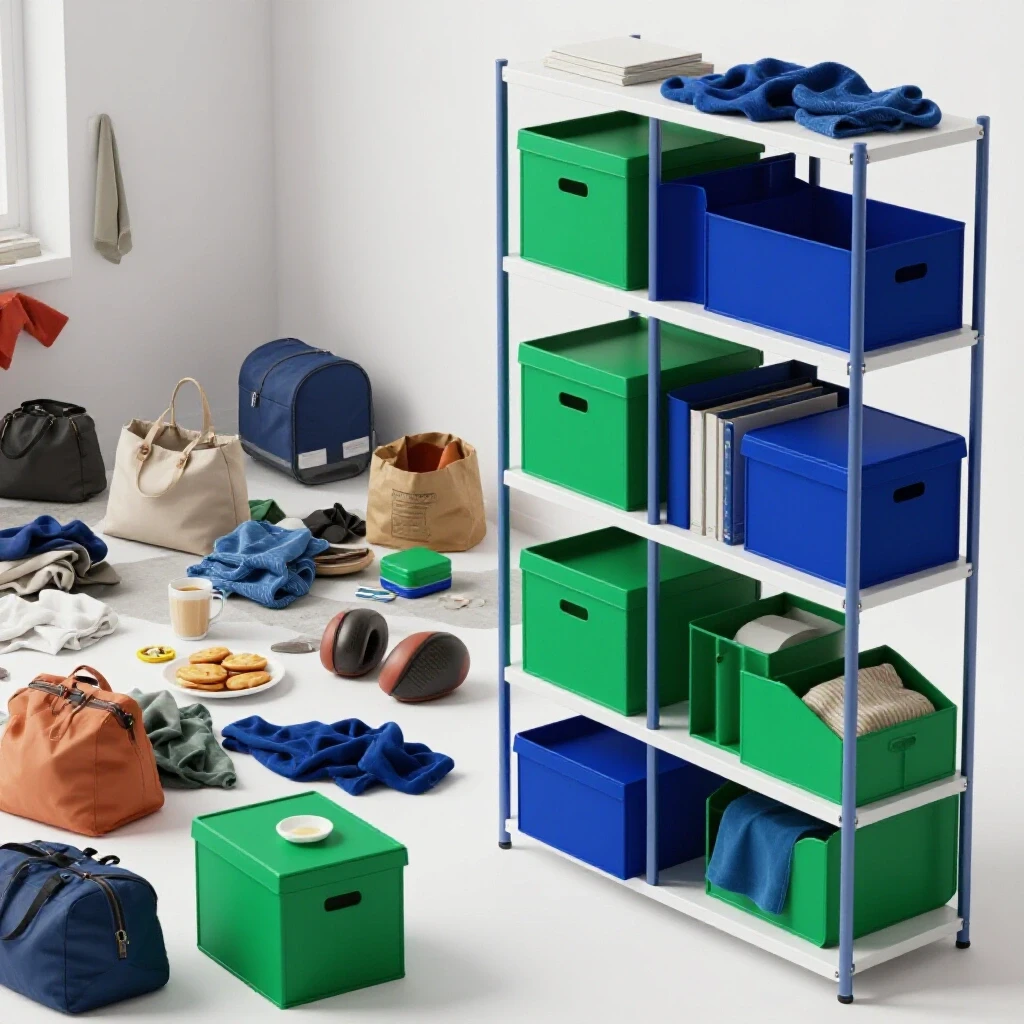
Have you ever reached for a single frying pan only to trigger a metal-on-metal landslide that echoes through your entire home? This moment of frustration is more than just a noisy inconvenience; it is a symptom of high-friction logistics in your kitchen. When our storage systems require us to move three items just to reach one, we experience a micro-stressor that contributes to mental fatigue.
In my eleven years managing supply chains and household operations, I have learned that the “avalanche” happens because we prioritize space-saving over accessibility. We stack, nest, and cram because we think we are being efficient. In reality, we are creating a system that is impossible to maintain during a busy Tuesday night dinner. My family and I spent years fighting with a deep corner cabinet until I applied the same flow-rate principles I used in warehouses to our cookware.
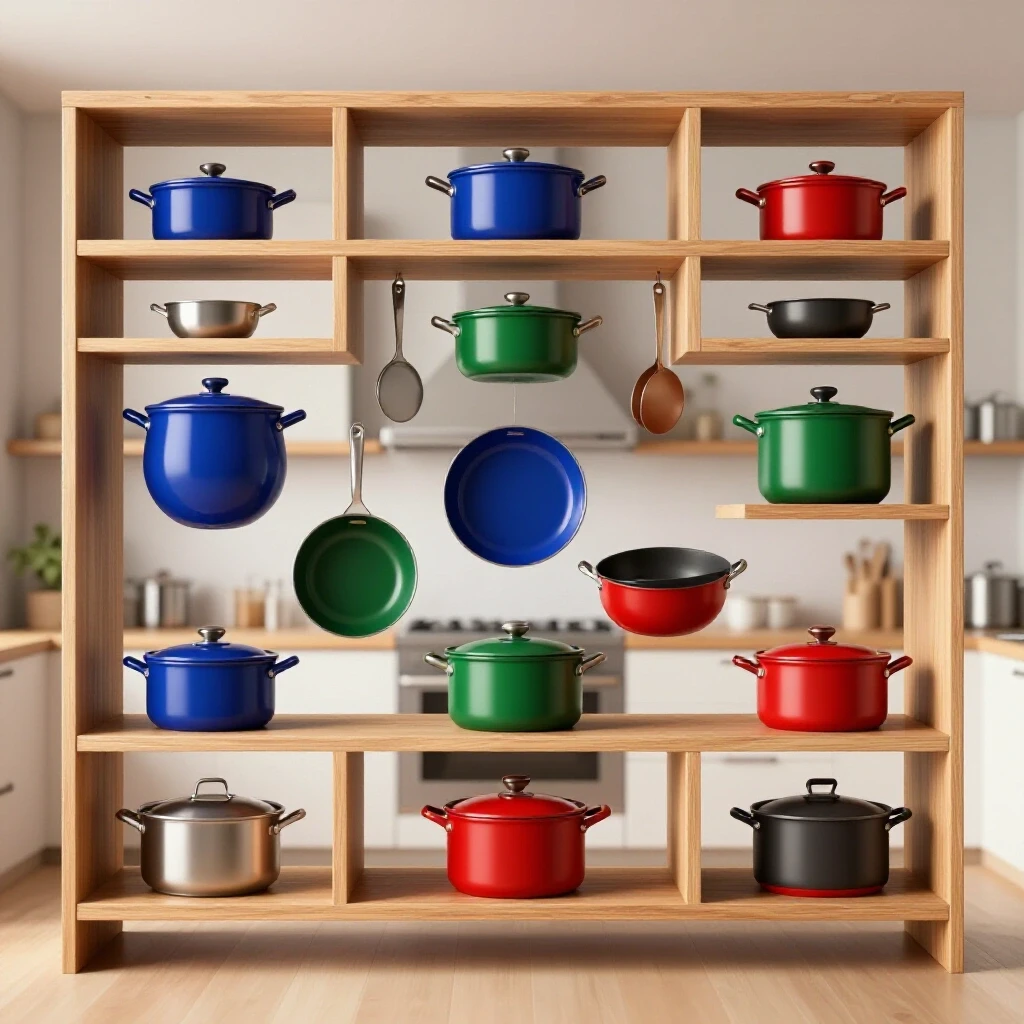
The goal of a functional kitchen is not to have a magazine-ready display. Instead, we want a system where the “retrieval step count” is as low as possible. By focusing on how easily we can grab a pot and, more importantly, how easily we can put it back, we can stop the cycle of constant reorganization.
The Spatial Psychology of Kitchen Retrieval Friction
Retrieval friction is the physical and mental resistance encountered when trying to access or store an object. In a kitchen setting, high friction occurs when items are buried under layers of other equipment, leading to a “clutter rebound” where the system collapses within days.
When we look at a cluttered cabinet, our brains perform a rapid series of calculations. We weigh the effort of digging out a heavy stockpot against the hunger we feel. This is known as the “cognitive load” of a space. Environmental psychology research suggests that visual chaos in high-use areas like the kitchen can increase cortisol levels. If your cookware is a jumbled mess, your brain perceives the act of cooking as a high-effort chore rather than a simple task.
In logistics, we measure the “pick rate”—how fast a worker can grab an item. Your kitchen should be designed for a high pick rate. If you have to move a stack of three heavy skillets to get to the one on the bottom, you have a friction score of four (three moves plus the final grab). To create a sustainable home, we aim for a friction score of one.
Understanding the Last-In, First-Out (LIFO) Bottleneck
A LIFO bottleneck occurs when items are stored in a way that only the most recently used object is easily accessible. This is the primary reason why nested stacks of pans fail to stay organized in active family homes.
When you nest your pots by size, you create a hierarchy that demands perfection. If the medium pot is dirty, the stack loses its structural integrity. If you are in a rush, you will likely shove the clean pot on top of the stack rather than putting it back in its “proper” nested place. This creates a disorganized pile in less than a week. By moving toward a system where every item has its own “parking spot,” we eliminate the LIFO bottleneck and allow for “Random Access Storage.”
Why Vertical Organization Outperforms Horizontal Stacking
Vertical organization involves storing items upright, similar to books on a shelf, rather than lying flat on top of one another. This method allows for independent access to every piece of cookware without disturbing the surrounding items.
In my own home, we transitioned from a “stacking model” to a “vertical divider model.” This single change reduced our cleanup time by an average of six minutes per meal. When a pan is stored vertically, you can see exactly what you have, and you can retrieve it with one hand. This is a fundamental principle of ergonomic reach: the less you have to move your body and other objects, the more sustainable the system becomes.
| Storage Method | Retrieval Step Count | Maintenance Effort | Visual Clarity |
|---|---|---|---|
| Nested Stacking | 3-5 steps | High | Low |
| Deep Bin Dumping | 4-6 steps | Very High | Very Low |
| Vertical Dividers | 1 step | Low | High |
| Individual Hooks | 1 step | Medium | High |
The Three-Second Rule for Kitchen Logistics
The three-second rule states that any frequently used item should be retrievable and restorable within three seconds. If it takes longer, the system is too complex for a busy household.
When I audited our kitchen, I found that our cast iron skillet took nearly ten seconds to retrieve because it was stored at the back of a lower cabinet behind a slow-cooker. By moving it to a vertical rack right next to the stove, we hit that three-second target. This reduces the “barrier to entry” for cooking and cleaning. If putting a pan away is as easy as dropping a book into a slot, your family is much more likely to do it.
Mapping Your High-Speed Zoning Strategy
Zoning is the process of dividing your kitchen into functional areas based on the frequency of use and the proximity to the point of action. A high-speed zone is the “Prime Real Estate” located between your waist and chest height.
Logistics professionals use “ABC Analysis” to categorize inventory. “A” items are used daily, “B” items weekly, and “C” items monthly or seasonally. Your cookware should follow this exact map. Your most-used sauté pan should be in the most accessible spot (Zone A), while that massive turkey roaster can live on a high shelf or in the back of a deep cabinet (Zone C).
Identifying Your Prime Real Estate
Prime Real Estate consists of the drawers and cabinets closest to the stove and oven. These areas should never be used for long-term storage of items you rarely touch.
- Zone A (Daily Use): 10-inch skillet, 3-quart saucepan, and their lids. These should be at arm’s reach.
- Zone B (Weekly Use): Large stockpot, griddle, and baking sheets. These can be in lower drawers or slightly further from the stove.
- Zone C (Occasional Use): Pasta strainers, specialty woks, or holiday platters. These can be stored in the “deep dark” corners of your cabinetry.
By mapping your kitchen this way, you reduce the physical distance you travel during meal prep. In a study on spatial ergonomics, researchers found that reducing travel distance in a workspace significantly lowers physical fatigue and improves task completion rates.
Selecting Low-Friction Hardware and Containers
Low-friction hardware refers to the tools and organizers that facilitate easy movement and access. For cookware, this often means choosing adjustable dividers or pull-out shelves over deep, dark bins.
When my family first started our decluttering journey, we bought expensive, beautiful bins that matched our kitchen decor. However, they were heavy and had lids that were difficult to snap on. We quickly realized that “pretty” does not mean “functional.” We replaced them with simple, adjustable wire racks that let the pans stand up on their own. The goal is to minimize the number of “touches” required to interact with your gear.
Comparing Pull-Out Drawers and Static Shelving
Pull-out drawers are generally superior to deep static shelves because they bring the inventory to you, eliminating the need to kneel and reach into dark spaces.
- Full-Extension Slides: These allow the drawer to come out entirely so you can see the items at the very back.
- Adjustable Peg Systems: These use a board with movable pegs to create custom-sized “parking spots” for different pot diameters.
- Lid Organizers: Separate lid storage is essential. Lids are the “chaos factor” in most cabinets; giving them their own narrow slot prevents them from rolling around.
If you are a renter or cannot renovate, tension rods or standalone wire racks can achieve the same vertical effect on a standard shelf. The key is to avoid the “dark hole” effect where items disappear into the back of the cabinet.
The Family-Friendly Labeling and Maintenance System
A family-friendly system is one that requires zero “expert knowledge” to use. If a guest or a child can’t figure out where a pan goes within five seconds, the system is too complex.
In our home, we use a “visual silhouette” approach for our most chaotic drawers. By using simple dividers, the shape of the space tells you exactly what belongs there. You don’t need a label that says “Frying Pan” if the slot is only big enough for a frying pan. This reduces the decision fatigue associated with putting things away. When the “outflow” (cleaning and storing) is as fast as the “inflow” (cooking), the home stays in a state of equilibrium.
Establishing the Daily Reset Habit
A daily reset is a five-minute routine where the kitchen is returned to its “base state” before the day ends. This is not a deep clean, but a logistical realignment.
- Clear the “Landing Zones”: Ensure no pots are sitting on the stovetop or in the sink.
- Check the Dividers: Make sure pans are upright in their assigned slots rather than leaned against each other.
- Audit the Flow: If you notice a certain pot is always left out, ask why. Is the storage spot too hard to reach? If so, move it.
We track our “reversion rate”—how quickly a cabinet returns to a mess. If a cabinet stays tidy for two weeks, the system is a success. If it fails in three days, we don’t blame the family; we blame the system and redesign the friction points.
Actionable Metrics for Your Cookware Inventory
To manage a home like a professional, you need to look at the data. Most families own far more cookware than they actually use, which artificially inflates the density of their storage and increases friction.
- Standard Item Density: Aim for 70% capacity in your cabinets. If a cabinet is 100% full, you cannot move items easily.
- The 80/20 Rule: You likely use 20% of your pots for 80% of your meals. Identify that 20% and give them the best storage spots.
- Sorting Time-Box: Give yourself exactly 20 minutes to audit your pans. If you haven’t used a pot in six months, move it to “secondary storage” (Zone C).
By treating your kitchen like a living laboratory, you can make small, measurable adjustments. My family found that by removing just two oversized pots we rarely used, we freed up enough space to make the daily-use pans 50% easier to grab. This is the difference between a home that feels like a burden and a home that supports your lifestyle.
Practical Next Steps for a Low-Stress Kitchen
Reducing household clutter is a journey of small logistical wins. You do not need a total kitchen remodel to see a massive improvement in your daily stress levels.
Start by choosing one cabinet—the one that frustrates you the most. Empty it completely and count how many items are inside. Ask yourself how many you actually used in the last month. Then, instead of stacking them back in, find a way to stand them up. Whether you use a $15 wire rack or a set of DIY tension rods, the shift from horizontal to vertical will change the way you interact with your kitchen.
Remember, the goal is not a “perfect” home. The goal is a home where the systems are so simple and low-friction that they practically maintain themselves. When you reduce the physical effort of daily tasks, you save your mental energy for the things that truly matter—like enjoying a meal with your family.
Frequently Asked Questions
What is the best way to store heavy cast iron pans? Heavy pans should be stored in Zone A, between waist and hip height, to prevent back strain. Vertical heavy-duty racks are ideal because they eliminate the need to lift multiple heavy items at once. Never store cast iron in high cabinets where a slip could cause injury.
How do I handle pot lids that always seem to get lost? Lids are best stored separately from the pots themselves. Use a narrow vertical organizer or a door-mounted rack. This prevents the “clutter avalanche” that happens when lids are stacked precariously on top of round pots.
Is it better to hang pans or put them in drawers? Hanging pans on a wall rack or pot rack is the ultimate low-friction solution because it offers a “friction score” of one. However, if you prefer a clean visual look, deep drawers with vertical dividers provide the same ease of access while keeping the items out of sight.
How many pots and pans does a family of four actually need? Most families can function efficiently with one large stockpot, two saucepans (small and medium), one large skillet, and one non-stick pan. Excess inventory is the leading cause of storage system failure. If you have more than this, evaluate if the extras are causing more stress than they are worth.
What should I do with oversized items like roasting pans? Oversized items are “Zone C” inventory. Since they are used infrequently (perhaps only on holidays), store them in less accessible areas like the top of the pantry or a cabinet above the refrigerator. This keeps your daily-use areas clear for high-speed access.
How can I stop my family from just “shoving” pans back into the cabinet? Family members usually “shove” when the designated spot is too hard to access. If the system allows for single-motion storage (dropping a pan into a vertical slot), the “shoving” behavior typically disappears. Make the right way the easiest way.
Are pull-out organizers worth the investment for old cabinets? Yes. Retrofitting old cabinets with pull-out wire baskets or wooden drawers significantly reduces retrieval friction. It transforms a “dark cave” into a functional storage unit, making it much easier to maintain order over the long term.
What is the “one-in, one-out” rule for cookware? To maintain a sustainable system, never add a new piece of cookware without removing an old one. This keeps your “item density” at a manageable level and prevents the slow creep of clutter that leads to system collapse.
How do I organize a deep corner cabinet (Lazy Susan)? Lazy Susans are best for round items. Avoid putting rectangular baking sheets there, as they can jam the mechanism. Use the rotating shelves for your round pots and pans, ensuring that handles are tucked in so they don’t catch on the cabinet walls.
How often should I audit my kitchen storage system? A quick logistical audit should happen every six months. Check for items that haven’t been used and assess if any part of the system is feeling “heavy” or difficult to use. Small, frequent adjustments are easier than one massive reorganization every few years.
(This article was written by one of our staff writers, Christopher Bennett. Visit our Meet the Team page to learn more about the author and their expertise.)