How to Repair a Water-Damaged Cabinet Base (Step-by-Step Guide)

True endurance in home maintenance is not about the visible projects like a fresh coat of paint or a new backsplash. It is found in the quiet, persistent work of maintaining the structural integrity of your home’s core systems. In my twelve years managing large-scale facilities and maintaining my own properties, I have learned that the most significant issues often hide behind closed doors. A slow drip from a sink trap or a failing dishwasher seal can saturate a cabinet floor for months before you notice a smell or a soft spot.
I recall a Saturday morning in my first home when I reached for a bottle of cleaner and felt the cabinet floor flex under my hand. What looked like a minor surface stain was actually a total failure of the particleboard core. My professional training told me that once the structural binders in manufactured wood dissolve, the material cannot be “saved” with a hair dryer or a fan. It requires a systematic removal and replacement. This guide focuses on the technical reality of restoring a compromised cabinet interior using code-compliant methods and durable materials.
Assessing the Structural Integrity of the Cabinet Interior
Evaluating the scope of damage involves determining if the moisture has affected only the floor panel or if it has migrated into the side gables and toe kick. This phase identifies whether the wood is salvageable through drying or if the material has lost its structural load-bearing capacity.
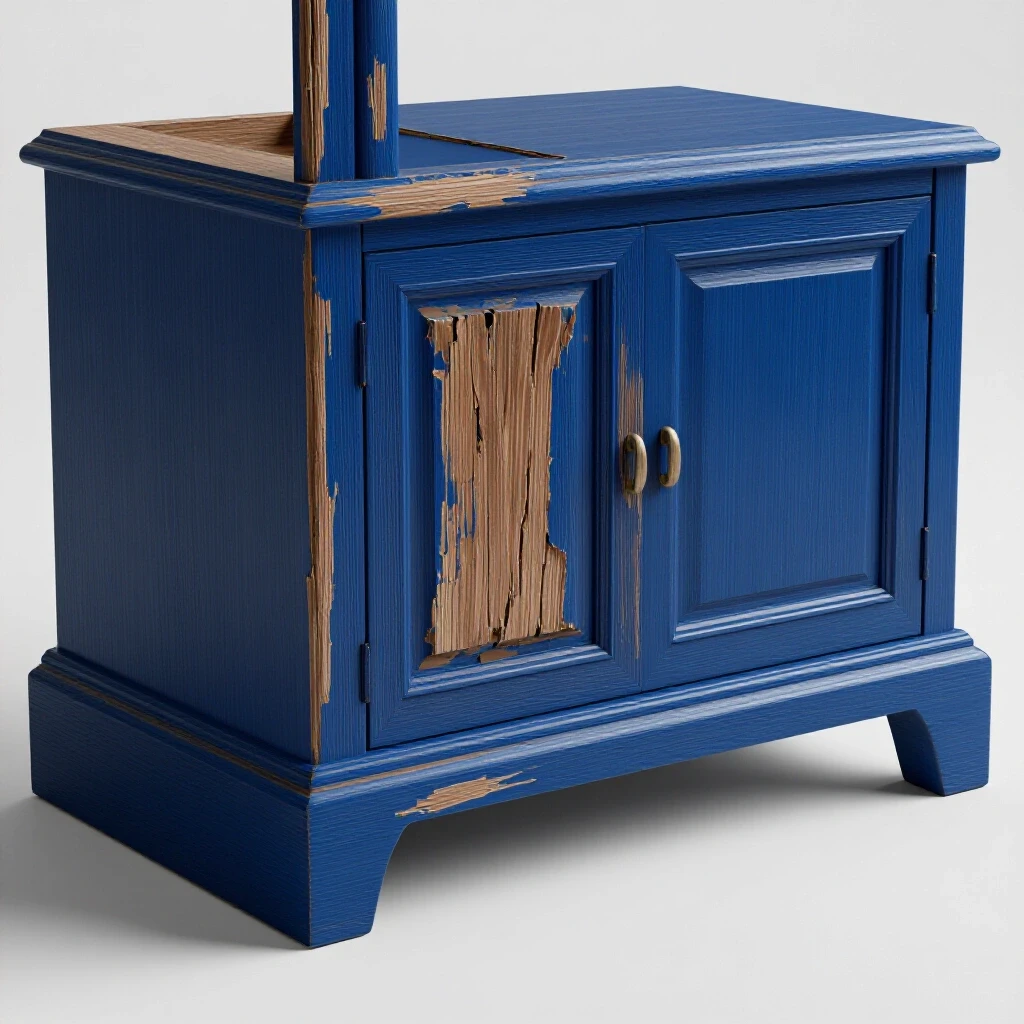
When you press on the wood, it should feel as firm as a tabletop. If your finger leaves an indentation or if the material flakes away like wet cardboard, the internal bonds have failed. In most modern kitchens, cabinets are made of Melamine-faced particleboard or plywood. Particleboard is particularly susceptible; it swells significantly when wet and does not shrink back to its original size after drying. You must also check the “toe kick,” which is the recessed area at the floor level. If the base of the cabinet is soft, the entire unit may be at risk of sagging.
Distinguishing Between Surface Staining and Core Failure
Core failure occurs when moisture penetrates the protective laminate layer and saturates the wood fibers, leading to permanent expansion and loss of screw-holding power. Surface staining is merely aesthetic and does not compromise the cabinet’s ability to support the weight of stored items.
To test this, I use a simple moisture meter or a small awl. If the awl sinks more than an eighth of an inch into the wood with minimal pressure, the core is compromised. Interestingly, many DIY home improvement enthusiasts mistake a dried, swollen board for a stable one. Even if the wood is currently dry, the “honeycomb” structure of the wood fibers has been broken. It will no longer support heavy pots or stacks of plates safely.
Essential Equipment for Substrate Restoration
A successful weekend DIY project relies on having the specific tools required to work in the cramped, dark environment of a base cabinet. You need tools that can make precise cuts in tight corners without damaging the surrounding plumbing or the exterior cabinet walls.
- Oscillating Multi-Tool: This is the most critical tool for this job. It allows for “plunge cuts” directly into the cabinet floor without needing a pilot hole.
- Cordless Drill and Impact Driver: Used for installing support cleats and securing the new floor panel.
- Jigsaw: Useful for cutting the replacement plywood to size outside of the cabinet.
- Pry Bar and Hammer: For removing the old, swollen material and any stubborn staples or nails.
- Shop Vacuum: Essential for immediate dust extraction, especially when cutting old particleboard.
- LED Work Light: High-visibility lighting is required to ensure you do not accidentally cut into a PVC drain line or PEX supply line.
- Personal Protective Equipment (PPE): N95 respirator, safety glasses, and heavy-duty gloves are non-negotiable.
Material Selection for Longevity
For the replacement floor, I recommend 1/2-inch or 3/4-inch ACX-grade plywood. The “A” side is smooth and paintable, while the “X” indicates exterior-rated glue, which resists future moisture better than standard interior boards. Avoid using particleboard for the repair, as it is likely to fail again if another leak occurs.
| Material Type | Pros | Cons | Best Use |
|---|---|---|---|
| MDF / Particleboard | Inexpensive, perfectly flat | Swells with moisture, low strength | Dry storage only |
| Plywood (ACX) | Water-resistant glue, high strength | More expensive, requires finishing | Sink bases, heavy storage |
| PVC Sheet | 100% waterproof, rot-proof | Difficult to paint, expensive | High-risk leak areas |
Preparation and Safety Protocols
Safe home repairs begin with isolating the work area and ensuring that no secondary damage occurs during the demolition phase. This involves clearing the workspace and protecting the finished flooring in front of the cabinets.
Before you start, turn off the water supply valves under the sink. Even if you aren’t working on the plumbing directly, you will be moving tools around these pipes. I once bumped a corroded shut-off valve with a pry bar, causing a spray that turned a simple repair into an emergency plumbing call. Cover your kitchen floor with a heavy drop cloth or “Ram Board” to prevent dropped tools or wood shards from scratching your hardwood or tile.
Understanding Local Building Codes
While replacing a cabinet floor is generally considered a cosmetic or minor structural repair, you must remain compliant with the Uniform Plumbing Code (UPC). Ensure that your repair does not bury or obstruct access to clean-outs or shut-off valves. If you find that the original builder cut a massive, jagged hole for the pipes, this is your chance to fix it. Use a hole saw for a clean, code-compliant look that allows for the installation of proper escutcheon plates (the decorative rings around pipes).
Execution: Removing the Damaged Section
The goal is to remove the failed material while leaving a “lip” or installing new supports for the replacement board to sit on. This requires a steady hand and a clear plan for where the cuts will be made.
Start by measuring two inches inward from the side walls of the cabinet. Use a straight edge and a pencil to mark a rectangular perimeter. By leaving a small strip of the original floor around the edges, you maintain the cabinet’s box integrity during the transition. Use your oscillating multi-tool to cut along these lines. Set the depth of the blade so it only penetrates the thickness of the floor board—usually 1/2 inch to 3/4 inch—to avoid hitting the floor joists or the subfloor underneath.
Troubleshooting Hidden Obstacles
As you pull up the old boards, you may find that the cabinet was installed directly over the subfloor, or there might be a “dead space” created by a toe kick frame. If you encounter mold or standing water, stop and dry the area completely with a fan for at least 24 hours. Building code and manufacturer specs for adhesives require the substrate to have a moisture content below 12% before you proceed with the new installation.
Installing Structural Cleats and Supports
Since you have removed the center of the floor, the new piece of plywood needs something to rest on. We call these “cleats.” They are essentially wooden shelf-brackets for your new floor.
- Measure and Cut Cleats: Use 1×2 pine or scrap plywood strips. Cut them to fit along the side walls and the back wall of the cabinet interior.
- Leveling: Use a small torpedo level to ensure the cleats are perfectly horizontal. If the floor is slanted, your stored items will constantly roll to one side.
- Mechanical Fastening: Apply a bead of construction adhesive to the back of the cleat. Secure it to the cabinet side-wall using 1-1/4 inch wood screws.
- Pre-drilling: Always pre-drill your holes. Cabinet gables are often made of dense material that will split if you drive a screw directly into the edge.
Why Dry-Fitting is Essential
Before applying any adhesive or final fasteners, cut your new plywood floor and “dry-fit” it into the space. It is rare for a cabinet to be perfectly square. I often find that the back of the cabinet is an eighth of an inch wider than the front. If the board doesn’t slide in easily, trim the edges with a block plane or sandpaper. Forcing a board into place can blow out the side seams of the cabinet carcass, leading to a much more expensive failure.
Final Installation and Moisture Proofing
Once the dry-fit is successful, it is time to secure the new floor and seal it against future leaks. This step transforms a rough repair into a professional-grade upgrade.
Apply a thin bead of construction adhesive to the top of the cleats you installed. Lay the new plywood floor onto the cleats. Secure it with 1-inch finish screws or brad nails every six inches. To make the surface easy to clean, I recommend applying two coats of a high-quality oil-based enamel or a specialized cabinet paint. These coatings provide a hard, non-porous surface that resists water better than standard latex wall paint.
Sealing the Perimeters
The final touch in safe home repairs is using 100% silicone caulk around the edges where the new floor meets the cabinet walls. This creates a “tub” effect. If a small leak occurs in the future, the water will be contained on the waterproofed surface rather than seeping down into the new cleats or the subfloor.
| Project Phase | Active Labor Time | Waiting/Curing Time | Difficulty (1-10) |
|---|---|---|---|
| Assessment & Demo | 2 Hours | N/A | 4 |
| Drying/Sanitizing | 30 Minutes | 12-24 Hours | 1 |
| Cleat Installation | 1.5 Hours | 1 Hour (Adhesive) | 5 |
| Floor Fitting | 1 Hour | N/A | 6 |
| Finishing/Sealing | 1.5 Hours | 24 Hours | 3 |
Project Planning and Cost Analysis
Completing this weekend DIY project yourself offers significant savings compared to replacing the entire cabinet vanity or kitchen island. A single base cabinet replacement can cost between $300 and $800, not including the labor to disconnect plumbing and pull up countertops.
Estimated DIY Material Costs: * 3/4″ ACX Plywood (2′ x 4′ project panel): $25 – $35 * Construction Adhesive: $8 * 100% Silicone Caulk: $10 * 1×2 Pine Cleats: $10 * Box of Wood Screws: $8 * Cabinet Paint/Primer: $25 * Total Estimated Cost: $86 – $96
In contrast, a professional might charge $400 to $600 for a structural repair of this nature, as it is labor-intensive and requires multiple trips to allow for drying and paint curing. By handling the labor yourself, you save approximately $300 to $500, which can be reinvested into higher-quality tools like a cordless oscillating multi-tool.
Troubleshooting Common Failure Points
Even with careful planning, you may encounter issues. One common problem is the “squeaky floor.” This happens if the new plywood is rubbing against the cabinet walls. To fix this, ensure there is a 1/16-inch gap around the perimeter, which will be filled with flexible silicone caulk later.
Another issue is hitting a hidden nail or screw during demolition. If your oscillating blade sparks, stop immediately. Inspect the area to ensure you haven’t hit an electrical wire. If it’s just a nail, switch to a bi-metal blade and continue. Always maintain a firm two-handed grip on power tools to prevent “walking” or jumping, which can mar the visible parts of your cabinetry.
Maintenance and Long-Term Prevention
After the repair is complete, the best way to protect your work is through proactive monitoring. I recommend installing a battery-operated water alarm under every sink. These devices cost about $15 and will emit a loud siren the moment they detect moisture.
Additionally, consider using a silicone under-sink mat. These are flexible, lipped trays that sit on top of your newly repaired floor. They can hold up to a gallon of water, giving you plenty of time to catch a leak before it ever touches your new wood. Regularly check the torque on your plumbing slip-joints, as vibrations from garbage disposals can loosen them over time.
Conclusion and Next Steps
Restoring a moisture-damaged cabinet base is a high-value project that protects the structural integrity of your kitchen or bathroom. It requires patience and precision rather than brute force. By following a systematic approach—assessing the core, using the right tools, and installing reinforced cleats—you ensure the repair will last as long as the house itself.
Your next step is to perform a thorough inspection of all sink bases in your home. Take a flashlight and an awl, and check the corners for any signs of swelling. If you find damage, start by measuring the interior dimensions and purchasing your plywood. Tackling this now, while it is a “weekend project,” prevents it from becoming a “total kitchen remodel” later.
Frequently Asked Questions
Can I just put a new piece of wood over the old, rotted one?
No. This is a common mistake that leads to structural failure. The rotted wood underneath acts like a wet sponge, trapped between the new board and the subfloor. This promotes further decay and may cause the new board to warp or sag. You must remove the compromised material to ensure a stable, dry foundation for the repair.
Is plywood better than solid wood for a cabinet floor?
Yes. Plywood is more dimensionally stable than solid wood. Solid wood expands and contracts significantly with changes in humidity, which can cause it to crack or pull away from the cabinet walls. Plywood’s cross-grain construction makes it much stronger and more resistant to warping in the damp environment under a sink.
How do I cut around the pipes without making a mess?
The best method is to measure the location of the pipes and transfer those measurements to your new plywood. Use a hole saw that is 1/2 inch larger than the pipe diameter to allow for some movement. Then, cut a straight line from the back of the board to the hole. This “split” allows you to slide the board around the pipes easily.
What kind of caulk should I use for the edges?
Always use 100% silicone caulk for plumbing-adjacent areas. Unlike acrylic or “latex with silicone” caulks, 100% silicone remains flexible forever and is completely waterproof. It will not shrink or crack when the cabinet shifts slightly under the weight of your stored items.
Do I need to remove the countertop to fix the cabinet floor?
In 95% of cases, no. As long as the side walls (gables) of the cabinet are still structurally sound, you can replace the floor from the inside. The countertop is supported by the vertical walls, not the floor panel itself. If the side walls are also rotted, you should consult a professional, as the countertop’s weight could cause a collapse.
How long should I let the area dry before installing new wood?
If the area was saturated, I recommend a minimum of 24 hours with an active fan blowing into the cabinet. Use a moisture meter if possible; the wood should read below 12% moisture content. Installing new wood over wet supports will trap moisture and lead to premature failure of your new materials.
Can I use a circular saw for the cuts?
I do not recommend using a circular saw inside a cabinet. The circular blade is too large to get close to the corners, and the “kickback” risk is very high in such a confined space. An oscillating multi-tool or a small reciprocating saw is much safer and more precise for this specific task.
What should I do if the toe kick is also rotted?
If the toe kick (the very bottom frame) is rotted, you will need to install 2×4 blocking underneath your new cleats to transfer the weight directly to the subfloor. This ensures that the weight of the cabinet’s contents isn’t relying on a crumbling base. Secure these blocks with construction adhesive and deck screws.
(This article was written by one of our staff writers, Robert Callahan. Visit our Meet the Team page to learn more about the author and their expertise.)