How to Replace a Bathroom Vanity Top: Step-by-Step Guide (DIY Tips)

The most visible part of a bathroom renovation is often the one that requires the most invisible preparation. We often assume that because a vanity cabinet looks square, the new surface will simply drop into place. However, the paradox of this specific DIY home improvement is that the more “standard” a replacement top seems, the more likely you are to encounter hidden structural or dimensional hurdles.
In my twelve years of managing facilities and upgrading my own homes, I have learned that the success of a weekend DIY project is rarely determined by the final bead of caulk. Instead, it is decided during the first ten minutes of measuring. I once spent an entire Saturday afternoon wrestling with a beautiful quartz top that was exactly one-half inch too wide because I failed to account for the “reveal” on the side of the cabinet near a door frame. This guide is designed to help you avoid those frustrations by focusing on the technical precision required for a safe and functional upgrade.
Establishing the Foundation for a Surface Swap
Preparation involves assessing the existing cabinet’s structural integrity and the wall’s alignment to ensure the new material rests level and secure. This phase dictates whether your installation will last for decades or fail due to stress fractures or water leaks.
Before you purchase a new top, you must evaluate the “bones” of your bathroom. A heavy stone or quartz surface can weigh between 15 and 20 pounds per square foot. If your existing cabinet is made of thin particle board that has seen better days, the added weight could cause the box to rack or the doors to misalign. I always check the corner blocks of the cabinet; if they are loose or water-damaged, they must be reinforced with wood screws and glue before proceeding.
Measuring for Dimensional Accuracy
Measuring for a new surface requires recording the width and depth of the cabinet box, then adding the desired overhang, typically 1/2 to 1 inch on exposed sides. You must also measure the “on-center” position of the sink and faucet holes to ensure they align with your existing drain and supply lines.
When I plan these weekend DIY projects, I use a “three-point check” for every measurement. Measure the width at the back, the middle, and the front of the cabinet. Walls are rarely perfectly straight. If your bathroom wall has a significant bow, you may need a top that is slightly deeper to allow for scribing, or you might need to plan for a thicker backsplash to hide the gap.
Navigating Building Code and Safety
Building code compliance ensures that your DIY home improvement is not just aesthetic but also safe and legal according to standards like the Uniform Plumbing Code (UPC). These regulations govern how fixtures are set and how much clearance is required for safe usage.
According to UPC Section 402.5, all fixtures must be set level and in proper alignment with adjacent walls. For a bathroom surface, this means ensuring the top is perfectly horizontal so water doesn’t pool in corners, which can lead to mold growth behind the cabinet. Additionally, you should maintain a minimum of 15 inches from the center of the sink to the nearest side wall to ensure adequate elbow room.
Essential Tool Inventory and Material Selection
A successful installation relies on having the right diagnostic and application tools ready before the water is ever turned off. Using the wrong tool, like a standard hammer instead of a rubber mallet, can easily crack a ceramic or stone surface.
| Tool Category | Essential Item | Purpose |
|---|---|---|
| Diagnostic | 4-foot Level | To ensure the cabinet and new top are perfectly horizontal. |
| Diagnostic | Digital Caliper | For measuring pipe diameters and hole clearances. |
| Removal | Oscillating Multi-Tool | To cut through old caulk and adhesive without damaging walls. |
| Installation | 100% Silicone Sealant | To create a waterproof bond and flexible joint. |
| Installation | Caulking Gun | To apply a consistent, professional-grade bead of adhesive. |
| Safety | N95 Respirator | To protect against silica dust if any sanding or cutting occurs. |
Understanding Material Compatibility
Selecting a material involves balancing the weight of the slab with the load-bearing capacity of your cabinet and the moisture levels of the bathroom. Each material has different requirements for sealing and maintenance.
- Quartz: Engineered stone that is non-porous and highly durable; does not require sealing but is extremely heavy.
- Granite: Natural stone that offers unique patterns; requires annual sealing to prevent staining from toiletries.
- Solid Surface: A synthetic acrylic that is easy to repair and can be sanded if scratched; lighter than stone.
- Cultured Marble: A budget-friendly resin-based material that often comes with an integrated sink, simplifying the installation.
Executing the Installation Phase
The core of the project involves removing the old surface, preparing the substrate, and securing the new top with professional-grade adhesives. This phase requires patience and a “dry-run” mentality to prevent permanent mistakes.
Removing the Existing Top Safely
Removal begins by disconnecting the plumbing and using a utility knife or multi-tool to slice through the sealant holding the old top to the cabinet and the wall. You must be careful not to pry against the drywall, as this can cause structural damage that requires expensive repairs.
In my experience, the hardest part of removal is often the hidden screws. Some older vanities have screws driven upward through the corner blocks into the underside of the countertop. If you try to pry the top off without removing these, you will rip the top rail of your cabinet off. Always use a flashlight to inspect the underside of the top before applying any force.
The Critical Dry-Fit Procedure
A dry-fit is the process of placing the new surface onto the cabinet without any adhesive to check for level, plumbing alignment, and wall gaps. This is the most important step for ensuring a code-compliant and visually appealing result.
- Check for Level: Place your level across the top from left to right and front to back. If there is a slope, use plastic shims between the cabinet and the top to level it.
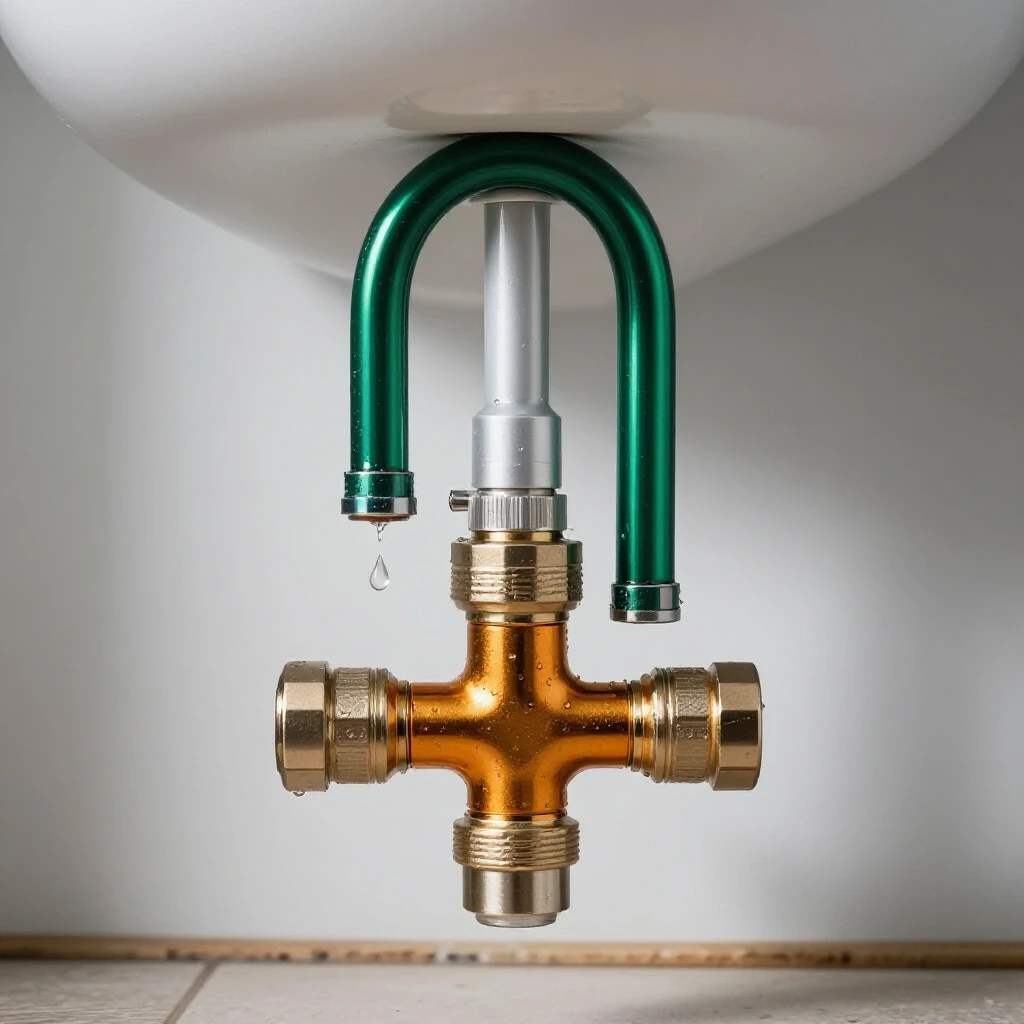
- Plumbing Alignment: Ensure the sink tailpiece lines up directly over the P-trap. If it is off by more than an inch, you may need an offset adapter.
- Wall Gaps: If the wall is crooked, you will see a gap. If the gap is larger than 1/8 inch, you cannot fill it with caulk alone; you may need to scribe the back of the top or use a backsplash.
Securing the Surface and Sealing
Once the dry-fit is successful, you apply construction adhesive to the top of the cabinet and lower the surface into place. The final step is applying a waterproof seal to prevent moisture from reaching the cabinet interior.
I recommend using a “nickel-sized” dollop of silicone on each corner block rather than a continuous bead. This allows the material to expand and contract slightly with temperature changes. For the backsplash, use a 100% silicone sealant. Unlike latex caulk, silicone remains flexible and is much more resistant to the mold and mildew common in high-moisture bathroom environments.
Troubleshooting Common Installation Hurdles
Even with careful planning, you may encounter issues like unlevel cabinets or plumbing that doesn’t quite reach the new sink’s depth. Addressing these problems correctly prevents long-term water damage.
If you find that your cabinet is significantly out of level, do not rely on the adhesive to fill the gap. Use composite shims, which do not rot or compress over time. Slide the shim in until the level reads true, then score and snap the shim so it is flush with the cabinet frame.
Another common issue is the “trap arm” height. If your new sink is deeper than the old one, the drain hole might be lower than the pipe entering the wall. Building code (UPC 1001.2) prohibits a “S-trap” configuration where the drain goes down then back up. If the sink is too low, you may need to consult a professional to lower the wall drain, as this involves opening the wall and rerouting the vent.
Project Timeline and Effort Estimates
Estimating the time required for safe home repairs allows you to manage your weekend effectively without rushing through critical safety checks.
| Phase | Active Labor Time | Curing/Waiting Time | Difficulty (1-10) |
|---|---|---|---|
| Preparation & Measuring | 1.5 Hours | N/A | 4 |
| Removal of Old Top | 1 Hour | N/A | 5 |
| Dry-Fitting & Shimming | 1.5 Hours | N/A | 7 |
| Final Bonding & Sealing | 1 Hour | 24 Hours (Cure) | 3 |
| Plumbing Reconnection | 1 Hour | N/A | 6 |
Total Weekend Commitment: Approximately 6-8 hours of active work spread over two days to allow for adhesive curing.
Final Testing and Maintenance
After the silicone has cured for at least 24 hours, you must test the system for leaks and ensure the surface is properly protected. This is the quality control phase of your DIY home improvement.
Fill the sink to the overflow drain and let it sit for a few minutes. Check the underside of the sink for “weeping” around the drain flange. Then, release the water all at once. This puts maximum pressure on the P-trap and the wall connection. If you see any moisture, tighten the slip nuts by hand—over-tightening with a wrench can crack the plastic threads.
For maintenance, avoid abrasive cleaners on natural stone. I suggest using a pH-neutral cleaner. If you installed a granite top, perform the “water drop test” every six months: place a few drops of water on the surface; if they soak in within a minute, it is time to re-apply a sealer.
Summary of Best Practices
Completing this upgrade provides a significant boost to your home’s value and functionality. By following a structured approach, you ensure the project is safe and professional in appearance.
- Always dry-fit before applying adhesive to avoid permanent alignment errors.
- Verify cabinet level in two directions to prevent water from pooling or draining poorly.
- Use 100% silicone for all wet-area joints to ensure long-term flexibility and mold resistance.
- Check local codes regarding drain heights and clearances to ensure your work is compliant.
- Protect your back by enlisting a partner to help lift heavy stone or quartz slabs.
Frequently Asked Questions
Can I install a new top over an existing one to save time? No. This is not a recommended practice for bathroom environments. Installing a new surface over an old one creates a “sandwich” where moisture can become trapped, leading to mold growth and structural rot. It also raises the height of the sink, which may violate ADA or local comfort standards and puts excessive weight on the cabinet.
What should I do if my new stone top has a small chip? For minor chips in quartz or granite, you can use a clear epoxy repair kit. Clean the area with isopropyl alcohol, fill the chip with the resin, and let it cure. Once hardened, you can carefully scrape the excess flush with a razor blade. However, if the chip is on a structural edge or near a sink cutout, consult a stone specialist.
Why is my silicone caulk peeling off after only a few months? Peeling usually occurs because the surface wasn’t properly cleaned or because latex caulk was used instead of silicone. Before sealing, wipe the joint with denatured alcohol to remove all oils and dust. Ensure the area is completely dry before application, and do not use the sink for at least 24 hours to allow the bond to fully set.
How do I know if I need a new P-trap? If you are changing the sink style (e.g., moving from a drop-in to an undermount), the distance from the drain to the wall will likely change. If the old P-trap is made of thin, corroded metal or shows signs of mineral buildup, it is best to replace it with a modern PVC trap. PVC is easier to adjust and less prone to leaking at the joints.
Can I cut a stone vanity top myself to fit a smaller space? Cutting stone requires a circular saw with a diamond blade and a continuous water feed to manage heat and silica dust. Because of the high risk of cracking the slab and the health hazards of silica dust, I recommend having the supplier cut the material to your exact specifications. If you must cut, always wear a P100 respirator and work outdoors.
Is it necessary to screw the countertop into the cabinet? In most cases, no. Modern construction adhesive or silicone provides a strong enough bond to hold the top in place. Using screws can actually be dangerous; if the cabinet or house shifts, the rigid screws can cause the stone or ceramic top to crack. The weight of the top combined with the adhesive is sufficient for a secure fit.
What is the best way to handle a backsplash that doesn’t reach the wall? If your wall is significantly bowed, you may have a gap behind the backsplash. Do not try to fill a gap larger than 1/4 inch with caulk alone. Instead, you can use a “backer rod”—a foam strip—pushed into the gap, then apply the silicone over it. For very large gaps, you may need to add a thin piece of decorative molding or “scribe” the wall side of the backsplash.
Does a new vanity top require a permit? In most jurisdictions, simply swapping a countertop and reconnecting the existing plumbing does not require a permit. However, if you are moving the location of the sink or modifying the internal wall plumbing, a permit and inspection are usually required to ensure the venting and drainage meet current safety codes.
What are the signs that my cabinet cannot support a new stone top? Look for “racking,” where the cabinet leans to one side, or visible sagging in the bottom shelf. If the side panels are made of 1/2-inch particle board and show signs of swelling from previous water leaks, they may collapse under the 100+ pound weight of a new quartz or granite slab. In these cases, the cabinet must be replaced or significantly reinforced.
How do I choose between an undermount and a drop-in sink? Undermount sinks offer a cleaner look and make it easier to wipe water from the counter into the bowl, but they require a countertop material that is waterproof throughout (like stone or solid surface). Drop-in sinks are easier to install and can be used with any material, including laminate, because the sink rim protects the cut edge of the countertop from water.
What is the “reveal” and why does it matter? The reveal is the portion of the cabinet frame that remains visible under the countertop overhang. A consistent reveal makes the project look professional. If your top is misaligned, the reveal will be wider on one side than the other, which is a common sign of an amateur installation. Always check your reveal during the dry-fit phase.
(This article was written by one of our staff writers, Robert Callahan. Visit our Meet the Team page to learn more about the author and their expertise.)