How to Do a Seasonal Clothing Purge for More Organized Closets (Guide)

Incorporating lifestyle needs into a home management system is the only way to ensure that organization sticks. For over 11 years, I have applied my background in operations and logistics to the challenges of a busy family home. I have learned that the most beautiful storage systems often fail because they do not account for the reality of human behavior. When we transition our wardrobes for a new time of year, we are not just moving fabric; we are managing a complex supply chain within our own four walls.
My journey into sustainable decluttering began when I realized our home was reverting to chaos every few weeks. We would spend an entire Saturday sorting through coats and boots, only to have the hallway look like a disaster zone by Tuesday. This was a failure of logistics, not a lack of effort. By treating our home like a high-functioning warehouse, I discovered how to reduce the mental fatigue that comes with constant tidying.
The Logistics of Rotating Wardrobes
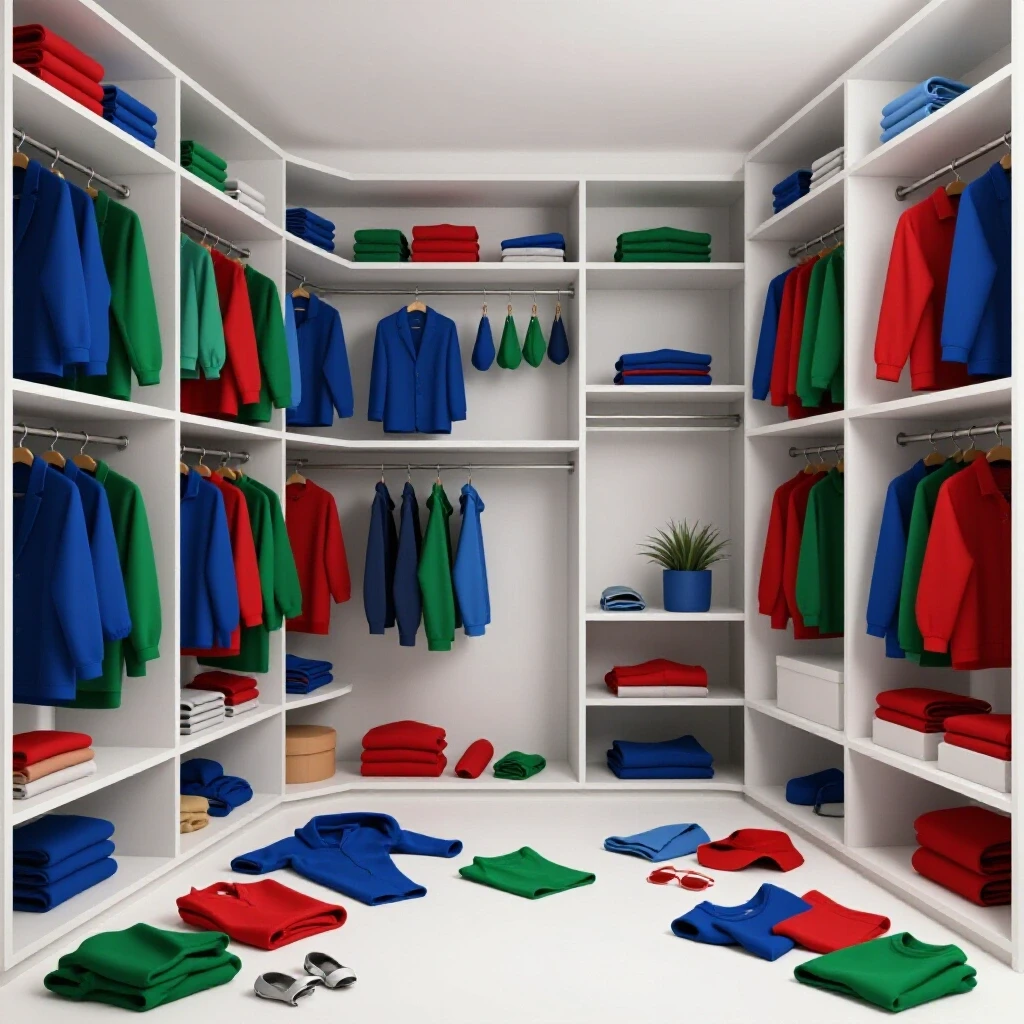
The logistics of rotating wardrobes involves managing the flow of items between active living areas and long-term storage zones to maximize daily efficiency.
When we look at our homes through a logistical lens, we see that every item has a “carrying cost.” This is the time and energy required to store, clean, and find that item. During a seasonal transition, the goal is to lower these costs. If it takes more than three steps to put a winter sweater away, that sweater will likely end up on the “closet chair” instead.
Environmental psychology research suggests that visual clutter competes for our attention. This leads to increased cognitive load and stress. By removing out-of-season items from our primary sightlines, we give our brains a much-needed break. In my own home, we found that reducing the volume of active clothing by just 30% led to a 50% decrease in the time spent getting ready each morning.
Understanding Retrieval Friction
Retrieval friction is the measurable physical and mental resistance encountered when trying to access or put away an item.
High friction occurs when a bin is buried under three other boxes or when a lid is difficult to snap shut. In logistics, we aim for “one-touch” systems. This means you should be able to interact with an item in a single movement. If your summer clothes are in a bin that requires a ladder to reach, you are less likely to put them away properly when the heat fades.
- Low Friction: Open-top bins, hooks at eye level, and clear containers.
- High Friction: Lidded bins stacked deep, high shelves, and vacuum-sealed bags hidden in crawl spaces.
A Data-Driven Framework for Sorting
A sorting framework is a structured method used to categorize items based on their utility and frequency of use during a transition period.
During our family’s organization sprints, I noticed we often got stuck making decisions. Decision fatigue is real, and it slows down the sorting process significantly. To combat this, we use a “Sorting Log” to track our progress and keep us moving. We aim for a sorting speed of roughly 40 items per 15 minutes. This keeps the energy high and prevents us from over-analyzing a single pair of shorts.
| Category | Action | Storage Location |
|---|---|---|
| Daily Use | Keep | Prime Real Estate (Closet at eye level) |
| Occasional | Store | Secondary Zone (Top shelves) |
| Off-Season | Rotate | Long-Term Zone (Basement or Attic) |
| Damaged | Repair/Discard | Utility Room |
| Outgrown | Donate | Exit Zone (Near the front door) |
Establishing Spatial Capacity Limits
Spatial capacity limits are the physical boundaries of a storage area that dictate the maximum number of items that can be stored without losing functionality.
Every closet has a “red line.” Once you cross that line, the system breaks. In my professional work, we call this the utilization rate. For a home to feel calm, closets should be at about 70% to 80% capacity. This extra space allows for air circulation and makes it easier to slide hangers across the rod. When we forced our winter coats into a closet that was 100% full, we found that we stopped hanging them up entirely because it was too difficult to squeeze them in.
High-Speed Zoning Maps for the Home
Zoning maps are visual or conceptual guides that divide a home into specific areas based on the activity level and frequency of item retrieval.
To keep household clutter under control, you must define where things live based on how often you touch them. We use a three-zone system that mimics industrial warehouse layouts. This reduces the number of steps we take during our daily routines.
- Zone 1 (The Hot Zone): Items used every day. These must be reachable within 3 seconds.
- Zone 2 (The Cold Zone): Items used once a week or month. These can be on higher shelves.
- Zone 3 (Deep Storage): Items used once a year. These are stored in less accessible areas.
Designing an Effective Exit Zone
An exit zone is a designated transition area near the home’s entrance used to manage items leaving the house, such as donations or returns.
One of our biggest bottlenecks was the “donation pile” that lived in the corner of the bedroom for months. By creating a permanent exit zone in the garage, we reduced the visual stress in our living spaces. We now use a standard 18-gallon bin for donations. Once it is full, it goes straight into the car. This simple flow ensures that the “outflow” of items matches the “inflow” of new purchases.
Selecting Low-Maintenance Storage Gear
Low-maintenance storage gear refers to durable, functional containers and shelving units that require minimal effort to use and maintain over time.
In my 11 years of managing home systems, I have seen many families buy expensive, matching bins that actually make their lives harder. If a bin has a complex latch, a child will not use it. If a box is opaque and unlabelled, you will forget what is inside. We prioritize “visual transparency” to reduce the mental effort of searching.
- Clear Polypropylene Bins: These allow you to see contents at a glance, reducing search time by up to 40%.
- Industrial Wire Shelving: These units are adjustable and do not collect dust as quickly as solid wood shelves.
- Heavy-Duty Labels: Use a large, bold font. If you have to squint to read it, the label is useless.
The Storage Friction Index
The Storage Friction Index is a scale used to evaluate how much effort a specific container or system requires for the user to maintain order.
| Bin Type | Friction Score (1-10) | Best Use Case |
|---|---|---|
| Open Basket | 1 | Socks, daily accessories |
| Clear Bin (No Lid) | 2 | Frequently rotated shoes |
| Clear Bin (With Lid) | 4 | Seasonal sweaters, out-of-season gear |
| Opaque Bin | 7 | Sentimental items (rarely accessed) |
| Vacuum Bag | 9 | Bulky bedding (requires tool to access) |
Family Behavior Alignment and Systems
Family behavior alignment is the process of tailoring organization systems to the natural habits and physical abilities of all household members.
A system is only as good as the person who uses it least. In our house, that meant designing for my kids. I realized that my children were not “messy”; they just couldn’t reach the hangers. We swapped closet rods for low-level bins, and suddenly, the floor was clear. This is what we call “ergonomic storage.” By placing items at the user’s natural height, you remove the barrier to being tidy.
- Toddlers (Ages 2-5): Floor-level bins with no lids.
- School-Age (Ages 6-12): Labeled drawers and low hooks.
- Adults: Eye-level shelving and structured closet systems.
Building Systematic Habit Loops
Habit loops are three-part cycles consisting of a trigger, an action, and a reward that automate the maintenance of an organized space.
We use a “Sunday Reset” to maintain our wardrobe systems. This is not a deep clean; it is a logistical check-up. We spend 15 minutes ensuring that items are in their correct zones. This small investment of time prevents the “clutter creep” that happens when items are left in the wrong places. According to organizational behavior studies, consistent, short bursts of maintenance are more effective than infrequent, marathon cleaning sessions.
Lessons from the Family Logistics Sprint
During our last major wardrobe transition, we tracked our metrics to see where we were losing time. We found that “searching for matching sets” was our biggest time-waster. We implemented a “bundle” system where seasonal sets are stored together in a single container.
For example, all beach gear—towels, swimsuits, and sun hats—goes into one large, labeled bin. When summer arrives, we swap that bin with the winter gear bin. This “modular” approach reduced our total transition time from six hours down to two. We also found that using a digital inventory (a simple list on a phone) helped us avoid buying duplicate items we already owned but had forgotten.
Daily Maintenance Timelines by Family Size
The time required to maintain a functional home storage system scales with the number of people living in the space.
| Family Size | Daily Maintenance (Minutes) | Weekly Reset (Minutes) |
|---|---|---|
| 2 People | 5-10 | 20 |
| 4 People | 15-20 | 45 |
| 6+ People | 30+ | 90 |
Sustainable Decluttering for Long-Term Success
Sustainable decluttering is the practice of maintaining a balanced ratio of items in the home through consistent inflow and outflow management.
The goal is not to reach a state of “perfection” but to reach a state of “flow.” In logistics, if a warehouse only receives items but never ships them, it eventually becomes a dead zone. Your home is the same. For every new seasonal item that comes in, one should go out. This “one-in, one-out” rule is a simple metric that keeps household clutter from reaching overwhelming levels.
By focusing on functional home storage rather than just aesthetics, we create a space that supports our lives instead of draining our energy. We have found that when our clothing systems are simple, our stress levels drop. We no longer fight with our closets every morning, and that peace of mind is worth more than any perfectly styled shelf.
- Next Steps:
- Perform a “friction audit” of your current closet.
- Identify one zone that always reverts to clutter.
- Replace high-friction containers with open or clear bins.
- Schedule a 15-minute “reset” this weekend.
Frequently Asked Questions
How do I know if a storage system is too complex for my family?
If you find yourself constantly “fixing” a room after other family members use it, the system is too complex. A successful system should be intuitive. If a five-year-old cannot figure out where their pajamas go without being told, you need to simplify. High-friction elements like tight-fitting lids, hidden labels, or stacked boxes are common signs of a failing system.
Why does my home get cluttered again just days after I organize it?
This usually happens because the system relies on “perfect” behavior rather than natural habits. In logistics, we look for the “path of least resistance.” If your storage is too far from where the items are actually used, people will drop things on the nearest flat surface. You must move the storage to the point of use to reduce the effort of putting things away.
What is the best way to store out-of-season clothing in a small home?
Use “dead space” effectively by employing under-bed storage or high-set shelving. However, the key is to use clear, labeled containers. In small spaces, visual weight matters. Opaque bins can make a room feel smaller and more cramped. Clear bins help you maintain a sense of space while keeping your inventory visible so you don’t overbuy.
How often should I rotate my wardrobe to prevent clutter buildup?
Most families find success with a twice-yearly rotation: once for spring/summer and once for fall/winter. However, if you live in a climate with four distinct seasons, a quarterly check-in might be better. The goal is to keep only what you are currently wearing in your “Hot Zone” to minimize the time you spend digging through irrelevant items.
Should I use vacuum-sealed bags for seasonal storage?
Vacuum bags are excellent for saving space, but they have high retrieval friction. They are best used for “deep storage” items like extra guest bedding or heavy winter parkas that you only touch once a year. For items you might need occasionally, like a light jacket during a cold snap, clear bins are a better choice because they allow for faster access.
How can I get my spouse or partner to follow the new system?
Focus on reducing the effort for them. If they tend to drop their keys on the counter, put a small bowl exactly where they drop them. Don’t try to change their behavior; change the environment to catch the behavior. When they see that the new system makes their life easier (e.g., they can find their favorite shirt in 5 seconds), they are more likely to buy in.
What are the most durable bins for long-term seasonal storage?
Look for polypropylene bins with reinforced corners. These are less likely to crack under the weight of being stacked. Avoid cheap, brittle plastics that shatter in cold temperatures if you are storing items in a garage or attic. Industrial-grade “totes” are often a better investment for long-term durability in non-climate-controlled areas.
How do I manage clothing that my children have outgrown?
Create a “Growth Bin” in each child’s closet. When an item becomes too small, it goes immediately into the bin. Once the bin is full, you can decide to save it for a younger sibling or donate it. This prevents outgrown clothes from taking up valuable space in the active wardrobe and makes the seasonal transition much faster.
Is it better to hang or fold seasonal items in storage?
This depends on the fabric and your available space. Heavy sweaters should always be folded to prevent stretching. Coats and delicate items are better off hung in garment bags. From a logistical standpoint, folding and binning is usually more space-efficient and easier to transport to a secondary storage zone like a basement or attic.
How do I start when the clutter feels completely overwhelming?
Start with a “Zoning Audit.” Don’t try to organize the whole house at once. Pick one small area, like the entryway or a single closet. Clear it out completely, define its purpose, and only put back what belongs in that “Hot Zone.” Success in one small area provides the psychological momentum needed to tackle larger projects.
(This article was written by one of our staff writers, Christopher Bennett. Visit our Meet the Team page to learn more about the author and their expertise.)