How Strong Are Shelf Brackets? Load Test Results (Guide)

The weight of a well-made object tells a story of its own. When you pick up a piece of solid steel hardware intended to support a heavy oak shelf, you can feel the density and the resistance. In my 13 years as a supply chain analyst, I have learned that true craftsmanship is often hidden in these structural details. It is not just about the visible finish, but how the material responds when you load it with thirty pounds of cookbooks or a heavy ceramic vase. Evaluating home materials requires looking past the aesthetic to see the engineering underneath.
Over the last decade, I have managed renovations across three different properties, each with its own set of demands. I remember a specific project in a 1920s bungalow where I had to choose between decorative cast iron and modern reinforced steel for a set of open kitchen shelves. The iron looked beautiful, but the technical specs showed it was more brittle than the steel. By applying the same rigorous trade-off analysis I use in my professional work, I chose a powder-coated steel that offered better tensile strength. This decision saved the shelves from sagging when my family started stacking heavy stoneware plates on them three years later.
Understanding Structural Integrity and Load-Bearing Standards
Structural integrity refers to the ability of a support system to hold weight without breaking or bending permanently. In home material comparison, we look at how different metals and woods handle “static loads,” which is weight that stays still. Understanding these technical material specifications helps you avoid the frustration of a shelf that bows in the middle or pulls away from the wall.
When evaluating support hardware, the most important metric is the yield strength. This is the amount of stress a material can take before it starts to deform. For homeowners, this means knowing if your wall-mounted hardware will stay straight or start to dip over time. I always look for items that reference ASTM (American Society for Testing and Materials) standards, as these provide a baseline for how much weight a specific thickness of metal can actually handle.
The Science of Material Deflection and Flex
Deflection is the technical term for how much a support arm bends under a specific amount of weight. While some flex is normal, excessive deflection leads to “creep,” where the material stays bent even after the weight is removed. Knowing the “why” behind material choice helps you decide if a higher upfront price for thicker gauge steel is worth the investment for your specific project.
In my evaluations, I focus on the thickness of the material, often measured in millimeters or gauge. A 5mm steel support will have significantly less deflection than a 3mm version, even if they look similar on a website. This is a classic trade-off analysis: you pay more for the extra metal, but you gain a shelf that stays level for fifteen years rather than five. For heavy appliances or large book collections, minimizing deflection is the primary goal.
Side-by-Side Material Performance Specifications
Selecting the right material for your shelving supports depends on the environment and the intended weight. Below is a comparison based on my procurement logs and technical data sheets.
| Material Type | Average Thickness | Max Load per Pair | Corrosion Resistance | Aesthetic Versatility |
|---|---|---|---|---|
| Cold-Rolled Steel | 4mm – 6mm | 150 – 300 lbs | Moderate (needs coating) | High |
| Forged Cast Iron | 6mm – 10mm | 100 – 200 lbs | Low (can rust) | Traditional |
| Extruded Aluminum | 3mm – 5mm | 50 – 100 lbs | High | Modern |
| Solid Hardwood | 20mm – 30mm | 40 – 80 lbs | High | Natural |
- Cold-Rolled Steel: This is the industry standard for high-strength applications. It undergoes a process that increases its hardness and strength-to-weight ratio.
- Forged Cast Iron: While heavy and visually appealing, it is more prone to snapping under sudden impact compared to steel.
- Extruded Aluminum: Best for humid environments like bathrooms. It is lightweight but cannot support the same heavy loads as steel.
- Solid Hardwood: Usually chosen for looks. It requires much thicker dimensions to match the strength of even thin metal.
Why Higher Upfront Costs Don’t Always Guarantee Durability
In the world of high-end home materials, price is often driven by the finish rather than the structural quality. You might find a hand-polished brass support that costs four times more than a standard industrial steel one, yet it holds half the weight. This is where many homeowners get overwhelmed. They assume a premium price tag equals premium performance, but in supply chain terms, you are often paying for “aesthetic labor” rather than “material performance.”
When I evaluate these trade-offs, I look at the cost per pound of support capacity. If a $20 steel bracket holds 100 lbs, your cost is $0.20 per pound of capacity. If a $100 designer bracket holds only 50 lbs, your cost jumps to $2.00 per pound. For a pantry or a laundry room where function is king, the industrial option is the clear winner. However, in a formal living room, you might decide the $1.80 “beauty tax” is worth it for the visual impact.
Technical Installation Demands and Wall Chemistry
The best hardware in the world will fail if it is not attached correctly to the wall. This is a critical part of any appliance buying guide or material evaluation. You must consider the substrate—whether you are mounting into wooden studs, metal studs, or masonry. Each requires a different fastening strategy to ensure the load is transferred safely into the home’s frame.
- Stud Mounting: This is the gold standard. A #10 or #12 wood screw driven 2 inches into a solid pine stud provides the highest pull-out resistance.
- Drywall Anchors: These should only be used for light decor. Even high-end “toggle bolts” have limits because the drywall itself will crumble under heavy leverage.
- Masonry Bolts: For brick or concrete, expansion bolts are necessary. These create a mechanical bond that can often exceed the strength of the metal support itself.
Maintenance Cycles and Environmental Sensitivity
Durability vs. maintenance cost is a major factor in long-term satisfaction. Materials like raw iron or poorly plated steel can rust in as little as two years if the humidity is high. I recommend looking for powder-coated finishes. Powder coating is a dry power that is electrostatically applied and then cured under heat to create a hard, plastic-like skin.
- Powder Coating: Requires almost zero maintenance. A simple wipe with a damp cloth every 6 months is enough.
- Raw Waxed Steel: Needs a fresh coat of wax every year to prevent surface oxidation.
- Plated Finishes (Chrome/Nickel): Can pit or peel if exposed to harsh cleaning chemicals.
- Anodized Aluminum: Highly resistant to scratching and never rusts, making it great for coastal areas.
Real-World Case Study: The Library Project
Three years ago, I installed a floor-to-ceiling library for a client who had over 800 hardcover books. We calculated the weight at roughly 40 lbs per linear foot. Using a standard “consumer grade” support would have resulted in immediate failure. Instead, I sourced heavy-duty steel gusseted supports with a 5mm thickness.
We spaced the supports every 16 inches to align with the wall studs. This reduced the “span” of the wooden shelves, which prevents the wood itself from bowing. By spending 25% more on the hardware upfront, the client avoided the $2,000 cost of replacing sagging shelves and damaged books later. This is the essence of a successful technical material specification: matching the hardware to the actual use case.
Practical Buying Worksheet for Support Hardware
Before you click “buy” on an expensive set of supports, use this checklist to ensure you are getting the right value for your project.
- Total Weight Calculation: Weigh the heaviest item you plan to put on the shelf. Multiply that by the number of items. Add 20% as a safety margin.
- Depth Ratio Check: Ensure the support arm covers at least 70% of the shelf depth. If the shelf is 12 inches deep, the support should be at least 8.5 inches long.
- Fastener Grade: Check if the hardware comes with screws. Often, included screws are low-grade. Buying high-strength stainless steel screws separately is a cheap way to upgrade your system.
- Finish Match: If the hardware is for a kitchen, ensure the finish can withstand grease and frequent cleaning without dulling.
Life-Cycle Costing: A 15-Year Financial Evaluation
When comparing a $15 support to a $45 support, the $30 difference feels significant. However, when you spread that over a 15-year lifecycle, the cost difference is only $2.00 per year. If the cheaper version fails and damages your wall or a $500 appliance sitting on the shelf, the “savings” vanish instantly.
In my professional opinion, the “sweet spot” for most homeowners is the mid-tier industrial-chic market. These products use heavy-gauge steel and durable powder coatings but skip the high-end designer markups. You get the technical performance of a commercial warehouse with a look that fits a modern home.
Conclusion and Next Steps
Choosing the right support system is about balancing physics with aesthetics. By focusing on material thickness, yield strength, and proper installation, you can create a storage solution that lasts as long as your home. Don’t be swayed by marketing photos alone; look for the technical specs that prove the item can handle the reality of your daily life.
Your next step should be to measure your space and estimate your total load. Once you have those numbers, look for hardware that offers at least double that capacity. This “over-engineering” is the secret to a stress-free home where you never have to worry about a shelf failing.
Frequently Asked Questions
How can I tell if a support is made of high-quality steel or cheap pot metal? Weight and sound are your best indicators. High-quality steel is heavy and produces a clear “ring” when tapped with a coin. Cheap “pot metal” or zinc alloys are lighter and produce a dull thud. Also, look at the edges; steel is usually clean and sharp, while cast alloys often have “flash” or rough lines from the mold.
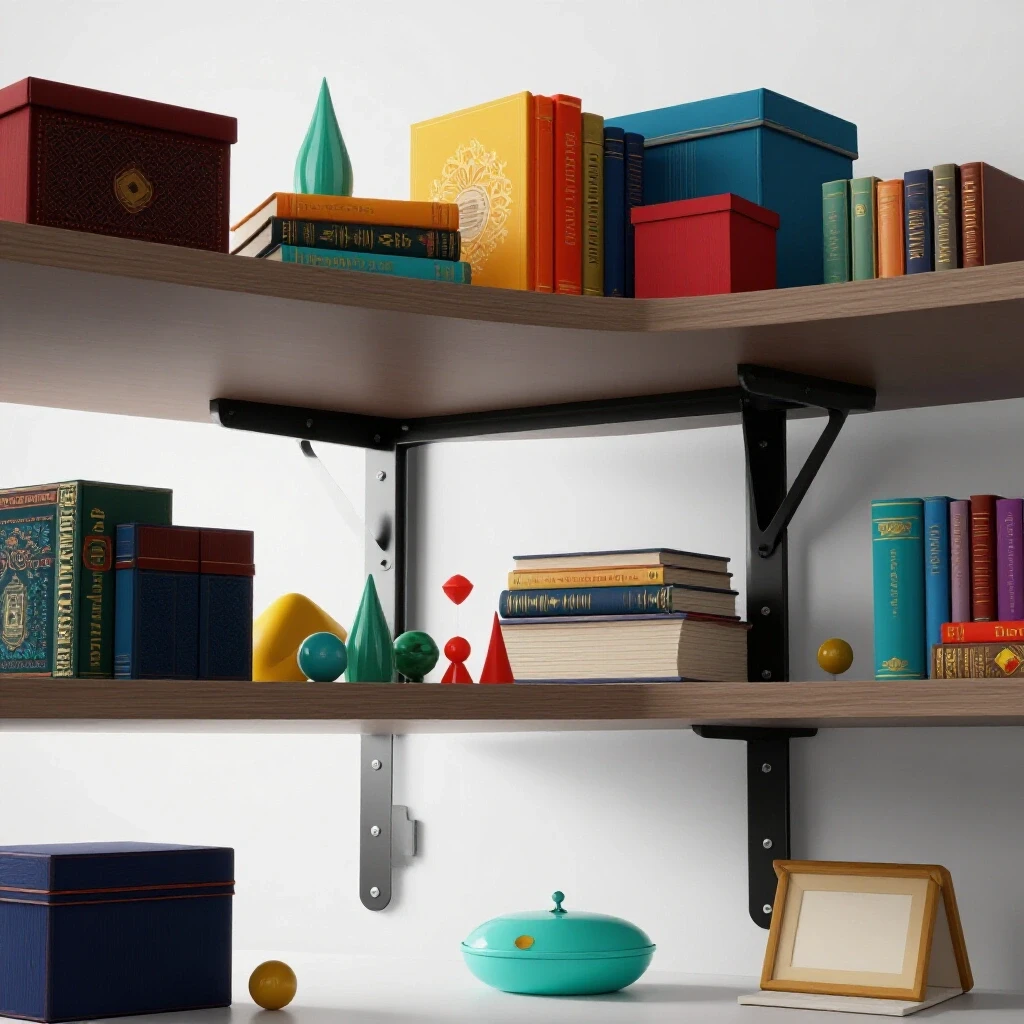
Does the shape of the bracket matter for weight capacity? Yes, significantly. A “gusseted” bracket—one with a diagonal cross-brace—is much stronger than a simple L-shaped bracket. The brace transfers the weight from the end of the arm back to the wall, reducing the leverage force that tries to bend the metal.
Is it better to have more small supports or fewer large ones? Generally, more supports are better. Spacing supports 16 inches apart (on every stud) distributes the load more evenly across the wall and prevents the shelf material from sagging between the brackets.
What is the best finish for a bathroom or laundry room? Stainless steel or anodized aluminum are the best choices. These materials have a natural resistance to moisture. If you prefer a color, ensure it is powder-coated rather than just spray-painted, as paint will bubble and peel in high humidity.
Can I install heavy shelving on a plaster and lath wall? It is much more difficult than drywall. You must find the underlying studs. If you cannot find the studs, you should mount a “ledger board” (a horizontal piece of wood) to the wall first, securing it to whatever framing you can find, and then attach your supports to that board.
How deep can my shelf be before it becomes unsafe? Most residential supports are designed for shelves between 6 and 14 inches deep. Once you go beyond 14 inches, the leverage on the top screw becomes immense. For very deep shelves, you may need “heavy-duty” brackets with longer wall flanges to spread the pulling force.
Do I really need to use a level during installation? Absolutely. If a support is even slightly tilted, the weight of your items will create a “sliding force” that puts extra stress on the fasteners. A level shelf ensures the weight pushes straight down, which is how the hardware is designed to work.
What should I do if my studs aren’t where I want my shelves? You can use a “cleat” system. Secure a sturdy piece of wood horizontally across the studs, then mount your brackets to that wood. This allows you to place the brackets exactly where you want them while still having a structural connection to the house frame.
Are hidden or “floating” shelf supports as strong as visible ones? Usually, no. Floating supports rely on a single rod inserted into the shelf. While they look great, they have much higher deflection rates and lower weight capacities than traditional brackets with a vertical wall flange.
How do I know if I’m overloading my shelves? Look for “sag” in the shelf board or a gap opening up between the top of the bracket and the wall. If you see either, you need to remove weight immediately or add more supports. Most failures happen slowly over time, not all at once.
(This article was written by one of our staff writers, Andrew Morrison. Visit our Meet the Team page to learn more about the author and their expertise.)