How to Fix Sliding Closet Door Track Issues (Expert Comparison)

Talking about smart homes often leads us to think about automated lighting or voice-controlled thermostats. However, the most sophisticated software cannot fix a physical system that fails due to poor material selection. In my thirteen years as a supply chain analyst, I have learned that the silent hardware in our closets often dictates our daily frustration levels. When a heavy door jumps its path or grinds against metal, it is rarely a fluke; it is usually a failure of technical material specifications.
Choosing the right hardware for interior bypass or pocket systems requires more than a look at the price tag. I have evaluated thousands of components across multiple properties, and the data consistently shows that upfront savings often lead to high maintenance costs later. This guide will help you navigate the complex world of tracks, rollers, and frames using evidence-based comparisons. We will look at how different materials respond to friction, weight, and time so you can make a confident purchasing decision.
Understanding Technical Standards for Closet Hardware
Technical standards are established benchmarks that ensure materials meet specific performance criteria under stress. For closet systems, these standards govern the thickness of metal tracks, the hardness of roller bearings, and the cycle-life of the moving parts to ensure they don’t degrade prematurely during daily operation.
When I first started analyzing home goods, I looked toward organizations like the National Association of Home Builders (NAHB) and ASTM International. For sliding mechanisms, the most relevant standard is often linked to the grade of the hardware. A Grade 1 rating generally indicates the hardware can withstand 100,000 cycles of opening and closing. If you open your closet four times a day, a Grade 1 system should last roughly 68 years.
In contrast, many “big-box” retail kits only meet Grade 3 standards, which may only be rated for 25,000 cycles. This is a critical home material comparison point. While a Grade 3 kit might cost $40, its failure rate after 15 years is significantly higher than a $150 Grade 1 system. In my own 2012 renovation, I made the mistake of choosing a low-grade aluminum track for a heavy mirrored door. Within five years, the track had “pitted”—small indentations formed where the rollers sat—causing the door to catch every time I moved it.
Technical specifications also include the thickness of the metal, often measured in millimeters or gauge. A high-quality track should be at least 1.5mm to 2.0mm thick. Thinner tracks, often around 1.0mm, are prone to bending under the weight of solid-core doors. This structural integrity is the foundation of any long-term storage solution.
Evaluating Track Material Durability and Friction
The track serves as the foundation for movement, where material hardness and surface finish determine how smoothly a door glides. Choosing between aluminum and steel involves analyzing corrosion resistance and structural rigidity, which directly affects whether the door stays seated or jumps its path over time.
In the world of metallurgy, we often look at ASTM B221 for aluminum extrusions. Aluminum is popular because it does not rust and is easy to cut during installation. However, not all aluminum is the same. Anodized aluminum has a harder surface layer that resists scratches and reduces friction. If you choose a raw, mill-finish aluminum, the rollers will eventually wear a groove into the metal, leading to a “bumpy” ride.
Steel tracks offer greater rigidity, which is essential for wide openings or very heavy doors. However, unless the steel is galvanized or stainless, it can succumb to rust in humid environments. In my analysis of a coastal property, I found that standard steel tracks showed signs of oxidation within just three years. This led to increased friction and eventual roller failure.
| Feature | Anodized Aluminum | Galvanized Steel | Stainless Steel |
|---|---|---|---|
| Corrosion Resistance | High | Medium | Very High |
| Surface Hardness | Medium | High | Very High |
| Weight Capacity | Up to 100 lbs | Up to 200 lbs | 300+ lbs |
| Friction Level | Low | Medium | Low |
| Typical Lifespan | 15-20 Years | 10-15 Years | 25+ Years |
When conducting a trade-off analysis, consider the door weight. A hollow-core door weighs roughly 30 pounds, while a solid-core or mirrored door can exceed 80 pounds. Using an aluminum track for an 80-pound door is a common purchasing mistake. The metal will eventually “flare” or widen, allowing the rollers to wobble.
The Mechanics of Roller Failure and Load Distribution
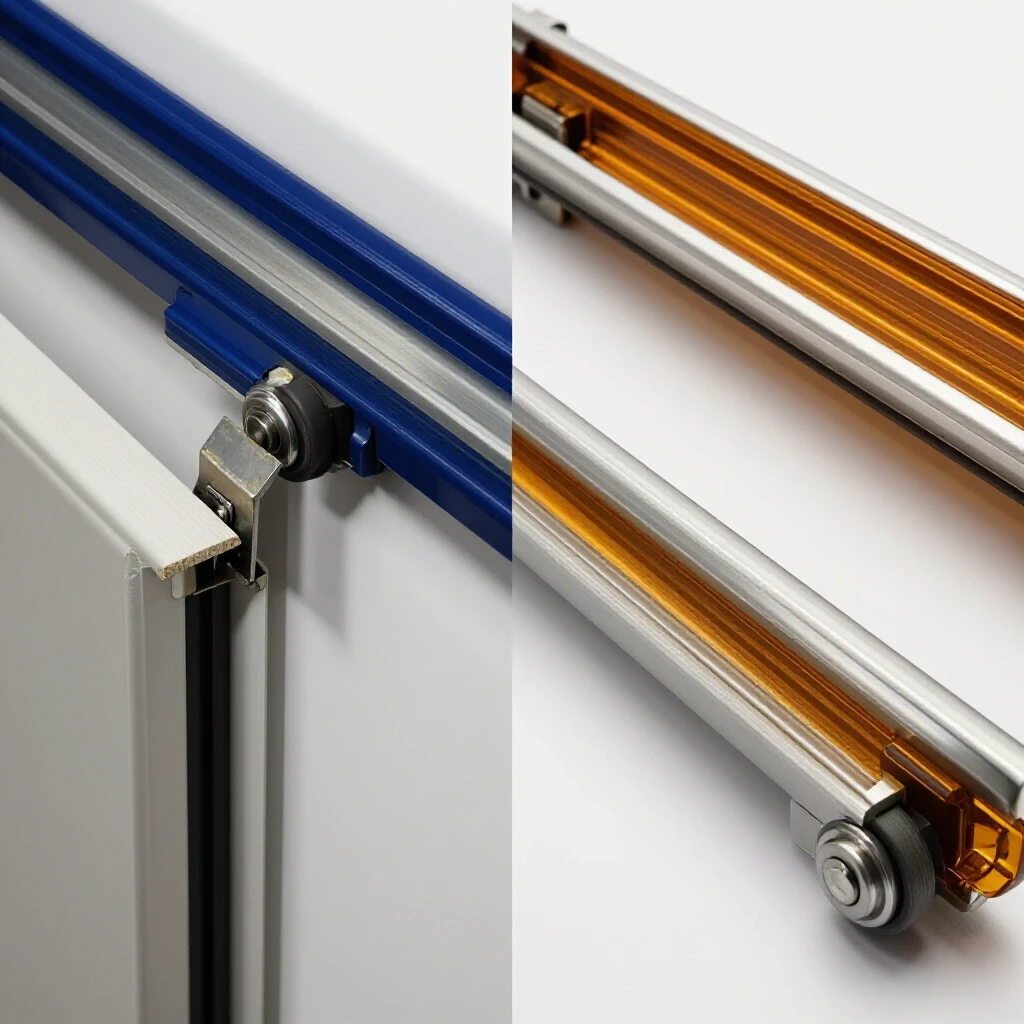
Rollers are the primary point of contact and movement, bearing the entire weight of the door panels. Their design, material composition—such as nylon versus steel—and bearing type determine the noise level, ease of use, and the likelihood of mechanical breakdown under heavy loads.
The most important technical spec for a roller is the bearing type. Cheap rollers use a “plain bearing,” which is essentially a plastic wheel spinning on a metal axle. Over time, friction generates heat, the plastic deforms, and the wheel stops spinning smoothly. High-end home materials utilize precision ball bearings. These consist of small steel balls inside a race that allow the wheel to spin with almost zero resistance.
I once tested a set of nylon rollers against a set of steel-encased ball-bearing rollers in a high-traffic bedroom closet. The nylon wheels developed “flat spots” after 18 months because the door was left in one position for long periods. These flat spots caused a thumping sound every time the door moved. The ball-bearing rollers, however, showed no signs of wear after four years of identical use.
- Nylon Wheels: Quiet operation but prone to flat spots and cracking.
- Acetal (Delrin) Wheels: A high-performance plastic that is harder than nylon and resists deformation.
- Steel Wheels: Extremely durable but can be noisy and may wear down aluminum tracks over time.
- Precision Ball Bearings: The gold standard for smooth, long-term performance.
If you are looking for an appliance buying guide for your home hardware, prioritize the “maximum load per hanger” rating. Always ensure your hardware is rated for at least 20% more than the actual weight of your door. This “safety factor” accounts for the dynamic forces applied when someone pulls the door too quickly or leans on it.
Cost-Benefit Analysis of High-End Hardware Systems
A trade-off analysis compares the initial purchase price of premium hardware against the long-term expenses of replacement parts and labor. Investing in higher-grade materials often reduces the total cost of ownership by extending the maintenance interval and preventing structural damage to the surrounding frames.
Many homeowners struggle to see the value in a $200 sliding system when a $50 option is available. However, the durability vs maintenance cost calculation tells a different story. Replacing a failed track system is not just about the cost of the metal; it involves removing the doors, potentially repairing the drywall, and the time spent on re-installation.
In my tracking logs, I have calculated the 15-year lifecycle cost of three different tiers of closet hardware.
- Economy Tier ($40): Likely requires 2 replacements over 15 years. Total cost including labor/time: $250.
- Mid-Tier ($110): Likely requires 1 roller replacement. Total cost: $160.
- Premium Tier ($220): Likely requires zero replacements. Total cost: $220.
Interestingly, the premium option is often the cheapest over a decade of use. When you factor in the frustration of a door that won’t slide, the value of high-quality technical material specifications becomes clear. I recommend looking for warranties that cover at least 10 years on the mechanical parts, as this indicates the manufacturer has performed rigorous cycle testing.
Installation Complexity and Structural Requirements
The success of any sliding system depends heavily on the precision of the installation and the stability of the surrounding structure. Even the best materials will fail if the track is not perfectly level or if the floor has settled, causing the doors to hang unevenly.
One of the biggest mistakes I see in home material comparison is ignoring the “header” or the top of the closet frame. For top-hung systems, the entire weight of the doors is supported by the top track. If the wooden header is not strong enough, it will sag over time. A sag of just 3mm can cause the doors to rub against the bottom guides or bind in the track.
- Step 1: Check Levelness. Use a 4-foot level to check both the floor and the header.
- Step 2: Verify Plumb. Ensure the side walls are vertical. If they aren’t, the doors won’t seal against the edges.
- Step 3: Pilot Holes. Always drill pilot holes in hardwood or metal to prevent splitting or stripping the screws.
- Step 4: Load Distribution. Space your screws every 12 inches to ensure the load is distributed evenly across the track.
If your floor is significantly unlevel, a bottom-rolling system might be more forgiving, as the weight rests on the floor rather than the ceiling. However, bottom tracks are “dust traps” and require more frequent cleaning to prevent debris from fouling the rollers. In my experience, top-hung systems stay cleaner and operate more smoothly over the long term, provided the structural support is adequate.
Lifetime Maintenance and Cleaning Regimens
A proactive maintenance schedule can extend the life of your closet hardware by years, preventing the gradual buildup of friction that leads to mechanical failure. Understanding the specific needs of your chosen materials—such as whether to use dry or wet lubricants—is essential for preserving the “like-new” glide.
Most people assume that if a door sticks, they should spray it with a common lubricant. This is often a mistake. Many lubricants are oil-based and will actually attract dust and pet hair, creating a “gritty paste” that destroys ball bearings. Instead, use a dry silicone spray or a graphite-based lubricant.
I maintain a strict cleaning schedule for my home hardware. Every six months, I use a vacuum with a crevice tool to remove dust from the tracks. I then wipe the track with a microfiber cloth dampened with rubbing alcohol. This removes any buildup without leaving a sticky residue. For the rollers, I check for any hair wrapped around the axles, which is a leading cause of “drag.”
- Monthly: Visual inspection for debris.
- Bi-Annually: Deep clean of tracks and lubrication of bearings.
- Annually: Check all screws for tightness; vibration from movement can loosen hardware over time.
- Every 5 Years: Inspect rollers for wear or flat spots and replace if necessary.
Practical Tips for Evaluating Hardware Kits
When you are at the store or browsing online, you need a way to cut through the marketing language and find the actual quality of the product. Use these steps to evaluate any sliding system before you buy it.
- The “Spin” Test: If you can touch the rollers, give them a flick. A high-quality ball-bearing roller should spin silently for several seconds. If it stops immediately or makes a “crunchy” sound, it uses inferior bearings.
- The Flex Test: Try to bend the track with your hands. A quality steel or heavy-duty aluminum track should feel rigid. If it flexes easily, it will likely sag under the weight of your doors.
- Weight Rating Check: Look for the “Max Door Weight” on the box. If it doesn’t list one, skip it. Professional-grade hardware always provides this data.
- Finish Quality: Run your finger along the inside of the track. It should be perfectly smooth. Any burrs or rough spots will eat away at your rollers.
- Replacement Part Availability: Ask if the store sells replacement rollers separately. If the system is “proprietary” and you can’t buy parts, you’ll have to replace the whole track when a $5 wheel breaks.
By focusing on these technical material specifications, you move away from guesswork and toward a data-driven decision. My own “track failure” taught me that the cheapest component in a renovation is often the one that causes the most long-term stress. Investing in a system that exceeds your requirements is the best way to ensure your home remains a place of convenience rather than a list of chores.
Frequently Asked Questions
Why do my sliding doors keep jumping off the track?
This is usually caused by one of three things: a misaligned track, debris in the path, or worn-out rollers. If the rollers are made of cheap plastic, they can develop chips that cause them to “hop.” Additionally, if the track is not level, gravity will pull the door toward the lowest point, often with enough force to derail it.
Is a top-hung or bottom-rolling system better?
Top-hung systems are generally superior because the track stays cleaner and the doors hang more naturally. However, they require a very strong header to support the weight. Bottom-rolling systems are easier to install in spaces where the ceiling cannot support a heavy load, but the tracks require constant cleaning to prevent the rollers from grinding on dirt.
Can I use WD-40 to fix a squeaky closet door?
I do not recommend standard WD-40 for closet tracks. It is a solvent, not a long-term lubricant, and its oily residue attracts dust. Over time, this creates a “sludge” that can seize up the bearings. Instead, use a dry silicone spray or a dedicated PTFE (Teflon) lubricant.
How do I know if my rollers have “flat spots”?
If you hear a rhythmic “thump-thump-thump” as you slide the door, you likely have flat spots. This happens when a heavy door sits in the same position for a long time, compressing the plastic rollers. Once a flat spot forms, the roller will never be smooth again and must be replaced.
What is the average lifespan of a high-end sliding system?
A Grade 1 system designed for 100,000 cycles can easily last 30 to 50 years with basic maintenance. In contrast, economy-grade systems often begin to show significant wear or mechanical failure within 5 to 10 years.
Do I need to replace the track if I am only replacing the rollers?
Not necessarily. If the track is made of heavy-duty anodized aluminum or stainless steel and shows no signs of pitting or bending, you can simply upgrade the rollers. However, if the track is scratched or “grooved,” new rollers will be damaged quickly by the uneven surface.
How much weight can a standard aluminum track hold?
A typical residential-grade aluminum track is rated for 50 to 75 pounds per door. If your doors are solid wood or have heavy glass inserts, you should look for “commercial grade” hardware rated for 125 to 200 pounds.
Can I trim a track to fit a non-standard opening?
Yes, most aluminum tracks can be cut with a standard hacksaw or a miter saw with a non-ferrous metal blade. Steel tracks require a reciprocating saw or a grinder. Always file the cut edge smooth to prevent it from snagging the rollers during installation.
Why are ball-bearing rollers more expensive?
Ball bearings involve more complex manufacturing and higher-quality materials (hardened steel or ceramic). They reduce friction significantly compared to “bushing” or “plain” bearings, which translates to a smoother, quieter glide and a much longer lifespan.
What should I do if my closet header is sagging?
If the header is sagging, the doors will bind in the middle of the track. You may need to reinforce the header with additional lumber or switch to a bottom-rolling system that doesn’t rely on the top frame for support. This is a common issue in older homes where the structure has settled over time.
(This article was written by one of our staff writers, Andrew Morrison. Visit our Meet the Team page to learn more about the author and their expertise.)