How Buying Less Improves Home Organization and Saves Money (Guide)

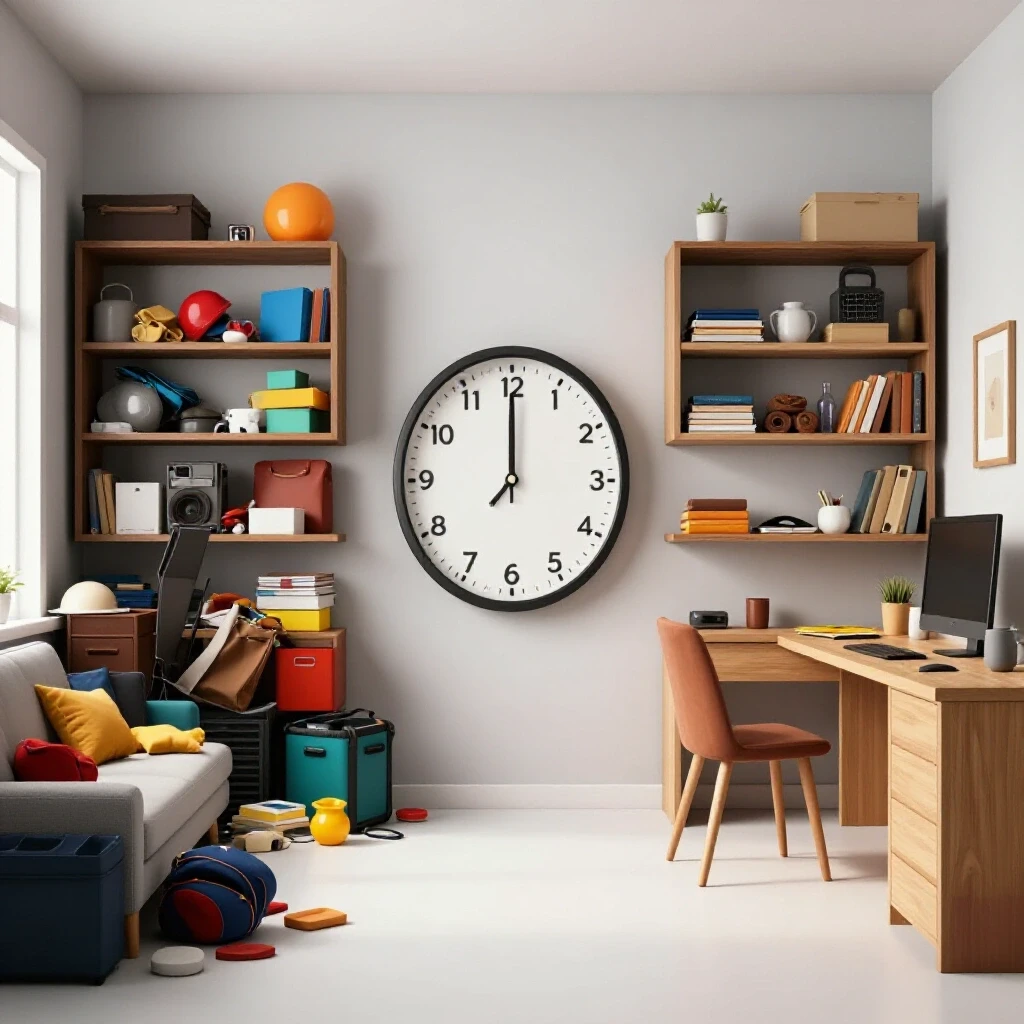
In my 11 years managing logistics and operations, I have learned that the most efficient warehouse is not the one with the most shelves. It is the one with the best flow. In my own home, I applied this same logic when my family hit a breaking point. We were constantly tidying, yet the clutter returned within forty-eight hours. I realized we were treating the symptoms rather than the cause. By shifting our focus toward low-maintenance options and reducing the volume of items entering our doors, we reclaimed our weekends. This guide explains how you can use professional logistics principles to create a functional home storage environment that actually lasts.

Why Household Inflow Impacts Your Daily Sorting Speed
Household inflow refers to the rate at which new items enter your living space. When the volume of incoming goods exceeds your home’s spatial capacity, your daily sorting speed slows down significantly. This creates a logistical bottleneck where items sit on counters because their designated “home” is already full.
In logistics, we look at “inventory carrying costs.” In a home, this cost is paid in time. Every item you bring into your house requires a series of actions: unboxing, finding a spot, cleaning, and eventually disposing of it. When my family and I decided to stop the constant stream of new purchases, our daily cleanup duration dropped from 45 minutes to just 12 minutes. We weren’t cleaning faster; we simply had fewer items to move out of the way to reach what we actually used.
Research in organizational behavior suggests that “visual noise” from too many objects triggers a low-grade stress response. For a busy parent, this manifests as mental fatigue. If you are constantly moving a stack of mail or a new toy to find your keys, you are experiencing high “retrieval friction.” By limiting what comes in, you naturally lower the density of your storage, making every other system in your house work better.
The Hidden Time Tax of Managing Excessive Inventory
Managing inventory involves the labor required to track, store, and maintain every object in your possession. For families, this “time tax” often goes unnoticed until it consumes entire Saturday mornings. When you reduce the number of items you own, you essentially give yourself a time-raise by eliminating these low-value labor hours.
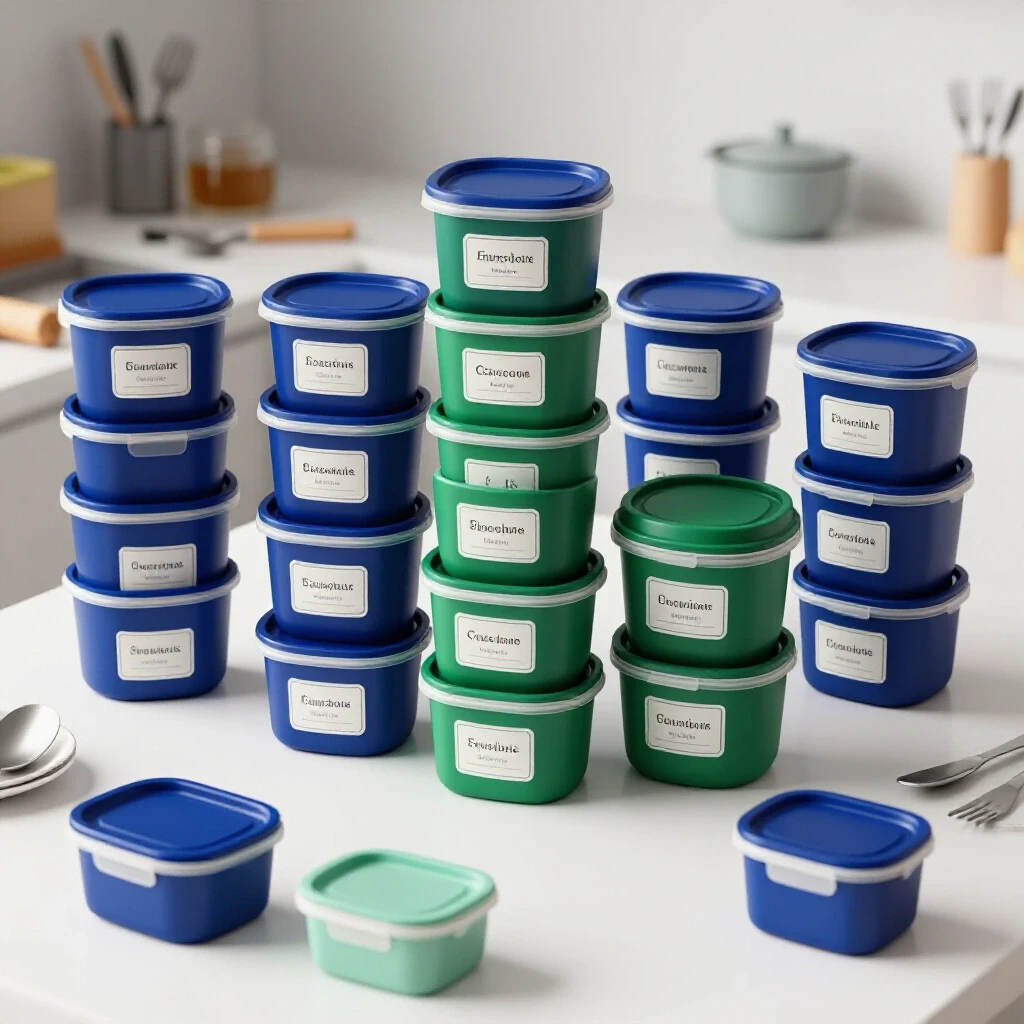
I remember a specific “sprint” where I tried to organize our playroom using a complex color-coded bin system. I spent six hours and $200 on containers. Within three days, the system failed. Why? Because the inventory exceeded the children’s ability to sort it. The logistics were too heavy. We found that by simply having fewer toys, the kids could clean up in five minutes without any complex instructions.
Storage Friction Index by Bin Type
This table illustrates how different storage choices affect the time it takes to maintain a tidy space. Friction represents the number of physical steps required to put an item away.
| Container Type | Steps to Store | Friction Level | Best Use Case |
|---|---|---|---|
| Open Basket | 1 (Drop) | Low | Daily toys, shoes, frequently used blankets |
| Drawer | 2 (Pull, Drop) | Medium | Clothing, kitchen utensils, office supplies |
| Lidded Bin | 3 (Lift, Drop, Snap) | High | Seasonal decor, archival documents |
| Stacked Lidded Bins | 5+ (Move top, Lift, Drop, Snap, Replace) | Critical | Long-term garage storage only |
Reducing Retrieval Friction with Low-Maintenance Storage Systems
Retrieval friction is the physical and mental effort required to get an item out of storage or put it back. Low-maintenance systems prioritize a “one-motion” rule to ensure that putting something away is as easy as leaving it on the floor. High-friction systems are the primary reason homes revert to clutter.
In professional logistics, we measure “pick paths.” This is the distance a worker travels to get an item. In your home, if your coffee pods are in a pantry ten feet away from the machine, that is a long pick path. By reducing the number of items you own, you can move essential goods into “Prime Zones.” These are areas between your eye level and waist level where items are easiest to reach.
When we stopped buying “just in case” items, we cleared enough shelf space to move our most-used kitchen tools into these Prime Zones. This reduced our cooking prep time and made unloading the dishwasher much faster. We stopped using deep, dark bins and switched to shallow, open containers. This simple change meant we could see our entire inventory at a glance, preventing us from buying duplicates of things we already owned.
Mapping Your Home: Using Industrial Zoning for Family Spaces
Zoning is the practice of dividing a space into functional areas based on the frequency of use and the type of activity performed. Industrial zoning ensures that high-velocity items are the most accessible, while low-velocity items are moved to the perimeter. This prevents traffic jams in busy areas like the kitchen or entryway.
To create a zoning map, I suggest tracking your family’s movements for two days. Notice where piles naturally form. These “hot spots” are usually where your current systems have too much friction. For example, if shoes always end up by the door, your shoe rack might be too far away or too difficult to use.
Daily Maintenance Timelines by Family Size
The following metrics show the average time spent on “resets” when a home uses low-friction zoning and has a controlled inflow of items.
- 2-Person Household: 5–10 minutes per day.
- 4-Person Household: 15–20 minutes per day.
- 6-Person Household: 25–30 minutes per day.
By sticking to these zones, you stop the “clutter creep” that happens when items from the playroom migrate to the dining table. Each zone has a spatial capacity limit. Once a shelf is full, nothing new can enter that zone unless something else leaves. This rule is the cornerstone of a sustainable home.
Implementing Habit Loops to Prevent System Reversion
A habit loop is a three-part process consisting of a cue, a routine, and a reward. In a home setting, these loops automate the maintenance of your organization systems so they don’t require constant willpower. When your systems are simple, these loops become much easier for children and tired parents to follow.
We implemented a “Closing Shift” habit in our house. At 8:00 PM, we spend ten minutes resetting the common areas. The cue is the kitchen light turning off. The routine is a quick sweep of the zones. The reward is a tidy house to wake up to. Because we have reduced our total inventory, this “shift” never feels overwhelming.
Decluttering Sorting Log
Use this log to evaluate whether an item is worth the “time tax” of keeping it.
- Frequency of Use: Have I used this in the last 90 days?
- Retrieval Cost: Is it easy to store and find?
- Replacement Ease: If I needed this in a year, could I get it for under $20 in under 20 minutes?
- Spatial Value: Is the space this item occupies more valuable than the item itself?
If an item fails more than two of these checks, it is a candidate for removal. This logic helped my family clear out 30% of our garage, which we then converted into a functional workshop for home repairs.
Selecting Low-Maintenance Storage Gear for Real Life
The right gear should support your logistical flow rather than just looking good on a shelf. Heavy-duty storage configurations are often better than flimsy, decorative ones because they can handle the wear and tear of a busy family. Look for modular units that can grow or shrink based on your current needs.
When choosing containers, I recommend clear, stackable bins for items stored in closets, but open baskets for daily-use items. We also use a digital inventory method for our storage room. By placing a small QR code label on the outside of a bin, I can scan it with my phone to see exactly what is inside without unstacking four heavy boxes. This is a standard industrial practice that saves hours of searching.
- Clear Bins: Use for “out of sight” storage to maintain visual inventory.
- Open Totes: Use for “high-velocity” items like kids’ shoes or dog leashes.
- Adjustable Shelving: Avoid fixed shelves; they create wasted “air space.”
- Labeling: Use bold, sans-serif fonts that are easy to read from a distance.
Why High-Friction Bins Lead to Rapid Clutter Reversion
High-friction bins are containers that require multiple steps to open, close, or access. While they may look “clean” in photos, they are the enemy of a busy parent. If it takes more than three seconds to put an item away, it will likely stay on the counter. This is why many “Pinterest-perfect” homes revert to messes within days.
In my professional experience, “system failure” occurs when the effort required to maintain the system exceeds the user’s available energy. On a Tuesday night after a long work day, your energy is low. If your trash can has a lid that sticks, or your laundry basket is kept behind a heavy door, you will eventually stop using them correctly.
We replaced all our lidded hampers with open-top baskets. The result? Dirty clothes actually made it into the baskets instead of the floor. We also removed the doors from our pantry to create a “walk-in” flow. This reduced the steps for putting away groceries and allowed us to see exactly when we were running low on staples, preventing over-buying.
Practical Steps to Reclaim Your Space and Budget
To start seeing the benefits of a simpler home, you must first stop the bleeding. This means pausing the inflow of non-essential items for a set period, such as 30 days. During this time, focus on optimizing the logistics of what you already own.
- Audit your “Hot Spots”: Identify the three areas where clutter always accumulates.
- Measure your “Processing Time”: Time yourself while tidying. If it takes more than 20 minutes for one room, you likely have too much inventory or too much friction.
- Establish “One-In, One-Out”: For every new item that enters a zone, one must leave. This keeps your spatial density stable.
- Simplify Labels: Use broad categories like “Tools” or “Crafts” rather than specific ones like “Phillips Head Screwdrivers.”
By focusing on these logistical improvements, you will find that you have more money in your bank account and, more importantly, more hours in your week. You are no longer a manager of “stuff”; you are the curator of a functional home.
Frequently Asked Questions
How do I know if I have too much stuff or just bad storage?
If you have organized a room multiple times and it still feels messy within a week, you likely have a volume problem. Bad storage makes things hard to find, but too much volume makes things impossible to keep tidy. Try removing 20% of the items in a “hot spot” and see if the organization holds.
Does buying less really save that much time?
Yes. Every item you own is a commitment of time. You have to clean it, move it, store it, and look at it. If you reduce your household inventory by 30%, you can expect to see a similar reduction in your daily cleaning and tidying time.
How can I get my kids to follow these systems?
Focus on lowering friction. Children struggle with lids, latches, and high shelves. Use open floor-level baskets and visual labels (like a picture of a toy car). When it is easier to put a toy away than to leave it out, kids are much more likely to help.
What is the “One-Touch Rule” in home logistics?
The One-Touch Rule means you should aim to handle an item only once before it reaches its final destination. For example, instead of putting mail on the counter (Touch 1) and then moving it to the office (Touch 2), take it straight to the office or the recycling bin.
Are expensive organization systems worth the money?
Rarely. The most effective systems are often the simplest. In logistics, we prefer durable, modular, and transparent solutions. You don’t need “pretty” bins; you need bins that fit your shelves perfectly and allow you to see what is inside without opening them.
How do I handle “just in case” items?
Apply the 20/20 rule: If you can replace an item for less than $20 in less than 20 minutes from a local store, you don’t need to store it “just in case.” This frees up valuable spatial capacity for things you use every day.
Why does my home feel cluttered even when everything is put away?
This is often due to “visual weight.” Even if items are on shelves, too many different colors and textures can overwhelm the brain. Using uniform containers or hidden storage for small, mismatched items can reduce this cognitive load and make the space feel calmer.
How often should I re-evaluate my home zones?
I recommend a “spatial audit” once every six months. As kids grow or hobbies change, your zones will need to shift. If a system starts failing, it’s a signal that the logistics of your life have changed and the storage needs to catch up.
(This article was written by one of our staff writers, Christopher Bennett. Visit our Meet the Team page to learn more about the author and their expertise.)