Track Lighting vs Recessed Lighting: Which Is Better? (Comparison)

When evaluating overhead light sources, the most critical factor is often the thermal management of the fixture housing rather than the bulb itself. Efficient heat dissipation determines whether an LED component lasts its promised 50,000 hours or fails prematurely due to “lumen depreciation,” which is the gradual fading of light output over time.
In my 13 years as a supply chain analyst, I have managed the procurement of materials for several residential properties. I have learned that the choice between surface-mounted rail systems and integrated ceiling canisters often comes down to how much you value long-term flexibility versus architectural invisibility. Each system presents unique technical specs that impact how they age and how much effort you will spend on maintenance over a decade of use.
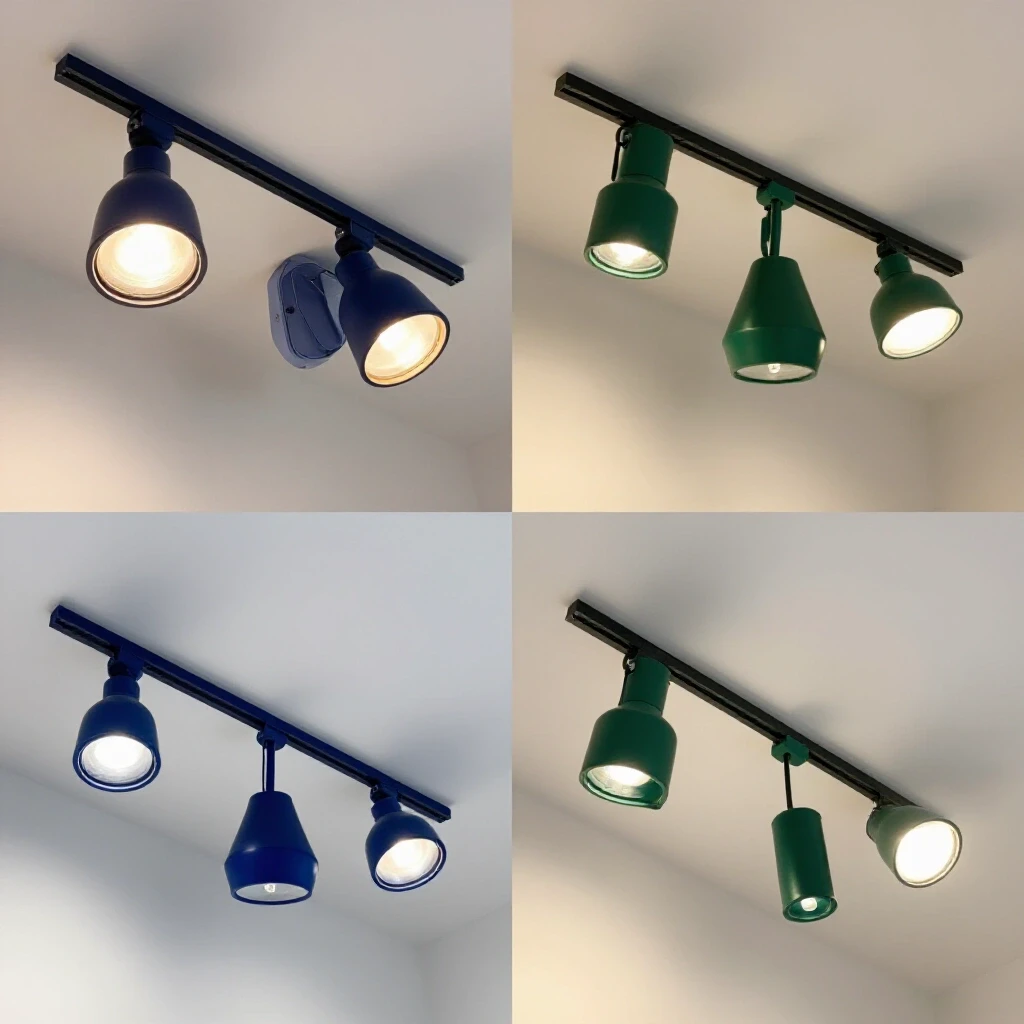
Understanding the Material Science of Interior Lighting Housing
The housing of a light fixture serves as the primary protection for the internal electronics and the structural interface with your ceiling. Most high-end fixtures utilize die-cast aluminum or extruded metals because these materials offer superior thermal conductivity compared to plastics or thin-gauge steel.
Thermal Management and Heat Sink Performance
Thermal management refers to the ability of a fixture to move heat away from the sensitive LED chips and drivers to prevent overheating. In both integrated canisters and modular rail systems, a well-engineered heat sink—usually made of finned aluminum—is essential for maintaining the L70 rating, which is the industry standard for when a light reaches 70% of its original brightness.
- Die-cast aluminum housings offer the highest rate of thermal transfer.
- Finned designs increase surface area, allowing air to carry heat away more effectively.
- Poor heat dissipation leads to “color shift,” where the light turns blue or pink over time.
Surface Finish Durability and Material Longevity
The finish on your lighting hardware is not just for looks; it protects the metal from oxidation and dust adhesion. Technical specifications usually list these as powder-coated, anodized, or wet-painted finishes, each with different resistance levels to scratching and environmental fading.
- Powder coating involves electrostatically applying dry powder that is cured under heat to create a hard “skin.”
- Anodizing is an electrochemical process that converts the metal surface into a decorative, durable, anodic oxide finish.
- ASTM B117 is the standard test for salt spray resistance, which indicates how well a finish will hold up in humid environments like kitchens.
Analyzing Fixed Architectural Downlighting Systems
Fixed architectural downlighting, often called integrated canisters, involves installing the light source inside the ceiling cavity. This creates a clean, flush look where the hardware is mostly hidden, but it requires a permanent commitment to the placement of each light source.
Aperture and Trim Specifications
The aperture is the diameter of the hole in the ceiling, while the trim is the visible ring that covers the edge of the drywall. Material choice here is vital because the trim is the only part you see, and it must resist yellowing from heat exposure over many years.
- Aluminum trims are preferred over plastic to prevent warping and discoloration.
- “Flangeless” or “mud-in” trims offer a seamless look but require high-precision installation.
- Reflector cones inside the canister can be spec’d with different finishes to control glare.
Integration with Ceiling Substrates
Because these fixtures sit inside the ceiling, they must be rated for contact with insulation or specific air-leakage standards. The National Association of Home Builders (NAHB) often highlights the importance of “Airtight” and “IC-Rated” (Insulation Contact) housings to maintain the thermal envelope of a home.
- IC-Rated housings allow insulation to be tucked directly against the fixture without a fire risk.
- Airtight housings prevent conditioned air from escaping into the attic or plenum space.
- The thickness of the ceiling material (drywall vs. plaster) must match the adjustment range of the fixture’s mounting clips.
Evaluating Modular Rail-Based Lighting Solutions
Modular rail systems, commonly known as track arrays, consist of a surface-mounted power rail and individual light modules that can be moved or swapped. This system offers high adaptability but remains a visible architectural element that requires regular cleaning.
Mechanical Connector Reliability
The “track” is essentially a linear busbar that carries electricity to the modules, and the quality of the mechanical connection is a major durability factor. I have seen cheaper rail systems fail because the copper conductors inside the rail oxidized or the locking clips on the modules became brittle and snapped.
- Look for rails with solid copper busbars rather than copper-plated steel.
- Polycarbonate connectors should be UV-stabilized to prevent them from becoming brittle.
- Standardized “H,” “J,” or “L” track types ensure you can find replacement modules years later.
Flexibility and Beam Control
The primary advantage of a rail system is the ability to change the direction and spread of light as your room layout evolves. Each module can be fitted with different lenses or “optics” to change the beam angle, which is measured in degrees from a narrow 15-degree spot to a wide 60-degree flood.
- Field-changeable lenses allow you to adjust the light without replacing the whole fixture.
- Adjustable heads provide 360-degree rotation and 90-degree tilt for precise aiming.
- Modular systems allow you to add or remove light heads as needed for different tasks.
Technical Performance Comparison: Fixed vs. Adjustable Overhead Systems
When comparing these two systems, the decision often rests on the trade-off between the “invisible” nature of canisters and the “adaptable” nature of rails. Below is a side-by-side comparison of the technical specifications that matter most for long-term ownership.
| Feature | Integrated Canisters (Fixed) | Modular Rail Systems (Adjustable) |
|---|---|---|
| Material Housing | Die-cast aluminum or galvanized steel | Extruded aluminum rails |
| Visibility | Low (Flush with ceiling) | High (Surface mounted) |
| Beam Adjustability | Limited (Fixed or small tilt) | High (Full rotation and tilt) |
| Heat Dissipation | Internal (Requires vented housing) | External (Open air cooling) |
| Dust Accumulation | Low (Inside ceiling) | High (On top of rails/heads) |
| Standard Life | 30,000 to 50,000 hours | 30,000 to 50,000 hours |
| Adaptability | Permanent placement | Reconfigurable at any time |
Long-Term Maintenance and Adaptability Profiles
Maintenance for lighting is often overlooked until a driver fails or a lens becomes clouded with dust. In my own properties, I have found that the physical location of the fixture significantly impacts how much time I spend keeping the system at peak performance.
Cleaning and Dust Accumulation
Integrated canisters are relatively low-maintenance because the light source is shielded by the ceiling. However, modular rail systems act as a shelf for dust, which can eventually settle into the light-emitting surface and reduce the total luminous flux (light output).
- Rail systems require a bi-annual wipe-down to prevent dust buildup from insulating the heat sinks.
- Recessed canisters only require occasional cleaning of the trim and lens.
- In kitchens, grease can bond with dust on surface-mounted rails, making them harder to clean than flush fixtures.
Component Replacement and Lifecycle
When an LED light fails, it is usually the “driver” (the power converter) that has died, not the LED chip itself. The ease of accessing this driver is a major factor in the technical “serviceability” of the system.
- Rail Systems: The driver is often located inside the individual light head or a “power feed” canopy, making it very easy to swap out.
- Integrated Canisters: The driver is typically hidden in a “junction box” above the ceiling, requiring you to pull the entire fixture down through the hole to access it.
- Standardization: Using industry-standard track types (like J-track) makes finding replacement heads easier than finding a matching trim for a discontinued canister model.
Selection Strategy for Different Living Environments
Choosing between these systems should be based on how you use the space and how often you expect to change your furniture or art. In my 13 years of evaluation, I have found that “static” rooms benefit from fixed lighting, while “dynamic” rooms require the flexibility of rails.
Static Spaces: Hallways and Bathrooms
In areas where the layout never changes, integrated canisters provide a clean look that doesn’t compete with the architecture. The lack of adjustable parts means there is less to break or go out of alignment over time.
- Use fixed downlights for general “wash” lighting in high-traffic areas.
- Ensure the canisters are centered to avoid “scalloping” (harsh shadows) on the walls.
- Select high-CRI (Color Rendering Index) LEDs for bathrooms to ensure accurate skin tones.
Dynamic Spaces: Kitchens and Living Rooms
Kitchens and living rooms often undergo layout changes, such as moving a dining table or hanging new artwork. Modular rail systems allow you to move the light to where the work is happening without cutting new holes in the ceiling.
- Position rails over work surfaces like islands or counters.
- Use directional heads to highlight features like a fireplace or a bookshelf.
- The ability to add more modules makes these systems ideal for spaces that need more light as you age.
Practical Buying Worksheet for Lighting Evaluation
When you are ready to purchase, use this checklist to compare the technical specifications of the products you are considering.
- Housing Material: Is it die-cast aluminum (best) or stamped steel (standard)?
- L70 Rating: Is the rated life at least 50,000 hours?
- CRI Rating: Is the Color Rendering Index 90 or higher for better color accuracy?
- Beam Angle: Does the fixture offer the specific degree of spread you need (e.g., 25° for art, 40° for general light)?
- Finish Type: Is it powder-coated for scratch resistance?
- Driver Access: Can the power driver be replaced without cutting into the drywall?
Conclusion
Deciding between integrated ceiling canisters and surface-mounted rail systems is a trade-off between architectural minimalism and functional flexibility. From a supply chain and material science perspective, integrated canisters offer a “set it and forget it” solution with lower cleaning requirements, while rail systems provide a robust, adaptable platform for evolving spaces. By focusing on high-quality aluminum housings and serviceable drivers, you can ensure that whichever system you choose remains a durable part of your home for decades.
Frequently Asked Questions
Which system is better for low ceilings?
Integrated canisters are generally better for low ceilings because they do not protrude into the living space. Surface-mounted rails can hang down several inches, which might make a room feel smaller or create a physical obstruction in areas with 8-foot ceilings.
Can I change the light color (CCT) later?
Many modern fixtures in both categories now feature “selectable CCT” switches, allowing you to choose between warm white (2700K) and cool white (5000K) during installation. If the fixture does not have this, rail systems are easier to update because you can simply swap out the individual light heads.
Do rail systems collect more dust than recessed fixtures?
Yes, because the rails and the tops of the light heads are exposed, they provide surfaces for dust to settle. In a kitchen environment, this dust can mix with airborne cooking oils, requiring more frequent cleaning than a flush-mounted canister.
How do I know if a fixture will fade my furniture?
Look for the UV rating of the lens. Most high-quality LED modules produce very little UV radiation compared to old-fashioned bulbs, but a glass or high-grade acrylic lens provides an extra layer of protection for your fabrics and wood finishes.
Is it hard to find replacement parts for modular rails?
If you stick to industry standards like H-type, J-type, or L-type tracks, finding replacement heads is very easy. Avoid proprietary “boutique” rail systems that use unique connectors, as these can be nearly impossible to repair if the manufacturer goes out of business.
What is the most common failure point in these lights?
The LED driver is the most common failure point. It is an electronic component that converts high-voltage AC to low-voltage DC. Heat is the enemy of drivers, so fixtures with better aluminum heat-sinking will generally have a much longer functional life.
Can I mix different beam angles on the same rail?
Yes, that is one of the primary benefits of rail systems. You can have a 15-degree spot head pointing at a painting and a 60-degree flood head providing general light for a walkway, all powered by the same track.
Do integrated canisters cause air leaks in the house?
Only if they are not “Airtight” rated. In older homes, recessed lights were a major source of heat loss, but modern Airtight (AT) and Insulation Contact (IC) rated housings are designed to seal tightly against the ceiling to prevent drafts.
What material is best for the lens?
Tempered glass is the most durable and resistant to scratching or yellowing. However, high-grade PMMA (acrylic) is also excellent and is often used in “TIR” (Total Internal Reflection) optics to provide very precise beam control.
How do I prevent glare with overhead lighting?
Look for fixtures with a “deep regress,” meaning the light source is set further back into the housing. This hides the bright “hot spot” of the bulb from your direct line of sight, creating a more comfortable environment.
(This article was written by one of our staff writers, Andrew Morrison. Visit our Meet the Team page to learn more about the author and their expertise.)