How to Declutter Tupperware for an Organized Kitchen (Guide)

Walking into a kitchen where plastic lids and mismatched containers spill out of a cabinet is a universal stressor for many parents. I remember a specific Tuesday evening in my own home when I reached for a simple container to pack my son’s lunch, and three empty bases tumbled onto the floor. As someone who has spent over a decade managing logistics and operations, I realized that my kitchen was failing the most basic test of spatial efficiency. The mental fatigue caused by this “visual noise” is not just an annoyance; it is a drain on our daily productivity. To fix this, we have to look at our food storage through the lens of a logistics audit, focusing strictly on what needs to be removed to restore flow.
Why Kitchen Cabinet Chaos Causes Mental Fatigue
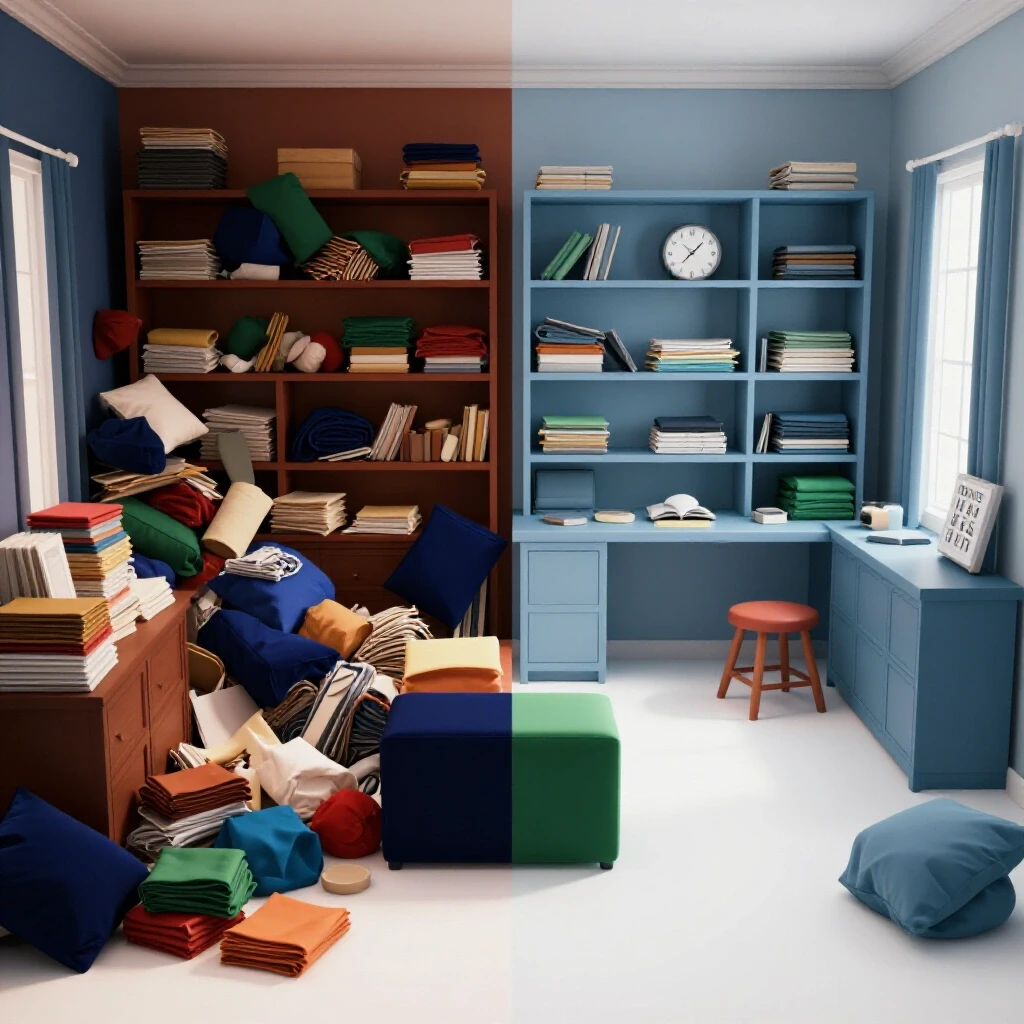
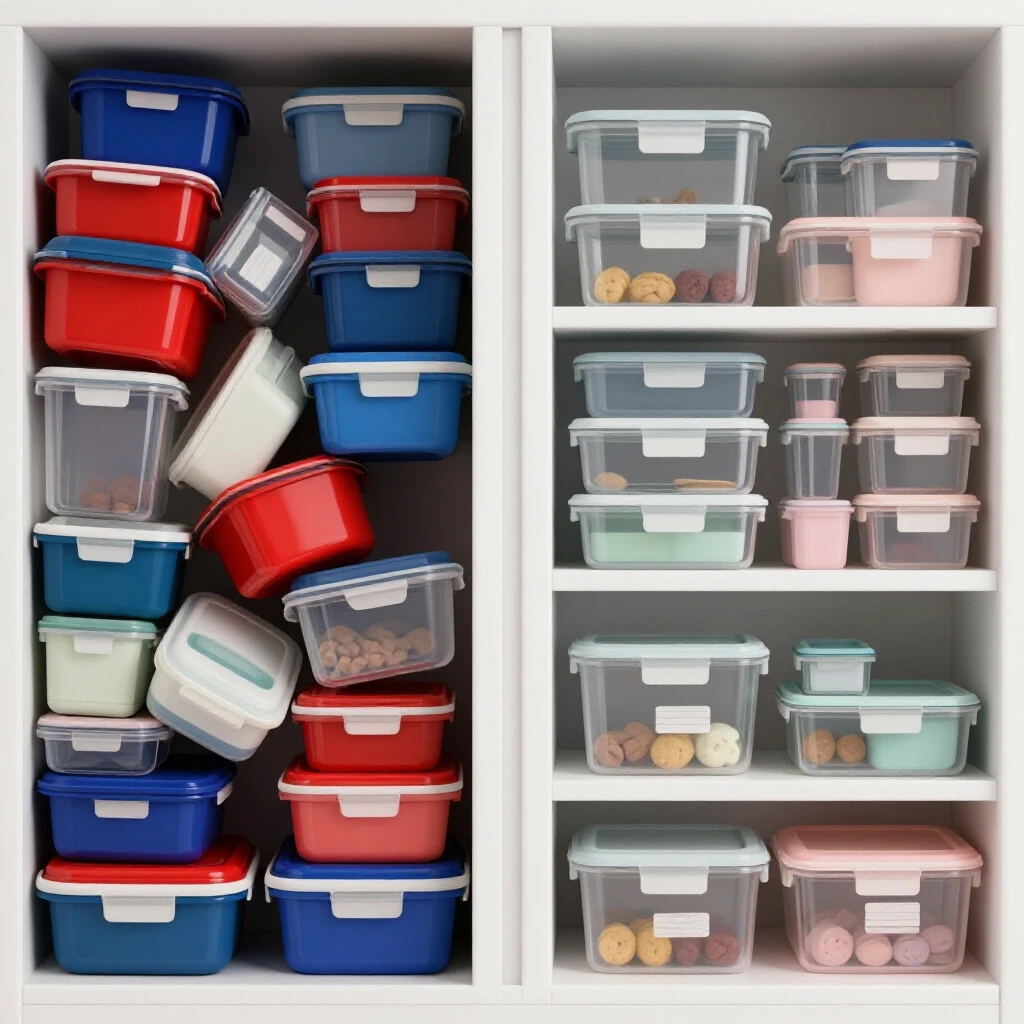
Visual clutter in the kitchen creates a high cognitive load because the brain must process hundreds of shapes and sizes to find one functional tool. This constant scanning for matching parts triggers a subtle stress response that makes simple meal preparation feel like a grueling chore.
When we open a cabinet filled with degraded or mismatched items, our brains experience what environmental psychologists call “visual processing overload.” Research in organizational behavior suggests that when a physical space is crowded with non-functional items, our ability to focus on the task at hand—like cooking a healthy meal—diminishes. In my professional work, we call this “system noise.” In a home setting, this noise manifests as frustration and a feeling that the house is never truly clean. By identifying and removing the specific items that cause this friction, we can reduce the mental energy spent on basic household navigation.
Visual Processing and Decision Fatigue in the Kitchen
Decision fatigue occurs when the sheer number of choices we make in a day depletes our mental resources, leading to poor choices or total burnout. In a kitchen, every mismatched lid or stained container represents a micro-decision: “Does this fit? Is this clean enough? Should I keep this?”
These micro-decisions add up quickly for busy professionals. If you have to move five items to reach the one you need, you are increasing “retrieval friction.” This is the physical and mental effort required to get a tool into a working state. By stripping the inventory down to only high-functioning pieces, we eliminate these unnecessary decision points. This allows the brain to stay focused on the family’s needs rather than the state of the cupboard.
Establishing Criteria for Discarding Worn Food Containers
Effective removal requires objective metrics to bypass the emotional or financial guilt often associated with throwing things away. By focusing on physical condition markers—such as warping, deep stains, or micro-cracks—you can quickly identify which items no longer serve their purpose.
In my family’s recent audit, we used a strict “logistical health check” for every piece of plastic in the kitchen. If an item did not meet a specific standard of cleanliness or structural integrity, it was removed immediately. This objective approach removes the “maybe I’ll need it later” mindset that keeps cabinets cluttered. We focused on three main categories of degradation that signaled an item was ready for disposal.
Physical Degradation and Safety Markers
Plastic food containers have a limited lifespan, especially when subjected to high-heat dishwashers and microwave use. Over time, the polymers begin to break down, leading to visible and structural changes that compromise the item’s utility.
- Cloudiness and Pitting: If a container has become opaque or has small pits in the plastic, it is often a sign of chemical breakdown or trapped bacteria.
- Persistent Odors: Plastics are porous; once a container retains the smell of last month’s curry despite multiple washings, it is a candidate for the bin.
- Warping: Bases or lids that have lost their original shape due to heat can no longer provide an airtight seal, making them functionally useless.
- Surface Peeling: Any sign of the top layer of plastic flaking off is a clear indicator that the item should be discarded for safety reasons.
| Degradation Marker | Logistical Impact | Action Required |
|---|---|---|
| Deep Staining | High Visual Noise | Discard |
| Warped Edges | Seal Failure | Discard |
| Micro-cracks | Bacterial Risk | Discard |
| Lingering Odor | Cross-Contamination | Discard |
| Missing Gasket | Leak Risk | Discard |
Identifying Mismatched Components and Redundant Items
Mismatched lids and bases are the primary source of retrieval friction in a kitchen. Eliminating any piece that lacks its corresponding partner immediately improves the flow rate of the kitchen, ensuring that every item handled is ready for immediate use.
In a professional warehouse, “orphaned stock” is inventory that cannot be sold because it is missing parts. We treat this as a total loss. I applied this same logic to our kitchen. We gathered every lid and every base and performed a “pairing sprint.” Any item that did not have a matching partner within sixty seconds was categorized as dead inventory and removed. This simple rule prevents the “lidless abyss” from reforming.
The Lid-to-Base Ratio and Retrieval Friction
Retrieval friction is measured by the number of steps or seconds it takes to find a functional tool. When your lid-to-base ratio is out of balance, your retrieval friction spikes, leading to the “clutter reversion” many families face.
- The Single-Lid Rule: If you have five identical bases but only three lids, you effectively only have three containers. The extra two bases are just occupying spatial real estate.
- The “Click” Test: If a lid sits on a base but does not securely click or seal, it is a mismatch. This often happens with different brands that look similar but have different tolerances.
- Redundant Sizes: We found that we had twenty tiny containers but only used two for school snacks. We kept the two best and discarded the rest to free up volume.
Logistical Metrics for Evaluating Kitchen Utility
Using data-driven metrics like frequency of use and volume-to-space ratios helps determine an item’s true value. If a container hasn’t been used in a full seasonal cycle, it represents “dead stock” that hinders the efficiency of the entire storage zone.
In logistics, we look at “inventory turnover.” If a product sits on a shelf for a year without moving, it is costing the company money in lost space. Your kitchen cabinets are high-value real estate. Every item that sits unused is “paying rent” in your home without providing any benefit. We decided to evaluate our containers based on how often they actually made it into the fridge or a lunchbox.
Calculating the Spatial Cost of Dead Inventory
Spatial capacity limits refer to the point where a storage area becomes so full that it loses its functionality. To find your kitchen’s limit, you must identify items that have a low utility-to-volume ratio.
- Frequency Audit: Items used daily are “Class A” inventory. Items used once a month are “Class B.” Items not used in six months are “Class C.”
- The 80/20 Rule: In most homes, 80% of the meals are stored in 20% of the containers. We identified our “top 20” and looked critically at the rest.
- Volume Efficiency: We measured the height of our cabinet and realized that bulky, non-nesting containers were wasting 40% of the vertical space. We discarded the items that couldn’t be stacked efficiently.
| Item Type | Usage Frequency | Spatial Cost | Recommendation |
|---|---|---|---|
| Daily Lunchbox | 5x / week | Low | Keep |
| Large Casserole | 1x / month | High | Evaluate |
| Specialty Shape | < 1x / year | High | Discard |
| Promotional/Free | Never | Medium | Discard |
A Case Study in Reducing Sorting Friction
Applying industrial sorting principles to my own kitchen allowed my family to cut down cleanup time by 40%. By strictly removing damaged and lidless items, we reduced the number of decisions required during the nightly post-dinner cleanup.
When I started this project, our “plastic drawer” was a source of daily arguments. My wife couldn’t find lids for leftovers, and I was tired of the drawer jamming. I treated the project like a warehouse “5S” event (Sort, Set in order, Shine, Standardize, Sustain). We didn’t focus on making it look pretty; we focused on how fast we could get a lid onto a bowl.
My Family’s Kitchen Inventory Audit
We started by emptying every single food storage item onto the dining room table. This is a “total inventory pull.” It forces you to see the sheer volume of what you own.
- The Sorting Phase: We spent 20 minutes separating lids from bases.
- The Culling Phase: We discarded anything with a stain, a smell, or a warp. This removed about 30% of the pile immediately.
- The Pairing Phase: We matched lids to bases. Anything left over was put in a “purgatory box.”
- The Result: After 48 hours, if we didn’t find the missing parts for the purgatory box, the whole box went to the recycling center. We ended up removing 50% of our total inventory.
The Step-by-Step Removal Process for Busy Families
A systematic approach to clearing out kitchen cabinets involves rapid sorting intervals and clear discard categories. This process minimizes the time spent in the “messy middle” and ensures the project is completed within a single afternoon.
For a busy professional, a decluttering project that drags on for days is a failure. It adds to the mental fatigue rather than subtracting from it. I recommend a “sprint” approach. Set a timer for 60 minutes. Your goal is not to organize, but to remove. The faster you can identify and discard the “dead stock,” the sooner you will see a measurable improvement in your daily routine.
High-Speed Sorting and Disposal Intervals
To maintain momentum, use a tiered sorting system. This prevents you from getting bogged down in individual decisions.
- The “Obvious Out” (10 Minutes): Quickly grab anything with visible cracks, deep tomato sauce stains, or melted edges. Don’t think; just toss.
- The “Lid Match” (20 Minutes): Lay all lids out. Place bases on top of their matches. If a base has no lid, it goes in the discard pile. If a lid has no base, it goes in the discard pile.
- The “Redundancy Check” (15 Minutes): Look at your remaining matches. Do you have twelve 2-cup containers but only ever use four at a time? Pick the four in the best condition and discard the rest.
-
The “Final Sweep” (15 Minutes): Look for specialty items you haven’t used in a year—like that giant cupcake carrier or the specific asparagus steamer. If the utility is low, the item must go.
-
Sorting Time-Box: 60 minutes total.
- Standard Item Density: Aim for no more than 15-20 complete sets for a family of four.
- Success Metric: You should be able to pull out a matching set in under 5 seconds.
Conclusion
The goal of this process isn’t to achieve a Pinterest-perfect kitchen; it is to create a functional workspace that supports your busy life. By applying logistical principles—like reducing retrieval friction and removing dead inventory—you can transform a chaotic cabinet into a streamlined system. My own family found that by removing the “noise” of mismatched and damaged containers, our evening cleanup became significantly faster. We stopped fighting the “avalanche” and started enjoying a kitchen that actually worked for us. Start your own 60-minute sprint tonight. Focus on the physical condition and the lid matches, and don’t be afraid to let go of the items that are slowing you down. Your mental health and your schedule will thank you.
Frequently Asked Questions
How do I know if a stained container is truly “bad”?
If a stain is accompanied by a change in texture, such as a sticky or rough surface, the plastic is degrading. This happens when fats and sugars are overheated in the microwave, bonding with the plastic. At this point, the container is no longer easy to sanitize and should be discarded to maintain a hygienic kitchen.
What should I do with lids that don’t have a matching base?
In a high-efficiency kitchen, a lid without a base is “orphaned inventory.” Unless you are certain the base is currently in the fridge or dishwasher, these should be discarded. Keeping them “just in case” creates visual clutter and increases the time it takes to find functional sets.
How many food storage containers does a family of four actually need?
Most families over-estimate their needs. A logical baseline is 12 to 18 complete sets of varying sizes. This allows for a week’s worth of lunches and several nights of leftovers. If your cabinets are overflowing, you likely have “safety stock” that you never actually use.
Is it worth keeping containers that have a slight smell?
No. Persistent odors are a sign that the plastic has become porous and is holding onto organic matter. This can affect the flavor of new food stored in the container. From a logistical standpoint, an item that compromises the quality of your “output” (your food) is a faulty tool and should be removed.
Why does my kitchen get cluttered again so fast after I organize it?
This usually happens because the “system friction” is too high. If you have too many items for the space, or if you have to stack things in complex ways to make them fit, the system will fail. By discarding the bottom 30% of your least-used or damaged items, you create “spatial buffer,” which makes it easier to maintain order.
Can I keep containers that are slightly warped if they still close?
If a container is warped, the seal is no longer airtight. This leads to food spoiling faster, which is a logistical failure. A container that doesn’t protect its contents is not worth the space it occupies. Discard any piece that requires “forcing” to close.
What is the fastest way to sort through a massive pile of plastic?
Use the “Total Inventory Pull” method. Clear a large flat surface and dump everything out. Sort by shape first (round, square, rectangular), then match lids within those shapes. This visual grouping allows your brain to process the inventory much faster than looking at one piece at a time inside a dark cabinet.
How often should I perform this type of kitchen audit?
For a busy family, a “logistical cull” should happen every six months. This accounts for the natural wear and tear of daily use and the inevitable influx of new items (like those “disposable” containers from takeout or guests). Regular culling prevents the “clutter creep” that leads to mental fatigue.
What if I feel guilty about throwing away items that still “work”?
Focus on the “spatial cost.” Every item you keep that is stained, mismatched, or rarely used is taking away space from the items you actually need. In logistics, keeping low-value items is a waste of resources. Reframe the act of discarding as “reclaiming your time and mental clarity.”
Does the brand of the container matter when deciding what to throw out?
Only in terms of “Standardization.” If you have three different brands that are almost—but not quite—interchangeable, pick the brand you have the most of and discard the outliers. Standardization reduces the cognitive load of finding a match, as you no longer have to guess which lid goes with which brand’s base.
(This article was written by one of our staff writers, Christopher Bennett. Visit our Meet the Team page to learn more about the author and their expertise.)