How to Prevent Water Damage Under Sink (Easy DIY Setup)

Have you ever considered that the most vulnerable part of your home’s plumbing infrastructure is hidden behind a simple cabinet door? During my 17 years as a facilities technician, I have spent countless hours crawling into the cramped spaces beneath kitchen and bathroom fixtures. In older legacy properties, these areas are often the first to show signs of structural fatigue. I have seen how a single, unmonitored drip can compromise the integrity of a subfloor over several months, leading to repairs that far exceed the cost of simple preventative measures.
My approach to home care is rooted in building science, which is the study of how heat, air, and moisture move through a structure. Under a sink, we are dealing with a micro-environment. This small space experiences frequent temperature shifts and high humidity levels. By understanding how moisture interacts with materials like plywood, particle board, and copper, we can create a containment system that protects the home from the inside out.
Why Sub-Sink Environments Fail—Understanding the Building Science of Moisture
The area beneath a sink is a high-risk zone because it combines mechanical penetrations with a confined, unventilated volume. In building science, we focus on the “envelope” of a space. When pipes pass through the bottom or back of a cabinet, they create breaches in that envelope. If a leak occurs, gravity pulls the water to the lowest point, which is typically the porous floor of the cabinet.
Two primary forces are at play here: capillary action and vapor pressure. Capillary action is the ability of a liquid to flow in narrow spaces without the assistance of, or even in opposition to, external forces like gravity. If water pools under a bottle of cleaner, it can “climb” up the sides of the cabinet or soak into the wood fibers. Vapor pressure refers to the force exerted by water vapor. In a closed cabinet, stagnant air can become saturated with moisture, leading to condensation on cold-water supply lines.
| Symptom | Potential Root Cause | Physical Evidence |
|---|---|---|
| Damp cabinet floor | Slow supply line drip | Water tracking down the braided hose |
| Swollen wood at the back | Improperly sealed penetrations | Softness around the pipe entry points |
| Musty odor | High ambient humidity | No visible standing water; general damp feel |
| Discolored rings | Intermittent drain leak | Stains appearing after the sink is filled and drained |
| Corrosion on hinges | Excessive condensation | Green or white crust on metal components |
Diagnostic Tools for Early Moisture Detection
Identifying a problem before it causes physical deformation requires more than just a quick glance. I have found that a systematic inspection is only as good as the tools used to perform it. For a homeowner managing an older property, having a dedicated diagnostic kit is the first step in a professional-grade maintenance routine.
- Non-Invasive Moisture Meter: This tool measures the moisture content of wood and drywall without poking holes. In a dry cabinet, the reading should typically be below 12%. Anything above 17% indicates active moisture accumulation that needs immediate attention.
- High-Lumen LED Flashlight: Shadows can hide small tracks of dried minerals left by “ghost leaks.” A light with at least 500 lumens is necessary to spot these faint trails on the back of the cabinet.
- Telescoping Inspection Mirror: This allows you to see the “blind” side of the P-trap and the underside of the sink rim where the mounting clips are located.
- Paper Towel Test: A simple but effective method. Wrapping a dry paper towel around a joint and checking it after ten minutes of running water will reveal even the smallest “weeping” leaks.
Establishing a Resilient Barrier: Cabinet Floor Protection
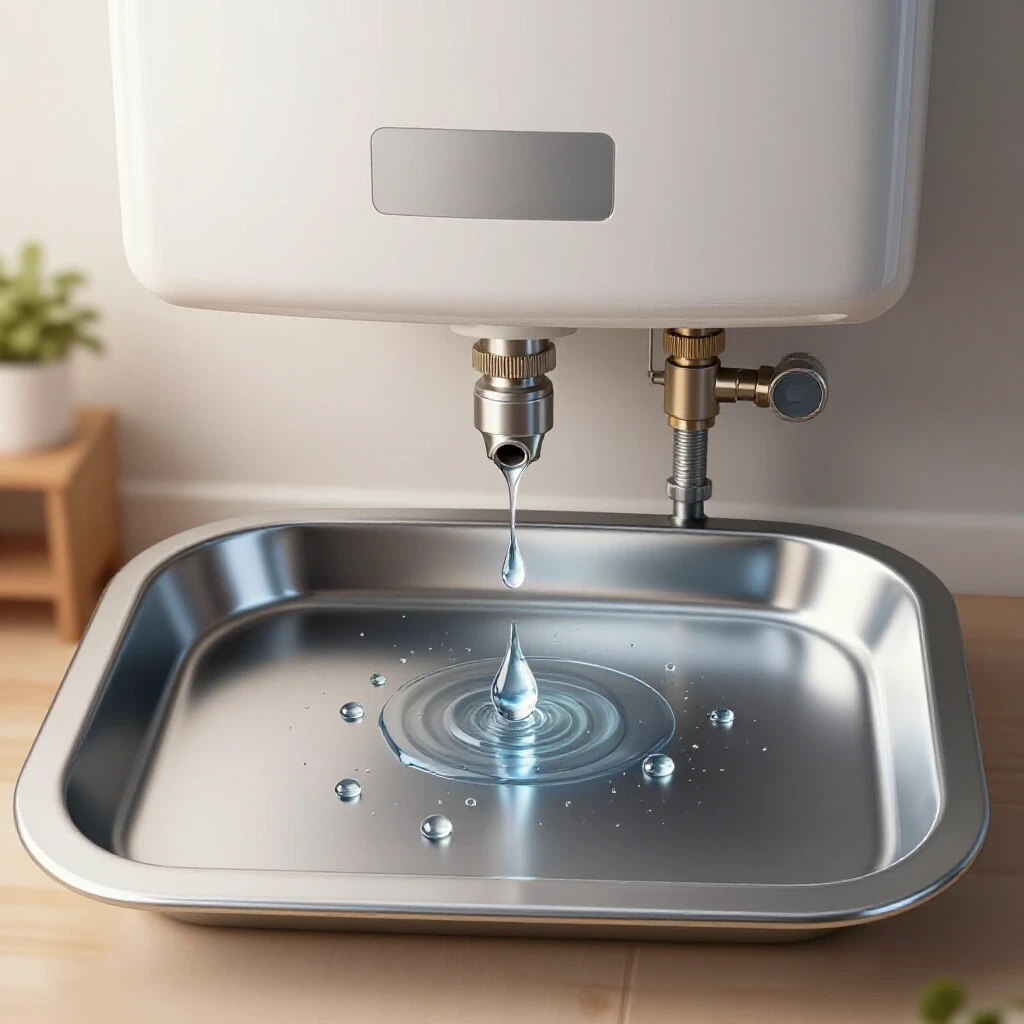
The floor of a sink cabinet is often made of engineered wood, which acts like a sponge when exposed to liquid. To prevent structural damage, we must install a secondary containment layer. This layer serves two purposes: it protects the wood and it makes a leak immediately visible by preventing the water from soaking in.
A high-quality containment setup involves using a flexible, waterproof silicone mat with a raised lip. These mats are designed to hold between one and two gallons of water. If a supply line fails, the water stays in the mat rather than flowing into the subfloor. Before installing a mat, I always ensure that the penetrations—the holes where the pipes come through—are sealed. Using a 100% silicone caulk around these gaps prevents water from following the pipes down into the crawlspace or basement.
Building science tells us that air sealing is just as important as water sealing. By closing the gaps around the plumbing, you also reduce the “stack effect,” which is the movement of air from the lower levels of the home into the living spaces. This helps maintain a stable temperature inside the cabinet, reducing the likelihood of condensation forming on the pipes.
Strategic Organization for Visible Maintenance
One of the biggest mistakes I see in residential diagnostics is a cluttered cabinet. When the space under a sink is packed with sponges, cleaners, and plastic bags, you cannot see the floor. This “out of sight, out of mind” reality allows slow leaks to persist for years.
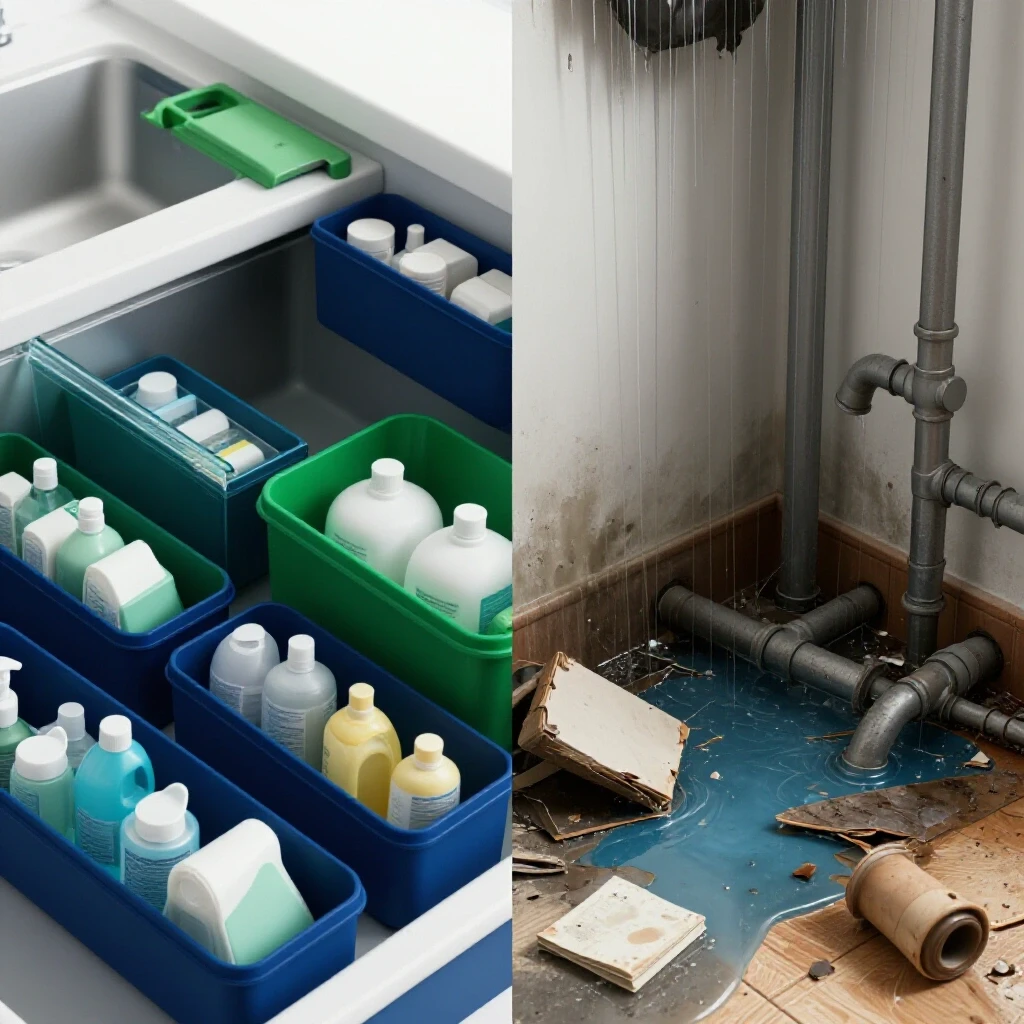
To fix this, I recommend a “suspended storage” model. By using pull-out wire baskets or risers, you keep all items at least two inches off the floor of the cabinet. This ensures that if a leak does occur, your supplies don’t become saturated, and you have a clear line of sight to the back of the cabinet.
- Use clear plastic bins for small items to prevent hidden spills from chemicals.
- Install a motion-activated LED light inside the cabinet to make weekly visual checks effortless.
- Avoid hanging heavy spray bottles on the cabinet doors, as this can pull the hinges out of alignment over time, creating gaps where moisture can enter the wood grain.
Managing Humidity and Airflow
In many older homes, the cabinets are tightly sealed, which prevents air circulation. If the humidity level inside the cabinet exceeds 60%, the risk of surface degradation increases significantly. This is especially common in bathrooms where steam from showers can migrate into the vanity.
To manage this, you can install small, passive vents on the cabinet doors or sides. This allows the air inside to reach an equilibrium with the rest of the room. If the property is located in a high-humidity climate, placing a rechargeable desiccant pack in the back corner can help pull excess moisture out of the air. These packs change color when they are saturated, providing a clear visual cue for maintenance.
| Maintenance Task | Frequency | Target Metric |
|---|---|---|
| Visual inspection of P-trap | Monthly | No visible moisture or salt deposits |
| Moisture meter reading of floor | Quarterly | Less than 15% moisture content |
| Silicone seal integrity check | Annually | No peeling or gaps in caulk |
| Supply line “Touch Test” | Monthly | Braided lines should be dry to the touch |
| Re-leveling the cabinet mat | Bi-annually | Ensure the lip is upright and holding shape |
Identifying Thermal and Mechanical Failures
Mechanical failures under a sink are often predictable if you know what to look for. For example, the vibration from a garbage disposal can gradually loosen the slip nuts on a plastic drain line. In my facility logs, I have noted that disposal-related leaks often start as a tiny spray that only occurs when the motor is running.
Thermal failures occur when the temperature differential between the pipe and the air is too great. If you have a cold water line in a warm, humid kitchen, the pipe will “sweat.” Over time, this condensation drips onto the cabinet floor. To prevent this, I recommend insulating the first 24 inches of the cold water supply line with foam sleeves. This simple step breaks the thermal bridge and keeps the exterior of the pipe dry.
DIY vs. Professional Scope Limits
Knowing when to handle a repair yourself and when to call in a specialist is a key part of preventative home care. My rule of thumb is based on the complexity of the connection and the potential for catastrophic failure.
- DIY Scope: Tightening slip joints, replacing cabinet liners, sealing floor penetrations with silicone, and installing organization systems. These are low-risk tasks that significantly improve the cabinet’s resilience.
- Professional Scope: Replacing shut-off valves, repairing copper solder joints, or addressing leaks inside the wall. If a valve is stuck or “frozen,” applying too much torque can snap the pipe behind the wall, leading to an immediate high-pressure flood.
| Phase | DIY Actions | Warning Signs to Stop |
|---|---|---|
| Inspection | Using a flashlight and moisture meter | Seeing water spraying from a pressurized line |
| Containment | Installing a silicone mat and sealing gaps | Finding active rot in the floor joists below |
| Maintenance | Tightening hand-tight plastic nuts | Encountering corroded metal pipes that crumble |
| Improvement | Adding LED lighting and risers | Noticing electrical wires that are wet or frayed |
Step-by-Step Execution for a Prevention Setup
If you are starting from scratch with an older cabinet, follow this systematic workflow to ensure the space is fully protected.
- Clear and Clean: Remove everything from the cabinet. Clean the floor with a mild detergent and allow it to dry for 24 hours. Use a fan to ensure all moisture is removed from the wood pores.
- Test the Baseline: Use your moisture meter to check the floor and side walls. Record these numbers in your home maintenance log.
- Seal the Penetrations: Apply a bead of 100% silicone around every pipe that enters the cabinet. Don’t forget the small gaps where the cabinet meets the wall.
- Install the Barrier: Place a custom-fit silicone mat on the floor. Ensure the edges are flush against the walls. If the mat is slightly too large, it can be trimmed, but always maintain the raised lip.
- Organize for Airflow: Place your risers and bins. Ensure that no items are touching the supply lines or the P-trap.
- Set a Schedule: Mark your calendar for a 30-day follow-up to check for any new signs of moisture.
Long-Term Monitoring and Modern Diagnostics
In the age of smart homes, we have access to sensors that can provide 24/7 monitoring. While I value manual inspections, a Wi-Fi-enabled water sensor is a great backup. These small devices sit on the floor (or in your new mat) and send an alert to your phone the moment they detect liquid. For a homeowner who travels or manages a legacy property from a distance, this is an invaluable layer of protection.
However, technology does not replace the “technician’s eye.” I still recommend a physical “touch test” every month. Reach back and feel the shut-off valves. Are they cold? Are they damp? Check the supply lines for any kinking or “bubbling” in the outer mesh. These are the early warning signs of a mechanical failure that a sensor might miss until it is too late.
Building a Multi-Year Prevention Program
Home maintenance is not a one-time event; it is a cycle. By treating the area under your sink as a critical mechanical zone, you move from a reactive mindset to a proactive one. This shift is what saves homeowners thousands of dollars in structural repairs over the life of a property.
Every five years, I recommend a more thorough “deep dive” into the cabinet’s health. This includes checking the torque on all mounting hardware and ensuring the sink itself is still properly sealed to the countertop. If the caulk around the sink rim fails, water can seep down the outside of the sink and rot the cabinet from the top down. This “top-down” moisture path is often overlooked but is just as destructive as a plumbing leak.
Summary of Key Metrics for Success
To ensure your setup is functioning correctly, keep these standards in mind: – Relative Humidity: Keep the cabinet interior below 60%. – Moisture Content: Wood surfaces should remain below 15%. – Containment Capacity: Your mat should hold at least 1 gallon of liquid. – Visual Clearance: At least 50% of the cabinet floor should be visible at a glance. – Water Pressure: Ensure your home’s main pressure is between 40 and 60 PSI; high pressure (over 80 PSI) significantly increases the risk of under-sink failures.
By following these guidelines, you are not just cleaning a cabinet; you are applying facility management principles to preserve your home’s value and structural integrity.
Frequently Asked Questions
How do I know if the dampness I feel is a leak or just condensation? Condensation usually appears as a uniform “sweat” or fine mist on cold surfaces like metal pipes. It is most common during humid months. A leak will typically have a specific point of origin, such as a joint or a nut, and will result in a concentrated drip or a trail of mineral deposits.
What is the best material for a cabinet liner? Silicone is the superior choice because it is heat-resistant, flexible, and completely waterproof. Unlike adhesive shelf liners, a thick silicone mat can contain a volume of water and is easily removed for cleaning.
Can I use a moisture meter on particle board? Yes, but be aware that particle board is more porous than solid wood. If the meter shows a high reading, the material may already be structurally compromised. Particle board often “blisters” or expands when wet, which is a clear sign of internal damage.
Why shouldn’t I store my cleaning chemicals directly on the cabinet floor? Chemicals can leak from their bottles. Many household cleaners are acidic or caustic and can eat through the finish of your cabinet or even corrode metal plumbing pipes. Using a secondary plastic bin protects your cabinet from both water and chemical damage.
How often should I replace my flexible supply lines? Most manufacturers and safety experts recommend replacing braided stainless steel supply lines every 5 to 7 years. Even if they look fine on the outside, the inner rubber hose can degrade over time, leading to a sudden burst.
What should I do if I find a small amount of water in my containment mat? First, dry the mat completely. Then, run the faucet and use a dry paper towel to check every connection. If no leak is found, check for condensation or a leak from the sink rim. Never ignore water in the mat, even if it seems like a small amount.
Is it necessary to seal the back of the cabinet where the pipes come in? Yes. Sealing these penetrations prevents moisture from traveling into the wall cavity or down into the floor. It also blocks pests and reduces air drafts, which helps maintain a stable environment under the sink.
Does the type of sink affect the risk of moisture damage? Undermount sinks have a higher risk of “rim leaks” where the sink meets the stone countertop. If the silicone seal there fails, water can run down the side of the sink. Top-mount sinks are generally safer in this regard, but the caulk around the edge still needs annual inspection.
Are plastic P-traps better than metal ones for preventing leaks? Plastic P-traps are often preferred in modern residential settings because they do not corrode and are easier to tighten by hand. Metal traps can develop “pinhole” leaks due to corrosion from the inside out, which are very difficult to spot early.
How can I improve the airflow in a bathroom vanity? If you don’t want to install vents, simply leaving the cabinet doors open for 30 minutes after a shower can help the space dry out. This is a simple lifestyle habit that prevents humidity buildup in legacy properties.
(This article was written by one of our staff writers, Daniel Whitaker. Visit our Meet the Team page to learn more about the author and their expertise.)