How to Fix Wet Carpet Near Walls: Find and Solve Moisture Issues (Guide)

A bright, neon-orange piece of painter’s tape marks the spot where the beige pile meets the baseboard. This small square of color serves as my “ground zero” for a diagnostic process I have repeated hundreds of times over 17 years of facility maintenance. When you find localized dampness at the edge of a room, your home is talking to you, and it is usually whispering about a failure in the building envelope or an environmental imbalance.
Understanding the Building Science of Perimeter Dampness
Building science is the study of how heat, air, and moisture move through a structure’s physical layers. In older properties, these elements are in a constant state of flux, and when moisture accumulates at the junction where a floor meets a wall, it is often due to a breakdown in one of these three flows.
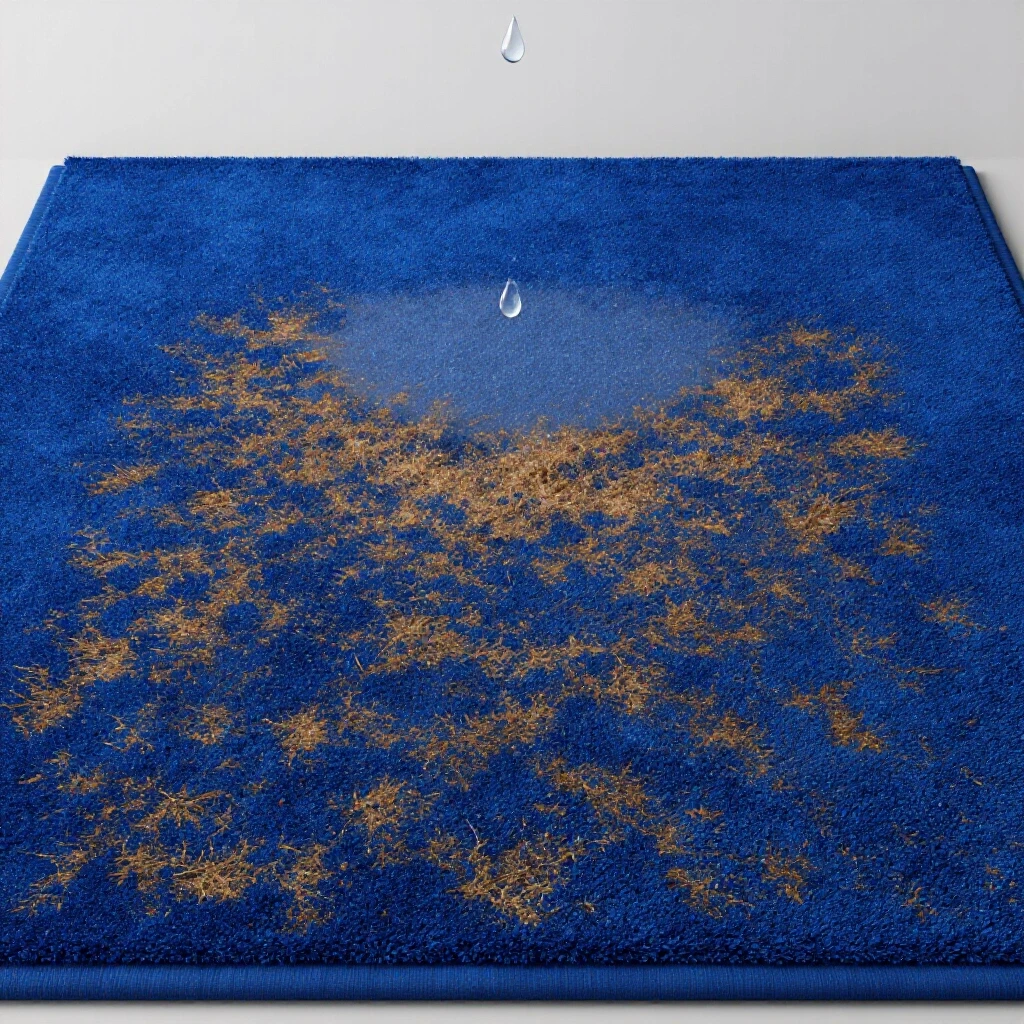
In my experience, many homeowners assume a damp spot on the floor is always a direct leak, but it is often the result of more subtle forces. For instance, capillary action occurs when fluid is “sucked” through tiny porous spaces in building materials, much like a sponge. Similarly, thermal bridging happens when a structural element, such as a wall stud or a concrete slab, conducts cold from the outside to the inside. When warm, humid indoor air hits that cold spot at the base of your wall, it reaches its “dew point” and turns into liquid water, saturating the fibers of your floor covering.
The Role of Hydraulic Pressure in Older Foundations
Hydraulic pressure is the force exerted by stagnant or moving water against a home’s foundation or subfloor. When the ground outside becomes saturated, this pressure can push moisture through microscopic cracks in a foundation wall or up through a concrete slab, manifesting as dampness at the room’s perimeter.
Older homes often lack the modern vapor barriers—typically 6-mil polyethylene sheeting—that prevent this upward migration. Without this shield, the concrete acts as a giant wick. I have seen cases where the moisture content in a subfloor reached 18% to 22%, which is the threshold where structural integrity can begin to degrade if left unaddressed. Understanding that your home is a dynamic system helps you move from reactive repairs to proactive prevention.
Essential Tools for Tracking Residential Fluid Intrusion
To manage a property effectively, you must move beyond guesswork and use objective data. Tracking moisture requires a specific kit of tools designed to see what the human eye cannot, allowing you to establish a baseline for your home’s “normal” state.
- Pinless Moisture Meter: This tool uses electromagnetic signals to detect moisture up to 0.75 inches below the surface without poking holes in your finishes.
- Infrared (Thermal) Camera: These devices visualize temperature differentials. A cold spot near the floor-to-wall junction often indicates either missing insulation or active liquid presence.
- Thermo-Hygrometer: This measures relative humidity (RH) and ambient temperature. Maintaining an indoor RH between 30% and 50% is critical for preventing condensation.
- Borescope/Inspection Camera: A tiny camera on a flexible cable that can be fed into small gaps to view the condition of the wall cavity or the underside of the floor.
- Calibrated Pressure Gauge: If you suspect external issues, checking the slope of your landscape with a simple line level ensures water is moving away at a rate of at least 1 inch of drop per foot for the first 6 feet.
| Tool | Primary Metric | Target Range |
|---|---|---|
| Moisture Meter | % Moisture Content (MC) | 6% – 12% (Dry) |
| Hygrometer | Relative Humidity (RH) | 30% – 50% |
| Thermal Camera | Temperature Delta (ΔT) | < 5°F difference |
| Laser Level | Grading Slope | 1″ drop per 1′ |
Systematic Troubleshooting for Damp Floor Coverings
When you encounter a damp area near an exterior wall, a systematic diagnostic sequence is required to isolate the source. Jumping to conclusions often leads to unnecessary expenses, so I always recommend starting with the least invasive checks first.
First, I perform the “Paper Towel Test.” Place a heavy, dry paper towel over the damp area and weight it down with a heavy object for 24 hours. If the towel is wet on the top side, the moisture is likely coming from the air (condensation). If it is wet on the bottom, it is migrating upward from the subfloor or through the wall. This simple step narrows your search by 50% immediately.
Checking the Exterior Building Envelope
During my years maintaining legacy properties, I found that 70% of perimeter dampness issues originated outside the home. Walk the exterior of the property during a rainstorm. Are the gutters overflowing? Is a downspout discharging water directly against the foundation? Even a small gap in the caulking around a window or a door frame can allow water to track down the inside of a wall and pool at the carpet’s edge.
I once consulted on a 1920s bungalow where the owner had recurring dampness in the guest room. By using a thermal camera, we discovered that a decorative exterior shutter had been screwed into the siding without sealant. Rainwater was entering the screw holes, running down the house wrap, and emerging at the baseboard inside. A $5 tube of silicone solved a problem that the owner feared would cost thousands.
The Science of Thermal Bridging and Condensation
Condensation is the most frequent “hidden” cause of dampness at the base of walls in older homes. This occurs when the temperature of a surface falls below the dew point of the surrounding air, causing water vapor to turn into liquid.
In older construction, the “rim joist”—the area where the house frame sits on the foundation—is often poorly insulated. This creates a massive thermal bridge. In winter, the base of the wall becomes significantly colder than the rest of the room. If you have furniture pushed tightly against these exterior walls, you restrict airflow. This creates a “micro-climate” where cold air is trapped, leading to heavy condensation that eventually soaks the floor.
Metrics of Condensation Risk
- Surface Temperature: If the wall base is 10°F to 15°F colder than the room air, condensation is highly likely.
- Airflow Velocity: Air moving at less than 0.1 meters per second is considered stagnant, increasing moisture buildup.
- Vapor Pressure: High indoor vapor pressure (caused by cooking, showering, or unvented heaters) forces moisture toward the colder exterior walls.
Non-Invasive Remedies and Airflow Optimization
Once you have ruled out a major structural failure, you can implement several non-invasive strategies to manage and prevent moisture accumulation. These steps focus on improving the “breathability” of the home and reducing the environmental stressors that lead to dampness.
I always advise the “Two-Inch Rule.” Ensure that all furniture, especially heavy pieces like dressers or sofas, is at least two inches away from exterior walls. This allows the home’s HVAC system to circulate air behind the furniture, keeping the wall temperature closer to the room’s ambient temperature. This single adjustment can reduce condensation-related dampness by up to 80% in older properties.
Improving Interior Drainage and Dehumidification
If your home has a basement or crawlspace, the moisture you feel in the carpet upstairs may be rising from below. Utilizing a high-capacity dehumidifier in the lowest level of the home can lower the overall vapor pressure of the structure. I recommend setting your dehumidifier to 45% RH. This creates a “dry sink” effect, where moisture is pulled out of the building materials and into the air to be collected and drained away.
- Step 1: Vacuum the affected carpet area with a wet/dry vac to remove as much liquid as possible.
- Step 2: Use a high-velocity floor fan to move air across the surface for 48 hours.
- Step 3: Lift the edge of the carpet (if possible, without damaging the tack strip) to allow the padding underneath to dry.
- Step 4: Inspect the baseboard for “cupping” or “crowning,” which indicates the wood has absorbed significant moisture.
Long-Term Prevention and Maintenance Frameworks
Preventative home care is about consistency rather than intensity. By establishing a routine, you can catch minor issues before they become structural failures. I use a seasonal checklist to ensure the building envelope remains intact.
In the spring, focus on the exterior. Clean gutters and ensure all downspout extensions are at least 6 to 10 feet away from the foundation. In the fall, inspect the weatherstripping on all doors and windows. A drafty window doesn’t just let in cold air; it lets in moisture and creates the temperature imbalances that lead to perimeter dampness.
Symptom-to-Root-Cause Diagnostic Tree
| Symptom | Potential Root Cause | Diagnostic Action |
|---|---|---|
| Dampness after heavy rain | Poor grading or gutter failure | Inspect exterior drainage during rain |
| Dampness on cold days only | Condensation / Thermal bridging | Check surface temp with IR camera |
| Constant dampness, no rain | Capillary rise from subfloor | Use moisture meter on subfloor |
| Dampness near a window | Failed window seal or weep hole | Inspect window track for standing water |
DIY vs. Professional Scope Limits
Knowing when to call a professional is a hallmark of a responsible homeowner. My 17 years in the field have taught me that while many moisture issues are environmental, some require specialized intervention.
If you find that the moisture is localized specifically around a plumbing fixture, or if the moisture meter shows a “saturated” (over 35%) reading that does not improve after 48 hours of drying, you have likely moved beyond a DIY scenario. Furthermore, if you notice that the dampness is accompanied by a “musty” odor that persists after the area is dry, it is time to consult a specialist who can look deeper into the wall assembly.
When to Transition to a Contractor
- Structural Softening: If the subfloor or wall studs feel soft or “punky” when pressed with a screwdriver.
- Persistent Saturation: If moisture levels remain above 16% despite running a dehumidifier for a week.
- Foundation Cracks: If you see horizontal cracks in the foundation wall coinciding with the damp spot.
- Electrical Concerns: If the moisture is near an outlet or junction box, shut off the circuit immediately and call an electrician.
Case Study: The “Mystery” Corner in a 1950s Ranch
I once worked on a property where the owner found a damp patch in the corner of the master bedroom every October. There were no pipes in that wall, and the roof was brand new. Using a thermal camera, we saw a massive cold spot.
It turned out that when the home was built, the insulation in that specific corner had slumped down, leaving a 12-inch gap of uninsulated wall. Every autumn, as the temperature dropped, the owner’s humidifier would kick on, and the moisture would condense on that cold, uninsulated corner, soaking the carpet. We didn’t need a plumber; we simply needed to blow a small amount of insulation into that wall cavity and adjust the furniture.
Actionable Diagnostic Checklist for Homeowners
Use this checklist the moment you detect moisture at the edge of your flooring.
- [ ] Check the HVAC: Is the AC condensate line draining properly?
- [ ] Test the Humidity: Is the room’s RH above 55%?
- [ ] Exterior Walkaround: Are there puddles within 3 feet of the wall?
- [ ] Furniture Check: Is there at least a 2-inch gap for airflow?
- [ ] Siding Inspection: Are there cracks in the stucco or gaps in the siding?
- [ ] Window Weep Holes: Are the small drainage holes at the bottom of the window frame clear of debris?
- [ ] Gutter Check: Are the gutters clear and the downspouts attached?
By following this systematic approach, you transform from a worried homeowner into a capable facility manager of your own property. Moisture is a persistent force, but with the right tools and a basic understanding of building science, it is a force that can be managed and mastered.
Frequently Asked Questions
Why is my carpet wet specifically near the baseboard after it rains?
This is usually caused by poor exterior drainage. When gutters overflow or the ground slopes toward the house, water pools against the foundation. Through capillary action or hydrostatic pressure, this water can be pushed through the wall assembly or under the sill plate, appearing at the edge of your carpet.
Can humidity alone make the edges of a carpet feel damp?
Yes. In a process called “hygroscopic transition,” carpet fibers and the dust trapped within them can absorb moisture directly from the air if the relative humidity exceeds 60%. This is most common in corners or behind furniture where airflow is restricted, causing the air to cool and its relative humidity to spike.
How do I know if the moisture is coming from the floor or the wall?
Perform the “Plastic Sheet Test.” Tape a 12×12 inch square of clear plastic over the damp spot, sealing all four edges with duct tape. After 24 hours, check for droplets. If they are on the underside of the plastic, moisture is rising from the floor. If they are on the top, it is condensing from the room air.
Is a moisture meter reading of 15% normal for a subfloor?
A reading of 15% is on the high end of “normal” for most regions but is generally considered the “caution” zone. Ideally, wood subfloors should stay between 6% and 12%. If the reading stays at 15% or higher consistently, you should investigate environmental causes like high humidity in the crawlspace.
How much of a gap should I leave between furniture and an exterior wall?
A minimum of 2 inches is recommended. This allows for sufficient “convective airflow,” which helps keep the surface temperature of the wall closer to the room’s air temperature, significantly reducing the risk of condensation at the floor level.
Why does my carpet feel damp even though there are no pipes in the wall?
This is often due to “thermal bridging.” A structural component (like a concrete slab or a steel bolt) conducts the outside cold into the warm room. This cold spot acts as a magnet for indoor humidity, which turns into liquid water (condensation) upon contact, soaking the carpet.
Can a clogged window weep hole cause the floor to get wet?
Absolutely. Modern windows have small “weep holes” designed to let water drain out of the frame. If these are clogged with dirt or insects, the water backs up, overflows the interior channel, and runs down the inside of the wall, often emerging at the carpet line.
What is the best way to dry out a damp carpet quickly?
The most effective method is “extraction and evaporation.” Use a wet/dry vacuum to pull as much liquid out as possible, then use a high-velocity air mover or floor fan to blow air across (not just at) the surface. Simultaneously, run a dehumidifier to lower the room’s vapor pressure.
Should I pull up the carpet to check for damage?
If the dampness is recurring or the area is larger than a few square inches, it is wise to pull back the carpet from the corner. This allows you to inspect the tack strip and padding. If the tack strip is black or the padding is disintegrated, the moisture issue has been present for a significant amount of time.
How does grading affect moisture inside my home?
Grading is the slope of the land around your foundation. If the land is flat or slopes toward the house, gravity pulls rainwater toward your walls. Professional standards recommend a slope of at least 5%, which equates to a 6-inch drop over the first 10 feet away from the foundation.
(This article was written by one of our staff writers, Daniel Whitaker. Visit our Meet the Team page to learn more about the author and their expertise.)