How to Find and Declutter Hidden Spaces at Home (Step-by-Step Guide)

For 11 years, I have managed complex supply chains and warehouse logistics. I spend my days ensuring that every pallet and parcel moves through a system with the least amount of resistance. However, a few years ago, I realized my own house was failing the very principles I applied at work. Despite my professional background, my family lived in a cycle of cleaning and cluttering. We would spend a Saturday organizing the pantry, only to find it a chaotic mess by Tuesday.
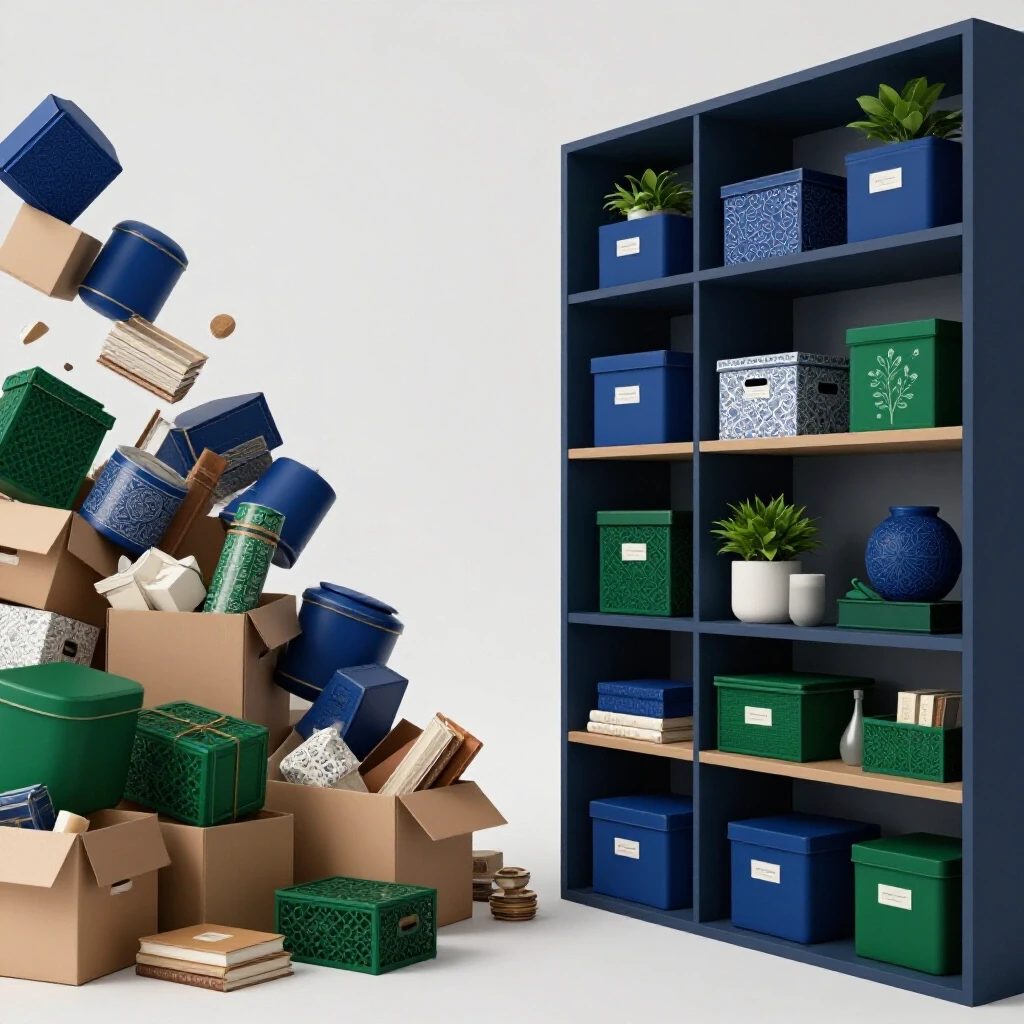
I decided to treat our living space like a fulfillment center. I began a deep audit of the forgotten areas in our house. This was not just a surface clean. I looked into the back of deep cabinets, under the stairs, and at the very top of closets. I found that these neglected spaces were the primary cause of our daily stress. They were filled with items we no longer used, which prevented us from storing the things we actually needed. By applying spatial management and reducing what I call “retrieval friction,” we finally broke the cycle of constant tidying.

Why Traditional Home Organization Systems Often Fail in Busy Households
Home organization systems fail when they prioritize appearance over how a family actually moves through a room. Most people buy beautiful bins and labels before they understand their own habits. This creates a high-friction environment where putting an item away takes too many steps. When life gets busy, these complex systems are the first thing to break.
Logistics is the study of movement. In a home, we must look at the flow of items. If a child has to open a closet, pull out a heavy bin, remove a lid, and then place a toy inside, they likely won’t do it. That is a four-step process. In professional logistics, we aim for one-step or two-step processes. Reducing household clutter requires us to lower the “cost” of being tidy. Environmental psychology journals often highlight that visual clutter increases cortisol levels. When a system is too hard to maintain, the resulting mess creates mental fatigue for everyone in the house.
Conducting a Deep Spatial Audit of Neglected Residential Areas
A spatial audit is a systematic check of every cubic inch of storage to identify underused or misused areas. Instead of looking at what is on your counters, you look at what is hiding behind closed doors. This process reveals the “dead stock” of your home. These are items that take up valuable real estate but provide zero daily value.
When I audited the rear sections of our kitchen cabinets, I found gadgets we had not touched in years. These items acted as physical barriers to the things we used every day, like mixing bowls or the toaster. By clearing out these hidden pockets, we increased our usable storage volume without adding a single square foot to the house. To start your own audit, you must measure your current capacity versus your actual needs.
Measuring Storage Efficiency and Volume
Storage volume metrics help you understand if your home is over capacity. Most professional warehouses aim for 85 percent utilization. If a space is 100 percent full, it becomes impossible to move items in and out efficiently. This leads to items being left on floors or counters because there is “no room” for them.
- Spatial Capacity Limit: The total volume of your storage units.
- Item Density: How many items are packed into a specific area.
- Utilization Percentage: The amount of filled space versus empty space.
- Access Frequency: How often you actually reach for an item in a specific zone.
| Storage Type | Retrieval Steps | Friction Level | Best Use Case |
|---|---|---|---|
| Open Wall Hooks | 1 Step | Very Low | Daily coats, bags, keys |
| Open Floor Bins | 1 Step | Low | Kids’ toys, shoes, blankets |
| Lidded Clear Bins | 3 Steps | Medium | Seasonal clothes, holiday decor |
| Stacked Opaque Bins | 5+ Steps | High | Long-term archives, rare tools |
Implementing Sustainable Decluttering Through Industrial Sorting Logic
Sustainable decluttering is not about a one-time purge. It is about creating a flow where items enter and leave the home at a balanced rate. In logistics, we call this “inflow and outflow control.” If more items come into your home than leave it, clutter is an mathematical certainty.
To manage this, I use a sorting framework based on “velocity.” High-velocity items are things you use every day. Low-velocity items are used once a year. Most people make the mistake of storing low-velocity items in high-value real estate, like the middle shelf of the pantry or the entryway closet. By moving forgotten items from these prime areas to the “hidden corners” of the attic or garage, you free up the space needed for a functional daily routine.
The Three-Pile Sorting Framework
This framework allows for rapid decision-making during an inventory of forgotten spaces. It prevents the “stalling” that happens when we get stuck on a single item for too long.
- Active Inventory: Items used in the last six months. These stay in accessible zones.
- Relocation Stock: Items that are useful but stored in the wrong place. These move to long-term storage.
- Exit Flow: Items that no longer serve a purpose. These must leave the home immediately.
Strategies for Reducing Household Clutter in High-Traffic Zones
High-traffic zones are the areas where clutter accumulates the fastest, such as the mudroom, the kitchen island, or the living room coffee table. These areas suffer from “spatial bypass,” where items are dropped in passing because the designated storage spot is too far away or too difficult to reach.
To fix this, we use zoning principles. A zone is a dedicated area where all items for a specific task live. For example, a “Coffee Zone” should have the mugs, beans, and spoons all within arm’s reach of the machine. When I looked into the neglected corners of our kitchen, I realized our zones were fragmented. We had mugs on one side of the room and the coffee maker on the other. This created unnecessary movement and mess.
Mapping Your Home Zones for Better Flow
Creating a zoning map helps you visualize where items should live based on where they are used. This reduces the time spent searching for things and the time spent putting them away.
- Zone 1 (High Touch): Items used daily. Store between hip and eye level.
- Zone 2 (Medium Touch): Items used weekly. Store in lower cabinets or higher shelves.
- Zone 3 (Low Touch): Items used monthly or seasonally. Store in the back of closets or high-reach areas.
- Zone 4 (Deep Storage): Items used once a year. Store in the garage, basement, or attic.
Selecting Functional Home Storage That Minimizes Daily Maintenance
The wrong storage solutions actually create more work. Many families buy matching wicker baskets or small, opaque boxes because they look good in photos. However, if you cannot see what is inside a container, you will forget it exists. This leads to “duplicate buying,” where you purchase a second or third version of an item you already own but cannot find.
Functional home storage should be transparent or clearly labeled. It should also be sized correctly for the items it holds. In my audit of our under-sink cabinets, I found that we were using bins that were too large. This led to “item layering,” where small bottles were buried under larger ones. Switching to tiered, pull-out drawers reduced our retrieval time from thirty seconds to three seconds.
The Storage Friction Index
When choosing containers, use this index to determine if the system will last. The more steps required to use a bin, the more likely the system is to fail.
- Visibility: Can you see the contents without opening the container?
- Accessibility: Can you reach the item with one hand?
- Labeling: Is the category clear enough for a guest or a child to understand?
- Durability: Can the container survive daily use by a busy family?
Designing Low-Maintenance Systems for the Whole Family
A system is only as good as its weakest link. In a family home, that link is often the person with the least amount of time or patience for tidying. If you design a system that only a professional organizer can maintain, it will fail. You must design for the “lowest common denominator” of effort.
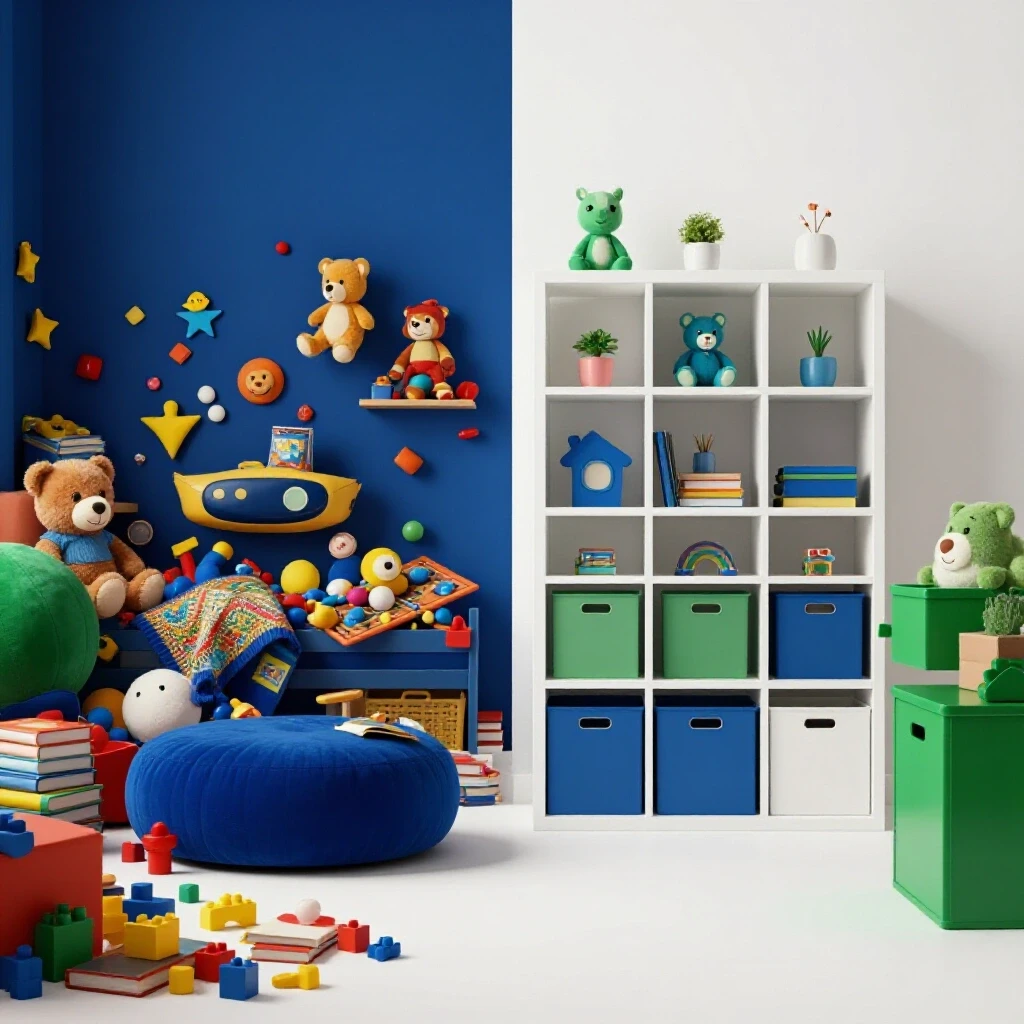
I found that by using open-top bins for my children’s toys, they were 70 percent more likely to put things away. We removed the lids entirely. This changed the task from “organizing” to “tossing.” In logistics, this is called “bulk binning.” It is much faster than “slotting,” where every item has a specific, tight-fitting home. For busy parents, bulk binning in high-traffic areas is the key to maintaining a tidy look without the constant labor.
Standard Operating Procedures for the Home
In a warehouse, we use Standard Operating Procedures (SOPs) to keep things running. You can apply simplified versions of these to your home to prevent clutter from returning.
- The One-In, One-Out Rule: For every new item that enters a zone, one must leave.
- The Five-Minute Reset: A daily timed interval where the family returns items to their zones.
- Point-of-Use Storage: Store items exactly where they are used, not where they “fit.”
- Visual Cues: Use clear labels with icons for children who cannot yet read.
Maintaining Order Over Months: The Feedback Loop
The reason most homes revert to clutter within days is a lack of a feedback loop. A feedback loop is a check-in to see if the system is still working. If you find that a specific drawer is always messy, the system for that drawer has failed. It is not a personal failure of the family; it is a design failure of the storage.
During my periodic checks of the less-visited areas of our home, I look for “clutter creep.” This is when items start to spill out of their designated zones. When I see this, I don’t just clean it up. I ask why it happened. Usually, it is because the zone is over capacity or the retrieval friction has become too high. Adjusting the system is more effective than nagging the family.
Quarterly Spatial Maintenance Checklist
Running this checklist every three months ensures that your hard work does not go to waste. It focuses on the areas that are easily forgotten.
- Check Volume Levels: Are any cabinets or closets at 100 percent capacity?
- Verify Labels: Are the labels still accurate for what is actually inside the bins?
- Identify Dead Stock: Are there items in Zone 1 that haven’t been touched in three months?
- Inspect Friction Points: Which areas are the hardest to keep tidy? Simplify the containers there.
Practical Steps for Long-Lasting Organization
To achieve a functional home, you must move away from the idea of “perfection.” A lived-in home will always have some movement and mess. The goal is a system that allows you to reset the space in minutes rather than hours. By inventorying the forgotten parts of your home and clearing out the stagnant items, you create the physical and mental space needed for a peaceful life.
- Step 1: Choose one “hidden corner” (like the space under the sink or a junk drawer).
- Step 2: Remove everything and categorize items by velocity (how often you use them).
- Step 3: Discard or relocate anything that hasn’t been used in a year.
- Step 4: Re-store the remaining items using the lowest friction method possible (open bins or clear drawers).
- Step 5: Label the area so everyone knows where things belong.
Frequently Asked Questions
How do I start when the whole house feels overwhelming? Start with a “spatial audit” of one small, enclosed area, like a single cabinet or the space under the guest bed. Focusing on these hidden zones first prevents you from just moving piles around in the main living areas. Once you clear out the “dead stock” from these corners, you create room to properly store the clutter currently sitting on your counters.
Why does my house get messy again so quickly after I organize? This usually happens because of “retrieval friction.” If your storage system requires too many steps (opening doors, lifting lids, moving other boxes), your brain will choose the path of least resistance and leave the item on a flat surface. Simplify your containers to one or two steps to make the system sustainable.
What should I do with items I might need “someday”? Move these to Zone 4 (Deep Storage). If you have the space in a garage or attic, place them in a clear, labeled bin. If you haven’t touched that bin in a year, it is a sign that the item is no longer serving you. Storing these in your daily living areas is what causes the feeling of being overwhelmed.
Are expensive matching bins necessary for a good system? No. In fact, many expensive bins are opaque, which increases “search friction.” The best systems often use simple, clear plastic bins or even open-top cardboard boxes for internal drawer dividers. The goal is visibility and ease of access, not aesthetic perfection.
How can I get my kids to follow the organization system? Use “bulk binning.” Instead of asking a child to put specific toys in specific small slots, give them a large, open bin for “Blocks” and another for “Dolls.” Lowering the precision required to tidy up makes it much easier for children to participate without constant supervision.
How do I handle “junk drawers” that seem to reappear? A junk drawer is actually a sign of a “missing zone.” If you have a drawer full of batteries, tape, and mail, it means those items don’t have a dedicated home. Create small, partitioned zones within the drawer for each category. If an item doesn’t fit a category, it likely needs to be discarded.
What is the “85 percent rule” in home storage? This rule states that you should never fill a shelf or closet more than 85 percent full. That remaining 15 percent of “air” is what allows you to move items in and out without knocking things over or feeling frustrated. When you hit 100 percent, it’s time to declutter.
How do labels help if I already know where everything is? Labels are not for you when you are focused; they are for you when you are tired. They are also for everyone else in the house. Labels remove the “decision fatigue” of wondering where an item goes, making it easier for the whole family to maintain the system.
How often should I audit my storage spaces? A full spatial audit should happen twice a year, but a “five-minute reset” should happen daily. Checking your high-velocity zones once a month ensures that “clutter creep” doesn’t take over your home again.
What is the best way to manage paper clutter? Paper is a high-volume inflow item. Create a “landing zone” near the entrance for all mail. Sort it immediately into “To Action,” “To File,” and “Recycle.” Never let un-sorted paper touch a kitchen counter or dining table, as these are “hot spots” for clutter accumulation.
(This article was written by one of our staff writers, Christopher Bennett. Visit our Meet the Team page to learn more about the author and their expertise.)