Best Window Coverings for Privacy and Energy Savings (Guide)

When I moved into my first home, a modest 1,200-square-foot bungalow, I spent the first three nights sleeping in a room with nothing but taped-up newspaper on the windows. I had budgeted for the down payment, the closing costs, and a new lawnmower, but I completely overlooked the cost of privacy. According to U.S. Census Bureau data, the average first-time homeowner spends nearly $4,000 on home improvements within the first year of ownership. A significant portion of that often goes toward managing light and temperature through interior window solutions.
My 14 years of tracking home logs across three different properties taught me that what looks good in a showroom often fails in the reality of a Tuesday morning. In my second house, a drafty 1950s ranch, I realized that window treatments are not just about decor; they are part of the home’s mechanical system. They manage the thermal envelope, protect your flooring from UV damage, and dictate your sleep quality. This guide draws from my personal data logs to help you navigate these choices without the typical first-year buyer’s remorse.
Managing the Initial Financial Shock of Outfitting Windows
This section covers the unexpected costs of covering every window in a new home. It explains why budgeting for these interior treatments early helps prevent financial strain during the first year of homeownership.
When you buy a home, you see the windows as a source of light. After you move in, you see them as holes in your privacy and your bank account. In my first year of ownership, I was shocked to find that outfitting a standard three-bedroom home with mid-range blinds and curtains could easily cost $2,000 to $5,000. For a young professional or a growing family, this is a massive hit to the emergency fund.
To manage this, I recommend the 1% to 3% maintenance rule. This rule suggests setting aside 1% to 3% of your home’s value annually for upkeep and improvements. In your first year, a large chunk of this reserve should be earmarked for interior window fixtures. If you are currently house-hunting, look at the number of windows and their sizes. Non-standard sizes will require custom orders, which can triple your costs compared to off-the-shelf options.
| Treatment Type | Average DIY Cost (Per Window) | Estimated Lifespan | Primary Benefit |
|---|---|---|---|
| Aluminum Blinds | $25 – $50 | 5 – 7 Years | Low Cost |
| Faux Wood Blinds | $40 – $120 | 10 – 15 Years | Durability |
| Cellular Shades | $60 – $200 | 8 – 12 Years | Insulation |
| Interior Shutters | $200 – $500 | 25+ Years | Home Value |
| Blackout Curtains | $30 – $100 | 10+ Years | Light Control |
Evaluating Light Control and Privacy Levels
This section explores how different interior options impact the amount of sunlight entering a room and the level of privacy provided. It details the practical differences between sheer fabrics and solid materials for daily living.
Light control is a primary home maintenance guide priority because it affects your home’s “livability.” In my third home, I tracked how different rooms felt at different times of the day. I found that a “one-size-fits-all” approach to windows leads to frustration. For instance, a home office needs diffused light to prevent screen glare, while a bedroom needs total darkness for better sleep hygiene.
Privacy is the other side of the coin. If your home is close to a neighbor’s driveway or a sidewalk, you need treatments that allow light in while keeping eyes out. My personal logs showed that “top-down, bottom-up” shades were the most effective for this. They allow you to lower the top of the shade to see the sky and let in sunlight while keeping the bottom half closed to maintain privacy from the street.
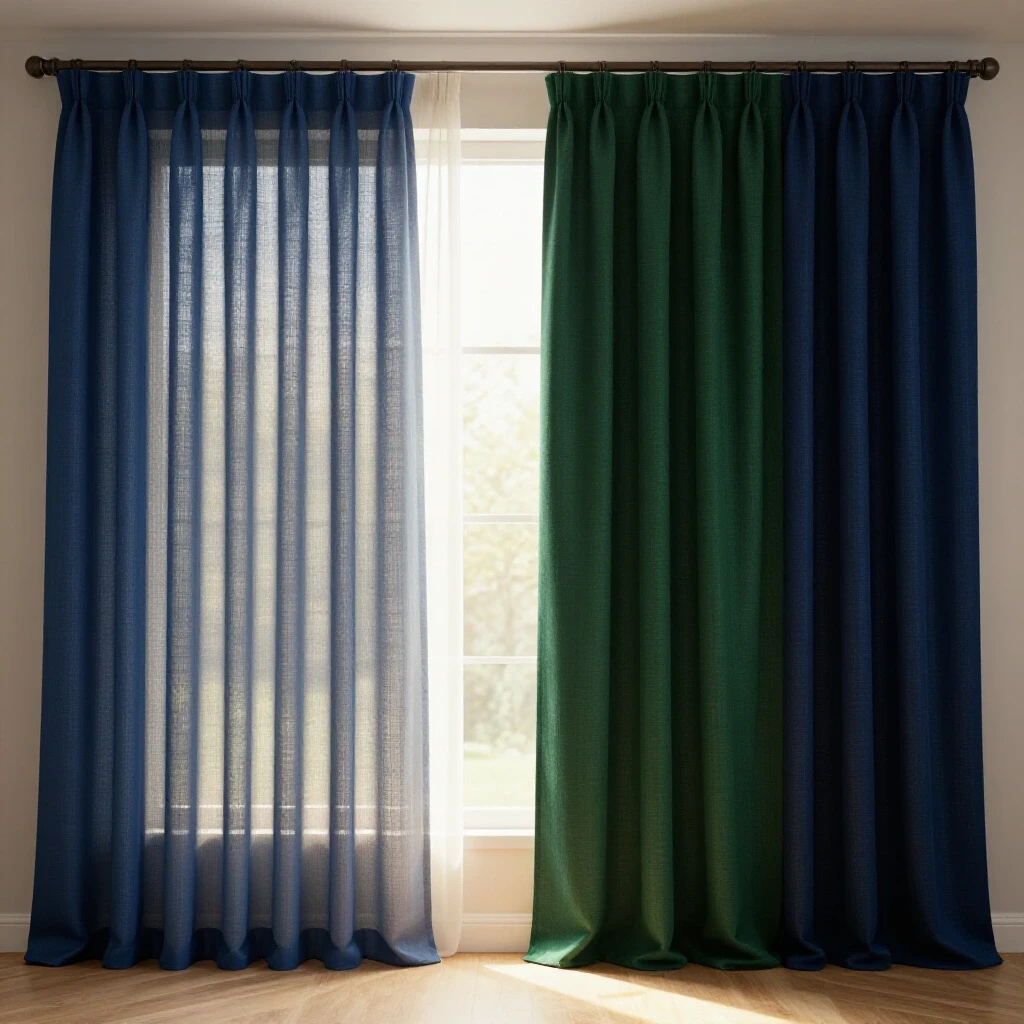
- Sheer Curtains: Best for living areas where you want natural light but need to blur the view from the outside.
- Slotted Blinds: Excellent for adjusting the angle of light throughout the day.
- Blackout Liners: Essential for bedrooms, especially for those working night shifts or parents with young children.
- Room Darkening Fabrics: A middle ground that blocks about 85-95% of light, suitable for media rooms.
Thermal Performance and Energy Savings from Interior Treatments
This section analyzes how interior window solutions affect a home’s temperature. It focuses on reducing heat gain in the summer and heat loss in the winter to lower monthly utility bills.
Sustainable home systems often start at the window. According to the Department of Energy, about 30% of a home’s heating energy is lost through windows. In the summer, about 76% of the sunlight that falls on standard double-pane windows enters the home to become heat. My utility logs from a three-year period showed a 15% reduction in cooling costs after I switched from basic plastic blinds to insulated cellular shades.
Cellular shades, or honeycomb shades, work by trapping air in distinct pockets. This creates a thermal barrier between the room and the glass. In my experience, this is the most effective DIY home care step you can take to improve comfort. If you live in a climate with extreme seasons, the ROI on energy-efficient treatments is often realized within three to five years.
- Measure the R-value: This measures thermal resistance. Higher numbers mean better insulation.
- Check for gaps: Even the best shade fails if there are large gaps at the sides where air can bypass the treatment.
- Use seasonal adjustments: Close treatments on sun-facing windows in the summer and open them in the winter to harness solar heat.
- Consider layered treatments: Combining a blind with a heavy curtain can create a “dead air” space that significantly boosts insulation.
Longevity and Maintenance of Common Interior Options
This section looks at the durability of various materials over several years. It provides a timeline for cleaning and repairs to ensure these interior fixtures remain functional and attractive.
One of the hard homeownership realities is that everything breaks eventually. In my 14 years of tracking, I’ve seen cheap vinyl blinds yellow and snap within three years. Conversely, high-quality faux wood blinds in my current home look as good as they did on day one. When you are balancing a career and family, you don’t want to spend your weekends fixing broken tilt wands or frayed cords.
Maintenance routines should be simple. Dusting once a month and a deeper clean twice a year is usually enough. However, the material matters. Real wood can warp in high-humidity areas like bathrooms or kitchens. Faux wood, made from PVC or composite materials, is much more resilient in these environments. My logs suggest that investing 20% more upfront for durable materials saves about 50% in replacement costs over a decade.
- Vacuuming: Use a brush attachment on low suction for fabric shades.
- Spot Cleaning: Use a damp cloth with mild soap for faux wood and metal.
- Cord Safety: Modern standards favor cordless designs, which are safer for pets and children and have fewer mechanical failure points.
- Hardware Inspection: Check the mounting brackets once a year to ensure they haven’t pulled loose from the drywall.
Strategic DIY Prioritization for New Homeowners
This section provides a framework for deciding which windows to address first. It helps homeowners manage their time and budget by focusing on high-impact areas of the house.
When you move in, the urge to fix everything at once is strong. This often leads to homeowner fatigue/burnout. My household budgeting diary shows that it is better to tackle one room at a time. Start with the “Primary Three”: the master bedroom for sleep, the living room for privacy, and the home office for productivity.
DIY home care is rewarding, but it requires the right tools. For window treatments, you need a reliable metal measuring tape, a level, a power drill, and a stud finder. Don’t rely on the “free” paper measuring tapes provided by stores; they can stretch and lead to inaccurate custom orders. If a window is particularly high or large, that is when the DIY time-investment vs. professional ROI shifts toward hiring help.
- The Master Bedroom: Prioritize blackout and thermal features here first.
- The Kitchen/Bathrooms: Focus on moisture-resistant materials.
- The Guest Rooms: Use lower-cost, standard-sized options here to save money.
- The Entryway: Consider the “curb appeal” and how the treatments look from the street.
Avoiding Common Rookie Mistakes in Selection
This section highlights frequent errors made by first-time buyers during the selection process. It offers practical advice on how to avoid these pitfalls to save time and money.
One of the most common mistakes I see in the homes I evaluate is the “wrong mount” error. You have two choices: inside mount (inside the window frame) or outside mount (on the wall or trim). Inside mounts look cleaner and more professional, but they require precise measurements. If your window frame isn’t deep enough, an inside mount won’t work.
Another mistake is ignoring the “stack height.” This is the amount of space the treatment takes up when it is fully open. If you have a beautiful view, you don’t want a thick stack of blinds blocking the top six inches of your window. My personal home logs show that roller shades have the smallest stack height, making them ideal for windows where the view is a priority.
- Double-check measurements: Always measure width at the top, middle, and bottom. Use the smallest of the three for inside mounts.
- Consider the “street side” color: Many Homeowners Associations (HOAs) require window treatments to have a white or neutral backing facing the street.
- Don’t ignore the cord: Corded blinds are a significant safety hazard for toddlers. Always opt for cordless or motorized options if your budget allows.
Long-Term Asset Protection and Property Preservation
This section explains how window treatments protect other parts of your home investment. It details the role of UV protection in maintaining the value of floors, furniture, and paint.
Homeownership is an exercise in asset protection. UV rays from the sun are incredibly destructive over time. In my second home, I moved a rug after two years and was shocked to see how much the hardwood floor had faded around it. High-quality interior treatments act as a sunscreen for your home.
By filtering or blocking UV rays, you preserve the life of your flooring, upholstery, and even your wall art. This is a form of preventative mechanical care for your home’s interior. When you eventually sell the home, well-maintained floors and window fixtures contribute to the overall “pristine” feel that buyers look for, directly impacting your five-year equity planning.
| Item Protected | Replacement Cost | UV Damage Risk | Prevention Method |
|---|---|---|---|
| Hardwood Floors | $8 – $15 per sq ft | High (Fading/Cracking) | Solar Shades / Sheers |
| Upholstered Sofa | $800 – $3,000 | Medium (Fabric Rot) | Closed Blinds at Peak Sun |
| Interior Paint | $500 – $2,000 per room | Low (Chalking/Fading) | Any Light Filtration |
| Area Rugs | $200 – $2,000 | High (Color Loss) | UV-Rated Liners |
Conclusion: Establishing a Sustainable Routine
The transition from renting to owning is a marathon, not a sprint. My 14 years of tracking have shown that the most successful homeowners are those who take a measured, data-driven approach to their property. Window treatments might seem like a small detail, but they are a fundamental part of your home’s operation.
Start by auditing your windows. Identify which ones face the sun, which ones are visible to neighbors, and which ones are in rooms where you sleep. Use the 1% maintenance rule to guide your spending. By choosing durable materials and focusing on thermal efficiency, you aren’t just decorating; you are building a more comfortable, cost-effective, and valuable home. Take it one window at a time, and don’t let the initial overwhelm stop you from making smart, long-term decisions for your property.
Frequently Asked Questions
How much should a first-time homeowner realistically budget for window treatments? For a standard three-bedroom home, a realistic DIY budget is between $1,500 and $3,000. This covers mid-range faux wood blinds or cellular shades and basic curtains. If you require custom sizes or professional installation, expect to double that amount. It is wise to include this in your “first-year setup” fund alongside your emergency savings.
What is the best material for high-humidity areas like bathrooms? Faux wood or aluminum are the best choices. Faux wood is typically made from a PVC/composite material that will not warp, crack, or peel when exposed to steam and moisture. Avoid real wood or untreated fabrics in these spaces, as they can develop mold or lose their structural integrity within just a few years.
Do cellular shades actually lower utility bills? Yes. Data from the Department of Energy and personal utility logs show that cellular shades can reduce heat loss through windows by up to 40% in the winter and reduce solar heat gain by up to 60% in the summer. This typically results in a 10% to 15% saving on monthly heating and cooling costs, depending on your local climate and the age of your windows.
Should I choose an inside or outside mount for my blinds? Inside mounts are preferred for a clean, custom look and to show off decorative window trim. However, they require a window frame depth of at least 2 to 3 inches. Outside mounts are better if your windows are shallow, if you want to make a small window look larger, or if you need to block out more light by covering the entire window opening.
Are cordless window treatments worth the extra cost? In almost every case, yes. Beyond the significant safety benefits for households with children or pets, cordless mechanisms have fewer external parts to tangle or break. They offer a much cleaner aesthetic and are now the industry standard. Most homeowners find the ease of operation well worth the 10-20% price premium.
How often should I clean my window treatments? Light dusting should be done monthly using a microfiber cloth or a vacuum with a brush attachment. A deeper cleaning should occur twice a year. For fabric shades, this might involve professional ultrasonic cleaning, while faux wood blinds can be wiped down with a mixture of warm water and mild dish soap.
How do I know if my window treatments are failing? Warning signs include frayed cords, slats that no longer tilt evenly, or fabric that has become brittle from sun exposure. If a shade becomes difficult to raise or lower, the internal tension mechanism is likely wearing out. My logs show that most mid-range treatments start showing these signs between years 7 and 10.
Can I install window treatments myself, or should I hire a pro? Most interior treatments are very DIY-friendly. If you can use a power drill and a level, you can install them. The primary reason to hire a professional is for very large, heavy shutters or for windows located in hard-to-reach areas like high foyers. DIY installation can save you $50 to $100 per window in labor costs.
What are solar shades, and do I need them? Solar shades are made from a mesh fabric designed specifically to block UV rays and heat while maintaining your view of the outside. They are excellent for sunrooms or living rooms with large windows. However, they do not provide privacy at night when the lights are on inside, so they are often paired with curtains.
How do window treatments impact my home’s resale value? High-quality, permanent fixtures like interior shutters or custom-fit blinds are often viewed favorably by buyers and can be included in the home’s appraisal. They suggest that the owner has taken care of the property’s details. Conversely, cheap or broken treatments can give the impression of deferred maintenance across the rest of the home.
(This article was written by one of our staff writers, Michael Morrison. Visit our Meet the Team page to learn more about the author and their expertise.)