Best Attic Storage Solutions to Prevent Heat Damage (Guide)

Have you ever wondered if that “heavy-duty” storage bin in your attic is actually cooking your belongings from the inside out? Many homeowners invest thousands in high-end home materials like quartz or hardwood, yet they overlook the technical environment of their upper-level storage areas. In my 13 years as a supply chain analyst, I have learned that the most expensive storage container is the one that fails to protect its contents from thermal degradation.
Understanding the Science of Thermal Stress in Upper-Level Storage
Thermal stress refers to the internal pressure and physical changes materials undergo when exposed to extreme temperature fluctuations. In an unconditioned space, temperatures can regularly exceed 130 degrees Fahrenheit, causing certain polymers to soften and wood fibers to lose structural integrity over time.
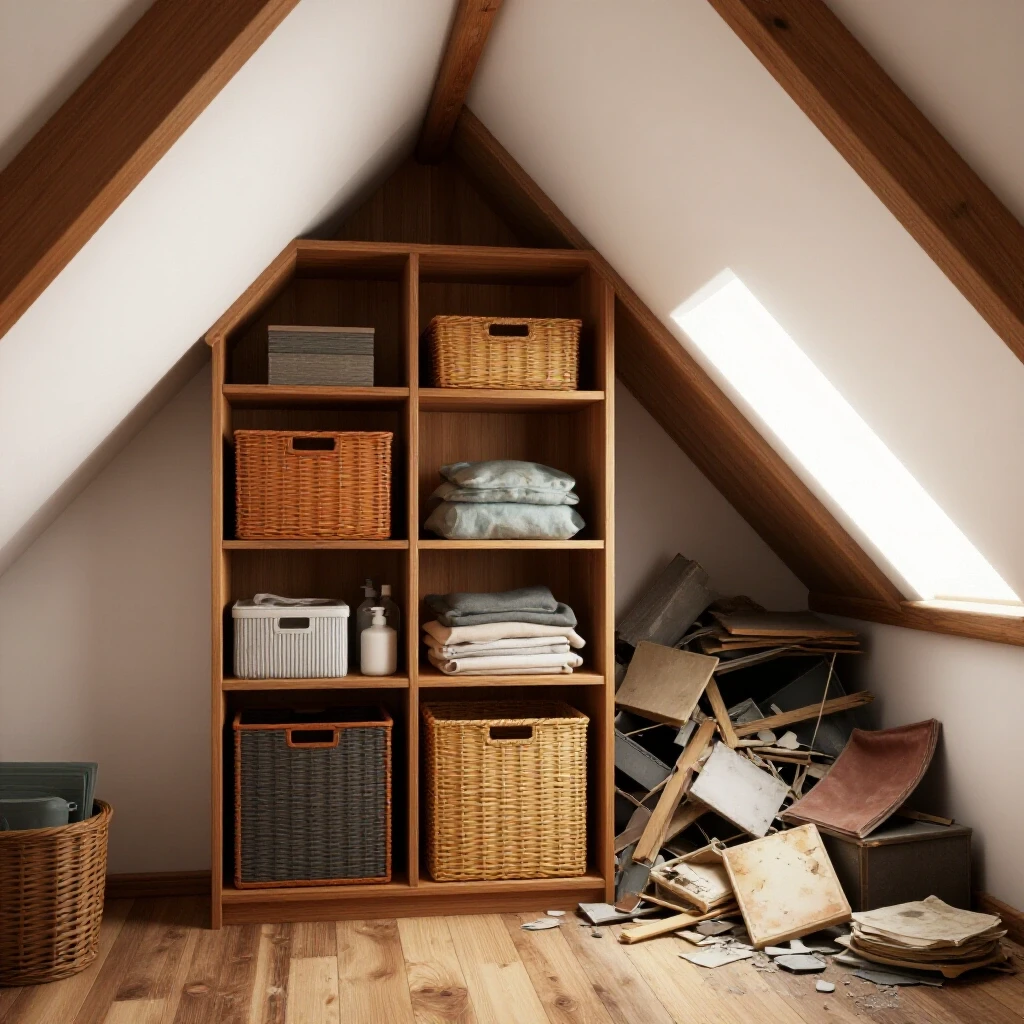
When we evaluate materials for high-heat environments, we must look at the Vicat softening point. This is the temperature at which a flat-ended needle penetrates a specimen to a depth of 1 mm under a specific load. In my experience, standard retail bins often have a lower softening point than industrial-grade versions. This leads to the “bowing” effect many of us see when bins are stacked in a hot environment. Building on this, the National Association of Home Builders (NAHB) notes that temperature swings are the primary driver of material fatigue in residential structures.
Why Material Composition Matters for High-Heat Environments
Material composition determines how a product handles the expansion and contraction caused by seasonal heat cycles. For example, high-density polyethylene (HDPE) and polypropylene (PP) are the two most common plastics used in storage, but they react very differently to sustained heat exposure.
Polypropylene generally offers a higher melting point and better chemical resistance than polyethylene. Interestingly, while HDPE is more impact-resistant at freezing temperatures, it can become brittle more quickly when subjected to the “baking” effect of an unventilated upper floor. As a result, choosing the wrong plastic can lead to off-gassing, where chemical vapors from the bin permeate your stored clothing or documents.
Comparison of Common Storage Container Materials
| Material Property | Polypropylene (PP) | High-Density Polyethylene (HDPE) | Glass (Borosilicate) |
|---|---|---|---|
| Vicat Softening Point | 300°F – 320°F | 250°F – 265°F | 1,500°F+ |
| Thermal Expansion | High | Medium-High | Very Low |
| Impact Resistance | Moderate | High | Low |
| UV Sensitivity | High (unless treated) | Moderate | None |
| 15-Year Durability | High (if kept dark) | Moderate | Exceptional |
Evaluating Radiant Barriers and Insulation Performance
Radiant barriers are thin layers of highly reflective material, usually aluminum foil, designed to reduce summer heat gain by reflecting thermal radiation. Unlike traditional insulation, which slows down heat conduction, these barriers address the primary way heat enters an upper-level storage space: through the roof deck.
In one of my previous properties, I conducted a side-by-side test of different radiant materials. I found that the emissivity rating—the ability of a surface to emit energy by radiation—was the most critical metric. A standard material might have an emissivity of 0.9, while a high-quality radiant barrier can be as low as 0.03. This means it reflects 97% of the heat hitting it. This technical specification is far more important than the thickness of the material itself.
Managing Thermal Transfer with Advanced Insulation Materials
Insulation performance is measured by R-value, which stands for the material’s resistance to conductive heat flow. The higher the R-value, the better the material insulates, but R-value is not a static number; it can change based on how the material is installed and its age.
When comparing insulation types for a storage area, homeowners often choose between fiberglass batts and rigid foam boards. Fiberglass is cost-effective but can settle over time, reducing its effectiveness. Rigid foam, such as Extruded Polystyrene (XPS), maintains a consistent R-value and acts as a better air barrier. However, XPS has a higher upfront cost. From a supply chain perspective, the long-term value of XPS often outweighs fiberglass because it does not require the same level of maintenance or replacement every decade.
Upfront Cost vs. 15-Year Maintenance Outlay
| Material Type | Upfront Cost (per sq ft) | Maintenance Cycle | 15-Year Total Cost |
|---|---|---|---|
| Fiberglass Batts | $0.80 – $1.10 | 10-12 Years | $1.50 – $1.80 |
| Rigid Foam (XPS) | $1.50 – $2.20 | 25+ Years | $1.50 – $2.20 |
| Reflective Foil | $0.40 – $0.70 | 15-20 Years | $0.60 – $0.90 |
My Lesson in Heat Damage: A Personal Case Study
A few years ago, I stored a collection of vintage vinyl records and family photo albums in what I thought were “premium” plastic totes. I placed them near the center of the attic, thinking they were safe. Unfortunately, I did not account for the stack effect, where hot air rises and stays trapped at the highest point of the house.
By the end of one particularly hot summer, the records had warped beyond repair. The plastic bins had actually acted like small ovens, trapping the heat inside with no way to dissipate. This taught me that storage is not just about the container, but about the airflow around it. I now use a “breathable” storage strategy, utilizing wire shelving and ensuring at least three inches of clearance between any bin and the floor or walls.
Technical Specifications for Ventilation Hardware
Ventilation hardware includes soffit vents, ridge vents, and gable vents, all designed to facilitate the movement of air to prevent heat buildup. The goal is to achieve a balanced system where cool air enters at the lowest point and hot air exits at the highest point.
The Net Free Area (NFA) is the technical spec to watch here. It represents the total unobstructed area through which air can pass. Many homeowners buy decorative vents that look great but have a very low NFA. If your intake and exhaust NFA are not balanced, the system will not “pull” heat out efficiently. Building on this, I always recommend checking for ASTM E606 standards on any ventilation products to ensure they can withstand high wind and heat without deforming.
Choosing Shelving Materials for High-Temperature Stability
Shelving materials must be able to support weight without sagging, even when the ambient temperature reaches its peak. Common options include particle board, plywood, and powder-coated steel, each with different thermal expansion coefficients.
I have found that particle board is the worst choice for these environments. The resins used to hold the wood chips together can off-gas and weaken in high heat, leading to “shelf creep” or permanent sagging. Powder-coated steel is the gold standard for durability. It does not warp, it is non-porous, and it allows for maximum airflow around your stored items. While the upfront cost is roughly 40% higher than wood, the maintenance cost is zero over a 20-year period.
Practical Steps for Evaluating Storage Materials
Before you purchase any high-end storage materials or appliances for your upper-level space, you should perform a series of simple field tests. These tests help bridge the gap between manufacturer claims and real-world performance in your specific climate.
- The Heat Soak Test: Place a sample of the material in a sunny window or near a safe heat source for 48 hours. Check for any softening, odor, or color change.
- The Load Stress Test: Place a heavy weight (like a gallon of water) on a sample bin lid or shelf. Leave it for a week in a warm area and measure any permanent deflection with a ruler.
- Check the Resin Code: Look at the recycling triangle on plastic goods. Number 5 (Polypropylene) is generally superior to Number 2 (HDPE) for heat resistance.
- Review the Spec Sheet: Request the Technical Data Sheet (TDS) from the manufacturer. Look specifically for the “Continuous Use Temperature” rating.
Why Higher Upfront Costs Don’t Always Guarantee Durability
In the world of home materials, price is often a proxy for aesthetics rather than technical performance. A designer storage box might cost $50 because of its fabric finish, but that fabric may trap heat and attract dust more than a $15 industrial bin.
When I analyze supply chains for home goods, I look for “over-engineered” products. These are items built for commercial or industrial use that have been rebranded for home use. For example, professional-grade “tuff tubs” used in construction often have higher UV stabilizers and thicker walls than the bins found in big-box home stores. They may not come in trendy colors, but their life-cycle cost is significantly lower because they do not need to be replaced every three to five years.
Strategies for Long-Term Maintenance and Monitoring
Maintaining a safe environment for your belongings requires more than just the right materials; it requires a consistent monitoring schedule. Heat damage is often cumulative, meaning it happens slowly over several seasons until the damage is irreversible.
I recommend installing a digital hygrometer with a remote sensor. This allows you to monitor the temperature and humidity of your storage area from your smartphone. If you see temperatures consistently staying above 100 degrees for more than six hours a day, it is a sign that your ventilation or insulation strategy needs adjustment. Interestingly, keeping a log of these temperatures can help you decide which items are safe to store and which should be moved to a climate-controlled area of the home.
Final Financial Evaluation of Storage Upgrades
When deciding how much to spend on protecting your belongings, consider the total value of what you are storing. If you are keeping $5,000 worth of seasonal gear, spending $500 on superior bins and radiant barriers represents a 10% insurance policy on those goods.
From a supply chain perspective, we call this “risk mitigation.” By investing in materials with higher thermal resistance and better ventilation specs, you are reducing the probability of a total loss of your stored assets. The trade-off is a higher upfront cost, but when amortized over 15 years, the cost of high-quality materials is often less than $20 per year.
Summary of Key Takeaways
- Prioritize Polypropylene: Choose bins with a “5” recycling code for better heat resistance.
- Focus on NFA: Ensure your ventilation hardware has a high Net Free Area to move heat out.
- Use Radiant Barriers: These are more effective than thick insulation for stopping heat before it enters.
- Avoid Particle Board: Use powder-coated steel shelving to prevent sagging and allow airflow.
- Monitor Remotely: Use a digital sensor to track temperature trends throughout the year.
Frequently Asked Questions
What is the best material for storage bins in a hot attic? Polypropylene (PP) is generally the best plastic for high-heat environments. It has a higher softening point (around 300°F) compared to polyethylene and is less likely to warp or off-gas when temperatures climb. Look for bins labeled “industrial” or “heavy-duty,” as these often have thicker walls and UV stabilizers.
How does a radiant barrier differ from standard insulation? Standard insulation, like fiberglass, works by slowing down the conduction of heat through materials. A radiant barrier works by reflecting thermal radiation away from the space. In a hot upper-level area, a radiant barrier is often more effective because it stops the sun’s heat from radiating through the roof deck in the first place.
Can high heat cause plastic bins to damage my clothes? Yes, through a process called off-gassing. When low-quality plastics are heated, they can release Volatile Organic Compounds (VOCs). These vapors can be absorbed by fabrics, leading to yellowing or a persistent “plastic” smell that is difficult to remove. Using high-quality, heat-stable plastics reduces this risk.
Is it worth paying more for powder-coated steel shelving? In my experience, yes. Steel does not lose its structural integrity at 130°F, whereas wood-based products like particle board or even some plywoods can sag over time due to the breakdown of adhesives. Steel also allows for better airflow, which is critical for keeping the temperature of your belongings down.
What temperature is considered “dangerous” for home storage? Most household items are safe up to 80-90°F. Once temperatures consistently exceed 100°F, you begin to see accelerated aging in plastics, papers, and adhesives. If your storage area reaches 120°F or higher, you should only store heat-insensitive items like metal tools or ceramic holiday decorations.
How do I calculate if I have enough ventilation? The general rule of thumb is 1 square foot of Net Free Area (NFA) for every 300 square feet of floor space. This should be split equally between intake (soffits) and exhaust (ridge or gable vents) to create a balanced flow that pulls hot air out effectively.
Does the color of the storage bin matter? While it might seem minor, dark-colored bins can absorb more radiant heat if they are sitting in direct sunlight near a window or vent. Opaque, light-colored bins are better for reflecting light and keeping the internal temperature slightly lower.
Are vacuum-sealed bags safe in a hot attic? Vacuum bags are excellent for saving space, but the plastic film used in many consumer-grade bags can become brittle in high heat. If you use them, ensure they are placed inside a rigid, heat-resistant bin to protect the seal from being compromised by thermal expansion.
What are the signs that my current storage solution is failing? Look for “oiliness” on the surface of plastic bins, lids that no longer snap shut tightly, or a “sweet” chemical smell. These are all signs that the materials are breaking down due to thermal stress. Also, check for any bowing in your shelving units.
Can I use a fan to cool my attic storage? A powered attic fan can help, but it must have adequate intake ventilation to work. Without enough intake air, a fan can actually pull conditioned air from your living space into the attic, increasing your cooling costs. Passive ventilation is usually more reliable and cost-effective.
(This article was written by one of our staff writers, Andrew Morrison. Visit our Meet the Team page to learn more about the author and their expertise.)