How to Build a Fold-Out Entry Table for More Space (Step-by-Step)

Does your entryway feel like a bottleneck every time you walk through the door with groceries, keys, and mail? As a facilities manager, I spend my days ensuring commercial buildings run like clockwork, yet I found my own home’s foyer was a chaotic mess of dropped mail and misplaced keys. Many of us living in homes with narrow hallways or limited floor space struggle to find furniture that provides utility without obstructing the path. Creating a collapsible wall-mounted surface is a high-impact solution that balances functional needs with the physical constraints of a modern home.
In my twelve years of managing properties and tackling weekend upgrades, I have learned that the most successful projects are those that respect the laws of physics and the realities of a busy schedule. I once attempted a similar project using cheap plastic anchors and no plan, only to have the entire assembly pull out of the drywall three days later. That failure taught me the importance of structural anchoring and hardware load ratings. This guide provides a code-compliant, durable approach to installing a folding utility ledge that will stand up to daily use while tucking away when you need the floor space.
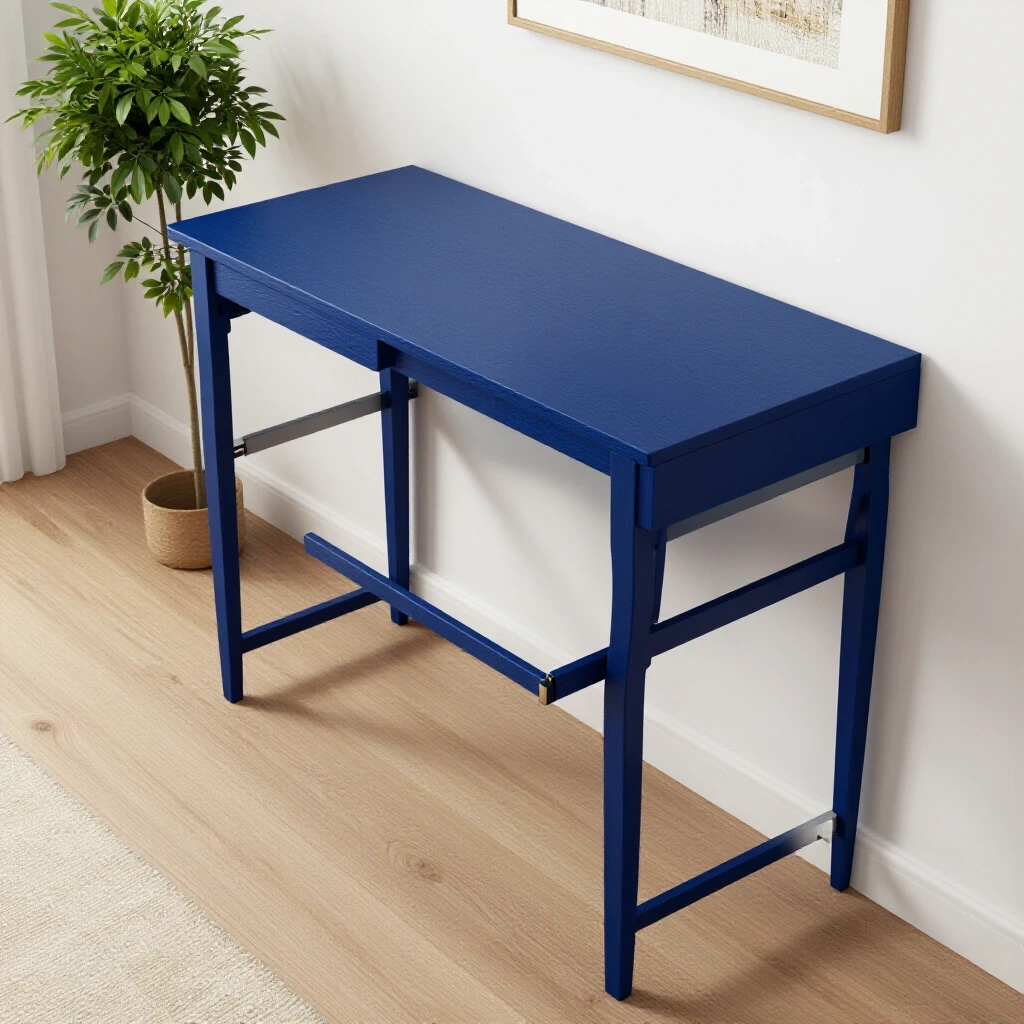
Evaluating the Scope and Feasibility of Your Project
Determining the right location and scale for your collapsible surface is the first step toward a successful installation. This phase involves measuring your available wall space, checking for hidden utilities, and ensuring the project fits into your weekend schedule without causing burnout.
Before you buy a single board, you must understand the “swing radius” of your intended surface. This is the path the wood takes as it moves from the vertical (closed) position to the horizontal (open) position. Interestingly, many DIYers forget to account for baseboards or nearby door frames, leading to a table that hits the wall before it fully opens. I recommend a standard depth of 10 to 12 inches for entryways; anything deeper often creates a snag hazard in narrow corridors.
| Metric | DIY Estimation | Professional Comparison |
|---|---|---|
| Active Labor Time | 4–6 Hours | 2 Hours |
| Total Project Duration | 2 Days (including drying) | 1 Day |
| Material Costs | $60–$120 | $150–$250 (Marked up) |
| Labor Savings | $200–$400 | $0 |
| Difficulty Rating | Intermediate (Level 3/5) | N/A |
Building a custom folding surface requires more than just screwing wood to a wall. You are creating a cantilevered load, which puts significant stress on your mounting points. According to the International Residential Code (IRC), any permanent fixture must not obstruct the minimum required width of a hallway, which is typically 36 inches. If your hallway is narrow, the folding feature isn’t just a luxury—it is a necessity for maintaining a safe egress route.
Essential Tools and Material Inventory
A successful build depends on having the right equipment ready before you start, preventing those frustrating mid-project trips to the hardware store. Using the correct tools ensures that your cuts are square and your mounting is secure enough to handle the weight of heavy bags or packages.
I have found that investing in a high-quality stud finder is the most important ROI for any wall-mounted project. In my early years, I relied on the “knock and listen” method, which resulted in more “oops” holes in my drywall than I care to admit. Modern electronic stud finders can detect both wood and live AC wires, which is critical when you are drilling into walls near light switches or outlets.
1. Required Power Tools
- Cordless Drill/Driver: For boring pilot holes and driving structural screws.
- Circular Saw or Miter Saw: To cut your wood to the specific length required for your space.
- Random Orbital Sander: Essential for smoothing the wood surface to prevent splinters.
2. Specialized Hand Tools
- 24-Inch Level: To ensure the surface is perfectly horizontal; a small torpedo level is often too short for accurate readings over a 3-foot span.
- Stud Finder: To locate the vertical framing members behind your drywall.
- Speed Square: For marking 90-degree lines across your lumber.
3. Materials and Hardware
- Lumber: 3/4-inch thick hardwood (like Oak or Maple) or high-grade plywood. Avoid softwoods like construction-grade pine if you want a premium finish.
- Folding Shelf Brackets: Look for heavy-duty steel brackets with a rated capacity of at least 100 lbs per pair.
- Structural Wood Screws: 2.5-inch screws for the wall and 3/4-inch screws for the underside of the table.
- Wood Finish: Polyurethane or furniture wax to protect the surface from moisture and scratches.
Navigating Structural Integrity and Safety Protocols
Safety in DIY isn’t just about wearing goggles; it’s about understanding the mechanics of how your home is built. When you mount a folding ledge, you are transferring the weight of whatever sits on that ledge directly into the wall’s framing.
Drywall alone has almost zero structural strength for a cantilevered load. If you use toggle bolts or plastic anchors for a folding table, the repetitive motion of opening and closing it will eventually crumble the gypsum, causing the table to sag or fall. You must bridge the distance between two wall studs, which are typically spaced 16 inches apart on center. If your desired location doesn’t align perfectly with the studs, you may need to mount a “ledger board”—a horizontal piece of wood screwed into the studs first—and then attach your brackets to that ledger.
Building code compliance also touches on electrical safety. Entryways are often hubs for light switches and thermostats. When drilling, always assume there is a wire running vertically or horizontally behind the wall. I follow the “1.25-inch rule” used by professional electricians: most wires are centered in a 3.5-inch stud, meaning they are roughly 1.25 inches away from the edge of the wood. Using 2.5-inch screws through 3/4-inch drywall and a 3/4-inch bracket base leaves about an inch of penetration into the stud, which generally stays clear of protected wiring zones.
Phase 1: Preparing the Wood Surface
The preparation phase is where you transform raw lumber into a piece of furniture. This stage requires precision in measurement and a focus on ergonomics to ensure the finished piece is comfortable to use.
Start by measuring your entryway width and subtracting the “clearance margin.” If you want the table to be 3 feet long, ensure you have at least 2 inches of breathing room on either side of nearby trim. Use your speed square to mark a cut line on your 1×12 board. When using a circular saw, I suggest cutting from the “back” side of the board. This is because the saw blade teeth move upward, which can cause splintering (tear-out) on the top surface.
Once cut, you must address the edges. Sharp corners in a high-traffic area like an entryway are a recipe for bruises. I use a sanding block or a router to “ease” the edges, creating a slight radius. This makes the table feel more intentional and professional.
- Step 1: Measure the wall space twice.
- Step 2: Mark the cut line using a speed square.
- Step 3: Secure the board to a stable work surface with clamps.
- Step 4: Make the cut using a steady, continuous motion.
Phase 2: Sanding and Finishing for Longevity
Sanding is often the most skipped step in DIY, but it is the difference between a “homemade” look and a “hand-crafted” look. A smooth finish prevents snagging your sleeves or scratching your skin as you walk past the table.
I follow a grit progression of 80, 120, and finally 220. The 80-grit removes the mill marks from the lumber yard, while the 220-grit prepares the wood to accept a finish. Building on this, you must wipe the wood down with a “tack cloth” or a damp microfiber towel between each grit to remove dust. If you leave dust behind, it will get trapped in the grain, resulting in a gritty texture once the sealer dries.
For entryways, I recommend a water-based polyurethane. It dries faster than oil-based versions and doesn’t yellow over time. Apply a thin coat, let it dry for two hours, lightly sand with 320-grit, and apply a second coat. This creates a hard, durable shell that can withstand a wet umbrella or a coffee cup.
| Finish Type | Dry Time | Total Coats | Durability |
|---|---|---|---|
| Water-Based Poly | 2 Hours | 3 | High |
| Oil-Based Poly | 8–12 Hours | 2 | Very High |
| Furniture Wax | 15 Mins | 1 | Low |
| Wood Stain | 4–6 Hours | 1 | N/A (Needs sealer) |
Phase 3: Hardware Alignment and Dry-Fitting
Dry-fitting is the process of assembling the project without permanent fasteners to check for errors. In my facilities career, we never install a fixture without a dry-fit because walls are rarely perfectly flat or plumb.
Lay your finished board face down on a soft surface. Position your folding brackets at least 4 to 6 inches in from the ends of the board. This prevents the wood from warping over time and provides better weight distribution. Use a pencil to mark the screw holes on the underside of the board.
Before you drill, check the length of your screws. A common mistake is using screws that are longer than the thickness of the wood, resulting in the screw tip poking through the top of your beautiful table. I use 5/8-inch or 3/4-inch screws for a 3/4-inch board, ensuring the bracket is held firmly without piercing the surface.
- Tip: Always drill pilot holes. A pilot hole is a small hole drilled before the screw is inserted. It prevents the wood from splitting and allows the screw to drive in straight. For a #8 screw, use a 1/8-inch drill bit.
Phase 4: Final Wall Mounting and Leveling
This is the most critical phase of the project. You are now transitioning from a woodworking project to a structural installation. You need to find the studs and ensure the table is at a comfortable height—usually between 30 and 34 inches from the floor.
Use your stud finder to mark the center of two studs. Once you have your marks, use your level to draw a light horizontal line across the wall at your desired height. Hold the first bracket up to the wall, aligning its top edge with your level line and its screw holes with the center of the stud. Drill a pilot hole into the wall and drive the top screw about 80% of the way in.
Building on this, repeat the process for the second bracket. Before tightening everything, place your level across the two brackets. If they aren’t perfectly level with each other, the table will bind when you try to fold it. Once level, drive the remaining screws into the studs. Finally, place your wood top onto the brackets and secure it from underneath.
Troubleshooting Common Installation Errors
Even with careful planning, you might encounter issues. If the table doesn’t stay in the “up” position, the brackets are likely not parallel to each other. This creates internal tension that prevents the locking mechanism from engaging. You can fix this by slightly loosening the wall screws, realigning the brackets, and retightening.
Another common problem is a “bouncy” table. This usually happens if the screws didn’t hit the center of the stud. If you feel the screw spinning without resistance, you have missed the wood. You must back the screw out and angle it slightly toward the stud center or relocate the bracket.
Interestingly, walls in older homes are often “bowed.” If you mount a flat board against a curved wall, you will see a gap. Do not try to force the board flush by over-tightening the screws, as this can snap the hardware or crack the wood. Instead, you can use small plastic shims behind the bracket to fill the gap and keep the hardware plumb.
Maintenance and Long-Term Care Protocols
A wall-mounted folding surface is a mechanical system that requires occasional maintenance. Every six months, I check the tightness of the screws. The vibration of opening and closing the table can slowly loosen the fasteners over time.
- Lubrication: If the folding hinges start to squeak, apply a small drop of dry silicone lubricant. Avoid WD-40, as it can attract dust and eventually gum up the mechanism.
- Surface Care: Clean the wood with a damp cloth and mild soap. Avoid harsh chemicals that can break down the polyurethane finish.
- Weight Limits: Remind family members of the load capacity. While the brackets may be rated for 100 lbs, that rating assumes a static load. Dropping a 40 lb bag of salt onto the table creates a dynamic force that could exceed the hardware’s limits.
Summary of Key Takeaways
Successfully adding a collapsible surface to your entryway is about more than just aesthetics; it is an exercise in structural planning and precision. By prioritizing stud-mounting and using high-quality hardware, you create a functional upgrade that enhances your home’s flow without compromising safety.
The project requires a modest investment of time—roughly one full weekend—but the reward is a custom-fit solution that a store-bought piece simply cannot match. Remember to always dry-fit your components, drill pilot holes to protect your wood, and respect the load-bearing limits of your wall. With these steps, you’ll have a professional-grade entry ledge that serves your busy lifestyle for years to come.
Frequently Asked Questions
What is the best height for a folding entryway surface?
The standard height for a side table or entry ledge is between 30 and 34 inches. However, if you plan to use it as a standing desk or a place to sort mail without leaning over, you might prefer a “counter height” of 36 inches. Always measure the height of your most-used bags or items to ensure they clear the floor when the table is folded down.
Can I install this on a masonry or brick wall?
Yes, but the process differs significantly. You cannot use standard wood screws. Instead, you must use a masonry drill bit and sleeve anchors or Tapcon screws. Ensure you drill into the brick itself, not the mortar joints, as mortar is too brittle to hold a cantilevered load securely.
What happens if my wall studs aren’t where I want the table?
If the studs don’t align with your desired location, you should install a “mounting board” or “ledger.” This is a piece of 1×4 lumber that is long enough to span two studs. Screw the ledger into the studs, and then screw your folding brackets into the ledger. This provides a solid foundation anywhere on the wall.
Is plywood or solid hardwood better for this project?
Solid hardwood (like Oak or Walnut) is more durable and looks better on the edges. Plywood is more stable and less likely to warp, but the “layers” are visible on the edges unless you apply edge banding. For a high-traffic entryway, solid hardwood is generally the better choice for longevity.
How do I know if the folding brackets are high quality?
Look for brackets made of cold-rolled steel with a powder-coated finish. Check the manufacturer’s load rating; a pair should be rated for at least 80–100 lbs. Avoid brackets that feel flimsy or have significant “play” or wiggling in the hinge mechanism when they are in the locked position.
Can I paint the table instead of staining it?
Absolutely. If you choose to paint, use a high-quality primer first. Entryway surfaces take a lot of abuse, so a semi-gloss or gloss enamel paint is recommended because it is easier to wipe clean and resists scuffs better than flat or eggshell finishes.
Will the table stay closed against the wall on its own?
Most heavy-duty folding brackets have a built-in tension catch that keeps them closed. If yours do not, or if you find the table swinging out slightly, you can install a small magnetic cabinet catch at the bottom of the board to hold it flush against the wall.
How much weight can a wall-mounted folding table actually hold?
If mounted correctly into two wooden studs with structural screws, a typical setup can safely hold 50 to 70 lbs. While the brackets might be rated for more, the limiting factor is often the wood of the studs or the screws themselves. Never sit or stand on a wall-mounted folding surface.
What is the most common reason these projects fail?
The most common failure point is “pull-out,” where the screws strip out of the wall because they were only anchored into drywall. Always ensure your primary structural screws are embedded at least 1.5 inches into solid wood framing.
Do I need a permit for this home upgrade?
Generally, no. Interior furniture and non-structural wall-mounted shelving do not require a building permit. However, always ensure the table does not block a required exit path or cover an electrical panel, as these are common code violations found during home inspections.
(This article was written by one of our staff writers, Robert Callahan. Visit our Meet the Team page to learn more about the author and their expertise.)